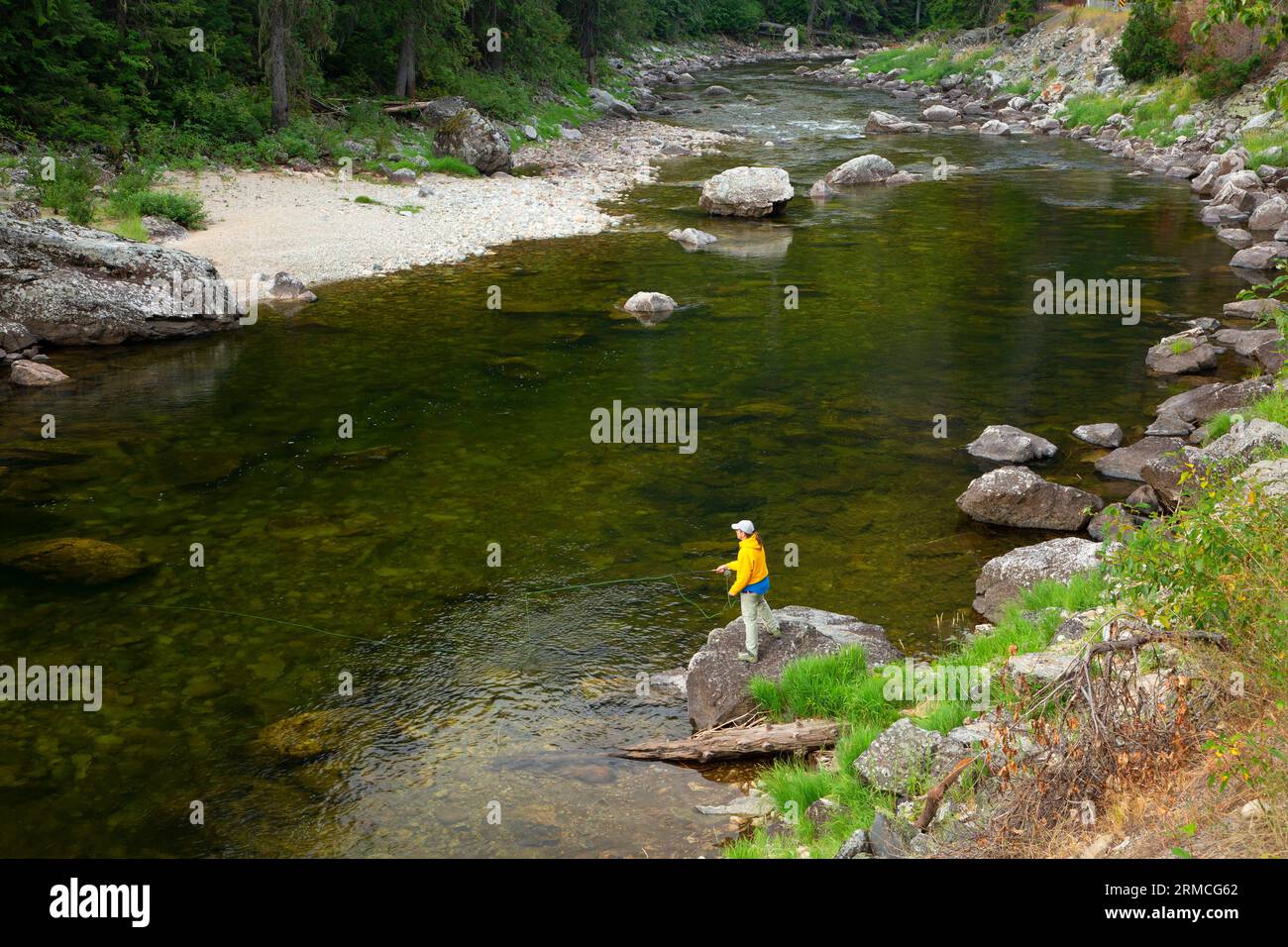
Washington state doesn’t just have good fly fishing — it has some of the most diverse and rewarding fly water in North America. Within a few hours of Seattle, you can swing flies for wild steelhead on a glacier-fed freestone, sight-cast to rising trout on a legendary spring creek, drift nymphs through basalt canyon runs holding chrome summer-runs, and strip streamers for aggressive resident rainbows in desert coulees. No other state in the Lower 48 packs this much variety into a single region.
We’ve spent years wading, rowing, and bushwhacking our way across every corner of Washington’s fly fishing landscape. From the arid sagebrush canyons of the Yakima to the emerald forests lining the Skagit, these rivers have shaped how we fish, what gear we carry, and why we believe the Pacific Northwest is the best place in the country to own a fly rod. Whether you’re a resident planning your season or a visiting angler building a PNW trip, this guide breaks down the rivers that belong on every fly fisher’s list.
For anglers just getting into the sport, our fly fishing beginner’s guide covers casting, gear selection, and how to read water. And for a broader look at the discipline — gear roundups, technique deep-dives, and more — visit our fly fishing hub.
Washington’s Fly Fishing Landscape at a Glance
Washington’s geography creates an almost unfair concentration of quality fly water. The Cascade Range acts as a continental dividing line: to the west, rain-soaked coastal drainages carry steelhead and sea-run cutthroat through old-growth forests. To the east, arid steppe rivers wind through basalt canyons where prolific insect hatches fuel some of the best dry fly fishing on the West Coast.
Picture a map of the state divided into these zones. The westside rivers — Skagit, Skykomish, North Fork Stillaguamish — are your steelhead and salmon waters, flowing heavy and green through conifer valleys. The eastside rivers — Yakima, Methow, Rocky Ford Creek — offer trout-focused fishing in landscapes that look more like Montana than the stereotypical Pacific Northwest. And straddling the divide, rivers like the Klickitat and Grande Ronde deliver a hybrid experience where trout and steelhead share canyon water.
Then there’s the Oregon border influence. The Deschutes River technically flows through Oregon, but it’s a cornerstone of PNW fly fishing culture and draws Washington anglers south in enormous numbers. We’ve included it here because no honest guide to Pacific Northwest fly fishing can leave it out.
The takeaway: Washington’s fly fishing calendar never truly closes. When westside rivers blow out in winter rain, eastside waters fish clean. When summer steelhead push into Columbia tributaries, the Yakima’s hoppers are popping. There is always somewhere to go and something to chase.
The Rivers
Yakima River
Target species: Rainbow trout, cutthroat trout, some brown trout Best season: March through November, with peak dry fly fishing from May to October Access: Extensive public access from Easton to Roza Dam; float access via drift boat or raft is the primary method from Cle Elum downstream
The Yakima is Washington’s premier trout stream, and it isn’t particularly close. Flowing east from the Cascades through the Kittitas Valley and into the canyon above Ellensburg, the Yakima holds an extraordinary density of wild rainbow trout — fish that are well-educated, leader-shy, and utterly addictive to pursue on a dry fly.
What makes the Yakima special is the quality of its insect life. The river produces prolific hatches from March through November: Skwala stoneflies in early spring, Mother’s Day caddis blizzards in May, Pale Morning Duns through summer, October Caddis in fall, and everything in between. During peak hatch windows, you can sight-fish to rising trout for hours without running out of targets. The canyon section between Cle Elum and Ellensburg is the jewel — steep basalt walls, pocket water, long riffles, and deep runs that stack up fish in predictable lies.
This is overwhelmingly a catch-and-release, wild trout fishery. The Yakima’s regulations reflect a decades-long conservation success story: selective gear rules and barbless hooks have turned a once-mediocre river into a genuine destination. Most anglers fish the canyon by drift boat, which opens up miles of water that are difficult to reach on foot. If you’re wading, focus on the upper river near Easton or the access points around Ellensburg where the river broadens and slows.
A 5-weight rod handles the Yakima perfectly. Bring your full dry fly arsenal — caddis imitations, PMD comparaduns, Chubby Chernobyls for summer hopper-dropper rigs, and a selection of nymphs for the inevitable midday lulls. If you need wading gear recommendations, our best waders for fly fishing guide covers the options that handle the Yakima’s slick basalt bottom.
Deschutes River (Oregon)
Target species: Redside rainbow trout, summer steelhead, resident brown trout Best season: Year-round for trout; July through November for steelhead Access: Excellent public access along the lower 100 miles from Maupin to the Columbia confluence; BLM land dominates the corridor
Yes, the Deschutes is in Oregon. We know. But if you fish in Washington and you haven’t made the drive to the Deschutes, you’re missing one of the defining fly fishing experiences in the Pacific Northwest. This river deserves inclusion on pure merit — and because half the license plates at every put-in seem to be from Washington anyway.
The Deschutes is a desert canyon tailwater with a staggering population of wild redside rainbow trout. These fish average 12 to 16 inches but fight like they’re twice that size — the Deschutes current is powerful and the redsides use every ounce of it. The river’s most famous feature is its dry fly fishing: salmonfly and golden stonefly hatches in late May and June bring some of the most aggressive surface feeding you’ll find anywhere. Fish crush big dries with violent, slashing rises that will make your hands shake.
Summer steelhead enter the system beginning in July and provide outstanding swing fishing through the fall. The Deschutes is one of the best rivers in the region to learn the steelhead swing game because the water is wadeable, the runs are clearly defined, and the fish are present in fishable numbers. Bring a 7- or 8-weight single-hand rod or a light switch rod — full spey rods are overkill on most Deschutes water. For steelhead-specific rod recommendations, our best fly rods for steelhead roundup has you covered.
Camp along the river, wade into a run at dawn, and fish the evening caddis rise until you can’t see your fly anymore. The Deschutes delivers an experience that combines great fishing with true backcountry solitude in a desert landscape that feels a million miles from the rainy westside.
Skagit River
Target species: Wild steelhead (catch-and-release), bull trout, sea-run cutthroat, pink and chum salmon (in season) Best season: December through April for winter steelhead; September through November for sea-run cutthroat and salmon Access: Public access from Concrete downstream through the Skagit Wildlife Area; boat ramps at Concrete, Rockport, Howard Miller Steelhead Park, and downstream
The Skagit is the cathedral of Pacific Northwest steelhead fly fishing. It’s the river where modern spey casting technique was refined, where the intruder fly pattern was born, and where generations of steelhead anglers have stood hip-deep in green water, swinging flies through the most iconic runs in the sport. If Washington has a single river that defines its fly fishing identity, this is it.
Winter steelhead begin entering the Skagit system in December, with the peak push running from February into April depending on water conditions. These are big, powerful fish — wild Skagit winters commonly exceed 10 pounds and fish over 15 are not uncommon. The river is managed as a catch-and-release, wild steelhead fishery, and the angling community here treats these fish with a reverence that borders on spiritual.
Fishing the Skagit demands a commitment to the two-hand game. The river is big, the runs are wide, and covering water efficiently means throwing a spey rod with a Skagit-style head and a sink tip. This is swing fishing at its purest — long casts, controlled swings through holding water, and the grab that makes every empty day worth it. If you’re new to steelhead fly fishing, the Skagit is a challenging starting point. But if you’re ready for the pinnacle of the discipline, there’s no better place to chase wild winter fish.
Access is reasonable from the bank for many classic runs, though a drift boat opens up the full river. Be prepared for raw, wet conditions. January on the Skagit is beautiful in a violent, elemental way — rain, fog, bald eagles in the cottonwoods, and the chance at a fish that will rewrite your understanding of what a trout rod can handle.
North Fork Stillaguamish
Target species: Winter steelhead (catch-and-release), summer steelhead, sea-run cutthroat Best season: December through March for winter steelhead; summer steelhead in July and August Access: Road access along Highway 530 from Arlington to Darrington; pull-offs and informal trails at many classic runs
The North Fork Stilly is a smaller, more intimate steelhead river than the Skagit, and many experienced anglers prefer it for exactly that reason. This is a river you can wade effectively without a spey rod — though two-hand rods certainly help — and the fish hold in clearly defined runs that reward careful reading of the water.
Winter steelhead on the North Fork are wild fish returning to one of the Puget Sound’s most important steelhead streams. Conservation efforts here have been significant, and the river’s catch-and-release regulations reflect the community’s commitment to protecting these runs. Fish numbers can vary year to year, and blank days are part of the reality. But when the river is in shape — slightly off-color, dropping after a rain — the North Fork delivers steelhead fishing that feels personal and earned in a way that bigger rivers don’t always match.
The landscape adds to the experience. The river corridor between Oso and Darrington flows through a valley framed by Cascade foothills, with second-growth forest crowding the banks. It’s not wilderness, but it feels wild. Wade fishing is the standard approach, and a 7-weight single-hand rod or a shorter switch rod is ideal for the North Fork’s moderate width. Swing soft hackles and intruders through the tailouts, and dead-drift egg patterns or nymphs through the deeper slots. The fish will tell you what they want.
Skykomish River (Sky River)
Target species: Winter steelhead, summer steelhead, sea-run cutthroat, coho and pink salmon Best season: December through March for winter steelhead; July through September for summer steelhead; September and October for salmon Access: Highway 2 parallels the river from Gold Bar to Index; public access at Al Borlin Park, Big Eddy, Reiter Ponds, and various pull-offs
Locals call it the Sky, and this river has a split personality that makes it one of the most versatile fly fishing destinations on the westside. In winter, the Sky runs high and green with steelhead pushing through classic boulder-garden runs. In summer, the river drops and clears, revealing pocket water and tailouts that hold summer steelhead willing to chase a swung fly on the surface or just below it.
The Sky’s summer steelhead run is what draws most fly anglers. Summer fish arrive as early as July and push into the system through September. These are aggressive, acrobatic steelhead that respond well to waking dries and shallow-swung wet flies — the kind of fishing that steelhead addicts live for. The stretch between Gold Bar and Index offers excellent wading access, and the river’s moderate size means a switch rod or even a long single-hand rod covers the water effectively.
Winter steelhead on the Sky are a different proposition. The river carries more volume, the fish hold deeper, and sink tips are the order of the day. A spey rod in the 12- to 13-foot range swings flies efficiently through the bigger winter runs. The Sky’s proximity to Seattle — roughly 90 minutes from downtown — makes it the go-to winter steelhead option for Puget Sound fly anglers who want to fish a morning session before lunch.
Sea-run cutthroat show up in the system from late summer through fall, providing a lighter-tackle option on days when steelhead aren’t cooperating. A 5-weight with small baitfish patterns fished on a floating line is all you need for these scrappy, willing fish.
Methow River
Target species: Rainbow trout, cutthroat trout, mountain whitefish, spring Chinook (very limited) Best season: May through October; peak dry fly fishing from June through September Access: Good road access along Highway 20 (North Cascades Highway) from Winthrop to Twisp and beyond; public land interspersed with private
The Methow Valley is one of the most beautiful places in Washington, and the river that runs through it is a trout stream that punches well above its size class. Crystal-clear water flowing through ponderosa pine and sagebrush landscape, with the North Cascades rising to the west — the Methow offers a fly fishing setting that rivals anything in the Rocky Mountain West.
The Methow’s trout are wild rainbows and cutthroat that demand good presentations. Water clarity can be intimidating — if you can see the fish, the fish can see you. Long leaders, fine tippet, and careful wading are mandatory. But the reward is legitimate sight-fishing to rising trout in a freestone stream that produces solid hatches of mayflies, caddis, and stoneflies throughout the summer season.
Fish the Methow with a 4- or 5-weight rod and dry-dropper rigs. Attractor dries like Royal Wulffs and stimulators work well as top flies, with a bead-head nymph trailing 18 inches below. When fish are visibly rising, switch to a targeted approach with CDC comparaduns or caddis emergers. The river fishes well on foot — wade carefully, watch for redds in spring, and respect the private land boundaries that are common in the valley.
The Methow is also a critical corridor for endangered spring Chinook salmon and summer steelhead. Anglers must be aware of seasonal closures and gear restrictions that protect these ESA-listed runs. Check WDFW regulations carefully before you go — the rules here are strict for good reason, and the local fly fishing community takes compliance seriously.
Rocky Ford Creek
Target species: Rainbow trout (large, wild fish averaging 18 to 22 inches) Best season: Year-round; best fishing from March through June and September through November Access: WDFW-managed access point off Road 6 NE near Ephrata; limited parking and a single trail to the creek
Rocky Ford Creek is unlike anything else in Washington — or anywhere else in the West, for that matter. This spring creek seeps out of the basalt near Ephrata in the Columbia Basin and flows through a narrow coulee for roughly two miles before sinking back into the ground. The water is gin-clear, cold year-round, and absolutely packed with massive rainbow trout that feed on a nearly constant buffet of scuds, Callibaetis mayflies, and midges.
The average fish in Rocky Ford is legitimately 18 inches. Twenty-inch-plus trout are common, and fish over 24 inches are caught with enough regularity to make your hands tremble every time you see a dark shape cruising the weed beds. This is technical, demanding fly fishing — fish that have been caught and released dozens of times in water you could read a newspaper through. There is no room for sloppy casts, heavy footsteps, or thick tippet.
Fish Rocky Ford with a 4- or 5-weight rod, 12- to 15-foot leaders, and 6X or 7X tippet. Scud patterns in olive and orange are the year-round staple. During Callibaetis hatches — typically mid-morning through early afternoon from late spring into fall — dry fly fishing can be exceptional. Midge clusters work through the winter months. The key to Rocky Ford is moving slowly, spotting fish before casting, and accepting that you will spook more trout than you hook. The creek’s selective-gear, catch-and-release regulations mean every fish you encounter has a PhD in avoiding flies.
Bring quality waders — the creek bottom is silty and the banks are marshy. Felt-soled boots are prohibited statewide, so use rubber-soled wading boots with good traction.
Grande Ronde River
Target species: Summer steelhead, rainbow trout, smallmouth bass, mountain whitefish Best season: September through November for steelhead; June through September for trout and bass Access: Launch at Boggan’s Oasis or Troy for multi-day float trips; road access at various points along the lower river in Washington
The Grande Ronde is a river that rewards those willing to make the drive. Tucked into the far southeast corner of Washington where the Blue Mountains meet the Snake River drainage, the Grande Ronde offers a multi-day float fishing experience that feels genuinely remote. Canyon walls rise hundreds of feet above the river, raptors circle the thermals, and the only sounds are the river and your line cutting through the air.
Summer steelhead push into the Grande Ronde beginning in September, and the run builds through October into November. These are wild B-run fish — larger than average and infamously hard-fighting in the canyon’s fast current. Swinging flies through the long, gravel-bottomed runs is the traditional approach, and the river’s manageable width means both spey and single-hand rods are effective. A 7-weight single-hand or an 11-foot switch rod covers the water well.
The multi-day float from Boggan’s Oasis to Heller Bar on the Snake is one of the great fly fishing adventures in the Pacific Northwest. You camp on gravel bars, fish run after run at your own pace, and experience a landscape that most Washingtonians never see. Earlier in the summer, the river holds solid populations of rainbow trout and aggressive smallmouth bass that eat streamers and poppers with reckless enthusiasm — making a July float trip an excellent warm-weather alternative to steelhead season.
Logistics require planning. The road into Boggan’s Oasis is steep and rough, shuttle services should be arranged in advance, and the float typically takes three to five days depending on your pace. But the effort pays dividends in the form of empty water, willing fish, and a canyon that makes you forget your phone has no signal.
Klickitat River
Target species: Summer steelhead, rainbow trout, spring Chinook (limited) Best season: September through November for steelhead; summer months for trout Access: Road access along Highway 142 from Lyle upstream to Klickitat; some sections cross the Yakama Nation reservation and are closed to non-tribal members
The Klickitat is a Columbia River tributary that cuts a dramatic basalt canyon through the eastern foothills of the Cascades, and it holds one of the most consistent summer steelhead returns in Washington. Fish push into the system from September through November, and the river’s moderate size and excellent wading access make it a favorite among fly anglers who prefer to cover water on foot rather than from a drift boat.
The Klickitat fishes best in the lower canyon between Lyle and the town of Klickitat, where the river alternates between deep pools, boulder-studded runs, and classic tailouts that stack steelhead in predictable lies. A 7- or 8-weight single-hand rod handles the lower river effectively, though a switch rod gives you extra reach in the wider runs. Swing traditional wet flies and intruders through the soft water, and dead-drift nymphs and egg patterns through the faster slots.
One important note: the upper Klickitat flows through the Yakama Nation reservation, and access is restricted. Fish the water downstream of the reservation boundary and respect all posted closures. The canyon landscape is stunning — dry-side basalt and golden grass with the river cutting through — and the fishing pressure is lighter than what you’ll find on the westside steelhead rivers. For anglers willing to explore beyond the I-5 corridor, the Klickitat is a rewarding and often overlooked destination.
Seasonal Planning Calendar
Understanding when to fish which water is the key to maximizing your time on Washington rivers. Here’s how we plan our year:
January and February: Winter steelhead season is in full swing. The Skagit, Skykomish, and North Fork Stillaguamish are the primary targets. Water conditions are rain-dependent — watch the gauges and be flexible. Rocky Ford Creek fishes well on mild winter days when you need a trout fix between steelhead trips.
March and April: Late winter steelhead overlap with the first trout hatches. The Skagit continues to fish through April. On the eastside, the Yakima’s Skwala stonefly hatch kicks off in March, offering the year’s first serious dry fly opportunity. Rocky Ford’s Callibaetis hatch begins ramping up.
May and June: This is prime time across the state. The Yakima’s Mother’s Day caddis hatch is legendary. The Deschutes’ salmonfly hatch draws anglers from across the region. The Methow opens and fishes beautifully as flows stabilize. Rocky Ford is in peak form.
July and August: Summer steelhead enter the Skykomish, North Fork Stilly, and eventually the Klickitat and Grande Ronde. The Yakima fishes well with hopper-dropper rigs. The Methow is in its summer sweet spot. Grande Ronde trout and bass fishing is excellent for float trips.
September and October: The steelhead calendar expands dramatically. The Grande Ronde, Klickitat, and Deschutes are all fishing well for summer-runs. The Yakima’s October Caddis hatch provides outstanding fall dry fly fishing. Sea-run cutthroat appear in westside rivers.
November and December: Late fall steelhead on the Grande Ronde and Klickitat. Early winter steelhead begin showing on the Skagit system. The Yakima still fishes on warmer days. Rocky Ford’s winter midge fishing can be outstanding for patient anglers.
Regulations Every Angler Must Know
Washington’s fishing regulations are complex, and ignorance is never an excuse. Here are the key rules that apply across most of the waters we’ve discussed:
Selective gear rules apply on many of the state’s best fly fishing rivers, including the Yakima and Rocky Ford. This means single barbless hooks only, no bait, and no added weight on some waters. Check WDFW’s sport fishing rules pamphlet for each river’s specific regulations.
Wild steelhead release is mandatory on virtually all Washington rivers. Wild steelhead are identified by an intact adipose fin. Only hatchery fish with a clipped adipose may be retained on rivers where retention is allowed. Handle wild steelhead carefully — keep them in the water, minimize air exposure, and use barbless hooks for quick release.
Catch record cards are required for steelhead, salmon, sturgeon, and certain other species. Purchase one with your license and record every fish caught immediately.
Tribal fishing areas exist on several rivers, including the Klickitat and others that cross reservation lands. Respect all posted boundaries. Fishing on reservation land without tribal authorization is both illegal and disrespectful.
Seasonal closures protect spawning fish on many rivers. The Methow, for example, has closures tied to endangered steelhead and Chinook runs. Some rivers or sections close entirely during certain months. Always verify current regulations with WDFW before planning a trip — the rules can change annually and are often specific to individual river sections.
Felt-soled wading boots are prohibited in Washington to prevent the spread of aquatic invasive species. Rubber-soled boots only. Our waders and wading gear guide covers boots that comply with this regulation.
Frequently Asked Questions
What is the best fly fishing river in Washington for beginners?
The Yakima River is the best starting point for new fly anglers in Washington. It has excellent public access, high trout densities that keep beginners engaged, and clearly defined hatches that make fly selection straightforward. The canyon section near Ellensburg is particularly forgiving — there are enough fish in the system that imperfect casts still produce opportunities. A guided float trip on the Yakima is one of the best investments a beginner can make. For a broader introduction to the fundamentals, our fly fishing beginner’s guide covers everything you need to get started.
When is the best time to fly fish in Washington state?
Washington offers year-round fly fishing, but the peak window for diversity and quality is May through October. May brings the Yakima’s caddis hatch and the Deschutes’ salmonfly emergence. Summer adds steelhead to the mix on the Skykomish, Klickitat, and Grande Ronde. Fall delivers the Yakima’s October Caddis and late-season steelhead across multiple systems. Winter steelhead fishing on the Skagit and other westside rivers extends the season for dedicated anglers who don’t mind rain and cold.
Do I need a drift boat to fly fish Washington rivers?
Not at all, but it helps on certain waters. The Yakima canyon fishes best from a drift boat because bank access is limited through the basalt walls. The Skagit is primarily a boat fishery for covering steelhead runs effectively. But rivers like the North Fork Stillaguamish, Methow, Klickitat, and Rocky Ford Creek are wade-fishing destinations where a drift boat is unnecessary or impractical. The Grande Ronde requires a raft or drift boat for multi-day trips, but daily access points allow some wade fishing too.
What fly rod weight should I bring for Washington rivers?
A 5-weight is the universal trout rod for the Yakima, Methow, Rocky Ford, and Deschutes trout fishing. A 7- or 8-weight single-hand or switch rod covers steelhead on smaller rivers like the Klickitat and North Fork Stilly. A 12- to 13-foot spey rod in an 8-weight is the standard for the Skagit and other big steelhead rivers. If you can only bring one rod for a mixed trip, a 6-weight single-hand rod is the best compromise. Check our steelhead fly rod roundup for specific two-hand recommendations.
Are there guided fly fishing trips available on these rivers?
Yes, and we strongly recommend guides for anglers new to a specific river. The Yakima River near Ellensburg has the highest concentration of fly fishing guide services in the state, with outfitters running drift boat trips daily from spring through fall. The Skagit and other steelhead rivers have experienced guides who know the water intimately and can accelerate your learning curve dramatically. The Deschutes has numerous guide operations based in Maupin. For the Grande Ronde, guided multi-day float trips handle all logistics including shuttle, camping gear, and meals — making the remote canyon accessible to anglers who don’t own their own rafting equipment.