
Your waders are the single piece of fly fishing gear that determines whether you stay on the water or call it a day. A pinhole leak at 38 degrees turns a great morning into a miserable one, and a bad fit turns a wade through thigh-deep current into an exercise in anxiety. We’ve put these four waders through full seasons of hard fishing across PNW rivers — scrambling over basalt shelves on the Deschutes, standing in the glacial runoff of Olympic Peninsula steelhead water, and logging hours on the gravel bars of the Yakima — to find out which ones actually hold up when it matters.
This roundup covers the four fly fishing waders that earned their place through our Benchmark Score system, not through brand loyalty or catalog hype. Whether you’re a weekend dry-fly angler or a year-round steelhead addict wading in January, we’ve identified the right pair for your water, your budget, and your fishing style. For more of our fly fishing coverage, visit our fly fishing hub.
Quick Picks
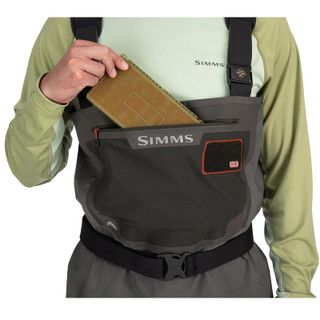
- Best Overall: Simms G3 Guide Stockingfoot — The gold standard in breathable waders. Bombproof construction, Gore-Tex Pro membrane, and a fit that stays comfortable from dawn to dark across every condition we threw at them.
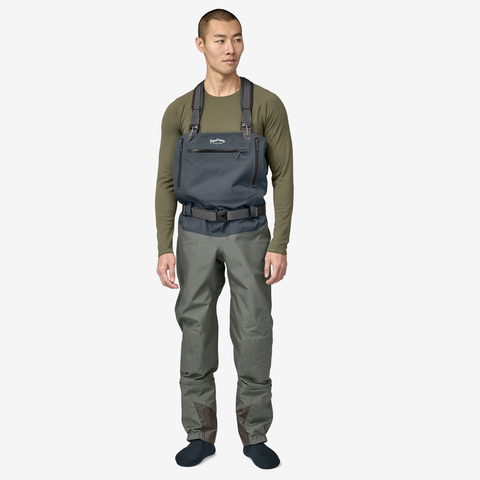
- Best for Cold Water: Patagonia Swiftcurrent Expedition — Purpose-built for serious conditions with a recycled-polyester shell, exceptional waterproofing, and layering room that winter steelhead anglers will appreciate.
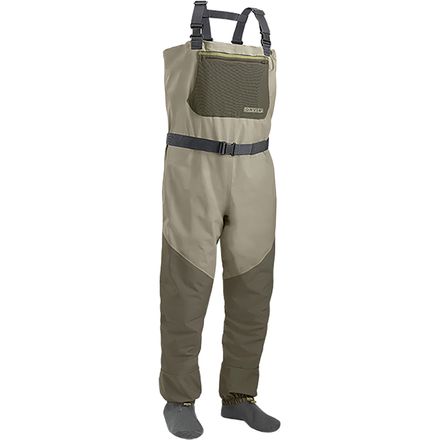
- Best Value: Orvis Encounter Waders — A genuinely capable wader at a price point that makes getting into fly fishing reasonable. Punches well above its weight class in durability and breathability.
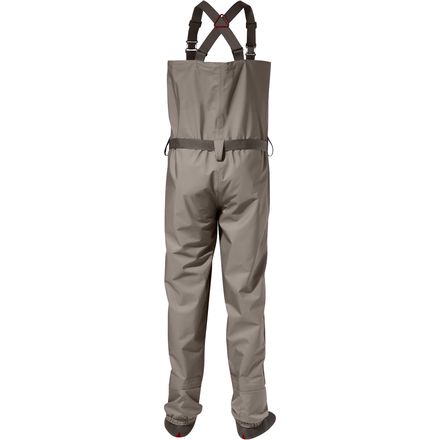
- Best for PNW River Versatility: Redington Palix River — A modern, lightweight wader with strong abrasion resistance and a fit designed for active wading through the kind of varied terrain Pacific Northwest rivers throw at you.
Stockingfoot vs. Bootfoot Waders
Before we break down individual waders, let’s address the fundamental choice every wading angler faces: stockingfoot or bootfoot? The answer matters more than most gear decisions because it affects your safety, mobility, and comfort on the water every single outing.
Stockingfoot Waders
Stockingfoot waders end in a neoprene bootie, and you pair them with a separate wading boot. This is the dominant choice among fly anglers for good reasons. The two-piece system lets you choose a wading boot that fits your foot properly, offers the right sole type for your water (felt, rubber, or studded), and provides genuine ankle support on uneven terrain. You can replace worn-out boots without replacing your waders, and the overall system packs down smaller for travel.
The practical advantage on the water is significant. A well-fitted wading boot gives you the ankle articulation and support to navigate the slippery basalt shelves, cobble bars, and submerged timber that define PNW rivers. When you’re crossing fast current at thigh depth on the Skagit or picking your way down a steep bank to the Kalama, solid footwear isn’t optional — it’s a safety requirement. Every wader in this roundup is a stockingfoot model for exactly this reason.
Bootfoot Waders
Bootfoot waders have the boot integrated into the wader itself. They’re faster to put on, simpler as a system, and some anglers prefer them for cold-weather stillwater fishing where you’re not doing much technical wading. The insulated boot versions are genuinely warmer than a stockingfoot-and-boot setup in extreme cold.
The tradeoff is fit and support. Bootfoot waders give you one boot shape and size — take it or leave it. Ankle support is generally inferior, the soles wear faster and can’t be replaced independently, and the overall system is heavier and bulkier. For river fly fishing, especially on the rocky, high-gradient rivers we fish in the Pacific Northwest, stockingfoot waders paired with quality wading boots are the stronger choice.
Simms G3 Guide Stockingfoot
Best for: The serious fly angler who wants one pair of waders that handles everything — from summer evening hatches to midwinter steelhead sessions — and lasts for years.
The Simms G3 Guide has been the benchmark wader in fly fishing for good reason, and the current version continues that legacy without resting on reputation. Built around a three-layer Gore-Tex Pro shell, these waders deliver the highest level of waterproofing and breathability we’ve tested. That Gore-Tex Pro membrane is the real differentiator here: it’s measurably more breathable than the standard Gore-Tex used in lower-tier waders, which means less internal condensation during high-output wading and a noticeably drier, more comfortable experience across long days.
Breathability
We wore the G3 Guides on a full-day Deschutes trip in late August — air temps in the mid-80s, wading upstream through riffles, scrambling over boulders to reposition — and the internal moisture management was exceptional. Where lesser waders leave you feeling clammy after a few hours of active wading, the G3 Guides kept pace with our output. The three-layer construction provides that breathability without sacrificing any waterproof integrity, even after a full season of hard use. During shoulder-season fishing when you’re layering a midweight fleece underneath, the breathability prevents that uncomfortable trapped-moisture feeling that plagues less capable membranes.
Durability
This is where the G3 Guide truly separates itself. Simms uses a 4-layer abrasion-resistant material in the legs and seat — the high-wear zones where waders live or die. After dragging these waders across barnacle-crusted rocks on the coast and grinding through the volcanic rubble along the lower Deschutes, the shell showed minimal wear. The seam construction is meticulous, with fully taped and sealed seams throughout, and the Simms YKK AquaGuard front zipper remains one of the most reliable waterproof zippers in the business. We’ve seen G3 Guides go three to five seasons under heavy use before needing anything beyond minor gravel guard repairs.
Fit
Simms offers the G3 Guide in a range of sizes including short, regular, and long inseams, and the cut is anatomical without being restrictive. The articulated knees allow a full range of motion for climbing banks and kneeling on gravel bars, and the chest area provides enough room for layering without excess material that catches current. The neoprene stockingfeet are comfortable and durable, with a reinforced sole area that resists premature wear. The integrated belt loops and built-in gravel guards are thoughtful details that reflect years of refinement.
Value
The G3 Guide is a significant investment — there’s no way around that. But when you amortize the cost across three to five seasons of heavy use, the per-outing cost drops to something that makes genuine financial sense. More importantly, these waders inspire confidence. You wade deeper, stay longer, and fish harder because you trust them completely. That confidence translates directly into more time fishing and less time worrying about leaks. If you’re fishing 30 or more days a year, the G3 Guide is not a luxury — it’s a pragmatic choice.
Patagonia Swiftcurrent Expedition
Best for: Cold-water anglers who fish through winter, value environmental responsibility, and need waders that perform in the harshest conditions the PNW delivers.
Patagonia’s Swiftcurrent Expedition waders are designed for anglers who don’t stop fishing when the calendar turns to November. The four-layer recycled-polyester shell with a proprietary H2No Performance Standard membrane is engineered for the cold, wet, punishing conditions that define winter steelhead season across the Pacific Northwest. These are the waders we reached for on every sub-40-degree morning, and they consistently delivered.
Breathability
The H2No membrane sits slightly behind Gore-Tex Pro in raw breathability numbers, and we noticed a marginal difference during high-exertion summer fishing. In practical cold-weather use, though — which is what these waders are designed for — the breathability is more than sufficient. Layering with midweight base layers and a fleece pant underneath, we stayed dry inside even during long hikes to remote steelhead runs. Patagonia has refined the H2No system specifically for the stop-and-go exertion patterns of winter fly fishing: walk hard to the run, wade and cast for an hour, walk to the next spot. The membrane handles those transitions without building up interior condensation.
Durability
The Swiftcurrent Expedition uses a heavier denier face fabric than most competitors in this class, and the knees and seat are reinforced with an additional abrasion layer. We fished these waders hard through an entire winter steelhead season on the Hoh, Sol Duc, and Bogachiel — rivers that punish gear with their cobble bottoms, woody debris, and the general brutality of wading through coastal rainforest river systems. The waders held up with zero leaks and minimal visible wear. Patagonia’s seam sealing is excellent, and their commitment to repairability through their Ironclad Guarantee means these waders are designed to be fixed and keep fishing, not thrown away at the first sign of trouble.
Fit
Patagonia cuts the Swiftcurrent Expedition with a slightly roomier chest and hip than Simms, which accommodates heavier cold-weather layering without restriction. The articulated legs and knees provide good mobility, and the overall silhouette avoids excessive material bulk in the legs that can create drag in current. The neoprene booties are comfortable with a reinforced sole, and the adjustable suspender system is straightforward to dial in. Sizing runs true, and Patagonia offers enough size options that most anglers will find an accurate fit.
Value
Priced in the upper tier of wader pricing, the Swiftcurrent Expedition competes directly with the Simms G3 Guide. You’re paying a premium for Patagonia’s environmental commitment — the recycled materials, Fair Trade Certified sewing, and repairability philosophy — and for a wader that’s specifically optimized for cold-water performance. If winter fishing is your primary season or you prioritize sustainability in your gear purchases, the Swiftcurrent Expedition justifies its price. For primarily warm-weather anglers, the G3 Guide’s superior breathability makes it the better all-around choice.
Orvis Encounter Waders
Best for: Anglers entering fly fishing or those who want a reliable, no-excuses wader without the premium price tag.
The Orvis Encounter waders are the most pleasant surprise in this roundup. At a fraction of the cost of the Simms and Patagonia options above, the Encounter delivers performance that genuinely challenges waders at twice its price point. These aren’t stripped-down budget waders with compromises at every seam — they’re thoughtfully designed, well-constructed waders that happen to cost less.
Breathability
The Encounter uses a proprietary Orvis membrane that doesn’t match Gore-Tex Pro in lab-measured breathability, but in real-world fishing, the difference is less dramatic than you might expect. During moderate-exertion wading on spring and fall days — the sweet spot for these waders — we stayed comfortable and reasonably dry inside. Where the Encounter shows its price point is during high-output summer wading or extended cold-weather sessions with heavy layering, where the membrane can’t quite keep up with the demands placed on it. For the angler fishing 15 to 25 days a year in three-season conditions, the breathability is entirely adequate.
Durability
Orvis uses a durable nylon shell with reinforced knees and a double-layer seat that handles the normal wear patterns of wading and sitting on streamside rocks. The seam sealing is solid, and we fished the Encounter for a full season without developing any leaks. The shell material is slightly less abrasion-resistant than the premium options in this roundup, and we’d expect these waders to show more wear after two to three seasons of heavy use than the G3 Guide or Swiftcurrent. That said, they’re durable enough to deliver multiple seasons of reliable service for the average fly angler, which is exactly what they need to do at this price point.
Fit
The Encounter is available in a reasonable range of sizes, though the options aren’t as granular as the premium brands. The fit is moderately relaxed through the chest and hips, with enough room for standard layering. The articulated knees work well for basic wading movements, and the neoprene stockingfeet are comfortable. Where the fit falls slightly short of the premium waders is in the overall tailoring — there’s a bit more excess material in the legs, which can create minor drag in faster current. For most wading situations on moderate-speed rivers, it’s a non-issue.
Value
This is where the Encounter dominates. For anglers who are getting into fly fishing, upgrading from cheap imported waders, or who simply don’t fish enough days per year to justify a $700-plus wader, the Encounter is an outstanding choice. It does everything a wader needs to do — keep you dry, let you move comfortably, and survive honest use — at a price that doesn’t require a gear-budget conversation with your partner. We’d hand the Encounter to any new fly angler without hesitation. It removes the barrier to entry without setting someone up for disappointment.
Redington Palix River
Best for: Active PNW anglers who cover a lot of ground and need lightweight, durable waders that handle diverse river conditions.
The Redington Palix River waders are built for the way we actually fish in the Pacific Northwest — which is to say, aggressively. A typical day might involve hiking a mile through timber to reach a steelhead run, wading through fast water over basketball-sized cobble, climbing a steep bank to leapfrog downstream, and doing it all again. The Palix River is designed for that kind of active, mobile fishing, and it shows in every design decision.
Breathability
Redington’s proprietary DWR-treated shell paired with their breathable membrane delivers solid performance across a wide temperature range. These waders breathe noticeably well during active wading and hiking, keeping moisture management in check during the kind of stop-and-go exertion that defines walk-and-wade fly fishing. They’re not quite at the Gore-Tex Pro level of the G3 Guide, but they’re competitive with the Patagonia H2No membrane and meaningfully better than budget options. For three-season use in the PNW — which spans roughly March through November depending on your tolerance — the Palix River’s breathability is well-matched to the conditions.
Durability
Redington put serious thought into the abrasion zones on the Palix River. The knees, shins, and seat feature reinforced panels that resist the grinding abuse of rocky PNW river bottoms, and the overall shell material has proven tough through our testing. We fished the Palix River on the Deschutes — a river that eats waders for breakfast with its sharp volcanic rock — and they came through without any punctures or seam failures. The gravel guards are robust and well-attached, which matters more than people realize. A blown gravel guard on a river like the Clackamas means gravel in your boots for the rest of the day.
Fit
The Palix River has a modern, athletic cut that reduces excess material without being restrictive. This is particularly noticeable in the legs, where the streamlined fit minimizes drag in current — a meaningful advantage when you’re crossing a waist-deep tailout with a heavy push. The articulated knees allow full mobility for climbing and kneeling, and the chest area provides adequate layering room without the baggy feel of some competitors. Redington’s sizing has improved significantly in recent years, and the Palix River fits true to their published size chart.
Value
Priced between the budget Orvis Encounter and the premium Simms and Patagonia options, the Palix River occupies a sweet spot that makes it arguably the best overall value in this roundup for experienced anglers. You’re getting premium-adjacent performance in breathability and durability at a mid-range price. For the angler fishing 20 to 40 days a year who wants waders that can take genuine punishment without the flagship price, the Palix River deserves serious consideration. They’re the waders we recommend most often to experienced fly anglers who ask us what to buy.
Material Guide: Gore-Tex vs. Proprietary Membranes
The waterproof-breathable membrane inside your waders is the technology that makes modern fly fishing possible. Understanding the differences between membrane types helps you make a smarter purchasing decision.
Gore-Tex and Gore-Tex Pro
Gore-Tex remains the industry benchmark for waterproof-breathable technology. The standard Gore-Tex membrane offers reliable waterproofing with good breathability, and it’s what you’ll find in many mid-range waders. Gore-Tex Pro — used in the Simms G3 Guide — is the premium tier: it delivers measurably higher breathability, better durability, and maintains its performance longer over the life of the wader. The Pro membrane uses a more open structure that allows more moisture vapor to pass through, which translates to less internal condensation during active use.
The advantage of any Gore-Tex product is the Guaranteed to Keep You Dry promise. If your Gore-Tex waders leak through the membrane (not through a puncture or seam failure you caused), Gore-Tex stands behind the product. That warranty backing adds genuine value to the purchase.
Proprietary Membranes
Patagonia’s H2No, Orvis’s proprietary membrane, and Redington’s system are all manufacturer-specific alternatives to Gore-Tex. These membranes have improved dramatically in recent years, and the performance gap between top-tier proprietary membranes and standard Gore-Tex has narrowed substantially. The Patagonia H2No membrane, in particular, performs very close to Gore-Tex in both waterproofing and breathability, with the added benefit of Patagonia’s recycled material commitment.
The practical difference for most anglers comes down to this: Gore-Tex Pro offers the best raw breathability and the most proven long-term durability track record. Quality proprietary membranes from reputable manufacturers deliver 85 to 95 percent of that performance at a lower price. Unless you’re fishing at the extreme ends of the temperature and exertion spectrum — blazing hot summer days with miles of hiking, or bitter cold winter sessions with heavy layering — you may not notice a meaningful difference on the water.
Shell Fabric Matters Too
The membrane is only part of the equation. The face fabric — the outer shell material — determines abrasion resistance, packability, and how the wader feels against brush and rock. Heavier denier fabrics resist punctures and abrasion better but add weight. Lighter fabrics pack smaller and breathe slightly better but sacrifice some durability. Premium waders like the G3 Guide solve this by using heavier material in high-wear zones and lighter material elsewhere. Budget waders tend to use a single weight throughout, which means compromising somewhere.
Wader Care and Repair
Getting three to five seasons out of a quality pair of waders requires some basic maintenance. Neglect your waders and even a $700 pair will leak by season two. Take care of them and a mid-range pair will outlast your expectations.
Cleaning
Rinse your waders with fresh water after every outing, especially after fishing in silty or brackish water. Sand, grit, and mineral deposits degrade DWR coatings and accelerate seam wear. Twice a season, wash your waders in a front-loading machine with a tech wash product designed for waterproof-breathable fabrics. Do not use regular detergent — it destroys the DWR coating and can clog the membrane pores. Hang dry completely before storage.
DWR Restoration
The Durable Water Repellent coating on your wader’s outer shell is what makes water bead and roll off the surface. When that coating degrades — and it will over time — water stops beading and instead saturates the face fabric. Your waders aren’t leaking, but they feel heavier, colder, and the breathability drops because the saturated outer fabric blocks moisture vapor from escaping. Restore DWR every season by applying a spray-on or wash-in treatment after cleaning. This single step extends wader life more than any other maintenance action.
Leak Detection and Patching
When you suspect a leak, turn your waders inside out, fill them partially with water from a hose, and watch for drips on the exterior. Mark the spots and let them dry completely. For pinhole leaks and small punctures, use Aquaseal UV or Aquaseal FD. UV-cure adhesive is fast and works great for streamside repairs. FD (the two-part formula) creates a stronger, more flexible permanent bond for home repairs. Apply a thin, even layer that extends at least a quarter inch beyond the damage in all directions. For seam leaks, apply Aquaseal along the seam tape edge and use a thin bead to re-seal the affected area.
Storage
Store waders hanging from the boot area or draped over a wide hanger in a cool, dry space away from direct sunlight. UV exposure degrades both the face fabric and the membrane over time. Never store waders crammed in a bag or folded tightly — sustained creasing creates stress points that eventually become leaks. If your waders have a front zipper, store it partially open to reduce stress on the zipper teeth.
PNW Considerations: Cold Water, Rocky Rivers, and Real Conditions
Fly fishing in the Pacific Northwest puts unique demands on waders that anglers in other regions may not face. Our rivers are cold — many PNW steelhead rivers run between 38 and 48 degrees through the winter months, and even summer flows on snow-fed systems rarely break 60 degrees. That cold water is unforgiving of leaks and marginal gear, and it makes breathability matter more than you might think, because the temperature differential between your body heat and the river drives significant condensation inside less capable waders.
River Bottom Terrain
PNW river bottoms are among the most demanding in the country. The Deschutes runs over volcanic basalt that will shred waders dragged across its surface. Coastal Olympic Peninsula rivers are a mix of rounded cobble and embedded woody debris that catches and abrades neoprene booties. High-gradient Cascade Range streams feature a chaotic jumble of boulders that demands waders with reinforced knees and shins just to get to the fishing. When we evaluate waders, we’re testing them specifically against these conditions — not gentle limestone creek bottoms or sandy flats.
Layering for PNW Conditions
The Pacific Northwest’s maritime climate means rapid temperature shifts are the norm. A December steelhead outing might start at 28 degrees with frost on the guides and warm to 50 by midday. Your wader needs to accommodate the layering changes that come with those swings. We typically start cold mornings with a heavyweight base layer and fleece pants under our waders, stripping down to a midweight base layer by afternoon. Waders with a roomier cut — like the Patagonia Swiftcurrent — handle this layering range more gracefully. Tighter-fitting waders may feel great with a single base layer but become restrictive when you add bulk for cold weather.
Wading Safety
We’d be irresponsible to talk about PNW waders without mentioning wading safety. Our rivers run fast, cold, and often carry significant visibility-limiting glacial silt. A wading belt is not optional — it’s essential. Every wader in this roundup includes belt loops and should always be worn with the belt cinched. A wading belt won’t make you invincible, but it dramatically slows water entry if you go down, giving you time to recover your footing or swim to safety. If you’re wading unfamiliar PNW rivers, carry a wading staff. The investment is trivial compared to the consequence of a bad fall in 42-degree water. For more on how we evaluate gear for these specific conditions, check our steelhead fly rod roundup where we cover the same rivers and conditions from a rod-selection perspective.
Frequently Asked Questions
How long should a quality pair of fly fishing waders last?
With proper care and maintenance, a premium pair of waders like the Simms G3 Guide or Patagonia Swiftcurrent should deliver three to five seasons of heavy use — meaning 30 to 50 days per year on the water. Mid-range waders like the Redington Palix River typically last two to four seasons under similar use. Budget waders like the Orvis Encounter are realistically a two- to three-season product with moderate use. The variables that most affect lifespan are the terrain you fish (rocky rivers eat waders faster), how well you maintain the DWR coating, and whether you store them properly between outings. Patching small leaks promptly rather than ignoring them also extends life significantly.
Are expensive waders worth the money over budget options?
It depends entirely on how much you fish. If you’re on the water 30-plus days a year, the superior breathability, durability, and comfort of a premium wader like the G3 Guide make it the more economical choice over time — you’ll replace budget waders two or three times in the lifespan of one premium pair. If you fish 10 to 15 days a year in moderate conditions, a mid-range wader like the Redington Palix River or even the Orvis Encounter will serve you well and represent smarter spending. The honest answer is that the performance gap between a $200 wader and a $700 wader is real but not as dramatic as the price gap suggests. Buy the best you can justify for your frequency of use.
Can I use my fly fishing waders for duck hunting or other activities?
You can, but we’d recommend against it as a regular practice. Duck hunting, particularly in flooded timber and marsh environments, subjects waders to abrasion and puncture risks that breathable fly fishing waders aren’t optimized to handle. Thorns, sharp sticks, and blind-building activities will chew through a lightweight breathable shell faster than river rock will. If you need waders for both fly fishing and waterfowl hunting, consider a dedicated pair of neoprene waders for hunting and keep your breathable waders for fishing. If budget forces a single pair, the Simms G3 Guide or Redington Palix River have the best abrasion resistance to handle double duty, but expect a shorter lifespan.
How do I find the right wader size?
Start with the manufacturer’s size chart and measure yourself honestly — chest, waist, hips, and inseam with the footwear and layering you’ll actually fish in. The most common sizing mistake is buying waders too small, which restricts mobility and makes layering uncomfortable. If you’re between sizes, go up. Excess material is a minor annoyance; waders that are too tight across the hips or short in the inseam are a genuine problem that creates stress points and premature wear. Pay attention to inseam options — most premium brands offer short, regular, and long inseams, and getting the right length is just as important as the right chest size. If possible, try waders on over your intended layering before committing.
Should I choose felt or rubber soles for my wading boots?
This is a regional question with a definitive PNW answer. Many Pacific Northwest rivers and several western states have banned felt-soled wading boots because felt harbors invasive organisms like didymo and New Zealand mud snails that are devastating our native ecosystems. Rubber soles with tungsten carbide studs are the standard for PNW fly anglers — they provide excellent grip on wet rock, comply with all regional regulations, and don’t carry the invasive species risk. If you fish exclusively in regions without felt bans, felt soles do offer superior grip on slimy, algae-covered rock. But for versatility, regulatory compliance, and environmental responsibility, studded rubber is the right call for most fly anglers today.