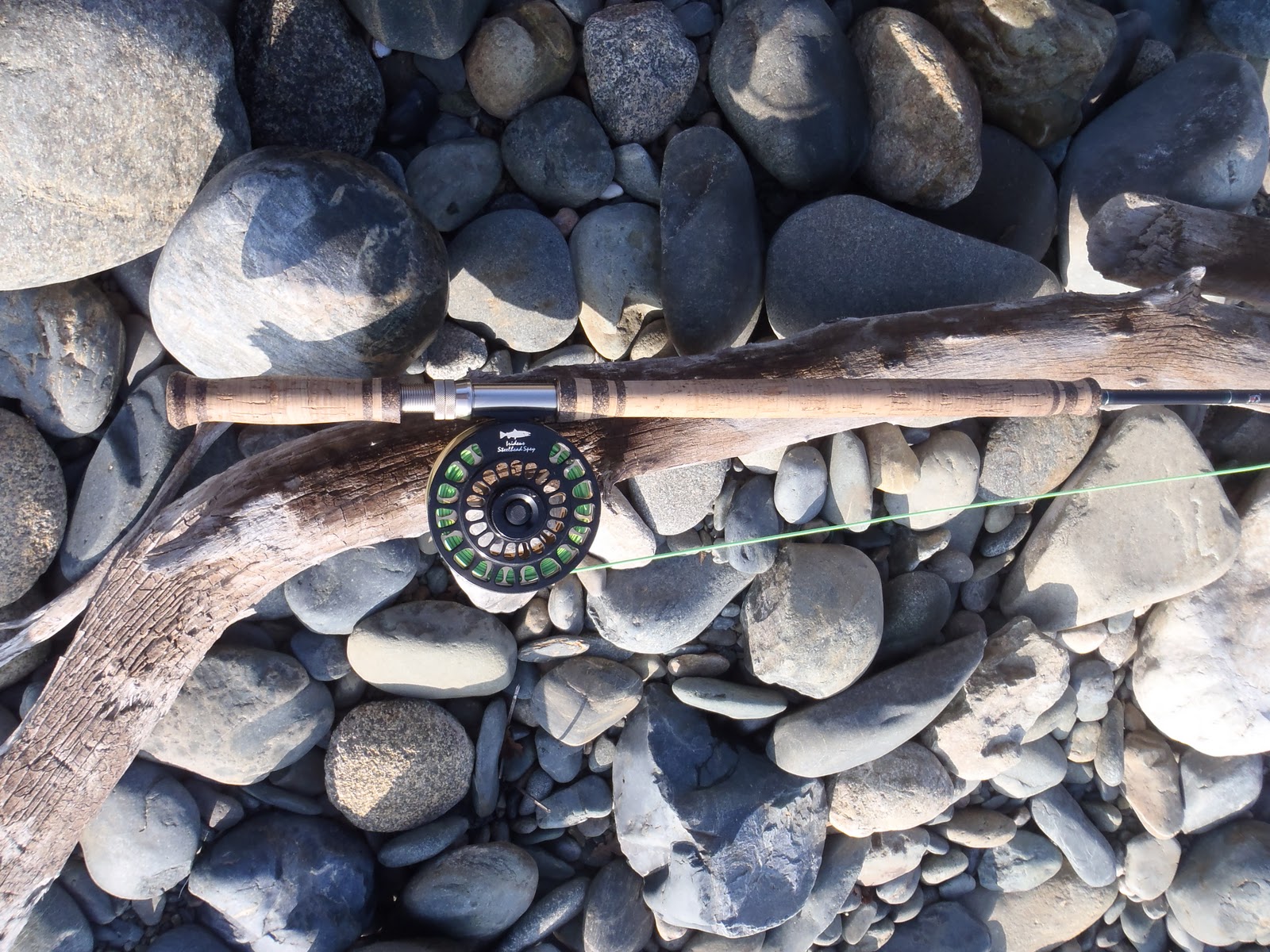
Choosing the best fly rod for steelhead is one of the most consequential gear decisions a fly angler can make. The rod you carry dictates how you fish, what water you can effectively cover, and whether a 15-pound chrome hen is the fight of your life or a frustrating tug-of-war with the wrong tool. We’ve spent entire seasons swinging flies and dead-drifting nymphs across steelhead rivers from the Olympic Peninsula to the Deschutes, putting these rods through conditions that expose every strength and weakness a blank can have.
This roundup covers five steelhead fly rods that earned their place through our Benchmark Score system — not through sponsorship deals or catalog hype. Whether you’re a single-hand purist, a committed two-hand caster, or somewhere in between with a switch rod, we’ve got a recommendation that fits your water and your style. For more fly fishing coverage, visit our fly fishing hub.
Quick Picks
- Best Overall: Sage R8 Core — The most versatile and refined steelhead rod we’ve cast. Exceptional feel across swing and nymph applications with a fast-but-forgiving action that rewards good technique.
- Best for Experienced Casters: G. Loomis IMX-PRO V2S — A true performance blank for anglers who can load a rod precisely. Devastating line speed and pinpoint accuracy for technical water.
- Best Value Spey Rod: Orvis Clearwater Spey — A genuinely capable two-hand rod at a price point that makes spey fishing accessible without sacrificing fishability.
- Best Dedicated Swinging Rod: Redington Chromer — Purpose-built for the swing game with a progressive action that turns over sink tips and heavy flies with authority.
- Best Compact Spey Option: Echo Compact Spey — A shorter two-hand rod that bridges the gap between switch and full spey, ideal for tight water and traveling anglers.
Single-Hand vs. Two-Hand vs. Switch Rods for Steelhead
Before we get into individual rods, we need to address the question that defines steelhead fly fishing: what style of rod should you fish? The answer depends entirely on the water you fish, how you fish it, and honestly, what brings you the most joy on the river. There’s no single correct answer, and anyone who tells you otherwise is selling something.
Single-Hand Rods
A 7- or 8-weight single-hand rod in the 9- to 10-foot range is the classic steelhead tool, and it remains the right choice for a lot of anglers. If you primarily nymph, indicator fish, or swing soft hackles on small-to-medium rivers, a single-hand rod gives you the casting precision, mending control, and direct fish-fighting connection that two-hand rods can’t match. We particularly love single-hand rods on rivers like Oregon’s North Umpqua or smaller coastal streams where roll casts and tight-quarter presentations are the norm.
The limitation is obvious: covering big water. When you need to throw 70 feet of line with a sink tip and a weighted intruder across a broad tailout, a single-hand rod asks a lot of your body. Full days of overhead casting heavy rigs lead to fatigue, sloppy presentations, and the kind of shoulder soreness that makes you question your life choices by 2 PM.
Two-Hand (Spey) Rods
Spey rods in the 12- to 14-foot range are the workhorses of serious steelhead water. The mechanical advantage of a two-hand rod means you can cover more water with less effort, mend at distances that would be impossible with a single-hand rod, and fish all day without breaking down physically. On big rivers like the Skagit, the Hoh, or British Columbia’s Thompson, a spey rod isn’t a luxury — it’s a necessity.
The tradeoff is versatility. Full-length spey rods aren’t great nymphing tools, and they’re overkill on smaller streams where you’re fishing pocket water at 30 feet. They also represent a significant casting learning curve. If you’ve never spey cast, expect to spend time on the practice field before you’re fishing effectively. That said, once spey casting clicks, most steelhead anglers never go back.
Switch Rods
Switch rods — typically 10.5 to 11.5 feet — attempt to split the difference, and the best modern switch rods do this remarkably well. You can overhead cast them single-hand for nymphing and indicator work, then grab the lower grip and execute spey casts to cover swing water. They’re the Swiss Army knife of steelhead rods, and for anglers who fish diverse water types on a single outing, a switch rod is often the smartest choice.
The compromise is that a switch rod doesn’t spey cast as efficiently as a dedicated 13-foot rod, and it doesn’t overhead cast as cleanly as a dedicated 9-footer. You’re giving up peak performance at both extremes for competence across the full range. For most steelhead anglers fishing most rivers, that’s a trade worth making.
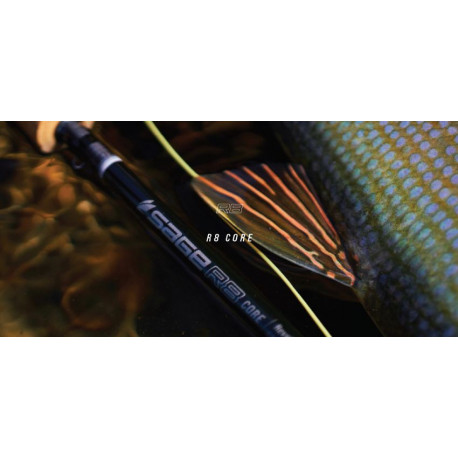
Sage R8 Core
Best for: The all-around steelhead angler who wants one rod that excels across techniques and water types.
The Sage R8 Core is the rod we kept reaching for when we didn’t know exactly what the day would throw at us — and on steelhead rivers, that’s most days. Sage built this rod around their Generation 5 Technology, and whatever they’re doing with the resin system and taper design has produced a blank that manages to feel fast without being harsh, powerful without being stiff, and sensitive without being fragile. It’s a rod that flatters your casting when you’re sharp and forgives you when you’re not.
For swinging flies, the R8 Core loads progressively through the lower third of the blank, generating smooth line speed that turns over sink tips and weighted flies without the jarring tip rebound you feel on cheaper fast-action rods. The casting stroke is intuitive — a clean acceleration to a crisp stop — and the rod does a remarkable job of maintaining loop shape at distance. We consistently hit 65- to 75-foot casts with Skagit heads without feeling like we were muscling the rod.
Switch it to nymphing duty and the R8 Core reveals impressive sensitivity. The tip section registers subtle takes that would vanish in a stiffer blank, and the moderate-fast recovery gives you the mending authority to manage complex drift lanes at range. When a steelhead eats, the mid-section loads deeply and transitions into a fighting tool that protects light tippets while still turning fish away from structure.
The build quality is what you’d expect from Sage — flawless wraps, quality hardware, and a reel seat that locks down without any play. The weight is competitive with rods costing significantly less, which is notable at this price point. The R8 Core isn’t cheap, but it’s the kind of rod you buy once and fish for a decade. If we could only carry one steelhead rod to any river, this is the one in our hands.
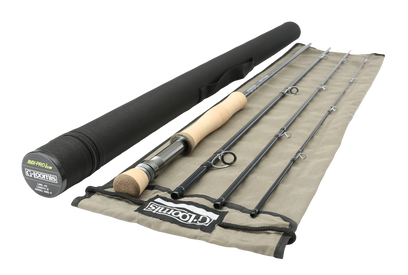
G. Loomis IMX-PRO V2S
Best for: Technical casters who demand maximum line speed, accuracy, and the ability to dominate challenging presentations on big water.
The G. Loomis IMX-PRO V2S is a scalpel in a market full of machetes. This rod is unambiguously fast — not the marketing-copy “fast” that actually means moderate-fast, but genuinely quick in the tip with a blank that only loads deep under deliberate, committed casting strokes. For the angler with refined spey mechanics, it’s a revelation. For the angler still developing their stroke, it’s going to expose every timing flaw you have.
We say that not as criticism but as honest assessment. The IMX-PRO V2S rewards precision. When you time a snap-T or double spey correctly, this rod converts your energy into line speed with almost alarming efficiency. The tight loops it generates cut through the wind conditions that define PNW steelhead fishing — the horizontal rain, the upstream gusts that collapse a lesser rod’s cast. We fished it extensively on the Skagit system during a November blow and it outperformed every other rod in the group at maintaining presentation quality in truly ugly conditions.
Fighting power is exceptional. The blank has a progressive power curve that starts firm in the butt and deepens through the mid-section as a fish loads the rod, giving you serious leverage to steer hot steelhead away from log jams and boulders. We landed a 16-pound buck on the Bogachiel that tried to bury itself in a root wad, and the IMX-PRO gave us the backbone to redirect the fish without going to the reel in a panic.
Where the IMX-PRO V2S loses points relative to the Sage is in forgiveness and feel at close range. Inside 40 feet, the rod doesn’t fully load and the casting experience feels somewhat sterile. Nymphing is functional but not a joy — the tip is just too stiff to register the subtle takes you want to feel when dead-drifting egg patterns through a soft seam. This is a rod optimized for swinging at distance on big water, and if that’s your primary game, it’s arguably the best tool available. Just know what you’re buying: a specialist, not a generalist.
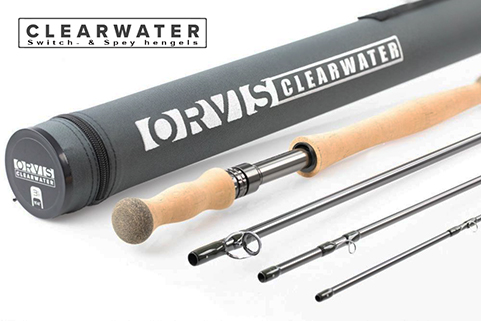
Orvis Clearwater Spey
Best for: Anglers entering the spey game or experienced casters who want a reliable backup rod without the flagship investment.
The Orvis Clearwater Spey is proof that the democratization of fly rod manufacturing has reached spey fishing. Five years ago, getting a two-hand rod that cast this well required spending three times what Orvis is asking for the Clearwater. The game has changed, and this rod is a major reason why more anglers are picking up spey casting than ever before.
We’ll be direct: the Clearwater Spey doesn’t cast like an R8 Core or an IMX-PRO. The blank lacks the refinement and sensitivity of those rods, the recovery speed is a half-beat slower, and you can feel a bit of resonant vibration after the stop that premium rods have engineered out. But here’s what matters — it absolutely gets the job done. The action is genuinely pleasant to cast, with a moderate-fast taper that loads predictably with Skagit and Scandi heads and forgives the timing errors that plague developing spey casters.
During our testing, we handed the Clearwater Spey to three anglers who’d never touched a two-hand rod. All three were making fishable casts within an afternoon. The rod’s action is honest — it tells you when you’re loading it correctly and gently corrects you when you’re not, without the punishing tip bounce that makes some budget rods exhausting to learn on. That quality alone makes it worth every penny for the angler committing to the spey learning curve.
As a fish-fighting tool, the Clearwater holds up better than its price suggests. We landed multiple steelhead in the 8- to 12-pound range without any sense that the rod was outmatched. The reel seat and hardware are Orvis-standard quality — nothing flashy, nothing that’s going to fail. The cork grip could be denser, and we noticed some minor filler after a season of use, but that’s a cosmetic quibble on a rod at this price.
If you’re testing the spey waters, the Clearwater Spey removes the financial barrier without removing the fishing performance. And if you’re an experienced angler who wants a truck rod or a loaner for friends joining you on the river, this is the one to keep rigged and ready.
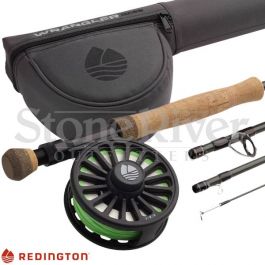
Redington Chromer
Best for: Dedicated swing anglers who want a rod purpose-built for the down-and-across game with sink tips and big flies.
Redington designed the Chromer with a single mandate: swing flies for steelhead. Every taper decision, every material choice, and every design element on this rod serves that purpose. The result is a rod that does one thing exceptionally well — it loads, casts, and fishes sink tips and weighted flies with a fluid authority that makes all-day swinging not just possible but genuinely enjoyable.
The action is best described as progressive with a strong mid-section. The tip loads quickly to handle the weight of sink tips and heavy intruders, then the power transitions smoothly into the lower half of the blank when you commit to the forward stroke. The casting feel is rhythmic and forgiving, which sounds like marketing speak until you’ve fished it for six hours straight and realize your casting shoulder isn’t screaming. The Chromer wants to be fished at a relaxed cadence — step, cast, swing, step — and it rewards that meditative approach to steelhead water.
Where the Chromer truly earns its spot on this list is the value proposition. Redington has managed to build a rod with genuinely good blank performance, quality components, and steelhead-specific design at a price that sits well below the premium competition. The reel seat is solid, the guides are well-placed, and the blank has a clean, professional finish. It’s not a luxury item, but it doesn’t feel like a budget compromise either.
The rod’s limitations are the flip side of its strengths. Because the Chromer is optimized for sink tips and the swing, it’s not our first choice for nymphing or fishing floating lines. The progressive taper doesn’t generate the crisp tip speed you want for tight loops with a Scandi head on the surface, and the mid-section flex that makes it wonderful with heavy tips translates to reduced sensitivity for detecting subtle nymph takes. If you’re building a steelhead quiver and you want a dedicated swinging rod that punches above its price class, the Chromer belongs on the rack. Just pair it with something more versatile for your nymphing days.
Echo Compact Spey
Best for: Anglers who fish tight, brushy steelhead rivers or want the benefits of a two-hand rod in a more portable, maneuverable package.
The Echo Compact Spey occupies a fascinating niche that more anglers should be paying attention to. At lengths ranging from 11 to 12 feet depending on the weight, these rods sit shorter than traditional spey rods but longer than most switch rods, and that sweet spot unlocks water that neither category handles as well alone. If you fish rivers lined with alders, if you hike into remote canyon water, or if you travel with rod tubes that can’t accommodate a 13-foot four-piece, the Compact Spey solves real problems.
We fished the Compact Spey extensively on Oregon coastal streams and Washington’s smaller Olympic Peninsula rivers — the kind of water where a full-length spey rod clanks against the brush on your backcast and a single-hand rod can’t cover the far bank. In those environments, this rod was genuinely superior to either alternative. The shorter length allows you to execute spey casts in spaces that would stymie a longer rod, while still providing enough leverage to throw meaningful line and control your swing at distances beyond single-hand reach.
The blank action is moderate-fast with a surprisingly responsive tip for a rod in Echo’s price range. It pairs beautifully with compact Skagit heads, which are specifically designed for these shorter two-hand rods and generate impressive turnover despite the reduced casting stroke. We threw everything from unweighted wet flies to moderately weighted intruders without any sense that the rod was struggling with the payload.
Fish-fighting performance exceeded our expectations. The shorter lever arm means you’re applying force more directly, and several anglers in our testing group commented that fighting steelhead on the Compact Spey felt more intimate and connected than on a full-length rod. You sacrifice some leverage for turning big fish in heavy current, but on the medium-sized rivers where this rod excels, that rarely proved to be a limiting factor.
Echo’s build quality continues to impress at the price. The components are clean, the rod balances well, and the blank has a durability that inspires confidence on rough-access rivers where your rod takes some bumps. For the angler who fishes smaller or tighter steelhead water, the Echo Compact Spey isn’t a compromise — it’s the optimal tool for the job.
What to Look for in a Steelhead Fly Rod
Buying a steelhead rod involves balancing several variables against your specific fishing style and home water. Here’s what actually matters when you’re making the decision.
Rod Weight
For single-hand rods, 7-weight covers most steelhead applications and 8-weight handles bigger rivers and heavier flies. For two-hand and switch rods, 6- and 7-weight spey designations (which don’t correspond directly to single-hand weights) are the steelhead sweet spot. Go heavier if you’re fishing large rivers with heavy sink tips; go lighter if you primarily fish smaller water with floating lines and light tips.
Action and Recovery
Steelhead rods need enough backbone to turn over heavy lines and fight strong fish, but enough flex to protect the light tippets that winter steelhead often demand. A moderate-fast action is the most versatile choice for most anglers. True fast-action rods reward experienced casters but punish developing ones. Avoid anything described as “slow” — you need recovery speed for mending at distance and controlling a swinging fly.
Length Considerations
Longer rods give you more line control, more mending reach, and more leverage for steering fish. Shorter rods give you more maneuverability in tight spaces and more casting precision at close range. Match your rod length to the rivers you actually fish, not the rivers you dream about.
Build Quality and Durability
Steelhead fishing is hard on gear. You’re fishing in rain, sleet, and near-freezing water. You’re scrambling over boulders, pushing through brush, and occasionally falling in. Your rod needs quality guides that resist corrosion and groove-cutting, a reel seat that locks down and stays locked, and a blank that can handle the occasional impact against a rock or tree. Inspect guide wraps, reel seat hardware, and cork quality before you buy.
Line Compatibility
Your rod choice dictates your line choice, and vice versa. Make sure the rod you’re considering pairs well with the line system you intend to fish. Skagit heads are the most versatile for steelhead and work on nearly everything, but Scandi heads and integrated lines have their place on specific water. Read the manufacturer’s line recommendations, then test the rod with the actual line you plan to fish before committing.
PNW River Recommendations
We fish these rivers constantly, and after years of matching rods to water, here’s our honest take on which rod suits which type of PNW steelhead river.
Big, open rivers (Skagit, Hoh, Queets, Deschutes lower): The G. Loomis IMX-PRO V2S or a full-length Sage R8 Core in a 7-weight spey configuration. These rivers demand distance, line control, and the ability to cover vast runs efficiently. A full spey rod is the right tool here.
Medium rivers with varied structure (Sol Duc, Bogachiel, Sandy, Kalama): The Sage R8 Core in a switch or moderate-length spey is our top pick. These rivers ask you to adapt — nymph a pocket, swing a tailout, roll cast into a slot behind a boulder. Versatility wins.
Small coastal streams and tight canyon water (Oregon coast tributaries, smaller Olympic Peninsula rivers): The Echo Compact Spey was made for this water. Short spey casts in confined spaces, enough power to handle the occasional big fish, and the portability to hike into remote runs.
Budget-conscious or learning anglers on any water type: The Orvis Clearwater Spey paired with a forgiving Skagit head. Learn your casting, develop your water-reading skills, and invest in a premium rod once you know exactly what you want.
Dedicated swing fishing on any river: The Redington Chromer. If you know you’re swinging tips and big flies, this rod delivers the casting feel and fish-fighting performance that the swing game demands at a price that leaves room in your budget for quality lines and flies.
Frequently Asked Questions
What weight fly rod is best for steelhead?
For single-hand rods, an 8-weight is the safest all-around choice, though 7-weights work well on smaller rivers with lighter tips. For two-hand spey and switch rods, a 7-weight (in spey line designations) covers the broadest range of steelhead water and techniques. If you only fish large rivers with heavy sink tips and big flies, consider stepping up to an 8-weight spey. If you primarily nymph on smaller streams, a 6-weight switch rod can be a joy. When in doubt, err toward the middle — a 7-weight spey rod with a versatile Skagit system will fish competently on more steelhead water than any other single setup.
Can I use a regular trout rod for steelhead?
Technically, yes — anglers landed steelhead on bamboo trout rods for decades. Practically, a dedicated steelhead rod makes the experience dramatically better. A 5- or 6-weight trout rod lacks the backbone to effectively cast the heavy tips and flies that steelhead fishing often demands, and fighting a 12-pound fish on an undergunned rod means prolonged fight times that harm the fish. If you’re testing the steelhead waters and don’t want to invest in a dedicated rod yet, an 8-weight single-hand rod intended for bass or light saltwater is a far better starting point than your 5-weight dry fly rod. Your trout rod earned its retirement from steelhead duty.
How much should I spend on a steelhead fly rod?
There’s no minimum dollar amount for catching steelhead, but there is a quality threshold below which rods become frustrating to fish. In the current market, that threshold sits around the $250 to $350 range for entry-level rods like the Orvis Clearwater Spey and Redington Chromer. Below that, blank quality and component durability drop noticeably. Premium rods in the $700 to $1,000 range — like the Sage R8 Core and G. Loomis IMX-PRO — deliver meaningful improvements in casting feel, sensitivity, and longevity that serious anglers will appreciate. Spend what you can comfortably afford, but prioritize the rod over other gear categories. A great rod with a mediocre reel fishes better than a mediocre rod with a great reel.
Do I need a spey rod to fly fish for steelhead?
No, but learning to spey cast will make you a more effective steelhead angler on most water. The practical advantages of spey casting — covering more water with less fatigue, eliminating backcast obstructions, superior line management at distance — are real and significant on the rivers where most steelhead are caught. That said, plenty of anglers catch steelhead exclusively on single-hand rods, especially on smaller rivers where overhead casting and nymphing are the primary techniques. Our recommendation: if you fish rivers wider than 60 feet on a regular basis, invest the time to learn spey casting. The learning curve is real but shorter than most people fear, and the payoff in fish-catching efficiency is substantial.
What’s the difference between a switch rod and a spey rod?
A switch rod is typically 10.5 to 11.5 feet long and designed to be cast effectively with either one hand (overhead) or two hands (spey style). A spey rod is typically 12 to 14 feet long and designed primarily for two-handed spey casting. The practical difference comes down to versatility versus specialization. A switch rod lets you nymph single-handed in the morning and swing flies with spey casts in the afternoon, but it won’t throw line as far or manage heavy tips as efficiently as a dedicated spey rod. A spey rod covers big water with unmatched authority but becomes unwieldy for close-range work and nymphing. Most steelhead anglers eventually own both, but if you’re starting with one rod and you fish varied water types, a quality switch rod is the more versatile first investment.