Finding the best pedal drive fishing kayaks means sorting through a lot of marketing noise. Every manufacturer claims theirs is the fastest, most stable, or most feature-packed hull on the water. We’ve spent hundreds of hours pedaling these kayaks across flats, through current, and into headwinds so you don’t have to guess. Whether you’re chasing redfish in skinny water or trolling for walleye on open lakes, this roundup covers the five pedal drive kayaks that actually earned a spot on our kayak fishing hub recommendations for 2026.
Below, we break down what makes each kayak worth considering, compare the three dominant pedal drive systems head-to-head, and walk through exactly what to look for before you spend $2,000 or more on a pedal-powered fishing platform.
Quick Picks
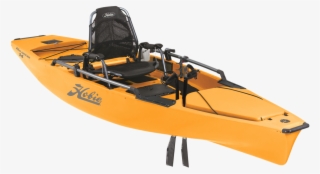
- Best Overall: Hobie Mirage Pro Angler — The benchmark for pedal drive fishing kayaks. Unmatched stability, legendary drive system, premium price.
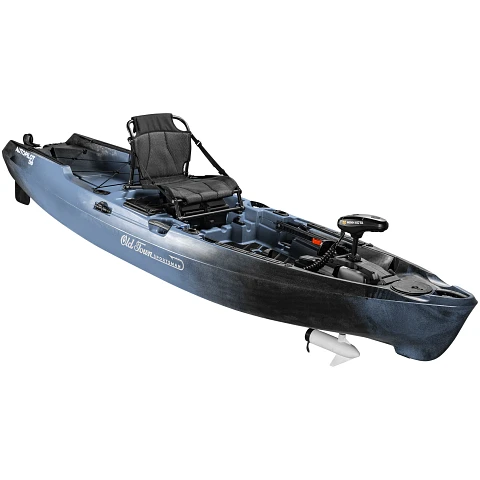
- Best Value: Old Town Sportsman 120 PDL — A complete fishing kayak at a price point that undercuts most competitors without cutting corners.
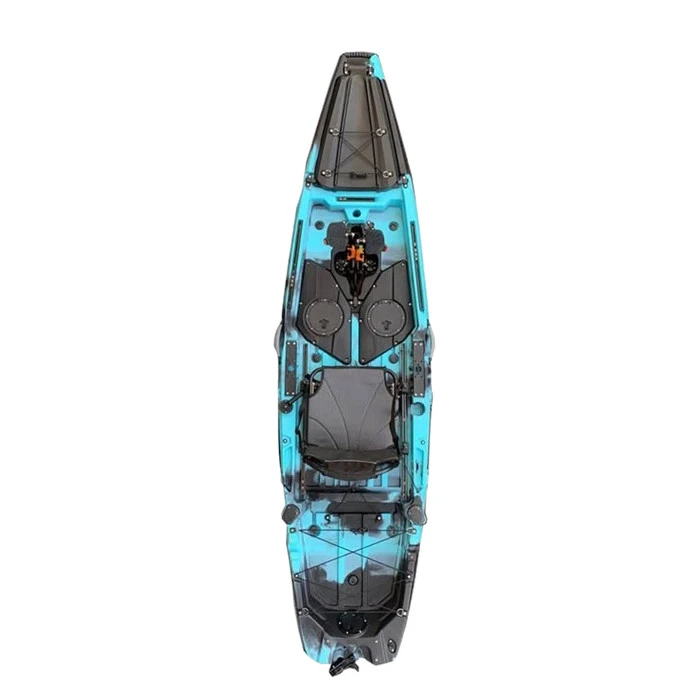
- Best for Standing and Sight Fishing: Bonafide SS127 — Wide, confidence-inspiring platform built from the ground up for anglers who fish on their feet.
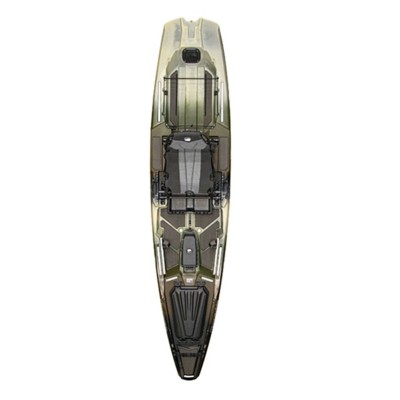
- Best for Big Water and Current: Native Watercraft Titan Propel 12 — Tracks like a longer kayak, handles chop with authority, and the Propel drive is dead simple to maintain.
- Best for Versatility: Wilderness Systems Recon 120 HD — Helix HD pedal drive paired with a hull that performs well across conditions from rivers to coastal bays.
Why Pedal Drive?
If you’ve only fished from a paddle kayak, the first time you pedal into a casting position while both hands work a rod is a genuine revelation. Pedal drive kayaks solve the fundamental problem of kayak fishing: you can’t paddle and fish at the same time.
Beyond hands-free propulsion, pedal drives give you precise boat control in current and wind. You can hold position over a brush pile, make micro-adjustments while working a shoreline, or troll at consistent speeds without putting down your rod. That translates directly into more casts, better presentations, and more fish.
The tradeoff is weight, cost, and draft. Pedal kayaks are heavier, more expensive, and their drive units sit below the hull — meaning you need more water depth than a paddle kayak. For most anglers, those tradeoffs are well worth it. But if you primarily fish water under 10 inches deep, a paddle or motorized kayak might serve you better.
Hobie Mirage Pro Angler
Best for: The angler who wants the most refined, full-featured pedal fishing kayak available and is willing to pay for it.
The Hobie Mirage Pro Angler is the kayak that defined the pedal drive fishing category, and it continues to set the standard everyone else is chasing. At 36 inches wide with a hull designed specifically around the MirageDrive 360, this is a fishing platform first and a kayak second. Stability is extraordinary — most anglers can stand, fight fish, and manage tackle without a second thought about tipping.
The MirageDrive 360 is the star of the show. Full 360-degree pedal steering with kick-up fins that deflect on contact with structure means you can navigate shallow flats, oyster bars, and submerged timber without constantly pulling up the drive. Forward, reverse, and lateral movement are all controlled from the seat, which gives you a level of boat control that borders on unfair. It’s the closest thing to a bass boat you’ll find in a kayak hull.
Hobie doesn’t skimp on the fishing features either. The Pro Angler comes loaded with H-Track accessory rails, multiple rod holders, a massive bow hatch with a removable liner that doubles as a cooler, and Lowrance-ready transducer mounting. The Vantage ST seat is the most comfortable stock seat in the category. Where the Pro Angler loses points is weight — at roughly 130 pounds rigged, you need a cart or a buddy to get it to the water. And at this price point, you’re paying a significant premium over every other kayak on this list. But if budget isn’t the primary constraint and you want the best pedal drive fishing kayak money can buy, this is still the one to beat. Our full Benchmark Score breakdown reflects that dominance across nearly every testing criterion.
Old Town Sportsman 120 PDL
Best for: Anglers who want a capable, well-rounded pedal drive kayak without the flagship price tag.
Old Town’s Sportsman 120 PDL has quietly become one of the most popular pedal drive fishing kayaks in the country, and the reason is straightforward: it does almost everything well at a price that makes sense. The PDL Drive is a forward-and-reverse pedal system that’s intuitive to operate, easy to deploy and retract, and requires minimal maintenance. It won’t give you the 360-degree maneuvering of the MirageDrive, but for the vast majority of fishing situations, forward and reverse with rudder steering is more than sufficient.
Hull stability is excellent for a 12-foot kayak. At 33.5 inches wide, it’s not the widest platform in this roundup, but Old Town’s hull design provides a reassuring secondary stability that lets most anglers stand with confidence once they get comfortable. The modified tri-hull tracks well in open water and handles light chop without feeling squirrelly. It’s a genuinely versatile shape that works on lakes, slow rivers, and protected coastal water.
The Sportsman 120 comes with a clean deck layout, universal transducer mounting, and enough accessory track to customize your rigging without aftermarket drilling. The Element seat is comfortable for full-day outings with a breathable mesh design and multiple adjustment points. At around 100 pounds, it’s manageable for solo loading with a decent cart and roof rack system. Where the Sportsman 120 really shines is the value proposition — you’re getting a complete, fish-ready pedal drive kayak that competes with hulls costing hundreds more. For anglers entering the pedal drive world or those who want a reliable workhorse without the premium markup, the Sportsman 120 PDL is the smart money pick.
Bonafide SS127
Best for: Sight fishing anglers, flats fishing, and anyone who prioritizes a rock-solid standing platform.
The Bonafide SS127 was designed with one mission: give anglers the most stable, fishable deck possible in a kayak hull. At 33.75 inches wide with an ultra-stable catamaran-inspired hull design, the SS127 delivers on that promise emphatically. This is the kayak where you genuinely forget you’re standing on water. The flat, open deck layout gives you an unobstructed casting platform that feels more like a microskiff than a kayak.
Bonafide pairs the SS127 with a reliable fin-based pedal drive system that handles forward and reverse duties cleanly. It’s not the fastest drive on this list, but that’s not the point of this kayak. The SS127 is built for anglers who want to pole into a flat, lock down, and sight-cast to tailing redfish or cruising bonefish. The wide, stable hull sacrifices some speed and tracking efficiency compared to narrower designs, and you’ll feel that tradeoff on long open-water crossings or in significant headwinds.
Where the SS127 excels beyond stability is in thoughtful fishing-specific design. The deck layout gives you ample room for tackle management, the integrated rod holders are positioned intelligently, and the overall build quality reflects Bonafide’s commitment to the serious kayak angler market. Storage is generous, with a large rear tankwell and accessible bow hatch. The seat system is comfortable and provides the elevated seating position that sight fishing demands. If your fishing style centers on shallow water, standing, and precision casting, the SS127 is purpose-built for exactly that. It earns its spot on this list by being the best at what it does, even if it’s not trying to be everything to everyone.
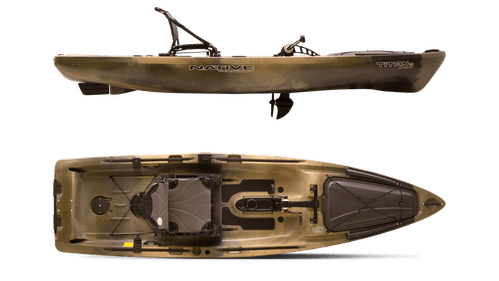
Native Watercraft Titan Propel 12
Best for: Big water, current, wind, and anglers who value tracking and speed alongside stability.
The Native Watercraft Titan Propel 12 is the kayak on this list that most impressed us in rough conditions. Where some pedal drive kayaks feel their width in beam seas and headwinds, the Titan’s hull design cuts through chop with a composure that belies its 34-inch beam. It tracks exceptionally well for a fishing kayak, maintaining a straight line with minimal rudder correction even in crosswinds that had us fighting the rudder on other hulls.
The Propel Pedal Drive is Native’s take on a propeller-based system, and it’s become a favorite among anglers who value mechanical simplicity. There are fewer moving parts than fin-based systems, the prop is protected by a skeg guard, and field maintenance is about as straightforward as it gets. Forward and reverse are smooth and responsive, and the drive generates solid thrust that translates to efficient cruising speeds. It’s not a 360-degree system, but the combination of prop drive and responsive rudder gives you authoritative boat control in the conditions where it matters most — current, wind, and open water.
Stability is strong, with a comfortable standing platform that most anglers will feel confident on after a few outings. The deck layout is practical and well-organized, with ample track for accessories, integrated rod holders, and a large open tankwell. The elevated Titan seat provides good visibility and all-day comfort. The Titan Propel 12 weighs in around 110 pounds, which puts it in the middle of this roundup. For anglers who fish larger bodies of water, deal with current regularly, or want a hull that handles adverse conditions with authority, the Titan Propel 12 is the strongest choice on this list. It’s the kayak we’d pick for a day on a big reservoir in unpredictable spring weather.
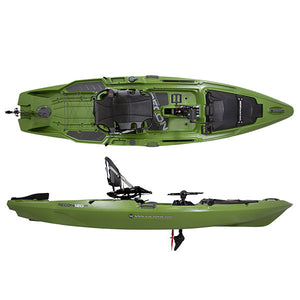
Wilderness Systems Recon 120 HD
Best for: Anglers who fish diverse water types and want a single kayak that adapts to everything from rivers to coastal bays.
The Wilderness Systems Recon 120 HD is the Swiss army knife of this roundup. It’s not the most stable, the fastest, or the most feature-loaded kayak on this list, but it’s the one that performs most consistently across the widest range of conditions. The Helix HD pedal drive is a propeller-based system that delivers reliable forward and reverse thrust with smooth, efficient pedaling. Wilderness Systems has refined the Helix over several generations, and the HD version represents a meaningful improvement in durability and performance over earlier iterations.
The Recon’s hull strikes a deliberate balance between stability and efficiency. At 33 inches wide, it’s the narrowest kayak in this roundup, which means it trades a fraction of standing stability for noticeably better tracking and speed. On the water, that translates to a kayak that covers distance efficiently, handles current well, and still provides a stable enough platform for most anglers to stand and fish with practice. It’s not the kayak for someone whose top priority is a rock-solid standing platform, but it’s the kayak for someone who wants to paddle a river on Saturday and fish a coastal marsh on Sunday without compromise.
Wilderness Systems brings their characteristically thoughtful design to the Recon’s deck layout. The SlideTrax accessory system is versatile, the AirPro Max seat is among the best stock seats in the industry, and the hull has clean lines for easy rigging. Storage is well-distributed with accessible bow and stern hatches. The Recon 120 HD comes in at roughly 105 pounds, making it one of the more manageable kayaks on this list for solo transport. If you need one pedal drive kayak that does everything reasonably well rather than one thing exceptionally, the Recon 120 HD deserves serious consideration. It’s a kayak that won’t hold you back regardless of where you launch it.
Pedal Drive Systems Compared
Not all pedal drives are created equal. The mechanical system propelling your kayak is arguably the most important component of the entire package, and understanding the differences between the three dominant systems will help you make a smarter buying decision.
Hobie MirageDrive 360
The MirageDrive 360 uses oscillating fins (Hobie calls them “fins,” but think flexible underwater wings) to generate thrust. Pedaling moves these fins in a back-and-forth motion that propels the kayak. The “360” designation means you get full omnidirectional control — forward, reverse, and lateral movement — all from the pedal system via a handlebar steering mechanism at the seat.
Strengths: Unmatched maneuverability, kick-up fins that handle shallow water and submerged obstacles, proven reliability with decades of refinement, efficient in shallow draft situations.
Considerations: The fin system has more moving parts than a propeller drive, replacement fins and components are a recurring cost for heavy users, and the MirageDrive is proprietary to Hobie — you’re locked into their ecosystem.
Old Town PDL Drive
Old Town’s PDL Drive is a propeller-based system that provides forward and reverse thrust. Steering is handled by a separate rudder system controlled by hand. The drive unit drops through the hull and is easy to deploy and retract.
Strengths: Excellent reliability with minimal maintenance, straightforward operation, strong thrust-to-effort ratio, competitive pricing on replacement parts, easy to clean and service in the field.
Considerations: No lateral movement capability, the separate rudder control means your hands aren’t completely free when making directional changes, and prop-based systems can snag on vegetation more readily than fin-based designs.
Native Propel Drive
Native’s Propel system is another propeller-based drive with forward and reverse capability. It features a protected prop design with a skeg guard that reduces the chance of prop damage from submerged obstacles.
Strengths: Mechanical simplicity translates to durability and easy maintenance, the protected prop design handles rocky and structured environments well, efficient power delivery, and the system is well-regarded for longevity.
Considerations: Like the PDL Drive, no lateral movement. The prop guard adds some draft depth. Steering relies on a rudder system, so you’re managing two systems (pedal and rudder) rather than the integrated approach of the MirageDrive 360.
The Bottom Line on Drive Systems
If maneuverability and shallow water performance are your top priorities, the MirageDrive 360 is objectively the most capable system. If you value simplicity, reliability, and lower long-term maintenance costs, the propeller-based systems from Old Town and Native are excellent choices that will serve most anglers well. No drive system on this list is bad — the differences are in emphasis and application.
What to Look for in a Pedal Drive Fishing Kayak
Stability vs. Speed
This is the fundamental design tension in every fishing kayak. Wider hulls provide more stability for standing and fighting fish. Narrower hulls track better and move faster with less effort. Most pedal drive fishing kayaks land between 33 and 36 inches wide, and every inch matters. If standing is a priority, lean toward the wider end. If you cover a lot of water, a narrower hull will save your legs over a long day.
Weight and Transport
Pedal drive kayaks are heavy. The lightest kayak on this list is around 100 pounds, and the heaviest approaches 130 pounds rigged. Think seriously about how you’ll get the kayak from your vehicle to the water. A quality kayak cart, a truck with a bed extender, or a trailer setup isn’t optional for most anglers — it’s a necessity. Test your entire loading and transport workflow before you commit.
Draft and Drive Depth
Every pedal drive system extends below the hull, which means you need more water depth than a paddle kayak. Fin-based systems like the MirageDrive generally operate in shallower water than propeller systems, and kick-up fins add a margin of safety. If you fish skinny water regularly, pay close attention to minimum operating depth for the drive system you’re considering.
Seat Quality
You’re going to sit in this seat for 6 to 10 hours. A bad seat will ruin a great kayak. Look for adjustable height, breathable mesh material, lumbar support, and a design that lets you move and shift position throughout the day. The seats on this list range from good to excellent, but aftermarket upgrades are available if your chosen hull’s stock seat doesn’t meet your needs.
Deck Layout and Rigging
Pay attention to where rod holders, tackle storage, electronics, and accessories live on the deck. A clean, well-organized deck makes fishing more efficient and enjoyable. Look for universal accessory track systems that let you customize the layout without drilling into the hull. Consider where your fish finder, anchor trolley, and crate system will mount before you buy — retrofitting a poorly laid-out deck is frustrating and expensive.
Build Quality and Warranty
A pedal drive fishing kayak is a significant investment. Examine the hull material thickness, hardware quality, hatch seals, and drive system construction. Read warranty terms carefully — some manufacturers cover the hull and drive separately, and coverage periods vary significantly. A strong warranty from a company with good customer service is worth factoring into your decision.
Frequently Asked Questions
Are pedal drive kayaks worth the extra cost over paddle kayaks?
For serious fishing, yes. The ability to maintain position, troll, and move through the water while keeping both hands on your rod is a genuine game-changer. If you fish more than a dozen times per year and your primary goal is catching fish rather than simply being on the water, the productivity gains from a pedal drive system will pay for themselves in fishing effectiveness. That said, if you’re on a tight budget or fish very shallow water exclusively, a quality paddle kayak is still a capable fishing platform.
How fast can pedal drive kayaks go?
Most pedal drive fishing kayaks cruise comfortably between 3 and 4 mph with moderate effort. Top speed with sustained hard pedaling is typically 4.5 to 5.5 mph depending on the hull design, drive system, and conditions. That’s meaningful speed for repositioning, trolling, and covering water. You won’t outrun a bass boat, but you’ll move faster and more efficiently than any paddle kayak.
Can you use a pedal drive kayak in shallow water?
Yes, with caveats. Fin-based systems like the MirageDrive can operate in surprisingly shallow water — some anglers report effective pedaling in as little as 12 to 16 inches of depth, especially with kick-up fins. Propeller-based systems generally need a bit more depth, typically 18 to 24 inches minimum. In truly skinny water under a foot deep, you’ll need to retract the drive and use a paddle or push pole regardless of the system.
How much maintenance do pedal drive systems require?
Less than you might think. The most important maintenance task is rinsing the drive system with fresh water after saltwater use. Beyond that, periodic lubrication of moving parts, inspection of fins or propellers for wear, and checking fasteners and cables will keep most systems running reliably for years. Propeller-based systems tend to require slightly less maintenance than fin-based systems due to having fewer moving parts. Budget for occasional replacement parts — fins, props, and cables are wear items that will eventually need replacing with heavy use.
What’s the best pedal drive kayak for beginners?
The Old Town Sportsman 120 PDL is our top recommendation for anglers new to pedal drive kayaks. It offers strong stability, an intuitive drive system, a manageable weight, and a price point that doesn’t require a second mortgage. It’s forgiving enough for new kayak anglers while capable enough that you won’t outgrow it quickly. The Wilderness Systems Recon 120 HD is also an excellent beginner-friendly option if you want more versatility across different water types.
Do pedal drive kayaks work in rivers with current?
Absolutely. Pedal drive kayaks are actually excellent river fishing platforms because you can pedal upstream to hold position, make precise adjustments in current, and cover water methodically. The key is choosing a hull with good tracking — the Native Watercraft Titan Propel 12 is particularly strong in current. Be mindful of your drive unit in rocky, shallow rivers. A propeller-based system with a skeg guard offers better protection in that environment than exposed fins.