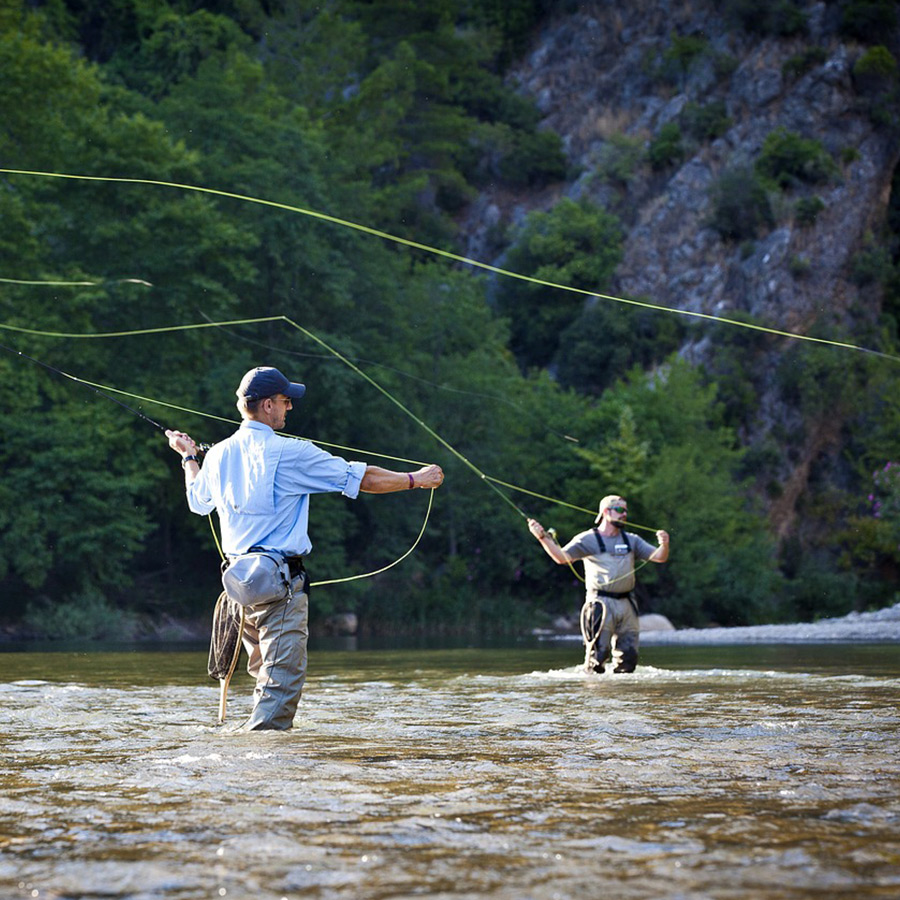
There’s a moment in fly fishing that hooks you forever. It’s not the first cast — that one probably landed in a bush behind you. It’s the moment a wild trout rises to a dry fly you placed softly on a seam, sips it off the surface, and the line goes tight in your hand. Everything slows down. The river, the mountains, the heron standing in the shallows — it all collapses into the electric connection between you and a fish that chose your fly over everything else drifting past.
If you’ve been watching fly anglers from the bank and wondering whether it’s worth learning, we’re here to tell you it absolutely is. Fly fishing is one of the most rewarding ways to experience moving water, and getting started is more accessible than the sport’s reputation suggests. You don’t need a thousand-dollar rod, a vest full of hand-tied flies, or a decade of practice before you catch fish. You need the right fundamentals, a willingness to look foolish for a few sessions, and water to practice on.
We’ve been chasing trout and steelhead across the Pacific Northwest for a combined couple of decades, and we still feel that same electricity every time a fish eats. This guide covers everything a beginner needs to go from curious to confident on the water — gear, casting, reading water, fly selection, etiquette, and specific places to start. For deeper coverage of fly fishing gear and techniques, explore our full fly fishing hub where we review rods, lines, waders, and break down advanced strategies.
Why Fly Fishing Is Worth the Learning Curve
Let’s be honest: fly fishing has a steeper entry barrier than spin fishing. The casting is different, the gear is specialized, and the learning curve is real. So why bother?
Because fly fishing puts you deeper into the experience. Conventional fishing is about getting a lure in front of a fish. Fly fishing asks you to understand the entire system — the insects hatching off the water, the current lanes carrying food to holding fish, the relationship between water temperature and fish behavior. It turns a fishing trip into a puzzle that plays out in real time, and every piece of knowledge you gain makes the next trip more productive and more rewarding.
There’s also the practical side. Fly tackle presents tiny, weightless imitations that spin gear simply can’t deliver. When trout are feeding on size 18 mayflies in a spring creek, a fly rod is the only tool that puts you in the game. When steelhead are holding in a tailout and you need to swing a fly through the bucket at the right depth and speed, nothing else matches the control a fly rod gives you.
And then there’s the community. Fly anglers tend to care deeply about the rivers they fish, the fish that live in them, and the wild places that make it all possible. Walking into this sport connects you to a tradition of conservation and stewardship that runs generations deep in the Pacific Northwest.
Gear Basics: What to Buy First and What to Skip
The fly fishing industry will happily sell you thousands of dollars of gear before your first cast. Don’t let them. Here’s what actually matters for a beginner, what’s worth investing in, and what you can safely ignore for now.
The Fly Rod
Your rod is the most important piece of gear because it determines what line you cast, what flies you can deliver, and what water you can effectively fish. For a beginner, a 5-weight, 9-foot, 4-piece fly rod is the universal starting point. A 5-weight handles everything from small stream trout to modest-sized bass, and the 9-foot length gives you good line control and mending reach without being unwieldy.
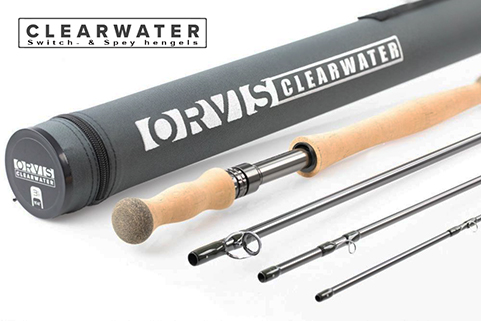
Spend $150 to $300 on your first rod. Rods in this range from Orvis, Redington, and Echo are genuinely well-made tools that cast smoothly and will last for years. You don’t need a $900 rod to learn — in fact, a high-end rod won’t make a beginner cast better. It might actually mask bad habits that a more moderate rod would expose. If you eventually chase steelhead and want to explore two-hand casting, our best fly rods for steelhead roundup covers the dedicated tools for that game, including the Orvis Clearwater Spey as an accessible entry point.
The Reel
Here’s a hot take that will save you money: your reel barely matters for trout fishing. On a 5-weight setup targeting fish under 20 inches, the reel’s job is to hold line and stay out of the way. A smooth, reliable drag is nice, but you’ll be stripping line by hand for the vast majority of fish you hook. Spend $50 to $100 on a reel that balances your rod, has a decent disc drag, and holds your line and backing. Save the premium reel purchase for when you’re chasing steelhead or saltwater species where drag performance is genuinely critical.
Fly Line
This is where beginners should not cut corners. Your fly line matters more than your rod for casting performance. A quality weight-forward floating line in a weight that matches your rod (a 5-weight line on a 5-weight rod) is the only line you need to start. Lines from Scientific Anglers, Rio, and Airflo in the $50 to $80 range cast dramatically better than the bargain-bin options, and the difference is immediately noticeable — smoother loading, better turnover, and less frustration while you’re learning.
A weight-forward floating line handles 90 percent of trout fishing situations: dry flies, nymphs under an indicator, and small streamers in shallow water. When you’re ready for sinking lines and specialized heads for steelhead, our best fly lines for steelhead guide covers the options in detail.
Leader and Tippet
The leader is the tapered monofilament or fluorocarbon section that connects your fly line to your fly. It transfers the energy of your cast down to the fly and provides the invisibility that keeps fish from seeing your line. A 9-foot tapered leader in 4X or 5X is the starting point for most trout fishing.
Tippet is the thin material you add to the end of your leader to extend its life and adjust its diameter. Buy a spool of 4X and 5X tippet — that covers the range from size 10 to size 18 flies, which is where most of your fishing will happen. Fluorocarbon tippet sinks slightly and is less visible underwater than nylon, making it the better choice when fishing subsurface flies. Nylon works fine for dry flies.
Flies
You don’t need 500 flies to start fishing. You need about two dozen that cover the major food groups, and you can buy them at any fly shop for less than the cost of dinner.
Start with this minimal fly box:
- Dry flies (6-8 flies): Elk Hair Caddis (sizes 14, 16), Parachute Adams (sizes 14, 16), Stimulator (size 10) — these cover caddis, mayfly, and stonefly adult imitations
- Nymphs (8-10 flies): Pheasant Tail (sizes 14, 16), Hare’s Ear (sizes 12, 14), Copper John (sizes 14, 16), Pat’s Rubber Legs (size 8) — these represent the subsurface insects that trout eat 80 percent of the time
- Streamers (4-6 flies): Woolly Bugger in black and olive (sizes 8, 10), Muddler Minnow (size 8) — these imitate baitfish, leeches, and large aquatic insects
Walk into any Pacific Northwest fly shop, tell them you’re a beginner, and ask them to build you a starter box for local water. They’ll steer you right, and the conversation alone is worth the trip.
What to Skip for Now
Wading boots and waders are important but not essential for your first few sessions. You can fish from the bank, wade wet in summer, or borrow a pair to test the waters before investing. When you’re ready, quality waders make a massive difference in comfort and access — we reviewed the top options in our best waders for fly fishing guide.
A vest or pack can wait until you have enough gear to justify one. A zip-lock bag with a few flies, a spool of tippet, nippers, and forceps fits in a jacket pocket.
A landing net is nice to have but not critical when you’re catching 10-inch stockers. Add one to the kit when you start consistently hooking fish worth netting.
Learning to Cast: Overhead Cast Fundamentals
Casting is the skill that intimidates most beginners, and it’s the skill that separates frustration from flow once you build it. The good news is that a functional overhead cast — the foundation of all fly casting — can be learned in an afternoon. Mastering it takes longer, but fishing-level competence comes fast with the right mechanics.
The Basic Overhead Cast
The overhead cast has four phases: the pickup, the backcast, the pause, and the forward cast. Every cast you ever make — from a 20-foot trout presentation to a 70-foot steelhead bomb — is built on these four elements.
The pickup: Start with 20 to 30 feet of line on the water in front of you. Grip the rod with your thumb on top of the cork. With a smooth, accelerating motion, lift the rod from the 9 o’clock position to the 1 o’clock position (think of a clock face with 12 o’clock straight overhead). This lifts the line off the water and sends it behind you.
The backcast: The line should unroll behind you in a tight loop. Your rod hand stops crisply at 1 o’clock — this is the most important moment in the cast. If you break your wrist and let the rod drift back to 2 or 3 o’clock, the line drops behind you, hits the ground, and the cast falls apart.
The pause: Wait for the line to fully unroll behind you. This is where most beginners fail — they rush the forward cast before the backcast has straightened. You should feel a slight tug or load on the rod tip as the line reaches full extension behind you. That load is your signal.
The forward cast: Accelerate the rod smoothly from 1 o’clock to 10 o’clock, applying a crisp stop at 10 o’clock. The line shoots forward, the leader turns over, and the fly lands on the water. Lower your rod tip as the line settles.
Common Casting Mistakes
Using your wrist instead of your forearm. Fly casting is a forearm-and-shoulder motion with a wrist accent at the very end — not a wrist flick. If your wrist is doing the work, your loops will be wide, your accuracy will suffer, and your arm will fatigue quickly. Imagine you’re holding a hammer and driving nails at eye level. That forearm motion is your fly cast.
Rushing the backcast. If your fly keeps slapping the water behind you or landing in a pile in front of you, you’re not pausing long enough to let the backcast unroll. Longer line out means a longer pause needed. Turn and watch your backcast for the first dozen casts — seeing the line straighten behind you teaches the timing faster than any verbal instruction.
Too much line out. Start with 20 feet of line beyond your rod tip. That’s it. Master the cast at 20 feet, then add 5 feet at a time. Trying to cast 50 feet on your first day is how people develop bad habits that take months to break.
Gripping the rod too tightly. A death grip on the cork causes tension in your forearm and shoulder that translates to stiff, jerky casts. Hold the rod firmly but not rigidly — like you’re holding a bird. Tight enough that it can’t fly away, loose enough that you don’t crush it.
Practice Without Water
You don’t need a river to learn to cast. A park, a backyard, even a parking lot works. Tie a small piece of yarn to the end of your leader instead of a fly, and practice your overhead cast on grass. Twenty minutes of focused practice three times a week will build a functional cast faster than one marathon session where fatigue degrades your form. Focus on tight loops, crisp stops, and consistent timing.
Reading Water: Where Fish Live in a River
Understanding river structure is the skill that turns a fly caster into a fly angler. Trout don’t distribute themselves randomly — they hold in specific places that provide food, shelter, and rest from current. Learn to read these features and you’ll spend your time casting to fish instead of casting to empty water.
Riffles
Riffles are the shallow, fast, broken-water sections where the river flows over gravel and cobble. The choppy surface hides fish from overhead predators and oxygenates the water. Riffles are insect factories — the gravel substrate harbors enormous populations of mayfly, caddis, and stonefly nymphs. Trout feed aggressively in riffles, especially in the morning and evening. Nymphs fished dead-drift through a riffle are one of the most productive techniques in fly fishing.
Pools
Pools are the deeper, slower sections where the river widens or the gradient flattens. Larger fish tend to hold in pools because the depth provides security and the reduced current lets them conserve energy. The head of a pool — where fast water enters and slows down — is often the most productive zone because food concentrates there as current decelerates and insects tumble in from the upstream riffle.
Runs
A run is the transition between a riffle and a pool — moderate depth, moderate speed, and consistent current flow. Runs are prime trout habitat because they offer the food delivery of a riffle with the depth and comfort of a pool. If you can only fish one type of water, fish runs.
Seams
Seams are the visible boundary lines where fast water meets slow water — along current edges, behind boulders, beside log jams, and at the edges of channels. Trout park themselves on the slow side of a seam and pick off food items that the fast current delivers past their nose. Casting your fly so it drifts naturally along a seam is one of the most reliably productive presentations in all of fly fishing.
A practical approach for beginners: When you arrive at a new piece of river, stand back and observe before you wade in. Look for the seams, identify the head of pools, and note where riffles transition to runs. Start at the tail of a run and work upstream, making short casts to the near water before reaching for the far bank. The fish closest to you are the easiest to spook and the first ones you should target.
Matching the Hatch: Dry Flies, Nymphs, and Streamers
Trout eat insects — a lot of insects. Understanding the basic categories of aquatic bugs and the flies that imitate them is fundamental to knowing what to tie on and when.
Dry Flies: Fishing the Surface
Dry flies imitate adult insects sitting on or emerging through the water’s surface film. Fishing a dry fly is the most visual and visceral form of fly fishing — you watch the fly drift, you see the fish rise, you see it eat. It’s addictive.
When to fish dry flies: When you see fish rising (making rings or splashes on the surface), there’s usually a hatch happening and dry flies are the right call. Even without visible rises, a well-presented dry fly like an Elk Hair Caddis or Parachute Adams can draw fish up on summer evenings and overcast days. Dry fly fishing tends to be best from late morning through evening during warmer months when insect hatches are most active.
Nymphs: Fishing Below the Surface
Nymphs imitate the larval and pupal stages of aquatic insects — the forms that live on the river bottom before they emerge as adults. Here’s the statistic that changes how beginners think about fly fishing: trout eat subsurface food roughly 80 to 90 percent of the time. That means nymphing is the most consistently productive technique in the sport, even though it’s less glamorous than dry fly fishing.
When to fish nymphs: Essentially always, but especially when there are no visible rises. A Pheasant Tail or Hare’s Ear nymph dead-drifted near the bottom under a strike indicator is a fish-catching machine in almost every trout stream on earth. Nymphing is the technique that will catch you the most fish as a beginner, and it’s the method we recommend spending the majority of your early time practicing.
Streamers: Fishing the Big Stuff
Streamers imitate baitfish, leeches, crayfish, and other large prey items. They’re typically fished on an active retrieve — stripped through the water in pulses that mimic a fleeing or injured food source. Streamers attract the largest, most aggressive fish in a river because big trout expend energy on big meals.
When to fish streamers: High or off-color water, early morning, late evening, and overcast days are prime streamer conditions. Streamers excel when visibility is reduced and predatory fish are hunting by feel and vibration rather than sight. They’re also the go-to when nothing else is working — sometimes swinging a Woolly Bugger through a run that seemed dead produces a violent strike from a fish that ignored every nymph and dry fly you threw.
Where to Start Fishing
The right water makes all the difference when you’re learning. You want fish that are willing to eat, conditions that forgive mistakes, and an environment where you can practice without pressure.
Stocked Lakes and Ponds
Stocked stillwater is the easiest place to catch your first fish on a fly rod. Hatchery trout in lakes are less selective than wild river fish, and the lack of current simplifies your presentation. Cast a Woolly Bugger or nymph under an indicator, let it sink, and retrieve slowly. State wildlife departments publish stocking schedules — find a recently stocked lake within driving distance and go.
Easy Rivers and Creeks
Small, low-gradient creeks and rivers with healthy populations of resident trout are ideal for learning to read water and present flies in current. Look for water you can wade easily without feeling pushed around — ankle-to-knee-deep riffles and runs that let you practice casting, mending, and drifting without the complexity of big, powerful rivers.
Guided Trips
A single day with a qualified fly fishing guide compresses weeks of self-taught learning into eight hours. A good guide puts you on fish, corrects your casting in real time, teaches you to read water through their eyes, and builds confidence that sticks. Budget $400 to $600 for a full-day guided trip — it’s one of the best investments a beginner can make in the sport.
Etiquette and Conservation
Fly fishing has a strong culture of respect — for the river, for the fish, and for other anglers. These aren’t arbitrary rules; they’re the practices that keep fisheries healthy and the experience enjoyable for everyone.
Give other anglers space. If someone is already fishing a run, don’t wade in 50 feet upstream of them. Move to unoccupied water or wait. A good rule of thumb on walk-and-wade rivers is to stay at least 100 yards from the next angler. On popular water during a hatch, that distance shrinks, but always ask before entering someone’s stretch.
Walk upstream, fish upstream. The convention on most trout streams is to move upstream as you fish. Walking downstream through water someone is about to fish pushes silt and spooks fish in their direction. If you need to pass an angler, go well around them on the bank rather than wading through.
Practice catch and release properly. Wet your hands before handling fish — dry hands strip the protective slime coat that shields fish from infection. Keep the fish in the water as much as possible. Use barbless hooks (pinch down the barbs on your flies with hemostats) for easier, faster releases. Revive exhausted fish by holding them gently upright in current until they swim away under their own power. If you plan to keep fish for the table, follow all regulations and harvest stocked fish before wild ones.
Pack out everything you carry in. Tippet ends, fly packaging, snack wrappers — all of it leaves with you. We’ve pulled enough tangled monofilament off streamside bushes to know that not everyone follows this principle, but the anglers who care about these places lead by example.
Respect private property. Just because a river holds fish doesn’t mean you have the right to access it from private land. Know the access laws in your state and stick to public access points, easements, and publicly owned riparian corridors.
PNW Beginner Waters: Where to Make Your First Casts
The Pacific Northwest is one of the greatest fly fishing regions on earth, and it has no shortage of beginner-friendly water. Here are four specific recommendations for new anglers getting started.
Deschutes River, Oregon (Lower Section)
The lower Deschutes below Warm Springs is a legendary trout fishery and one of the most beginner-friendly fly fishing rivers in the West. The redsides (a local rainbow trout strain) are aggressive, abundant, and rise willingly to dry flies during the prolific caddis and stonefly hatches from May through October. The river is wide with well-defined riffles, runs, and pools that make reading water intuitive. Multiple public access points and a well-established guide community make the lower Deschutes an ideal first river for a PNW fly angler.
Yakima River, Washington (Canyon Section)
The Yakima Canyon between Ellensburg and Roza Dam is a tailwater fishery that produces consistent hatches and willing trout year-round. The canyon section runs through public land with easy wade access, and the blue-winged olive and caddis hatches can produce dry fly fishing that rivals any river in the region. Flow is regulated by the dam, which means stable, wadeable conditions for beginners even during spring runoff. It’s close to Seattle, well-stocked with wild rainbows and a growing population of cutthroat, and has multiple fly shops in Ellensburg ready to point you at the right water.
Metolius River, Oregon
The Metolius is a spring-fed gem in Central Oregon — crystal-clear, cold, and flowing through old-growth ponderosa forest that makes you forget the rest of the world exists. The trout here are wild, beautiful, and educated, which makes the Metolius a slightly more challenging beginner experience. But the river’s well-marked trails, public campgrounds with direct river access, and manageable size make it a wonderful classroom for learning to read water and present flies delicately. Fish nymphs deep in the morning, watch for the late-morning hatch, and prepare to be humbled by fish that have seen it all.
Stillaguamish River, Washington (North Fork)
The North Fork Stilly is a smaller coastal river with a resident trout population that responds well to attractor dry flies and basic nymphing rigs. It’s less famous than the Deschutes or Yakima, which means less pressure and more room to learn without feeling watched. The river is accessible via several county parks and state land access points north of Arlington, and it fishes well from late spring through fall. It’s also a winter steelhead river, so once fly fishing hooks you — and it will — you’ll already know the water when it’s time to chase chrome.
Common Beginner Mistakes
We’ve made every one of these, and we’ve watched hundreds of new fly anglers make them too. Sidestep these and you’ll progress faster than most.
Casting too far. Most trout are caught within 30 feet. Beginners fixate on distance because it feels impressive, but accuracy at 25 feet catches more fish than a sloppy 50-foot cast. Master the short game first.
Lining fish. Dropping your fly line directly over a fish’s head spooks it instantly. Approach from downstream, cast upstream or across, and let only your leader and tippet pass over the fish’s position.
Ignoring drag. Drag is the unnatural pull on your fly caused by current acting on your line. Even subtle drag makes your dry fly skate or your nymph drift at the wrong speed, and trout reject it immediately. Learn to mend your line — flipping upstream slack into the line after it lands — to extend your drag-free drift.
Wading too aggressively. New anglers wade to the middle of the river because they think the fish are on the far bank. Often the best fish are holding within 10 feet of the bank you just waded through. Start fishing from the bank, then wade only as deep as necessary to reach new water.
Switching flies too often. If you change your fly every five minutes, you spend more time tying knots than fishing. Give each fly a fair trial — at least 15 to 20 good drifts through productive water — before switching. More often than not, the problem is presentation, not pattern.
Not setting the hook. When a trout eats a dry fly, you see it and raise the rod. When a trout eats a nymph, the only indication is a subtle pause, dip, or twitch in your indicator. If you’re nymphing and your indicator does anything other than drift naturally, set the hook. You’ll hook the bottom plenty, but you’ll also hook fish you would have otherwise missed.
Frequently Asked Questions
How Much Does It Cost to Start Fly Fishing?
A functional beginner setup — rod, reel, line, leader, tippet, and a basic fly assortment — runs $250 to $500 depending on quality. Complete outfit kits from Orvis, Redington, and Echo bundle a matched rod, reel, and line for $150 to $300 and are genuinely good tools for learning. Add $20 for tippet and leaders, $30 for a starter fly selection, and $15 for nippers and forceps, and you’re fishing. Waders and boots add $150 to $400 when you’re ready, but they’re not essential for your first few trips. We detail the evaluation criteria we use for every piece of gear on our methodology page.
Can I Teach Myself to Fly Fish?
Yes, but with caveats. Casting is the hardest part to self-teach because bad habits feel normal when you have no reference point. YouTube videos from credible instructors (look for certified casting instructors, not random influencers) can get you started, and an afternoon of focused backyard practice builds a functional cast. That said, a single casting lesson or guided trip accelerates learning dramatically. Many fly shops offer free or low-cost casting clinics in spring and summer — take advantage of them.
What Is the Best Time of Year to Start Fly Fishing?
Late spring through early fall offers the most forgiving conditions for beginners in the Pacific Northwest. Water levels are manageable, insect hatches are active, and the weather is comfortable for long days on the water. May and June are particularly productive because stonefly and caddis hatches push fish to the surface, and longer days give you more time to fish the prime morning and evening windows. That said, fly fishing is a year-round sport in the PNW — winter steelhead, spring trout openers, and fall salmon all extend the season for anglers who are willing to dress for the conditions.
Do I Need to Learn to Tie My Own Flies?
Not to start, and possibly not ever. Fly tying is a deeply rewarding hobby in its own right, but it’s entirely separate from fly fishing. You can buy commercially tied flies that are excellent in quality for $1.50 to $3 each, and a well-stocked fly shop curates patterns for local water that would take a beginner tyer years to replicate. If tying interests you, explore it as a winter hobby — but don’t let it delay getting on the water. Buy flies, go fish.
What Is the Difference Between Fly Fishing and Regular Fishing?
The fundamental difference is what carries the lure to the fish. In conventional (spin or bait) fishing, the weight of the lure pulls the line off the reel during the cast. In fly fishing, the weight of the line carries the fly, which is nearly weightless. This is why fly casting looks and feels so different — you’re casting the line, not the fly. This distinction gives fly anglers the ability to present tiny, delicate imitations that weigh almost nothing, which is why fly fishing excels for species that feed on insects. It also means the tackle, techniques, and approach differ significantly from spin fishing, but the underlying goal is the same: put something that looks like food in front of a fish and convince it to eat.
Fly fishing rewards patience, curiosity, and time on the water above all else. The gear doesn’t need to be expensive, the casts don’t need to be perfect, and the fish are more forgiving than you think — especially when you start on the right water with the right expectations. Pick up a 5-weight, tie on an Elk Hair Caddis, find a riffle with rising fish, and make a cast. Everything else builds from there. Explore our fly fishing hub for gear reviews, technique guides, and everything you need to grow from this foundation.