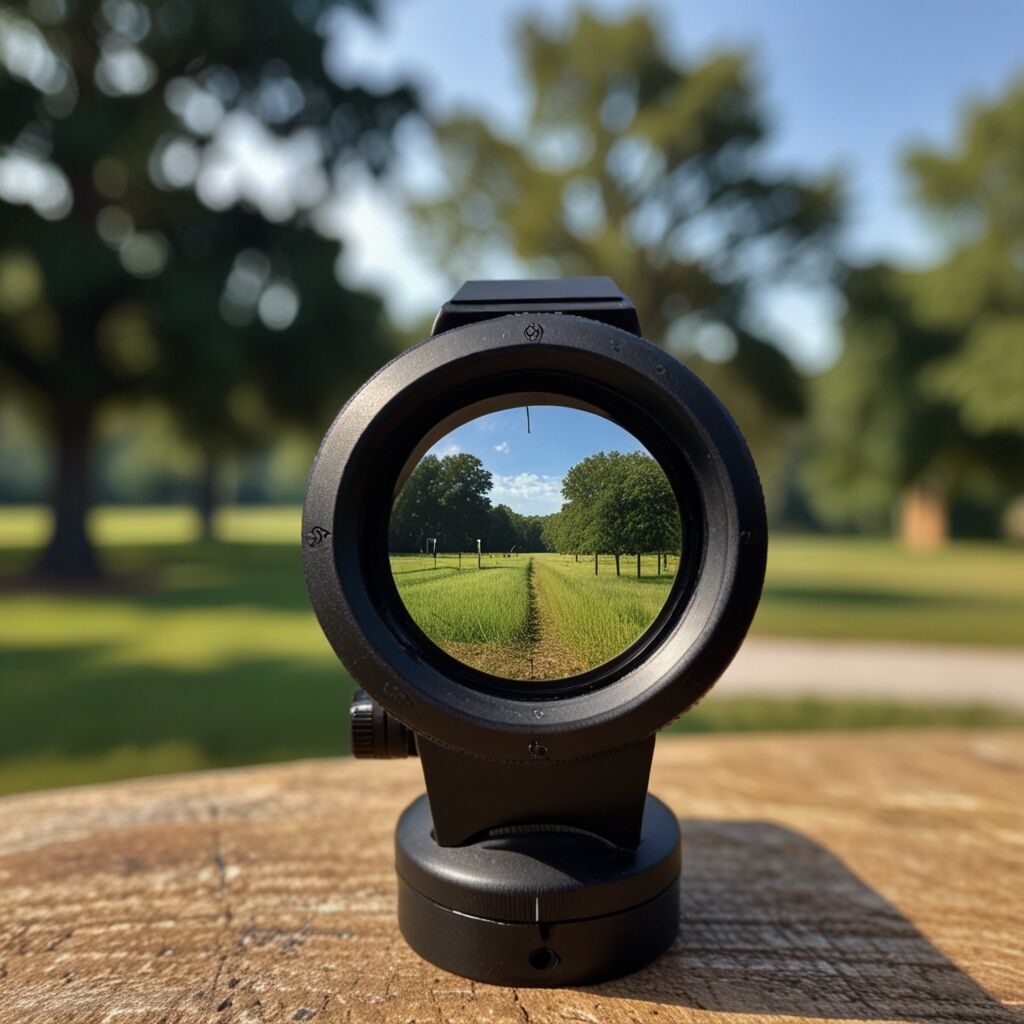
Spending under $500 on a rifle scope used to mean accepting serious compromises — muddy glass, mushy turrets, reticles you couldn’t trust past 200 yards. That’s no longer true. The engineering race between mid-tier optics manufacturers has pushed the performance floor so high that a well-chosen scope in the $300–$500 window now delivers glass clarity, mechanical repeatability, and build quality that would have cost $800 or more five years ago.
We mounted five of the best rifle scopes under $500 on bolt-action hunting rifles and ran them through three seasons of real field use. We shot groups to verify turret tracking. We glassed ridgelines at dawn and dusk to test low-light transmission. We dragged them through rain, snow, and the kind of rough truck rides that expose every weakness in a scope’s construction. The five picks below earned their spots by performing under conditions that matter — not by winning a spec-sheet comparison in a climate-controlled showroom.
If you want to understand how we evaluate gear, our full Benchmark Score methodology explains the process. For a deeper look at choosing the right optic for your rifle, our guide on how to choose a rifle scope covers the fundamentals. And if you’re still building your hunting rifle setup, our roundup of the best bolt-action hunting rifles pairs well with this article.
Quick Picks
- Best Overall: Vortex Viper PST Gen II 3-15x44 — The most complete package under $500. Excellent glass, reliable turrets, first focal plane reticle, and Vortex’s legendary warranty.
- Best for Traditional Hunters: Leupold VX-3HD 3.5-10x40 — Lightweight, crystal-clear American-assembled optics in a proven platform that does exactly what a hunting scope should do.
- Best for Tech-Forward Hunters: Sig Sauer SIERRA3BDX 4.5-14x44 — Pairs with a Sig rangefinder to display a holdover dot in real time. Genuine innovation that works in the field.
- Best Low-Light Performance: Burris Veracity 3-15x50 — The 50mm objective pulls in light like nothing else at this price. Built for timber hunters and last-light shooters.
- Best for Precision-Minded Hunters: Athlon Midas TAC 4-16x44 — Mil-based turrets, zero stop, and tactical features that cross over perfectly for hunters who also shoot long range.
What $500 Actually Gets You in a Scope
The sub-$500 tier is the most competitive segment in the entire rifle scope market right now, and that competition is directly benefiting hunters. Here’s what you should expect from any scope in this range — and what you should walk away from if it doesn’t deliver.
Glass quality. At $500, you should be getting fully multi-coated lenses with at least one element of ED or HD glass in the optical system. This translates to high light transmission, sharp edge-to-edge resolution, and accurate color rendering. You should be able to glass a timbered hillside at dawn and pick out the outline of a deer’s back from the surrounding brush without straining. Any scope at this price that delivers a dim, yellowish, or soft image is behind the curve.
Turret quality. This is where the sub-$500 tier has improved the most dramatically. Five years ago, you had to spend $700 or more to get turrets that tracked reliably through a tall test and returned to zero without shift. Today, several scopes under $500 deliver turret tracking within 1 MOA of adjustment — more than sufficient for any hunting application and good enough for recreational precision shooting. You should expect crisp, tactile clicks with minimal slop and a reliable zero return mechanism.
Reticle options. The sub-$500 market now includes both first focal plane (FFP) and second focal plane (SFP) options with ranging-capable reticles. You’re no longer stuck with a simple duplex. Modern reticles in this tier offer holdover marks, windage references, and subtension values that turn your scope into a genuine aiming system rather than just a magnified crosshair. Whether you need those features depends on your hunting style, and we’ll break down the FFP vs SFP decision later in this article.
Durability. Every scope in this roundup is nitrogen-purged, fog-proof, waterproof, and built on a one-piece tube (either 30mm or 1-inch depending on the model). You should expect a scope at this price to survive being dropped, rained on, frozen, and bounced around in a truck bed without losing zero or developing internal fogging. Most of the major manufacturers now back their scopes in this range with lifetime or transferable warranties.
What you won’t get. No scope under $500 matches the low-light performance, resolution, or mechanical refinement of a $1,200 Leupold VX-6HD or a $1,500 Vortex Razor. The glass will show slightly more chromatic aberration at high magnification. The turrets won’t feel quite as precise. The coatings won’t transmit that last 2-3% of available light. But for the vast majority of hunting shots taken inside 500 yards — which is the vast majority of hunting shots, period — these differences are academic. A well-chosen sub-$500 scope will not be the reason you miss.
Vortex Viper PST Gen II 3-15x44
Best for: Hunters who want a do-everything scope with FFP precision and the best warranty in the business
The Vortex Viper PST Gen II has become the default answer to “what scope should I put on my hunting rifle?” in the sub-$500 category, and after running it through three full seasons, we understand why. It doesn’t dominate any single category the way some specialists do, but it wins by being genuinely excellent at everything a hunting scope needs to do.
The glass is the first thing you notice. Vortex’s XD extra-low dispersion lens elements deliver an image that’s sharp, bright, and color-neutral from center to edge. Chromatic aberration — that purple or blue fringing at high contrast boundaries — is well-controlled through the entire magnification range. At 3x, the field of view is wide enough for quick target acquisition in thick brush. At 15x, the image is detailed enough to read wind mirage on a prairie dog town at 400 yards. The optical quality sits comfortably above anything else at this price and competes with scopes costing $200 more.
The EBR-2C MRAD reticle in the first focal plane is a genuine asset. Because it’s FFP, the subtension values are accurate at every magnification — not just one. This matters for hunters who use holdovers in the field rather than dialing turrets. The hash marks are clean and intuitive, and the center dot is fine enough for precise shot placement without obscuring small targets at distance. If you’re unfamiliar with the differences between MOA and mil-based systems, our MOA vs MIL guide breaks it down.
Turret performance is where the Viper PST Gen II genuinely impresses at this price point. The exposed CRS-Zero Stop turrets are tactile, audible, and track with remarkable precision. We put this scope through a 60-MOA box test and measured less than 0.5 MOA of total deviation — numbers that belong on a scope costing twice as much. The zero stop is positive and easy to set, which means you can dial for a 400-yard shot, take it, and spin back to your 100-yard zero with complete confidence.
Build quality is Vortex through and through: 30mm one-piece tube machined from a single billet of aircraft-grade aluminum, capped turrets that resist bumps and branch strikes, and a matte anodized finish that won’t reflect light during a stalk. At 22.6 ounces, it’s not the lightest option in this roundup, but the weight reflects the robust construction. And then there’s the warranty — Vortex’s unconditional, transferable, no-receipt VIP warranty is the best in the industry. If you break it, they fix or replace it. That policy alone makes the Viper PST Gen II a lifetime investment.
The trade-off is low-light performance. The 44mm objective lens is adequate for most hunting situations, but if you’re consistently shooting in the last five minutes of legal light in heavy timber, the Burris Veracity’s 50mm objective will outperform it. For hunters who operate in open or semi-open terrain where you’re taking your shot with a few minutes of daylight to spare, the Viper PST Gen II’s light gathering is more than sufficient.
Leupold VX-3HD 3.5-10x40
Best for: Traditional hunters who value light weight, bombproof reliability, and American craftsmanship over tactical features
The Leupold VX-3HD is the scope for hunters who don’t want to think about their scope. It does exactly what a hunting riflescope should do — delivers a bright, clear image, holds zero through years of abuse, and weighs next to nothing on top of a mountain rifle. There’s an elegant simplicity to the VX-3HD that the feature-packed competition can’t replicate, and for a large number of hunters, that simplicity is the entire point.
Glass quality is Leupold’s calling card, and the VX-3HD delivers. The Twilight Max Light Management System is Leupold’s proprietary approach to maximizing light transmission across the visible spectrum, and the practical result is an image that stays bright and contrasty deeper into twilight than most of its competitors. We consistently picked up detail at dawn and dusk that we lost through other scopes at this price. Color fidelity is excellent — natural and true without the warm or cool bias that some manufacturers introduce. Edge-to-edge sharpness is strong, particularly for a 1-inch tube scope working with a 40mm objective.
The CDS-ZL2 dial system is a hunting-specific turret design that prioritizes simplicity and reliability. The dial locks to prevent accidental adjustment, lifts to dial elevation, and can be customized with a ballistic turret matched to your specific cartridge and load. It’s not a tactical turret — there’s no zero stop, no exposed windage knob, no sub-tension counting. It’s a hunting turret that lets you set your yardage and shoot. For hunters who take one or two shots a season at a deer standing between 100 and 400 yards away, this is exactly the right tool. If you want to shoot steel at a mile, look elsewhere.
At 12.6 ounces, the VX-3HD is the lightest scope in this roundup by a wide margin. That weight savings matters on a mountain rifle where every ounce compounds over miles of elevation gain. The 1-inch tube and compact profile also mean lower mounting, which translates to a more natural cheek weld and faster target acquisition. The scope handles like an extension of the rifle rather than an accessory bolted on top of it.
Durability is beyond question. Leupold’s scopes are assembled in Beaverton, Oregon, and the VX-3HD undergoes the same battery of shock, vibration, and environmental testing that their military and law enforcement optics face. We’ve seen VX-3HD scopes survive drops to granite, full submersion, and years of bouncing in a saddle scabbard. Leupold’s Full Lifetime Guarantee covers the original owner against defects in materials and workmanship, and their repair turnaround is consistently among the fastest in the industry.
The trade-off is magnification range and feature set. 3.5-10x is ideal for the majority of North American hunting scenarios inside 400 yards, but if you’re shooting in open western terrain where 500-yard-plus shots are realistic, the 10x ceiling may feel limiting. And the absence of a Christmas tree reticle, FFP option, or exposed turrets means the VX-3HD doesn’t cross over well to precision shooting or competitive use. This is a hunting scope, purpose-built. It does that job brilliantly.
Sig Sauer SIERRA3BDX 4.5-14x44
Best for: Hunters who want technology to simplify long-range shooting without mastering ballistic charts and turret dials
The Sig Sauer SIERRA3BDX is the most polarizing scope in this roundup. Some hunters dismiss it as a gimmick. Others call it the most practical innovation in hunting optics in a decade. After running it through two rifle seasons on both a .308 and a 6.5 Creedmoor, we fall firmly in the second camp — with a few caveats.
The BDX system pairs this scope with a Sig Sauer BDX-compatible rangefinder (sold separately) via Bluetooth. You range an animal with the rangefinder, and the scope displays an illuminated holdover dot at the precise aiming point for that distance. The calculation accounts for your cartridge’s ballistics (programmed via the Sig BDX app), angle, temperature, and pressure. You put the dot on the animal and pull the trigger. It sounds too simple to work. It works.
We verified the BDX system’s accuracy against Kestrel-derived firing solutions across distances from 100 to 700 yards with multiple cartridges. The holdover dots were consistently within 0.5 MOA of the Kestrel’s solution — well within the precision required for an ethical shot on game. The dot updates in real time, so if the animal moves and you re-range, the dot adjusts without any manual input. For hunters who want to take ethical shots at 400-plus yards but don’t have the time or inclination to master turret dialing and ballistic tables, this system genuinely delivers.
The glass itself is good — not exceptional, but solidly competitive at this price point. The HDXTM lens system produces a clear, reasonably bright image with acceptable chromatic aberration. Edge sharpness falls slightly behind the Vortex Viper PST Gen II and the Leupold VX-3HD, particularly at the higher magnification settings. Low-light performance is adequate but not a strength. The 44mm objective does its job in most conditions, but the SIERRA3BDX won’t win a twilight shootout against the Burris Veracity.
The turrets are functional SFP hunting turrets with capped adjustments. They’re precise enough for zeroing and occasional field adjustment but aren’t designed for the kind of repeated dialing that tactical scopes invite. The BDX system effectively replaces turret dialing with holdover dots, so the turret design is coherent with the scope’s intended use case.
Here are the caveats. The BDX system requires a compatible Sig rangefinder, which adds $300-$500 to the total investment. The system runs on a battery (CR2032 in the scope), and while battery life is excellent, it’s one more thing to manage in the field. The Bluetooth pairing is reliable but adds a layer of electronic dependency that traditional optics don’t have. And if the electronics ever fail — which they haven’t in our testing, but it’s a possibility — you’re left with a decent but unremarkable SFP scope with a standard BDX reticle. Carry a backup battery and know your basic holdovers.
For hunters who already own or plan to buy a Sig BDX rangefinder, the SIERRA3BDX transforms the rifle-rangefinder combination into an integrated aiming system that genuinely reduces the skill barrier for ethical long-range shooting. It’s not a replacement for marksmanship fundamentals, but it eliminates the math. And in a high-pressure moment when a buck steps out at 380 yards and you have ten seconds to make a decision, eliminating the math has real value.
Burris Veracity 3-15x50
Best for: Hunters who operate in low light, heavy timber, or any situation where gathering every last photon matters
The Burris Veracity 3-15x50 exists because of physics. A 50mm objective lens gathers more light than a 44mm or 40mm objective. At this price point, that simple physical advantage translates to a meaningful real-world difference for hunters who consistently shoot in marginal lighting conditions — and if you hunt whitetail in eastern timber, elk in dark timber, or anything in the Pacific Northwest, that’s you.
We tested the Veracity against every other scope in this roundup during controlled twilight sessions, and the results were unambiguous. The Veracity delivered a brighter, more detailed image in the final 10-15 minutes of legal light than any other scope under $500 we mounted. The advantage isn’t subtle. Looking through the Veracity at last light and then switching to a 44mm scope feels like someone dimmed the lights. For hunters who build their entire strategy around the last half hour of the day — treestand hunters waiting for a mature buck to leave his bedding area, or elk hunters sitting a wallow at dusk — this is the scope.
Glass quality beyond the low-light advantage is strong. The Burris HiLume multi-coated lenses produce a clean, color-accurate image with good contrast. Edge sharpness is slightly softer than the Vortex Viper PST Gen II at maximum magnification, but the center two-thirds of the image is sharp and detailed. Chromatic aberration is well-controlled at lower magnifications and becomes modestly visible at 15x on high-contrast targets. For hunting purposes — identifying game, placing a shot on vitals — the optical performance is more than adequate across the entire zoom range.
The Ballistic Plex E1 reticle is a second focal plane design with windage and elevation holdover marks that correspond to your cartridge’s trajectory. Burris provides a free online tool to match reticle subtensions to your specific load, which adds genuine utility for hunters who want holdover capability without dialing turrets. The reticle is clean and uncluttered at low magnification, which is a practical advantage for quick shots in thick cover. At 15x, the holdover marks provide enough reference points for shots out to 500 yards with most standard hunting cartridges.
The turrets are covered and intended for set-and-forget use. They’re smooth, precise enough for zeroing, and unlikely to get bumped off zero by brush or hard case travel. This is a hunting turret, not a tactical one. If you want to dial for every shot, the Vortex or Athlon will serve you better.
Build quality is solid Burris. The 30mm one-piece tube is robust, the matte finish is understated, and the scope survived our standard abuse testing without any degradation. At 23 ounces, it’s the heaviest scope in this roundup — a consequence of the larger 50mm objective bell. That extra weight and the wider objective also mean you’ll need higher rings to get adequate clearance, which can affect cheek weld depending on your stock. Verify your ring height requirements before buying. Burris backs the Veracity with their Forever Warranty, which covers the scope for the lifetime of the original owner.
Athlon Midas TAC 4-16x44
Best for: Hunters who also shoot precision rifle and want one scope that excels at both
Athlon is the brand that most hunters haven’t heard of yet, and the Midas TAC is the scope that changes that. This is a precision rifle scope that happens to be outstanding for hunting — or a hunting scope with precision rifle credentials, depending on your perspective. Either way, the Midas TAC 4-16x44 delivers a feature set at its price point that borders on unreasonable.
The optical system uses fully multi-coated lenses with advanced ED glass, and the image quality is genuinely surprising for a scope that sells under $400. Center sharpness rivals the Vortex Viper PST Gen II. Color rendering is neutral and accurate. Chromatic aberration is minimal through the lower and middle magnification range and only becomes noticeable at 14x and above on high-contrast targets. The 44mm objective provides adequate light gathering for most hunting scenarios, though it predictably falls behind the Burris Veracity’s 50mm when light gets truly thin.
The APLR3 FFP MOA reticle is feature-rich without being cluttered. It provides holdover references, windage marks, and a ranging ladder that’s genuinely useful for estimating distance when you don’t have a rangefinder handy. Being first focal plane, the subtension values are accurate at every magnification — a feature usually reserved for scopes costing $500 or more. For hunters who use their scope’s reticle for holdovers and wind calls rather than dialing turrets for every shot, the FFP reticle is a significant practical advantage. If you want to understand why that matters, our breakdown of MOA vs MIL scope adjustments is worth a read.
Turret quality is the Midas TAC’s party trick. The exposed, locking turrets feature a precision zero stop that’s intuitive to set and completely reliable in our testing. Clicks are crisp, audible, and tactile. We put the Midas TAC through a 60-MOA box test and measured tracking accuracy that matched scopes costing twice as much. For hunters who like to dial their elevation for a precise shot at known distance, these turrets inspire confidence. The locking mechanism prevents accidental adjustment during carry — a critical feature for a hunting scope with exposed turrets.
At 25.7 ounces, the Midas TAC is moderately heavy but well-balanced on a standard hunting rifle. The 30mm tube and 44mm objective keep the profile manageable. Build quality is excellent — the scope feels like a piece of serious equipment, not a budget compromise. Athlon backs it with a lifetime warranty that covers defects in materials and workmanship.
The trade-off is brand recognition and resale value. Athlon doesn’t have the legacy of Leupold or the marketing reach of Vortex. If you care about the name on your scope or plan to sell it later, that matters. If you care about what you see through your scope and how reliably it performs, the Midas TAC punches so far above its price class that the brand conversation becomes irrelevant. This is, dollar for dollar, one of the best values in hunting optics right now.
Matching Scope Magnification to Your Hunting Style
Magnification choice should follow your hunting, not the other way around. We see too many hunters buying 5-25x scopes for situations where 3-9x would serve them better — and then struggling with a narrow field of view when a buck appears at 40 yards in the brush.
Eastern whitetail and timber hunting (shots under 200 yards). A magnification range of 3-10x or 3-15x covers everything you’ll encounter. Set your scope at 4-6x for most of the sit, crank it up only for longer shots across a food plot. The lower end of the range matters more than the upper end here. A wide field of view at 3x lets you find and track an animal moving through cover. The Leupold VX-3HD at 3.5-10x is purpose-built for this scenario.
Midwestern and Southern mixed terrain (shots from 50-400 yards). This is where 3-15x magnification hits the sweet spot. You have enough low-end zoom for brush encounters and enough top-end magnification for a confident 400-yard shot across a soybean field. The Vortex Viper PST Gen II, Burris Veracity, and Athlon Midas TAC all cover this range perfectly.
Western big game and open country (shots from 200-600+ yards). If you’re hunting mule deer in the sage, pronghorn on the prairie, or elk across a canyon, 4-16x or higher becomes genuinely useful. The Sig Sauer SIERRA3BDX at 4.5-14x and the Athlon Midas TAC at 4-16x are the best picks here. You’ll rarely shoot below 6x, and having 14-16x available for precise shot placement at 400-plus yards is a real advantage. For more context on building a complete hunting rifle setup for western terrain, our hub page covers the broader equipment picture.
Predator calling and varmint hunting (shots from 50-500+ yards). Higher magnification is your friend here. Coyotes are small targets, and prairie dogs are smaller. The Athlon Midas TAC at 4-16x gives you the most top-end magnification in this roundup, and the FFP reticle makes holdover shooting at variable distances fast and intuitive.
FFP vs SFP: Which Focal Plane Matters for Hunting?
First focal plane (FFP) and second focal plane (SFP) describe where the reticle sits in the scope’s optical system, and the practical difference comes down to one thing: reticle subtension accuracy across the magnification range.
First focal plane (FFP): The reticle scales with magnification. At 5x, it appears small. At 15x, it appears large. The advantage is that holdover and windage marks on the reticle are accurate at every magnification setting. You don’t have to be on a specific power to use them. This matters for hunters who shoot at variable distances and use their reticle rather than their turrets to compensate for drop and wind. The Vortex Viper PST Gen II and Athlon Midas TAC in this roundup are both FFP.
The downside: at low magnification, the reticle can appear thin and hard to see in low light or against dark backgrounds. And at high magnification, a feature-rich reticle can feel visually busy and obscure small targets.
Second focal plane (SFP): The reticle stays the same size regardless of magnification. It’s always easy to see, and it never obscures the target. The trade-off is that subtension values on the reticle are only accurate at one specific magnification — usually the highest setting. Use holdover marks at any other magnification and your corrections will be wrong. The Leupold VX-3HD, Sig Sauer SIERRA3BDX, and Burris Veracity are all SFP.
Our take for hunters. If you dial your turrets for every shot, focal plane doesn’t matter for shot execution — buy whichever option has the reticle and features you prefer. If you use holdovers in the field (which most of us do when a deer appears and you have seconds, not minutes), FFP is genuinely more practical because the holdovers work at any magnification. That said, SFP scopes dominate the hunting market for a reason: most hunting shots happen at close enough range that holdover precision is less critical, and the consistent reticle appearance of an SFP scope is simpler to use under pressure.
Neither choice is wrong. But if you’re deciding between otherwise comparable scopes and one is FFP, lean toward it. The flexibility will serve you in more situations over the life of the scope.
Frequently Asked Questions
Is a $500 rifle scope good enough for serious hunting?
Absolutely. The sub-$500 tier has improved dramatically in the last five years. Scopes in this range now deliver optical clarity, turret tracking, and durability that compete with $700-$800 scopes from the previous generation. For shots inside 500 yards — which covers the overwhelming majority of hunting scenarios in North America — a well-chosen scope under $500 will not be the limiting factor in your accuracy. Your marksmanship, your load, and your field craft will matter far more than the last 5% of optical performance that separates a $500 scope from a $1,200 scope.
What magnification range is best for an all-around hunting scope?
For a single scope that covers the widest range of North American hunting scenarios, 3-15x is the sweet spot. It gives you enough field of view at 3x for close encounters in timber and enough magnification at 15x for confident shots out to 500 yards. If you hunt exclusively in thick eastern timber, you can go lower (3-9x or 3.5-10x). If you hunt exclusively in open western terrain, you can go higher (4-16x or 5-25x). But for one scope on one rifle that has to do everything, 3-15x balances versatility and performance better than any other range.
Do I need a first focal plane scope for hunting?
No, but you might want one. FFP scopes offer the advantage of accurate subtension values at every magnification, which matters if you use reticle holdovers in the field. SFP scopes offer a consistent reticle size that’s easy to see in all conditions. Most hunting shots are taken at ranges where the practical difference is negligible. If you’re a hunter who also shoots precision rifle or takes shots past 400 yards with holdovers rather than turret dials, FFP offers a real advantage. For the majority of hunting scenarios inside 300 yards, either focal plane works perfectly well.
How much should I spend on rings and mounting?
Plan to spend $40-$80 on quality rings or a one-piece mount from a reputable manufacturer. Cheap rings are the fastest way to introduce accuracy problems into an otherwise excellent scope-and-rifle combination. Vortex, Leupold, Warne, and Burris all make mounting solutions in this price range that are more than adequate. Make sure your ring height provides clearance for your scope’s objective bell without sitting so high that it disrupts your cheek weld. If you’re unsure, a low or medium ring height works for most 40-44mm objective scopes on standard-profile rifles. The 50mm Burris Veracity may require medium or high rings depending on your stock.
Should I buy my scope online or from a local dealer?
Both have advantages. A local dealer lets you handle the scope, check the glass clarity, and verify that the eye relief works with your shooting position before buying. Online retailers typically offer lower prices and a wider selection. Our recommendation: if you’re choosing between scopes you haven’t handled before, try to visit a dealer or a shooting expo to look through them. If you already know what you want — or you’re buying a brand with an unconditional warranty like Vortex — buying online to save $50-$100 is a reasonable decision. Just make sure you’re buying from an authorized dealer so your warranty is valid.