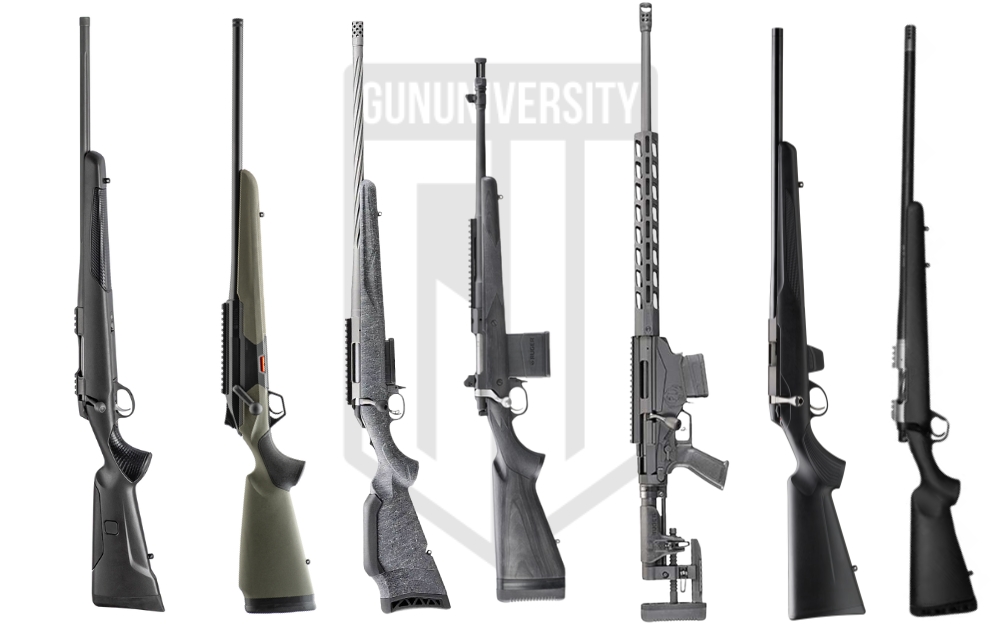
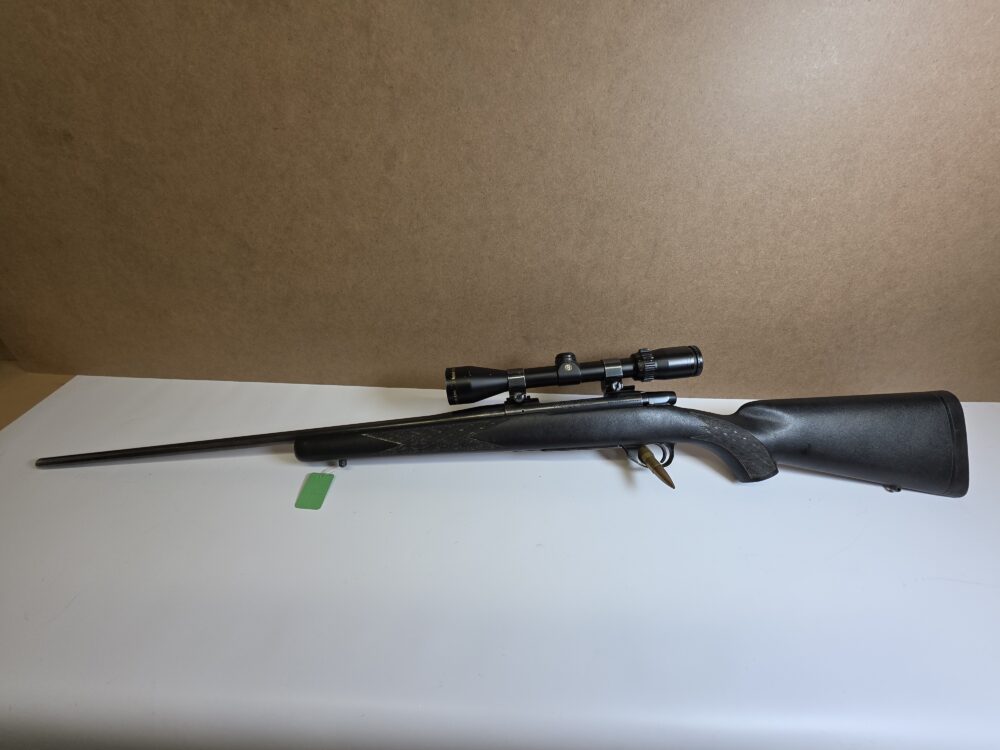
The bolt-action rifle is the most refined tool in a hunter’s arsenal. No semi-auto mechanism to complicate the action, no gas system to foul, no cycling issues in subzero weather. Just a chamber, a bolt, and a trigger — and when those three things are built right, you get a rifle that will outshoot the person behind it for decades.
We’ve carried bolt-action rifles through every conceivable hunting scenario over the past several seasons — tracking whitetail through Michigan hardwoods, glassing and stalking mule deer across Colorado plateaus, sitting freezing blinds for Montana elk, and punching paper at the range until our shoulders told us to stop. The five rifles below represent the strongest options on the market right now across different budgets, use cases, and hunting styles.
If you want to understand how we evaluate gear, check out our full Benchmark Score methodology. For broader coverage of the hunting rifles category, including AR platforms, caliber guides, and accessory reviews, start at the hub.
Quick Picks
- Best Overall: Tikka T3x Lite — Sub-MOA accuracy out of the box with the smoothest factory action on the market.
- Best for Precision Shooting: Bergara B-14 HMR — A purpose-built platform that bridges the gap between hunting rifle and target rig.
- Best Value: Weatherby Vanguard — Weatherby’s SUB-MOA accuracy guarantee at a price that undercuts the competition.
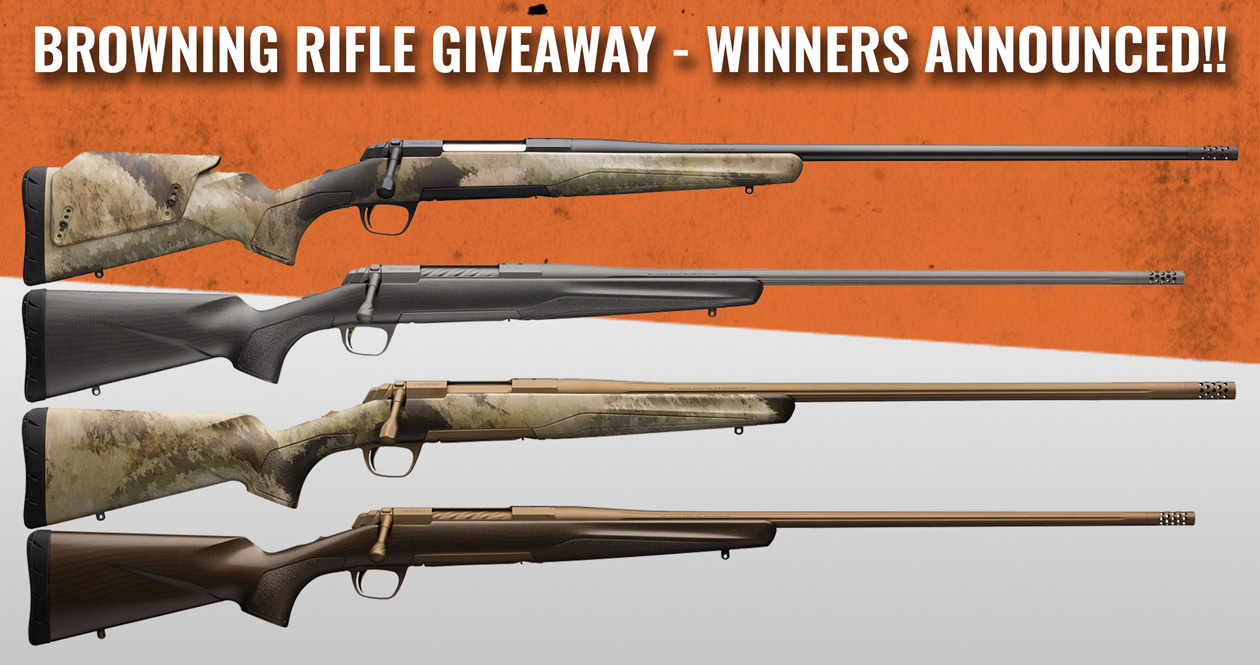
- Best All-Around Feature Set: Browning X-Bolt — Refined ergonomics, a crisp Feather Trigger, and Browning’s legendary fit and finish.
- Best Heritage Pick: Winchester Model 70 — The “Rifleman’s Rifle” still earns its name with a controlled-round-feed action that inspires absolute confidence.
What Makes a Great Bolt-Action Hunting Rifle
Before we get into individual rifles, it’s worth establishing what separates a good bolt-action from a great one. The spec sheet will tell you barrel length, weight, and available calibers. What it won’t tell you is how the rifle feels after carrying it for eight miles, how the bolt cycles when your hands are numb and shaking, or whether the trigger breaks clean enough to let you make a shot at 300 yards without flinching.
We evaluate bolt-action hunting rifles on five core criteria:
-
Accuracy. This is the foundational requirement. A hunting rifle needs to shoot sub-MOA or very close to it with quality factory ammunition. We test at 100, 200, and 300 yards in field conditions — not from a lead sled in a climate-controlled tunnel. Cold bore shots matter more than five-shot groups from a warm barrel, because in the field you almost always get one chance.
-
Action quality. The bolt should cycle smoothly, lock up with authority, and feed reliably regardless of temperature, orientation, or how aggressively you work it. A sticky bolt at the moment of truth is not an inconvenience — it’s a missed opportunity. We evaluate both push-feed and controlled-round-feed designs on their own merits.
-
Trigger. A hunting trigger needs to break cleanly between 2.5 and 4 pounds with minimal creep and zero overtravel. Too light and it becomes a safety concern in the field. Too heavy and it degrades accuracy by forcing the shooter to muscle through the break. The best factory triggers today rival aftermarket units from a decade ago.
-
Weight and balance. Ounces matter when you’re covering ground, but a rifle also needs enough weight to absorb recoil and hold steady from field positions. The sweet spot for a general-purpose hunting rifle is 6.5 to 7.5 pounds without optics. Equally important is where that weight sits — a well-balanced rifle shoulders faster and holds more naturally on target.
-
Value. Not just the sticker price, but what you get for the money. A $600 rifle that shoots MOA and has a decent trigger is a better value than a $1,200 rifle that does the same thing with nicer wood. We respect your gear budget and evaluate accordingly.
Every rifle in this roundup meets our threshold across all five criteria. Where they differ is in emphasis — some lean harder into accuracy, others into weight savings, and others into build quality and refinement. The right choice depends on how and where you hunt.
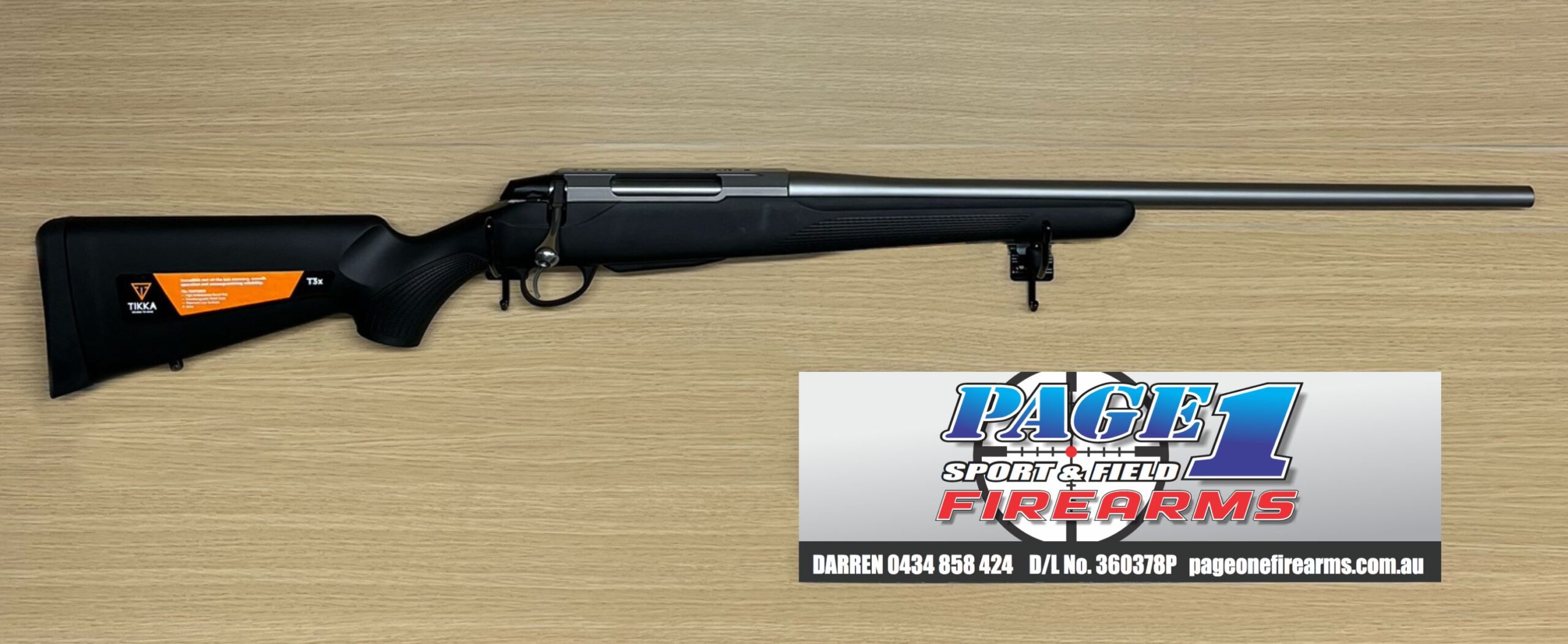
Tikka T3x Lite
Best for: Hunters who want the best out-of-the-box shooting experience under $1,000
The Tikka T3x Lite is the rifle we hand to someone who asks, “If I can only buy one bolt-action hunting rifle, what should it be?” It does everything well and several things exceptionally, which is exactly what you want from a rifle that might be your only centerfire for the next 15 years.
The action is the headline. Tikka’s bolt is famously the smoothest factory action in the hunting rifle world, and it’s not particularly close. The bolt throw is short at 70 degrees, which means faster cycling and more clearance for large objective scopes. The bolt glides through its travel with a buttery consistency that makes every other factory action feel like it needs another hundred cycles of break-in. Feeding is flawless — we ran hundreds of rounds through our test rifles across three calibers and never experienced a single feed or extraction issue, even in temperatures well below freezing.
Accuracy is where the T3x Lite converts skeptics. Our test rifle in 6.5 Creedmoor consistently produced three-shot groups under 0.75 MOA with multiple factory loads, including Hornady ELD-X and Federal Premium Terminal Ascent. The .308 Win version ran slightly larger at 0.85 MOA average but was equally consistent. For a factory hunting rifle at this price point, that level of accuracy is remarkable.
The single-stage trigger deserves specific praise. It’s adjustable from approximately 2 to 4 pounds and breaks with a crispness that belies the rifle’s price tag. Out of the box, ours was set at about 3 pounds with a clean break and short, tactile reset. We’ve shot aftermarket triggers on custom rifles that didn’t feel this good.
At 6 pounds 3 ounces without optics, the T3x Lite lives up to its name. It’s genuinely comfortable to carry all day, and it handles well from standing, kneeling, and seated positions. The synthetic stock is functional if unremarkable — adequate grip texture, a comfortable length of pull, and modular grip inserts for different hand sizes. It’s not going to win beauty contests, but it disappears in your hands when you’re focused on making a shot.
The trade-off for that light weight is felt recoil. In magnum calibers — .300 Win Mag, 7mm Rem Mag — the T3x Lite is snappy. A quality recoil pad or muzzle brake brings it back into comfortable territory, but it’s worth noting if you’re recoil-sensitive or plan to shoot high-volume at the range. In standard calibers like .308, 6.5 Creedmoor, and .270 Win, recoil is perfectly manageable.
Tikka’s detachable magazine is well-designed, clicks in and out cleanly, and holds the rounds securely. Spare magazines are reasonably priced and widely available. The rifle ships with a single magazine, which is standard at this price.
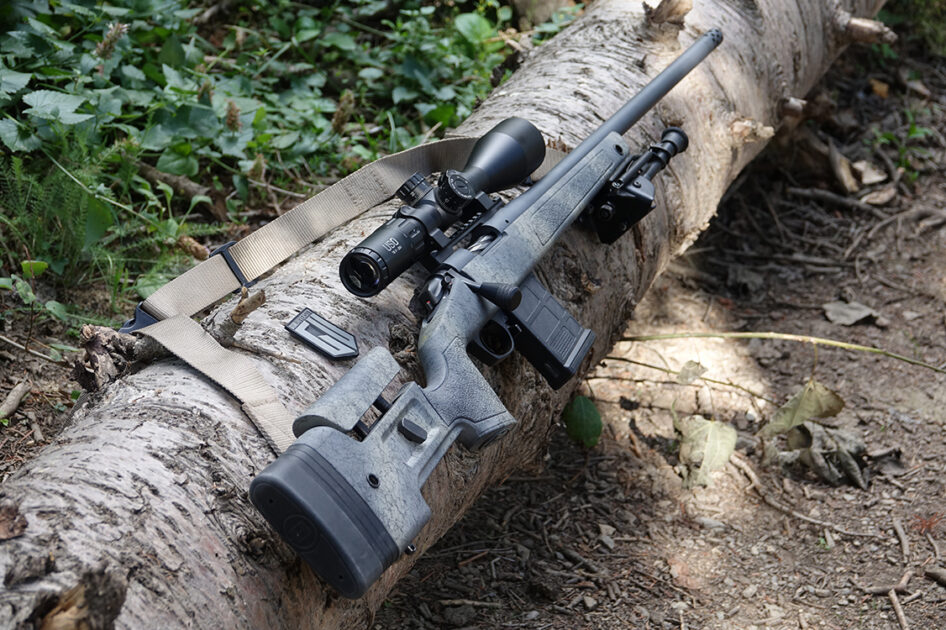
Bergara B-14 HMR
Best for: Hunters who also shoot precision competitions or want a true long-range capable hunting rifle
The Bergara B-14 HMR (Hunting and Match Rifle) occupies a unique and increasingly popular niche — a rifle that’s genuinely capable on a hunt and genuinely competitive on a PRS stage. Most rifles that try to bridge this gap compromise in one direction or the other. The B-14 HMR doesn’t. It’s a legitimate dual-purpose platform, and it’s priced well below what you’d expect for that level of performance.
The heart of the B-14 HMR is Bergara’s 4140 CrMo steel barrel with a proprietary bore and groove profile. Bergara’s heritage is in barrel manufacturing — they’ve been making match-grade barrels for decades — and that expertise shows. Our test rifle in 6.5 Creedmoor produced five-shot groups averaging 0.6 MOA with Hornady ELD Match and 0.7 MOA with hunting loads. The .308 Win version was nearly as impressive at 0.65 MOA average. These are numbers you expect from a custom rifle, not a production gun at this price.
The action is Bergara’s own Remington 700 footprint design, which means aftermarket trigger, stock, and chassis compatibility is massive. The bolt is smooth with a slight utilitarian feel — it doesn’t have the liquid quality of the Tikka, but it’s reliable and consistent. The two-position safety is well-placed and positive in its detent. The cone-shaped bolt nose aids feeding, and we had zero reliability issues across our testing.
Bergara’s B-14 Performance Trigger is adjustable from 1.5 to 4 pounds and ships set at approximately 3 pounds. The break is clean with minimal creep, and it’s consistent shot after shot. It’s one of the better factory triggers on the market, though the Tikka’s offering has a slight edge in crispness.
The mini-chassis stock is where the HMR really separates from traditional hunting rifles. The aluminum bedding block provides a rigid, consistent platform for the action, eliminating the accuracy-robbing flex that plagues some polymer and wood stocks. The adjustable cheek riser lets you dial in a perfect cheek weld for your optic height. The buttpad is adjustable for length of pull via included spacers. An integrated ARCA rail on the forend accepts barricade stops and bag riders for positional shooting.
All of that adjustability and precision comes with a weight penalty. At 9 pounds 2 ounces without optics, the B-14 HMR is the heaviest rifle in this roundup by a significant margin. This is not a mountain rifle. If you’re planning multi-mile backcountry hunts, the weight will wear on you. But for hunters who shoot from blinds, treestands, or established positions — or for anyone who prioritizes accuracy over packability — the extra weight is an asset, not a liability. It soaks up recoil and holds rock-steady from any supported position.
The B-14 HMR ships with a five-round AICS-pattern detachable magazine, which is the industry standard for precision rifles. Aftermarket magazines from Magpul, MDT, and others are widely available and affordable.
Weatherby Vanguard
Best for: Budget-conscious hunters who refuse to compromise on accuracy
The Weatherby Vanguard is the rifle that makes the entire budget hunting rifle segment better by existing. Weatherby guarantees sub-MOA accuracy from every Vanguard — three shots under one inch at 100 yards with Weatherby factory ammunition or premium brand equivalent. That guarantee has been in place for years, and from everything we’ve seen, Weatherby backs it without question. For a rifle that frequently sells in the $550–$650 range, that guarantee alone makes the Vanguard worth a long look.
Our test rifles lived up to the promise. The Vanguard in .30-06 Springfield averaged 0.9 MOA across multiple factory loads, with its best group — Hornady Precision Hunter 178-grain ELD-X — printing 0.62 MOA at 100 yards. The .270 Win version was similarly impressive, averaging 0.85 MOA. These are honest, field-condition numbers, not cherry-picked groups from a perfect day at the bench.
The action is a push-feed design with a Mauser-inspired claw extractor. It’s smooth enough for field work, though it doesn’t have the refined feel of the Tikka or the X-Bolt. There’s a slight grittiness to the bolt throw on a new rifle that smooths out after 50 to 100 cycles, which is typical for this price range. Feeding and extraction are reliable. The three-position safety — fire, mid-safe (bolt can be cycled), and full safe — is a thoughtful inclusion that many competitors lack at this price.
Weatherby’s two-stage trigger is adjustable from approximately 2.5 to 5 pounds. Out of the box, it’s set around 3.5 pounds with a discernible first stage and a reasonably clean break. It’s not in the same league as the Tikka or Bergara triggers — there’s a touch more creep before the break, and the reset is a bit mushier. It’s perfectly adequate for hunting purposes, and most shooters won’t notice the difference in the field, but trigger snobs will want to budget for a Timney or TriggerTech replacement down the road.
The synthetic stock on the base Vanguard model is serviceable without being exciting. It’s lightweight, weather-resistant, and has adequate grip texture. The Monte Carlo cheek piece provides a decent weld. Several Vanguard configurations come with upgraded stocks — the Vanguard Wilderness, for instance, features a Hogue overmolded stock with a full-length aluminum bedding block that significantly improves both ergonomics and accuracy potential. If you can swing the extra $100–$150 for a Wilderness model, it’s money well spent.
At 7 pounds 2 ounces in the standard synthetic configuration, the Vanguard sits right in the middle of our weight range — heavy enough to absorb recoil comfortably in standard calibers, light enough for reasonable carries. It balances well and shoulders naturally.
The Vanguard’s caliber selection is one of the broadest in its class, covering everything from .223 Remington to .300 Weatherby Magnum. If you hunt with an oddball caliber or want something specific for your intended game, the Vanguard probably comes in it.
Browning X-Bolt
Best for: Hunters who appreciate refined ergonomics and polished mechanical execution
The Browning X-Bolt is the rifle for hunters who notice the details. Not the details on a spec sheet — the details in the hand. The way the bolt handle sits exactly where your thumb falls. The way the tang safety clicks with precision. The way the stock contour feels like it was designed around a human body rather than optimized for CNC efficiency. Browning has been making sporting firearms since 1878, and that institutional knowledge is embedded in every surface of the X-Bolt.
The Feather Trigger is the X-Bolt’s calling card. It’s a factory trigger that breaks like glass at approximately 3.5 pounds with effectively zero creep and zero overtravel. The pull weight is adjustable from 3 to 5 pounds, and the mechanism is so clean that many X-Bolt owners never feel the need to explore aftermarket options. In our testing, the Feather Trigger was the most consistently crisp unit across multiple rifles — every sample we tested broke cleanly with identical character. That kind of quality control in a factory trigger is noteworthy.
Accuracy is strong, though the X-Bolt doesn’t quite match the Tikka or Bergara for absolute precision. Our test rifle in .30-06 averaged right at 1 MOA with its preferred loads (Federal Premium 165-grain Nosler Partition and Hornady Precision Hunter 178-grain ELD-X), with occasional groups dipping into the 0.7 MOA range. The .308 Win version was slightly tighter at 0.9 MOA average. These are perfectly adequate numbers for any realistic hunting scenario — if your rifle shoots 1 MOA, the limiting factor on shots inside 400 yards is your skill, not the rifle’s capability.
The bolt design features a short 60-degree throw — the shortest of any rifle in this roundup — which translates to lightning-fast cycling. The bolt itself is fluted, reducing weight and improving debris clearance. The unlock and lock-up feel positive and authoritative. Feeding is via a rotary magazine that sits flush with the stock, maintaining clean lines and preventing snag points. The rotary design feeds cartridges smoothly regardless of orientation, which is a meaningful advantage over some detachable box magazine designs.
The X-Bolt’s stock, even in the base composite configuration, is a step above the competition in terms of ergonomics. The grip angle, comb height, and forearm profile are refined through what feels like extensive ergonomic testing. The Inflex recoil pad is one of the best factory pads on the market — it redirects recoil force down and away from your cheekbone, reducing felt impact noticeably compared to a standard rubber pad. In magnum calibers, this pad makes a real difference.
Weight varies by configuration, but the standard composite model comes in at approximately 6 pounds 9 ounces — right in the sweet spot for an all-day carry. Balance is excellent, with the weight centered between the hands for a natural, responsive feel. The X-Bolt shoulders fast, and it points instinctively — qualities that are difficult to quantify on a spec sheet but immediately apparent in the field.
The X-Bolt’s main limitation is price. Base models start around $850 and quickly climb past $1,000 with upgraded stock options. You’re paying a premium for Browning’s fit, finish, and ergonomic refinement. Whether that premium is worth it depends on how much you value the shooting experience beyond raw accuracy. For hunters who appreciate a rifle as a finely made tool rather than a commodity, the X-Bolt delivers.
Winchester Model 70
Best for: Hunters who demand a controlled-round-feed action and proven reliability in any condition
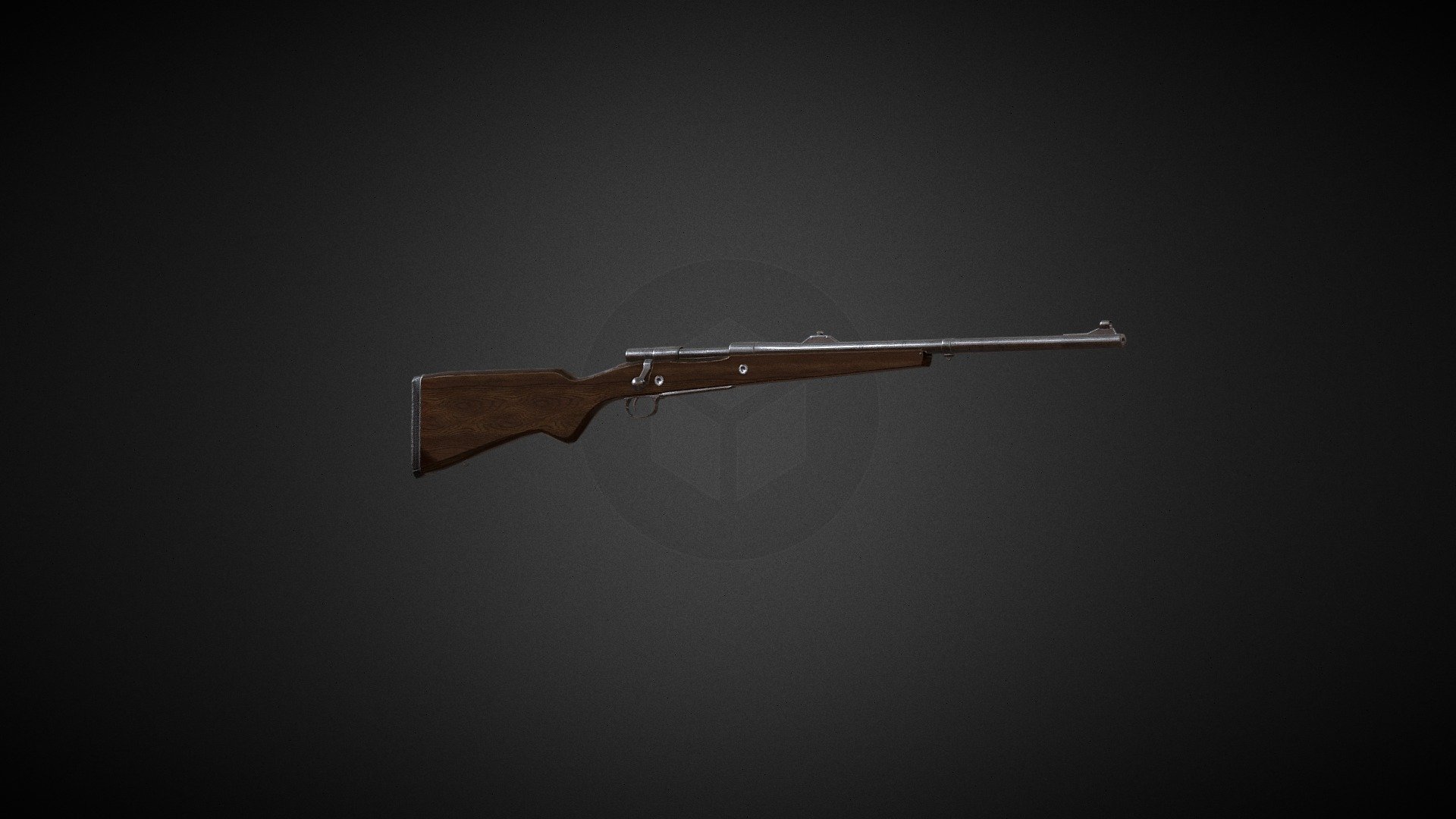
The Winchester Model 70 has been called “The Rifleman’s Rifle” since the 1930s, and the current production version — manufactured by FN Herstal in their Columbia, South Carolina facility — honors that legacy fully. This is a rifle built on mechanical principles that have been proven in the field for nearly a century, executed with modern manufacturing precision.
The defining feature is the controlled-round-feed (CRF) action. Unlike push-feed designs that guide the cartridge into the chamber with feed rails, the Model 70’s Mauser-type extractor grabs the cartridge rim the moment it leaves the magazine and maintains positive control through the entire feeding, chambering, and extraction cycle. The practical benefit is absolute reliability. You can cycle the bolt slowly, quickly, upside down, or at any angle, and the cartridge will feed and extract positively every time. For dangerous-game hunters, this has always been the gold standard — but the reliability advantage applies equally to a whitetail hunter working the bolt with numb fingers at dawn.
The three-position safety is another classic Model 70 element done right. The wing-type safety on the bolt shroud provides three distinct positions: fire, safe with bolt locked, and safe with bolt free to cycle. The detents are positive and audible — you always know which position you’re in, even with gloves, even in the dark. It’s one of the most intuitive safety designs ever put on a bolt-action rifle.
The MOA Trigger System replaced the older Model 70 trigger several years ago and brought the rifle firmly into the modern era. It’s adjustable from 3 to 5 pounds and breaks cleanly with just a hint of take-up before a crisp release. It’s not quite as refined as the Browning Feather Trigger or the Tikka’s unit, but it’s a significant improvement over previous Model 70 triggers and entirely adequate for precision field shooting.
Accuracy is solid. Our test rifle in .30-06 averaged 1.1 MOA with factory ammunition, tightening to 0.85 MOA with handloads tailored to the barrel’s preferences. The .300 Win Mag version came in at 1.0 MOA average with factory loads. The Model 70 isn’t the tightest-shooting rifle in this roundup, but it’s consistently accurate — the kind of rifle that puts every shot into a predictable group without fliers or surprises.
The Model 70 is available in several configurations. The Featherweight, at 6 pounds 12 ounces, is our pick for a do-everything hunting rifle. The satin-finished walnut stock is attractive and functional, with a Schnabel forend that provides a secure grip and a classic profile. The Super Grade adds AAA French walnut, a shadowline cheek piece, and hand-polished bluing for hunters who want heirloom-level aesthetics. The Extreme Weather model swaps in a composite stock with a textured surface for maximum weather resistance.
The Model 70’s heritage is both its greatest strength and its most common objection. Some hunters view it as old-fashioned — a mechanical design rooted in a previous century. We’d argue the opposite. The CRF action, three-position safety, and overall mechanical integrity represent a design philosophy that prioritizes function over novelty. Nothing about the Model 70 is trendy. Everything about it works.
Caliber Considerations by Game Type
Choosing the right caliber is as important as choosing the right rifle. Here’s how we think about cartridge selection matched to game.
Whitetail deer and pronghorn. The classic deer cartridges — .308 Win, .270 Win, .30-06 Springfield, and 6.5 Creedmoor — all work beautifully. The 6.5 Creedmoor has surged in popularity for good reason: low recoil, flat trajectory, and excellent terminal performance with modern expanding bullets. The .308 Win remains the most versatile and widely available option. If you’re a new hunter buying your first rifle, .308 Win or 6.5 Creedmoor in any of these five platforms will serve you extremely well.
Elk, moose, and large North American game. Step up to cartridges with more energy and heavier bullet options. The .30-06 is the historic standard and still one of the best elk cartridges available — it pushes 180-grain bullets fast enough for reliable expansion at distance while delivering deep penetration on heavy-boned animals. The .300 Win Mag adds velocity and reach for longer shots in open country. The 7mm Rem Mag threads the needle between flat trajectory and terminal authority. All five rifles in this roundup are available in at least two of these calibers.
Varmint and predator hunting. For coyotes, foxes, and prairie dogs, lighter and faster is the priority. The .223 Remington and .22-250 Remington are the dominant choices. Not all of these five rifles are offered in dedicated varmint calibers — the Tikka T3x platform has the broadest small-caliber selection.
Dangerous game. For bear, particularly grizzly and brown bear at close range, consider the .338 Win Mag or .375 H&H. The Winchester Model 70 has the strongest pedigree here, with its CRF action providing the absolute feed reliability you want when the animal bites back. The Weatherby Vanguard is also available in .338 Win Mag at an accessible price point.
Multi-species versatility. If you need one rifle for everything from whitetail to elk, the .30-06 Springfield remains the most versatile hunting cartridge ever designed. It can push a 150-grain bullet fast enough for deer at 300 yards and a 200-grain bullet hard enough for elk in the timber. Pair it with any rifle in this roundup, learn to shoot it well, and you’ll never run into a legal North American game animal you can’t ethically harvest.
For help pairing the right optic with your chosen rifle and caliber, see our guide on how to choose a rifle scope.
What to Look for When Buying a Bolt-Action Hunting Rifle
Beyond the five rifles we’ve reviewed, these are the criteria that should guide any bolt-action purchase decision.
Action Type: Push-Feed vs. Controlled-Round-Feed
Push-feed actions (Tikka, Bergara, Weatherby) are generally smoother, lighter, and less expensive to manufacture. CRF actions (Winchester Model 70) provide positive cartridge control throughout the feeding cycle. For the vast majority of hunting scenarios, both designs are equally reliable. CRF has a genuine advantage in dangerous-game situations where absolute feed reliability under stress is critical. For deer, elk, and general big-game hunting, choose whichever action type feels better in your hands.
Stock Material and Bedding
Synthetic stocks are the practical choice for most hunters — they’re impervious to moisture, temperature-stable, and durable against the inevitable dings and scratches of field use. Wood stocks are beautiful and can be functionally excellent, but they require more care and can shift point of impact with humidity changes. Regardless of material, a properly bedded action is essential for consistent accuracy. Aluminum bedding blocks (found in the Bergara B-14 HMR and higher-end Weatherby Vanguard configurations) provide the most rigid, consistent platform.
Barrel Length and Contour
Standard hunting barrels run 22 to 24 inches in non-magnum calibers and 24 to 26 inches in magnum calibers. Shorter barrels are lighter and more maneuverable in dense cover. Longer barrels extract more velocity, which matters at extended range. For most hunters, a 22-inch barrel in standard calibers is the best compromise. Barrel contour — sporter, medium, or heavy — affects both weight and heat dissipation. Sporter-contour barrels are lightest but heat fastest, which can open groups during extended shooting sessions. For hunting, where you’re firing one to three shots, sporter contour is almost always the right call.
Scope Mounting
Ensure your chosen rifle accepts the scope rings or bases you plan to use. Most modern bolt-actions use either Weaver/Picatinny or proprietary mounting systems. The Bergara B-14 uses a Remington 700 footprint, giving you access to the largest aftermarket ecosystem. The Tikka uses its own rail system, which is excellent but more limited. Check compatibility before you buy the rifle, not after.
Recoil Management
Consider your recoil tolerance honestly. A rifle that’s punishing to shoot is a rifle you won’t practice with, and practice matters more than any gear specification. If you’re sensitive to recoil, choose a standard caliber in a moderate-weight rifle and add a quality muzzle brake. A .308 Win or 6.5 Creedmoor with a brake and a good recoil pad is genuinely pleasant to shoot, even from the bench.
Frequently Asked Questions
What is the most accurate bolt-action hunting rifle under $1,000?
The Tikka T3x Lite and Bergara B-14 HMR both deliver sub-MOA accuracy consistently with factory ammunition. The Bergara edges out the Tikka in absolute precision — our test rifles averaged 0.6 to 0.7 MOA versus the Tikka’s 0.75 to 0.85 MOA — but the Tikka achieves its accuracy in a significantly lighter and more packable platform. Either rifle will outshoot the vast majority of hunters at any distance they should be taking a shot.
Is the Winchester Model 70 controlled-round-feed action worth the extra cost?
For most hunting scenarios, the CRF action’s reliability advantage over modern push-feed designs is marginal. Both feed types are functionally reliable. The CRF action earns its premium in two situations: dangerous-game hunting (where a malfunction has life-or-death consequences) and extreme cold weather (where positive cartridge control adds peace of mind). If you hunt in mild conditions and pursue non-dangerous game, a push-feed rifle will serve you equally well at a lower price.
What is the best caliber for a first bolt-action hunting rifle?
For a general-purpose first rifle aimed at deer-sized game and smaller, the 6.5 Creedmoor is hard to beat. It offers mild recoil that encourages practice, flat trajectory, excellent long-range ballistics, and a wide selection of quality factory ammunition. If you want more versatility to cover larger game like elk in the future, the .308 Winchester or .30-06 Springfield are the time-tested answers. All five rifles in this roundup are available in at least one of these three calibers.
How important is trigger quality in a hunting rifle?
Critically important. The trigger is the final mechanical interface between your decision to fire and the bullet leaving the barrel. A heavy, gritty trigger with excessive creep forces you to muscle through the break, which degrades accuracy by introducing movement at the worst possible moment. A clean trigger lets you press through the break smoothly while maintaining your sight picture. Every rifle in this roundup has at least an adequate factory trigger, and the Tikka T3x and Browning X-Bolt have excellent ones. If your chosen rifle’s trigger doesn’t satisfy you, a quality aftermarket replacement from Timney or TriggerTech runs $100–$150 and is one of the highest-impact upgrades you can make.
Should I buy a lighter or heavier bolt-action rifle for hunting?
It depends on how you hunt. If you cover miles on foot — backcountry western hunts, mountain terrain, public-land walk-in areas — every ounce matters. A rifle under 7 pounds (like the Tikka T3x Lite at 6 pounds 3 ounces) will significantly reduce fatigue on long days. If you hunt from a blind, treestand, or drive close to your stand, weight is less critical and a heavier rifle (like the Bergara B-14 HMR at 9 pounds 2 ounces) gives you a steadier shooting platform and less felt recoil. Most hunters are best served in the 6.5 to 7.5 pound range, which offers a workable balance of portability and stability.
Quick Buy — Products in This Article