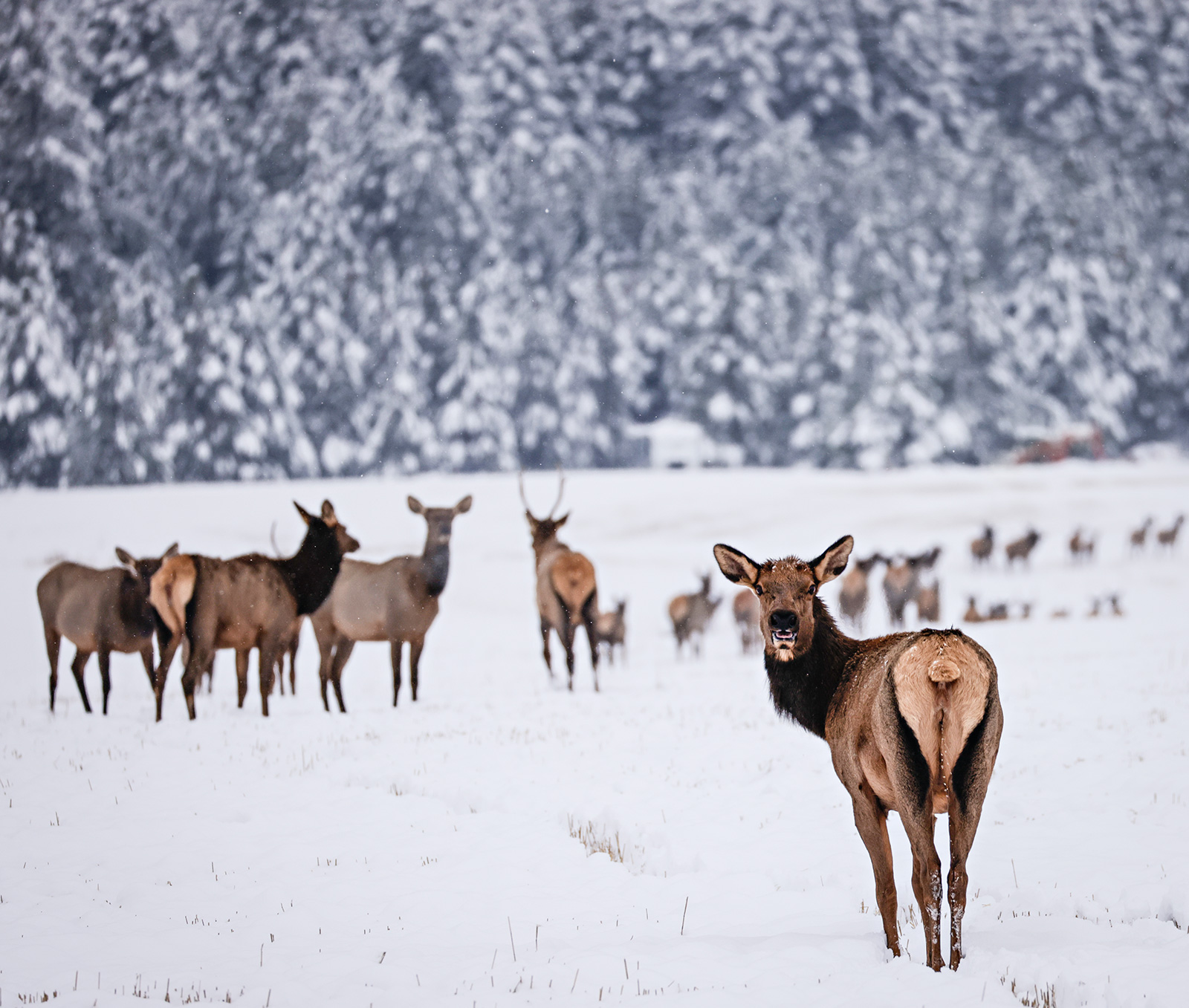
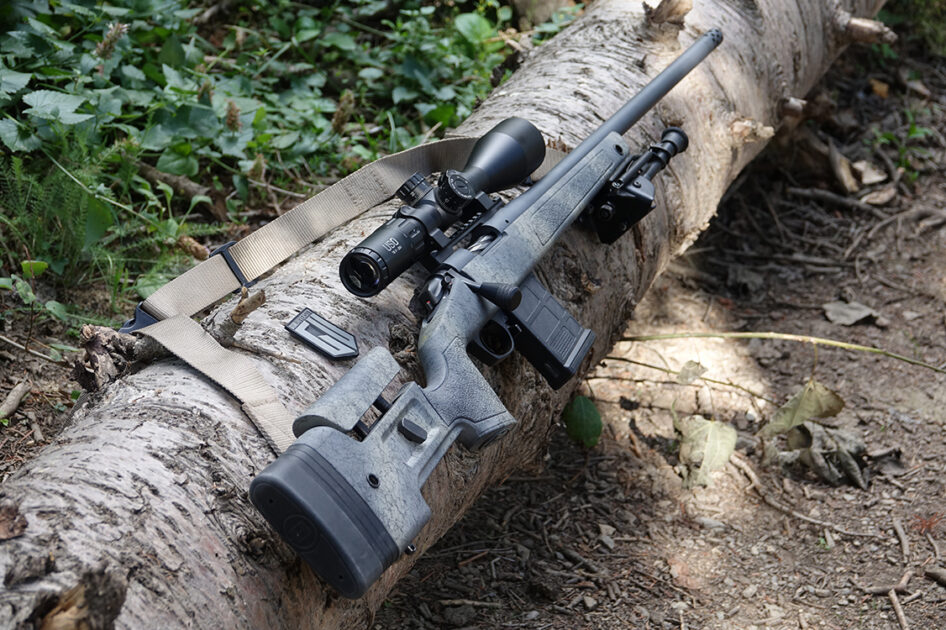
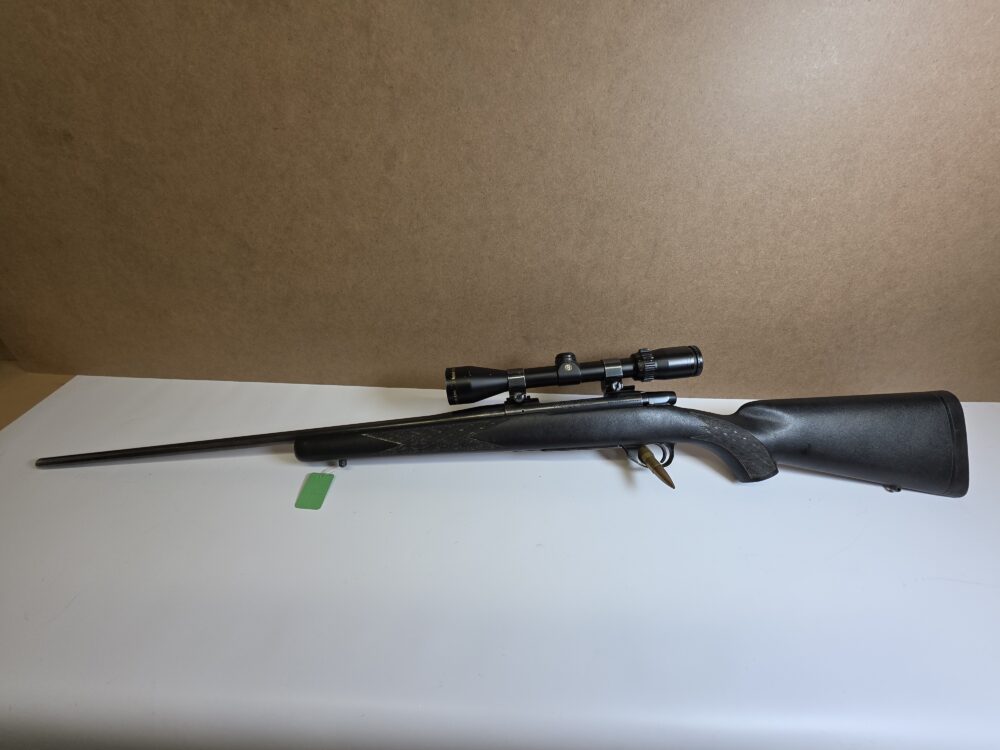
Elk hunting is the most demanding rifle discipline in North American big game. You are carrying a weapon system into steep, thin-air country where shots can present at 40 yards in dark timber or 400 yards across a basin — and you need a rifle that handles both without flinching. The animal itself is massive, thick-skinned, and built on a skeletal frame that punishes marginal calibers and marginal hits. A rifle that works perfectly for whitetail will get you into trouble on a bull elk faster than you think.
We have been chasing bulls across Colorado, Montana, Idaho, and Wyoming for the better part of two decades, and we have strong opinions about what an elk rifle needs to be. It needs to be light enough to carry for ten miles at 10,000 feet without destroying you. It needs to chamber a cartridge with enough authority to break a shoulder at 300 yards. It needs to shoot accurately from field positions — not from a bench in perfect conditions, but from a shaky bipod on a sidehill after you just climbed 1,500 vertical feet to close the distance on a bedded bull. And it needs to be utterly reliable, because elk do not give you second chances.
The five rifles below represent the best purpose-built elk rifles we have tested. Each chambers a cartridge with genuine elk-killing authority, weighs under seven and a half pounds, and shoots sub-MOA or very close to it with quality ammunition. We have carried all five into the backcountry, run them hard, and formed opinions we are confident in.
For a detailed breakdown of how we test and score every piece of gear, see our testing methodology. For broader rifle coverage including general-purpose bolt actions, see our best bolt-action hunting rifles roundup. And if you are building out a full elk hunting kit, our elk hunting gear checklist covers everything from optics to pack-out essentials.
Quick Picks
- Best Overall: Weatherby Mark V Backcountry 2.0 Ti (.300 Win Mag) — The lightest magnum-caliber rifle on this list with no accuracy compromise.
- Best for Long Range: Christensen Arms Ridgeline (.28 Nosler) — Carbon-fiber authority with flat-shooting ballistics built for open-country hunts.
- Best Value: Tikka T3x Superlite (.300 WSM) — The smoothest action in the business, now in a short-magnum package purpose-made for elk.
- Best for Heavy Timber to 400 Yards: Browning X-Bolt Mountain Pro (.300 PRC) — A versatile mountain rifle chambered in the most capable new magnum cartridge on the market.
- Best Budget Option: Bergara B-14 Wilderness Ridge (7mm Rem Mag) — Match-grade Bergara accuracy in a rugged, field-ready package at a price that respects your wallet.
What Makes a Great Elk Rifle
Not every hunting rifle is an elk rifle. Elk-specific demands narrow the field considerably, and understanding those demands will save you from making an expensive mistake. We evaluate elk rifles on four core criteria.
Weight
You are going to carry this rifle a long way. Western elk hunts routinely involve 6 to 12 miles of daily hiking at elevations between 8,000 and 11,000 feet. Every ounce matters when you are gasping at altitude with a 50-pound pack on your back. The ideal elk rifle weighs between 5.5 and 7.5 pounds without optics — light enough to carry all day, heavy enough to hold steady from field positions and absorb magnum recoil without punishing you into a flinch.
The weight conversation has changed dramatically in the last five years. Carbon-fiber barrels and stocks, titanium actions, and advanced manufacturing techniques have shaved full pounds off magnum-caliber platforms without sacrificing accuracy. Rifles that weighed eight and a half pounds a decade ago now weigh six and a half and shoot just as well. That matters when you are packing a rifle, a tripod, optics, water, and food up a mountain before daylight.
Caliber
Elk are large animals. A mature bull can weigh 700 to 1,000 pounds on the hoof. They have dense bone structure, a thick hide, and a chest cavity that demands deep penetration from a well-constructed bullet. We use 1,500 ft-lbs of energy at point of impact as our minimum threshold for elk, and we strongly prefer cartridges that maintain 2,000 ft-lbs or more at common engagement distances.
That effectively rules out standard cartridges like the .308 Winchester and 6.5 Creedmoor for elk beyond close range in timber. The proven elk calibers — .300 Winchester Magnum, .300 WSM, .300 PRC, .28 Nosler, 7mm Remington Magnum — all deliver the energy and penetration needed to put a bull down cleanly at distances out to 400 yards and beyond. We will cover caliber selection in more detail below, and our comprehensive hunting caliber guide goes even deeper on the ballistics.
Accuracy
A sub-MOA rifle is the standard we hold every rifle to, but with elk the stakes of accuracy failures are higher than with any other North American game animal. A poorly placed shot on a bull elk can result in a wounded animal covering miles of rugged terrain before going down — or worse, never being recovered. Your rifle needs to consistently place shots inside a six-inch vital zone at the distances you intend to shoot, from realistic field positions, after being carried through brutal terrain.
We test accuracy with multiple factory ammunition options at 100, 200, and 300 yards. Cold bore shots get particular attention because that is the reality of elk hunting — you almost always get one shot from a cold barrel, and it needs to go exactly where you point it.
Reliability
Elk season spans September through November across most Western states. That means you could be hunting in a warm early-season archery-adjacent opener or a brutal late-November snowstorm. Your rifle must cycle flawlessly in driving rain, below-zero cold, and after being banged against rocks, trees, and the inside of a panniers for a week straight. Stainless steel or Cerakote-finished actions and barrels, robust extractors, and corrosion-resistant stocks are not luxury features on an elk rifle — they are requirements.
Weatherby Mark V Backcountry 2.0 Ti
Best for: Hunters who log serious backcountry miles and refuse to compromise on caliber authority
Caliber: .300 Winchester Magnum
The Weatherby Mark V Backcountry 2.0 Ti is the rifle we reach for when the hunt plan involves a 12-mile pack-in, a spike camp at 10,000 feet, and the expectation that any shot opportunity will be hard-earned and singular. At 5 pounds 9 ounces without optics in .300 Win Mag, it is absurdly light for a full-length magnum — light enough that you genuinely forget it is there during long approaches, which is exactly the point.
The titanium action is the foundation of that weight savings. Weatherby’s Mark V action has been a proven design for decades, and the Ti version maintains all of its mechanical virtues — the nine-lug bolt with a 54-degree throw, the smooth cycling, the tight lockup — while shaving substantial weight from the receiver. The bolt cycles with authority and feeds cleanly every time. The three-position safety is positive and intuitive.
The barrel is a No. 1 contour with a Weatherby-spec fluted profile, finished in Cerakote FDE. It is 26 inches in .300 Win Mag, which lets the cartridge achieve its full velocity potential. Many lightweight rifles chop the barrel to save weight and leave 100 fps or more on the table. Weatherby does not make that compromise, and we consistently recorded muzzle velocities within 30 fps of published data with factory loads.
Accuracy is excellent. Our test rifle produced three-shot groups averaging 0.85 MOA with Hornady Precision Hunter 200-grain ELD-X and 0.78 MOA with Federal Premium 190-grain Terminal Ascent. Cold bore first shots consistently landed within half an inch of our zero, which is outstanding for a rifle this light. The carbon-fiber stock with its pillar-bedded action provides a consistent platform that does not shift under temperature swings or humidity changes.
The trade-off is recoil. A five-and-a-half-pound .300 Win Mag is snappy. There is no way around the physics — light rifles in magnum calibers kick hard. The stock’s recoil pad does an admirable job, and the rifle ships with a threaded muzzle and a brake installed. We strongly recommend keeping that brake on, or at minimum threading on a suppressor if your state allows it during hunting season. With the brake engaged, recoil is manageable enough for follow-up shots. Without it, this rifle will test your fundamentals.
The Mark V Backcountry 2.0 Ti is not an inexpensive rifle. It occupies the premium tier of the elk rifle market and commands a price that reflects titanium action manufacturing and Weatherby’s quality standards. But if you are a backcountry elk hunter who measures hunts in miles and vertical feet, the weight savings are not a luxury — they are a strategic advantage that compounds over every mile and every day of a hunt.
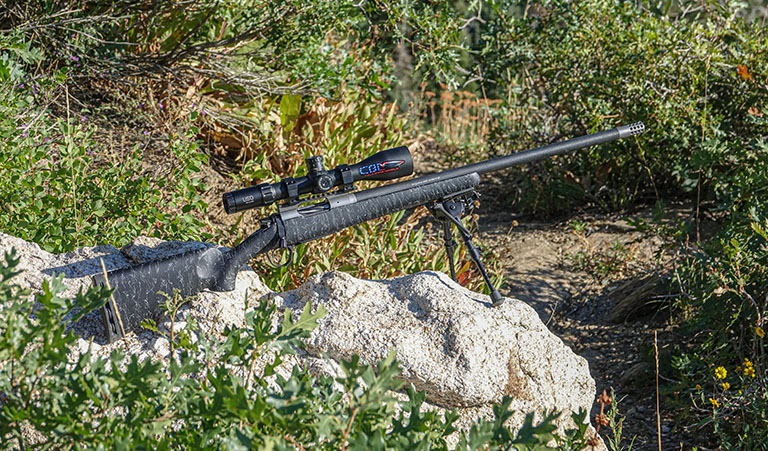
Christensen Arms Ridgeline
Best for: Hunters who want a flat-shooting, open-country rifle with carbon-fiber weight savings
Caliber: .28 Nosler
The Christensen Arms Ridgeline in .28 Nosler is the rifle we bring when the hunt plan involves glassing basins from high vantage points and making shots across draws and meadows where range estimation becomes critical. The .28 Nosler cartridge is purpose-built for this scenario — it pushes high-BC 7mm bullets at blistering velocities, producing a trajectory so flat that holdover errors at 300 to 400 yards are remarkably forgiving.
The Ridgeline is built around a 416R stainless steel action that Christensen manufactures in-house. The bolt runs smoothly with a 70-degree throw, and the spiral-fluted bolt body reduces weight while aiding debris clearance. The match-grade carbon-fiber-wrapped barrel is the signature feature — a stainless steel core wrapped in carbon fiber to create a barrel that is lighter than a standard steel contour while maintaining stiffness and heat dissipation characteristics that support consistent accuracy across shot strings.
At 6 pounds 5 ounces without optics, the Ridgeline strikes an excellent balance between packability and shootability. It is light enough for long mountain approaches but carries enough mass that it does not feel whippy from field positions. The carbon-fiber stock with a spot-bedded action is clean and utilitarian, with a Monte Carlo cheek piece that provides a natural weld for scoped shooting.
Accuracy testing produced impressive results. Our .28 Nosler test rifle averaged 0.72 MOA with Nosler Trophy Grade Long Range 175-grain AccuBond and 0.80 MOA with Hornady Precision Hunter 162-grain ELD-X. The carbon-wrapped barrel showed minimal point-of-impact shift through our standard five-shot accuracy strings, which is a meaningful advantage in a hunting scenario where your barrel might be ice cold or hot from a practice shot before the real opportunity presents itself.
The .28 Nosler cartridge deserves specific attention for elk hunters considering this platform. It pushes a 162-grain ELD-X at roughly 3,150 fps from the Ridgeline’s 26-inch barrel, producing over 2,000 ft-lbs of energy at 500 yards. Wind deflection and drop are significantly reduced compared to the .300 Win Mag at distance, thanks to the high-BC 7mm bullets. The downside is ammunition availability — the .28 Nosler is not on every shelf at every sporting goods store the way .300 Win Mag or 7mm Rem Mag is. We recommend buying your hunting ammunition well before the season and confirming your zero with the same lot number you intend to hunt with.
The Ridgeline is finished in Burnt Bronze Cerakote and the carbon stock has a subtle, professional appearance that resists showing wear. The TriggerTech trigger is adjustable and breaks cleanly at 2.5 pounds out of the box — one of the best factory triggers in any hunting rifle on the market. After three seasons of hard use, our test rifle shows cosmetic wear but zero functional degradation. It is a rifle built for the long term.
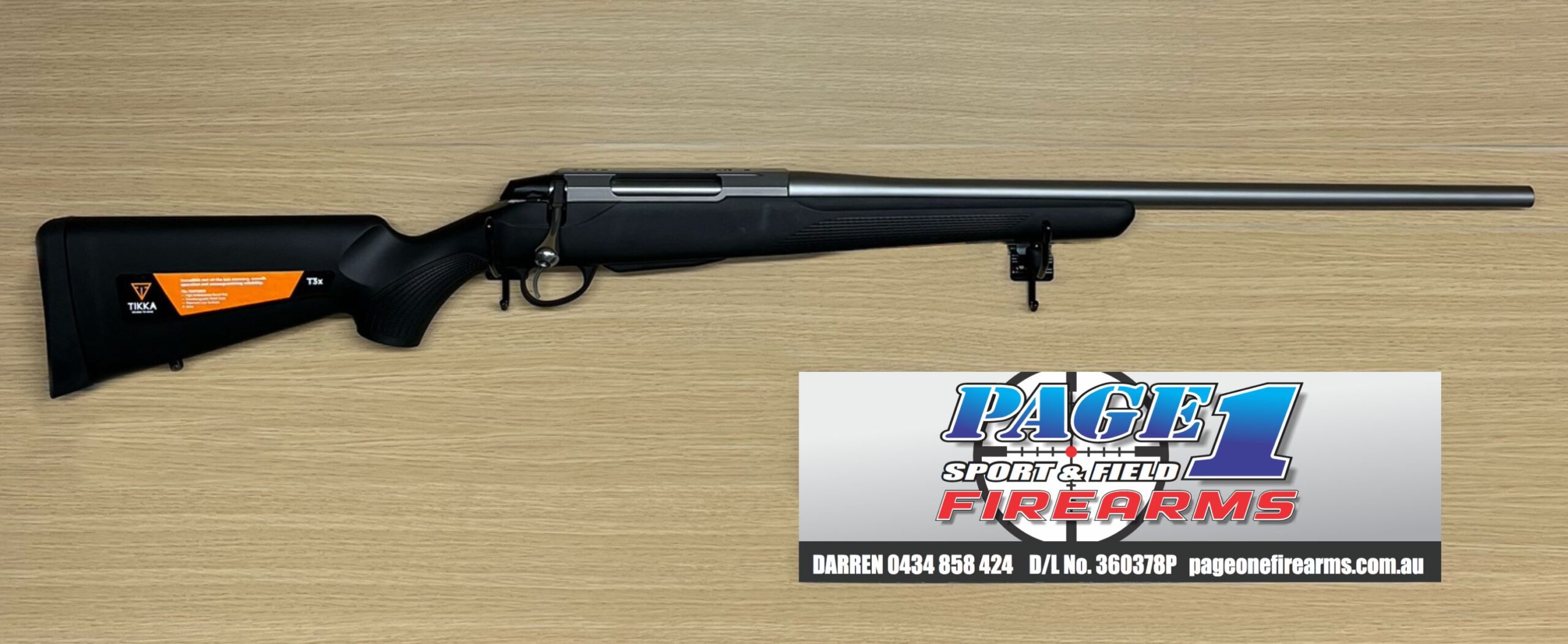
Tikka T3x Superlite
Best for: Hunters who want the smoothest action on the market in a proven elk caliber at a fair price
Caliber: .300 WSM
The Tikka T3x Superlite in .300 WSM is the rifle we recommend most often to hunters building their first dedicated elk setup. It offers the best action feel and the best accuracy-per-dollar in this roundup, and it does it in a package that weighs just 6 pounds 1 ounce without optics. For hunters on a realistic gear budget who still want genuine backcountry performance, this is the rifle.
We have written extensively about the T3x action in our bolt-action hunting rifles roundup, and everything we said there applies here with equal force. The bolt is the smoothest factory action in the hunting rifle market, full stop. The 70-degree bolt throw is fast, the cycling is fluid and consistent, and feeding is flawless. We have cycled thousands of rounds through T3x rifles across multiple calibers and conditions and have never experienced a single malfunction. In the field, where your hands are cold, your adrenaline is spiking, and you need to cycle the bolt without thinking, this level of mechanical refinement matters enormously.
The .300 WSM chambering is a smart choice for elk. It produces .300 Win Mag-class performance from a short action, which means a slightly lighter rifle, a more compact receiver, and a stiffer action. Our test rifle launched 180-grain Federal Terminal Ascent at 2,960 fps — essentially matching .300 Win Mag velocities from a 24-inch barrel. Accuracy averaged 0.82 MOA with that load and 0.75 MOA with Hornady Precision Hunter 200-grain ELD-X. These are excellent numbers for a lightweight hunting rifle at this price point.
The Superlite synthetic stock is functional without being remarkable. It is well-shaped with adequate grip texture, a comfortable length of pull, and enough stiffness to provide a consistent shooting platform. It will not win beauty contests, and it does not offer the bedding precision of a carbon-fiber chassis stock. But it is light, durable, impervious to weather, and serves the purpose for which it was designed. At this price point, putting money into the action and barrel rather than the stock is the right engineering decision.
The trigger is the same adjustable single-stage unit found across the T3x line — adjustable from roughly 2 to 4 pounds with a clean, crisp break. Ours was set at 3 pounds from the factory and required no adjustment. The detachable magazine holds three rounds of .300 WSM and clicks in and out positively. Spare magazines are affordable and widely available.
Recoil in .300 WSM from a six-pound rifle is stout. This is not a rifle that encourages extended range sessions with full-power elk loads. A muzzle brake or suppressor is a worthwhile addition, particularly for recoil-sensitive shooters or for confirming zeros at the range before a hunt. In the field, where you fire one or two shots and adrenaline masks the recoil, it is entirely manageable.
The T3x Superlite represents outstanding value in the elk rifle market. It undercuts most of the competition in this roundup by several hundred dollars while delivering action quality and accuracy that match or exceed rifles costing twice as much. If you are willing to accept a synthetic stock and spend the savings on quality glass, this is a devastatingly effective elk hunting system.
Browning X-Bolt Mountain Pro
Best for: Hunters who want a versatile mountain rifle chambered in the most modern magnum elk cartridge available
Caliber: .300 PRC
The Browning X-Bolt Mountain Pro in .300 PRC is the rifle on this list that best represents where elk rifle design is heading. The .300 PRC cartridge — developed by Hornady in collaboration with precision rifle shooters — is essentially a modernized, improved .300 Win Mag designed from the ground up around long, high-BC .30-caliber bullets. Paired with Browning’s refined X-Bolt platform in a dedicated mountain configuration, it creates a rifle that is genuinely excellent from dark timber to 500 yards.
The .300 PRC sends a 212-grain Hornady ELD-X at approximately 2,860 fps from the Mountain Pro’s 26-inch barrel. That is a heavy, high-BC bullet moving at serious velocity — the resulting trajectory is flatter than the .300 Win Mag with comparable bullet weights, and the wind deflection advantage at distance is measurable. Energy at 400 yards exceeds 2,200 ft-lbs, which is emphatic elk-killing authority. The cartridge also has a reputation for exceptional accuracy thanks to its optimized case design and the fact that factory ammunition is loaded to precision-rifle standards.
The X-Bolt action is one of the most refined production hunting actions available. The 60-degree bolt throw is the shortest in this roundup, enabling fast, efficient cycling from the shoulder. The bolt rotates into lockup with a solid, precise feel. Browning’s Feather Trigger is adjustable from 3 to 5 pounds and breaks with a crispness and lack of creep that continues to impress us across multiple test cycles. It is not quite as light as the TriggerTech on the Christensen, but it is cleaner and more consistent than most factory triggers at any price.
The Mountain Pro’s carbon-fiber stock is a significant upgrade over Browning’s standard composite offerings. It features a full-length bedding block that provides rigid, repeatable action-to-stock contact, and it is finished in an attractive accent-graphic pattern that is uniquely Browning. More importantly, it weighs considerably less than a traditional synthetic stock while being stiffer and more dimensionally stable across temperature and humidity swings. The overall rifle weight comes in at 6 pounds 7 ounces without optics — well within our ideal range for an elk rifle.
Accuracy has been consistently excellent. Our test rifle averaged 0.70 MOA with Hornady Precision Hunter 212-grain ELD-X and 0.83 MOA with Hornady Match 225-grain ELD-M. These are borderline precision-rifle numbers from a six-and-a-half-pound hunting platform, and they validate the .300 PRC’s reputation as an inherently accurate cartridge. Cold bore shots were particularly impressive — our first shots from a cold barrel consistently landed within a quarter inch of our established zero.
The X-Bolt Mountain Pro is finished in a tungsten Cerakote that is subdued and professional. The stainless steel barrel and action resist corrosion aggressively. The detachable rotary magazine holds three rounds of .300 PRC and feeds with the smoothness you expect from Browning. Every external surface is designed to resist the abuse of backcountry hunting.
The caveat with the .300 PRC is the same as any newer cartridge — ammunition availability is improving rapidly but has not yet reached the ubiquity of .300 Win Mag or 7mm Rem Mag. Rural sporting goods stores may not stock it. Plan ahead, buy in quantity, and you will not have an issue.
Bergara B-14 Wilderness Ridge
Best for: Budget-conscious hunters who want match-grade accuracy in a field-ready elk rifle
Caliber: 7mm Remington Magnum
The Bergara B-14 Wilderness Ridge in 7mm Rem Mag is the rifle that proves you do not need to spend two thousand dollars to build a serious elk hunting system. Bergara’s barrel-making heritage produces accuracy that punches well above the rifle’s price class, and the Wilderness Ridge configuration wraps that accuracy in a stock and finish designed specifically for hard field use.
Bergara builds barrels. That is the company’s origin, its identity, and the reason its rifles consistently outshoot competitors at the same price point. The B-14 Wilderness Ridge uses Bergara’s 4140 CrMo steel barrel with their proprietary bore profile, and the results speak through the chronograph and the target. Our 7mm Rem Mag test rifle averaged 0.78 MOA with Federal Terminal Ascent 155-grain and 0.85 MOA with Hornady Precision Hunter 162-grain ELD-X. These numbers rival rifles costing significantly more, and they were achieved with factory hunting ammunition — not hand-loaded precision rounds.
The 7mm Remington Magnum is the most proven elk caliber in North America. It has been putting bulls on the ground since 1962, ammunition is available in every sporting goods store on the continent, and the cartridge produces outstanding terminal performance on elk-sized game. A 160-grain bullet at 2,950 fps generates over 1,800 ft-lbs at 400 yards — more than enough for a clean kill with proper bullet construction. The 7mm Rem Mag also has a meaningful recoil advantage over the .300 Win Mag and .300 PRC, which is worth considering if you are sensitive to recoil or plan to practice extensively before your hunt.
The Wilderness Ridge stock is a Wilderness-series exclusive with a sniper green and tan pattern Cerakote that blends well in Western terrain. The stock features Bergara’s SoftTouch finish for improved grip, particularly in wet conditions. Internally, the stock uses Bergara’s integral bedding system — not a full chassis like the HMR, but a more refined and consistent bedding approach than a standard injection-molded stock. It provides a stable shooting platform without the weight penalty of an aluminum chassis.
The B-14 action uses the same Remington 700 footprint design found across the B-14 line. The bolt is smooth and positive, with a coned bolt nose that aids feeding. The two-position safety is well-placed and intuitive. The B-14 Performance Trigger is adjustable from 1.5 to 4 pounds and ships at approximately 3 pounds — it breaks cleanly with a tactile reset that gives you confidence in the shot. The detachable magazine uses an AICS-pattern design, meaning aftermarket magazines from Magpul and others are compatible.
At 7 pounds 2 ounces without optics, the Wilderness Ridge is the heaviest rifle in this roundup but still comfortably within our target range for an elk rifle. That extra weight is an asset during recoil management and provides a steadier platform from field positions. The 24-inch barrel in 7mm Rem Mag is a reasonable compromise between velocity and portability — you lose roughly 40 fps compared to a 26-inch tube, which is negligible in any practical hunting scenario.
The Wilderness Ridge represents the strongest value proposition in this roundup. For hunters who would rather invest the savings in quality optics, ammunition for practice, or a guided hunt in a new unit, this rifle delivers the accuracy and reliability to make the most of that investment.
Caliber Selection for Elk
Choosing the right caliber for elk is one of the most debated topics in Western hunting, and it deserves a focused discussion beyond the individual rifle sections above. Our comprehensive hunting caliber guide covers the full spectrum of cartridges, but here we will focus specifically on what works — and what does not — for elk.
The minimum threshold we recommend for elk is a cartridge that delivers at least 1,500 ft-lbs of energy at your maximum expected engagement distance. For most Western elk hunting scenarios, that means planning for shots out to 300 to 400 yards. This effectively establishes a floor of 7mm magnum-class cartridges and above.
7mm Remington Magnum remains one of the smartest choices for elk. It offers exceptional long-range ballistics, moderate recoil compared to the .30-caliber magnums, and ammunition availability that cannot be beat. With modern bullets like the 162-grain ELD-X or 160-grain Nosler AccuBond, it is a devastating elk killer.
.300 Winchester Magnum is the default elk cartridge for a reason. It hits harder than the 7mm Rem Mag at close to moderate range and offers an enormous selection of factory ammunition. The extra recoil over the 7mm is noticeable but manageable in a properly weighted rifle.
.300 WSM delivers .300 Win Mag performance from a short action. The ballistic differences at hunting distances are negligible — typically 50 to 75 fps less muzzle velocity. The advantages are a slightly shorter, stiffer action and marginally reduced weight. Ammunition selection is narrower than the .300 Win Mag but still excellent.
.300 PRC is the newest cartridge on this list and arguably the most capable. It was designed specifically around long, high-BC .30-caliber bullets and offers a measurable ballistic advantage over the .300 Win Mag at extended range. Ammunition availability is the only real weakness, and it is improving every season.
.28 Nosler pushes high-BC 7mm bullets faster than any production cartridge on the market. It is the flattest-shooting option here and drifts the least in wind. It is an outstanding open-country elk cartridge but shares the .300 PRC’s ammunition availability limitations.
The calibers we would avoid for elk: the .308 Winchester, 6.5 Creedmoor, and .270 Winchester are all capable deer cartridges but fall short of our recommended energy thresholds for elk beyond close range. Can they kill an elk? Yes, with perfect shot placement. But elk hunting is not a sport that rewards marginal caliber choices — the terrain is too vast, the pack-out too punishing, and the animal too tough for anything less than full confidence in your cartridge’s terminal authority.
Optic Pairing Recommendations
A rifle is only as effective as the glass sitting on top of it. For elk hunting, your scope needs to balance magnification range, light transmission, durability, and reticle design for both close encounters and longer shots across open terrain.
Magnification range. We recommend a 3-15x or 3-18x variable scope for elk. You need the low end of 3x for dark timber encounters where speed matters and a bull might appear at 50 yards. You need 15x or more for identifying and ranging bulls across canyons and placing precise shots at 300 to 400 yards. A 4-16x works as well, though you sacrifice some close-range speed.
Objective lens. A 44mm or 50mm objective provides excellent light transmission during the low-light hours of dawn and dusk when elk are most active. The 50mm gathers more light but adds weight and requires higher rings. For mountain hunting where ounces matter, a 44mm objective in a high-quality scope will outperform a 50mm in a budget scope every time.
Reticle. A BDC or exposed-turret system with a first focal plane Christmas tree reticle gives you the fastest path to accurate holdovers at distance. If you prefer simplicity, a second focal plane scope with a clean duplex reticle and capped turrets dialed for your load’s trajectory works perfectly for shots inside 400 yards. Know your system, practice it, and do not try to learn a new reticle setup during elk season.
Durability. Your scope will endure rain, snow, altitude, temperature swings, and the occasional impact against rock or timber. Nitrogen-purged, O-ring-sealed construction is mandatory. Buy from a manufacturer with a transferable, no-questions-asked warranty. Vortex, Leupold, Zeiss, and Nightforce all meet this standard.
Specific pairings. For the lightweight rifles in this roundup — the Weatherby, Tikka, and Christensen — we lean toward scopes in the 18 to 24 ounce range to keep the total system weight under eight and a half pounds. The Leupold VX-6HD 3-18x44 and the Vortex Razor HD LHT 3-15x42 are outstanding options that balance optical quality, features, and weight. For the Browning and Bergara, which carry a bit more weight, a Nightforce NX8 2.5-20x50 or Zeiss Conquest V4 4-16x44 provides exceptional glass without creating an unwieldy system.
Frequently Asked Questions
What is the best all-around caliber for elk hunting?
The .300 Winchester Magnum remains the best all-around elk caliber for most hunters. It delivers emphatic terminal energy at all reasonable hunting distances, factory ammunition is available everywhere from rural gas stations to big-box retailers, and it is chambered in virtually every bolt-action rifle on the market. If you are buying one elk rifle and want the broadest flexibility, the .300 Win Mag is the safest and most capable choice. The 7mm Remington Magnum is an excellent alternative if you want less recoil with marginally less close-range authority.
How far should I be prepared to shoot on an elk hunt?
Most elk are killed inside 300 yards. That said, Western terrain frequently presents shot opportunities between 300 and 500 yards, and being capable at those distances gives you options that other hunters do not have. We recommend being confident and practiced out to 400 yards from field positions with your specific rifle and load combination. Beyond 400, the variables — wind, angle, rangefinding error, shooter fatigue — compound quickly, and the ethical margin for a clean kill narrows. Practice at distance, but know your honest limit and respect it.
Is a lightweight rifle accurate enough for elk?
Modern lightweight rifles are dramatically more accurate than their counterparts from even ten years ago. Carbon-fiber barrels, advanced bedding systems, and precision manufacturing have closed the accuracy gap between ultralight rifles and heavier hunting platforms. Every rifle in this roundup weighs under seven and a half pounds and shoots sub-MOA or very close to it. The trade-off is recoil — lighter rifles in magnum calibers kick harder, which can erode shooting fundamentals over time. Mitigate this with a muzzle brake or suppressor and practice regularly so recoil does not develop into a flinch.
Do I need a muzzle brake for elk hunting?
We strongly recommend one, particularly on rifles under seven pounds chambered in .300-class magnums. A quality muzzle brake reduces felt recoil by 30 to 50 percent, which has a direct and measurable impact on shooting accuracy, follow-up shot speed, and long-term flinch prevention. The downside is increased muzzle blast — brakes redirect gas and noise to the side, making the rifle significantly louder for the shooter and anyone nearby. A suppressor eliminates this trade-off entirely by reducing both recoil and noise, and an increasing number of Western states now permit suppressor use during hunting season. If your state allows it, a suppressor on your elk rifle is the single best accessory investment you can make.
How much should I spend on an elk rifle?
Spend what you can afford without sacrificing your optics budget. A rifle and scope together form a weapon system, and an expensive rifle under cheap glass is a system that will fail you at the worst possible moment. If your total budget is limited, the Bergara B-14 Wilderness Ridge or Tikka T3x Superlite paired with a quality mid-range scope like the Vortex Viper PST Gen II or Leupold VX-5HD will outperform a premium rifle with entry-level glass every single time. Allocate roughly 50 to 60 percent of your total weapon system budget to the scope and rings. The best rifle in the world cannot compensate for an optic that fogs, loses zero, or cannot resolve a bull’s shoulder at 350 yards in fading light.
Elk hunting demands more from your rifle than any other pursuit in the lower 48. The five rifles in this roundup — spanning from the budget-friendly Bergara to the ultralight Weatherby — all meet that demand with genuine authority. Pick the one that fits your hunting style, your terrain, and your budget, pair it with quality glass, and then go put in the miles. The rifle is ready. The rest is up to you.
For more on building your complete elk hunting system, see our elk hunting gear checklist. And for the full hunting rifles category — including scope reviews, caliber breakdowns, and platform comparisons — start at the hub.
Quick Buy — Products in This Article