Choosing the right caliber is one of the first — and most debated — decisions any hunter faces. Walk into a sporting goods store and the ammo shelf stretches for what feels like a quarter mile. Ask three hunters what the “best” deer cartridge is and you’ll get four answers, two arguments, and at least one person who swears by a caliber that was designed before either World War.
Here’s what we’ve learned after years of testing rifles and spending time behind triggers in the field: there is no single best caliber. There are calibers that are better suited to specific game, specific distances, specific terrain, and specific shooters. The goal of this guide is to help you understand what separates one cartridge from another in terms that actually matter for putting clean, ethical shots on target.
We’re going to cover the ballistic fundamentals you need to make an informed decision, walk through the most popular calibers organized by game type, and then address the practical factors — recoil, ammo cost, availability — that can make or break your experience in the field. If you’re also in the market for a rifle platform, our best bolt-action hunting rifles roundup pairs well with this guide. And for a deeper look at how we evaluate gear and make our recommendations, see our testing methodology.
Understanding Ballistics Basics
Before we compare individual calibers, we need to establish a shared vocabulary. Ballistics is the science of projectile behavior, and a handful of key metrics determine how a cartridge performs from the muzzle to the target. Understanding these numbers will let you read any spec sheet with confidence and cut through the marketing noise.
Muzzle Velocity
Muzzle velocity is the speed of the bullet as it leaves the barrel, measured in feet per second (fps). Higher muzzle velocity generally means a flatter trajectory — the bullet drops less over a given distance because it spends less time in flight. A .270 Winchester pushing a 130-grain bullet at 3,060 fps will shoot flatter than a .308 Winchester sending a 165-grain bullet at 2,700 fps, all else being equal.
Velocity also factors into terminal performance. Many hunting bullets are designed to expand reliably within a specific velocity window, typically between 1,800 and 2,800 fps at the point of impact. If a bullet arrives too slowly, it may not expand and will pencil through the animal without transferring enough energy. Too fast at close range and some bullets can fragment excessively. This is why understanding velocity at distance — not just at the muzzle — matters.
Kinetic Energy
Energy is measured in foot-pounds (ft-lbs) and represents the bullet’s ability to do work on the target. It’s a function of both bullet weight and velocity. The standard rule of thumb suggests a minimum of 1,000 ft-lbs of energy for deer-sized game and 1,500 ft-lbs or more for elk. These thresholds are debatable, and bullet construction matters at least as much as raw energy, but they provide a useful baseline.
A .243 Winchester with a 100-grain bullet produces roughly 1,945 ft-lbs at the muzzle. A .300 Winchester Magnum with a 180-grain bullet generates around 3,500 ft-lbs. That difference is significant, and it’s why caliber selection should match the game you’re pursuing.
Trajectory
Trajectory describes the bullet’s curved flight path under the influence of gravity. Every bullet begins to drop the moment it leaves the barrel. A “flat-shooting” caliber is one that minimizes this drop over practical hunting distances, making holdover estimation less critical.
Trajectory matters most at longer ranges. At 100 yards, the difference between most hunting calibers is negligible. At 400 yards, a fast, flat-shooting cartridge like the 6.5 PRC might drop 18 inches while a slower .30-30 Winchester drops nearly 40 inches. That’s the difference between a hit and a clean miss — or worse, a wounded animal.
Ballistic Coefficient
Ballistic coefficient (BC) is a measure of how efficiently a bullet resists air drag during flight. A higher BC means the bullet retains velocity and energy better at distance, drifts less in wind, and drops less over long ranges. BC is determined primarily by the bullet’s shape, weight, and diameter.
Long, sleek, boat-tail bullets with pointed tips (Spitzer or VLD designs) have the highest BCs. A 6.5mm 140-grain ELD-X has a BC of approximately .610, which is excellent. A .30-caliber 150-grain flat-base soft point might have a BC around .350. The practical difference at 500 yards is dramatic — the high-BC bullet might drift 12 inches in a 10-mph crosswind while the lower-BC bullet drifts over 20 inches.
For hunters shooting inside 250 yards, BC is less of a deciding factor. For anyone regularly engaging game beyond 300 yards, it becomes one of the most important metrics to consider.
Best Calibers for Deer Hunting
Whitetail and mule deer are the most commonly pursued big game in North America, and there’s no shortage of cartridges that will get the job done. The calibers below represent the most popular and proven options, each with distinct characteristics that suit different hunting styles and environments.
.243 Winchester
The .243 Winchester sits at the lighter end of deer cartridges and serves as a popular entry point for new or recoil-sensitive hunters. Firing a 100-grain bullet at roughly 2,960 fps, it produces manageable recoil while delivering adequate energy for deer inside 300 yards.
Where the .243 excels is in its dual-purpose versatility. Loaded with lighter 58-75 grain bullets, it’s a capable varmint round. Loaded with 90-105 grain hunting bullets, it handles deer reliably. The recoil is mild enough that younger hunters and smaller-framed shooters can practice extensively without developing a flinch, which is worth more than any ballistic advantage on paper.
The limitation is energy retention at distance. By 400 yards, the .243 is hovering near that 1,000 ft-lb threshold with most loads. It’s not the right choice for long pokes at big-bodied mule deer, and it’s below the minimum we’d recommend for elk under any circumstances.
.270 Winchester
The .270 Winchester has been a go-to deer and open-country cartridge since Jack O’Connor started writing about it in the 1940s. Pushing a 130-grain bullet at 3,060 fps, it shoots flat, hits hard, and has a loyal following that spans generations.
What makes the .270 special is its combination of manageable recoil and genuine long-range capability. At 400 yards, a 130-grain Partition still carries over 1,500 ft-lbs of energy — plenty for any deer and enough for a well-placed shot on elk. The trajectory is forgiving, which reduces the margin for error on range estimation.
Ammo availability is outstanding. Every sporting goods store in the country stocks .270 Winchester, and factory loads range from budget to premium. If you’re buying one rifle that needs to handle everything from whitetail in the hardwoods to mule deer across a canyon, the .270 should be on your short list.
.308 Winchester
The .308 Winchester is arguably the most versatile general-purpose hunting cartridge ever developed. It’s efficient, accurate, widely available, and chambered in more rifle platforms than almost any other cartridge. Originally a military round (7.62 NATO), it transitioned seamlessly into the hunting world and has never left.
A typical deer load pushes a 150-grain bullet at 2,820 fps, producing around 2,650 ft-lbs of energy at the muzzle. Recoil is moderate — noticeably more than a .243 but less than the magnum cartridges. The .308 also functions well in short-action rifles, which tend to be slightly lighter and more compact than long-action platforms.
The .308’s trajectory is not as flat as the .270 or the 6.5 Creedmoor, but inside 400 yards the difference is rarely the deciding factor. Where the .308 truly shines is in its adaptability: load it with 125-grain bullets for light game, 150-165 grain for deer, or 180-grain premium bullets for elk. It does everything reasonably well, even if it’s not the absolute best at anything.
6.5 Creedmoor
The 6.5 Creedmoor has been the most significant cartridge introduction in the last two decades. Designed in 2007 as a long-range competition round, it migrated into hunting circles because its ballistic performance is exceptional relative to its recoil.
A 143-grain ELD-X load at 2,700 fps doesn’t sound fast on paper. But the high BC of 6.5mm bullets means the Creedmoor retains velocity and energy at distance better than cartridges with higher muzzle velocities and lower BCs. At 500 yards, the 6.5 Creedmoor often carries more energy than a .308 Winchester despite starting slower.
Recoil is roughly 30% less than a .308, which makes it easier to spot your own shots and shoot accurately under field conditions. Factory match-grade ammunition is abundant, and most 6.5 Creedmoor rifles are inherently accurate because the cartridge was designed with accuracy as the primary objective.
For deer hunting, the 6.5 Creedmoor is outstanding. For elk, it works with careful bullet selection and shots placed inside 400 yards, but we’d lean toward something with more authority if elk is the primary target. Check our guide to hunting rifles for specific rifle recommendations chambered in this caliber.
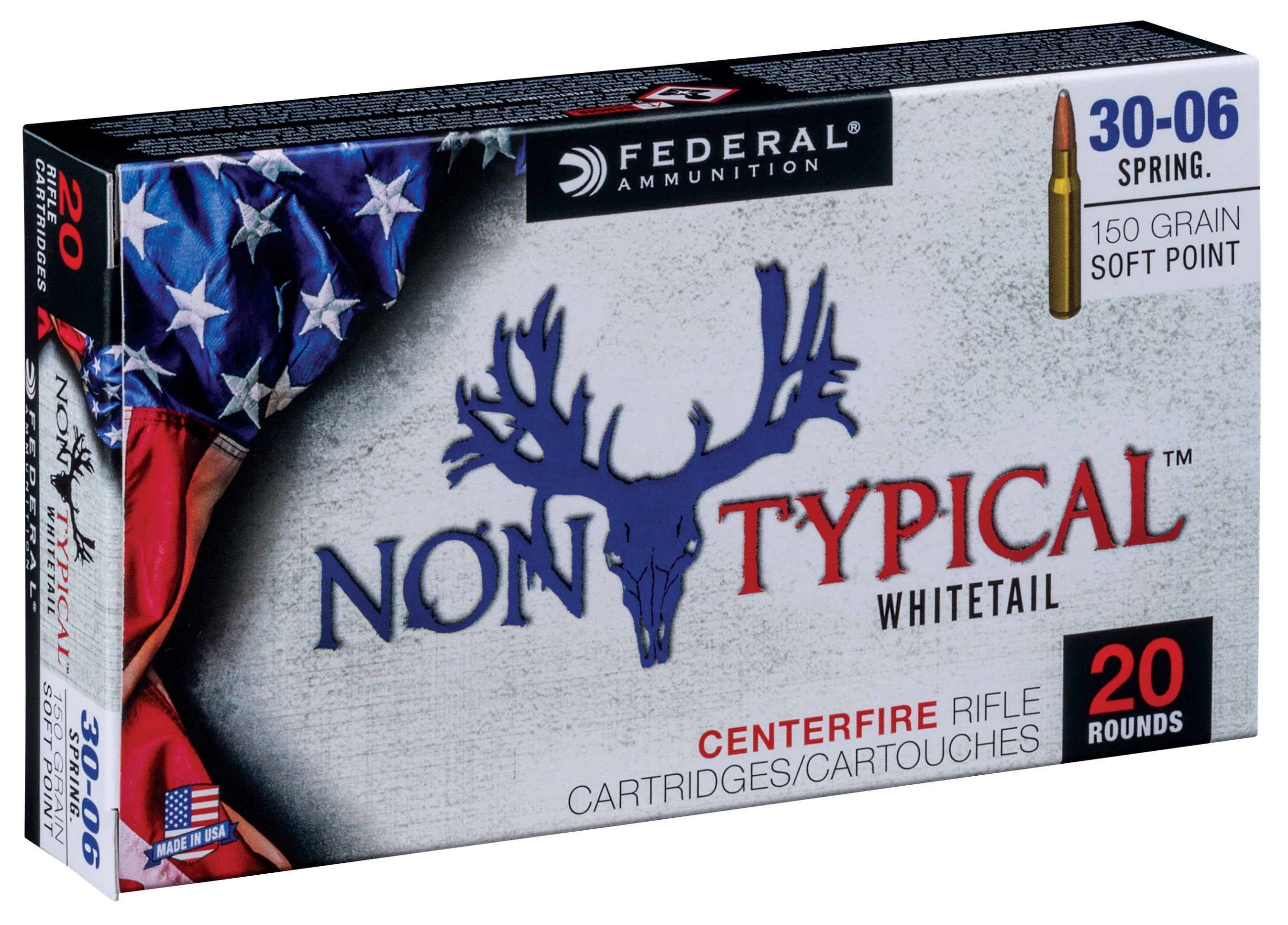
.30-06 Springfield
The .30-06 has been the standard by which American hunting cartridges are measured since 1906. With over a century of development, the range of available bullets and factory loads is unmatched. You can load it with everything from 110-grain varmint bullets to 220-grain heavy-for-caliber rounds suitable for moose.
A standard 165-grain load at 2,800 fps generates roughly 2,870 ft-lbs of energy — a meaningful step up from the .308 due to the longer case and higher powder capacity. The trajectory is slightly flatter than the .308 but not dramatically so.
What the .30-06 gives you that many cartridges don’t is headroom. If your primary hunt is whitetail but you draw an elk tag next year, the .30-06 with a 180-grain premium bonded bullet is fully up to the task. It’s also one of the most available cartridges anywhere in the world, which matters if you travel to hunt.
Recoil is stiffer than any of the previous calibers discussed. It’s manageable for most experienced adult shooters, but it’s not the caliber we’d recommend for a first-time hunter or anyone particularly sensitive to kick.
Best Calibers for Elk and Large Game
Elk, moose, and other large-bodied game demand more from a cartridge. Heavier, tougher-constructed bullets, more energy at typical engagement distances, and deeper penetration to reach vitals through heavy muscle and bone. The margin for error shrinks with bigger animals, and the calibers below are purpose-built for that reality. If you’re planning a big game hunting trip, this section deserves your close attention.
7mm Remington Magnum
The 7mm Remington Magnum has been a western hunting staple since 1962. It’s one of the flattest-shooting magnum cartridges available, pushing a 160-grain bullet at 2,950 fps with roughly 3,090 ft-lbs of energy. The 7mm bore diameter produces bullets with excellent BCs relative to their weight, giving this cartridge a genuine long-range advantage.
At 400 yards, a 160-grain Nosler AccuBond still carries over 2,000 ft-lbs of energy. That’s comfortably within elk territory. The trajectory is flat enough to keep holdovers manageable, and wind drift is moderate thanks to the high-BC bullet options available in 7mm.
Recoil is noticeably sharper than a .308 or .30-06 — roughly 25-30% more than a .30-06 in a rifle of equivalent weight. It’s the price of admission for magnum performance, and most hunters adapt with practice. The 7mm Remington Magnum is an excellent one-rifle solution for hunters who pursue everything from deer to elk across varied terrain and distances.
.300 Winchester Magnum
If you polled professional hunting guides across the western states and asked what caliber they see most often in elk camp, the .300 Winchester Magnum would consistently rank first or second. It’s the benchmark magnum cartridge for North American big game, and for good reason.
A 180-grain load at 2,960 fps produces approximately 3,500 ft-lbs of muzzle energy. At 400 yards, it’s still carrying north of 2,200 ft-lbs with premium bullets — more than enough for any elk at any angle. The .300 Win Mag hits the sweet spot between raw power and practical shootability in a standard long-action rifle.
Factory ammo selection is exceptional. You can find everything from budget hunting loads to premium long-range options at virtually any store that sells ammunition. The cartridge also has a decades-long track record of performance in the field, which means bullet manufacturers have optimized their offerings specifically for .300 Win Mag velocities and use cases.
Recoil is substantial. In a typical 8-pound hunting rifle, a .300 Win Mag generates roughly 25-27 ft-lbs of recoil energy, compared to about 17-18 for a .308. That’s enough to affect accuracy for shooters who don’t practice regularly with the cartridge. A good muzzle brake or suppressor cuts felt recoil dramatically, and we’d strongly recommend one if you plan to shoot a .300 Win Mag extensively.
.300 PRC
The .300 PRC (Precision Rifle Cartridge) is a newer addition to the hunting world, introduced by Hornady in 2018. It was designed from the ground up to optimize long-range performance with heavy, high-BC .30-caliber bullets — specifically the 225-grain ELD-X and similar projectiles.
Where the .300 Win Mag starts running out of case capacity with bullets heavier than 200 grains, the .300 PRC’s longer case and magnum bolt face give it room to seat 212-230 grain bullets at efficient overall lengths without eating into powder space. The result is a cartridge that pushes a 225-grain ELD-X at 2,810 fps with a BC north of .770. At 700 yards, it retains more velocity and energy than the .300 Win Mag with 180-grain bullets at 500.
This is a specialized cartridge. If your elk hunting involves shots inside 400 yards, the .300 Win Mag does everything you need at lower cost and with wider ammo availability. The .300 PRC earns its place when you’re genuinely hunting at extended range in open country and want every ballistic advantage at your disposal.
.338 Winchester Magnum
The .338 Win Mag is the classic big-bore cartridge for hunters who want no question about terminal performance on large, tough game. Pushing a 225-grain bullet at 2,780 fps, it produces around 3,860 ft-lbs of energy. At any practical hunting distance, the .338 hits with devastating authority.
This cartridge was designed for the biggest game on the continent — moose, brown bear, and elk — and it excels at that mission. The larger bullet diameter creates a bigger wound channel, and the heavy bullet weight drives deep penetration through heavy bone and muscle. For an Alaskan brown bear hunt or a situation where you might encounter animals at close range in thick cover, the .338 offers a margin of security that lighter calibers cannot match.
The trade-off is recoil. A .338 Win Mag in an 8.5-pound rifle generates roughly 33-36 ft-lbs of recoil energy. That’s approaching the threshold where many shooters begin to develop accuracy problems from anticipating the kick. If you can’t practice enough with a .338 to shoot it accurately under field conditions, you’re better off with a caliber you can shoot well. A .300 Win Mag bullet in the right spot will always outperform a .338 bullet in the wrong spot.
Best Calibers for Predator and Varmint Hunting
Predator and varmint hunting demand different characteristics from a cartridge. Shots are often longer, targets are smaller, and — in the case of coyote or fox — you may want to minimize pelt damage. Speed, flat trajectory, and accuracy take priority over raw energy.
.223 Remington
The .223 Remington is the most popular predator hunting cartridge in America, and it’s not close. Chambered in AR-platform rifles and countless bolt actions, it’s affordable to shoot, produces negligible recoil, and is accurate enough for precise shot placement on small targets at moderate distances.
A 55-grain V-Max at 3,240 fps is devastatingly effective on coyotes inside 300 yards. The bullet expands rapidly, which is ideal for quick kills but can cause pelt damage at close range. Switching to a heavier 62-70 grain bonded bullet reduces expansion and preserves fur better.
For varmint shooting — prairie dogs, ground squirrels, and similar targets — the .223 offers high-volume shooting at low cost. You can buy quality factory ammo for roughly half the price per round of most hunting cartridges, and the mild recoil lets you spot your own shots and stay on the scope through the trigger break.
The .223 falls short at extended distances. Beyond 400 yards, even the best .223 loads are dropping quickly and running low on energy. It’s not a long-range cartridge, and it’s not suitable for game larger than coyotes regardless of distance.
.22-250 Remington
The .22-250 takes the same .224-caliber bullets as the .223 but pushes them substantially faster thanks to its larger case. A 55-grain bullet exits the barrel at 3,680 fps or faster. The result is an extremely flat-shooting, high-velocity varmint cartridge that extends the effective range of .22-caliber bullets significantly.
At 400 yards, the .22-250 drops roughly 5 inches less than the .223 with equivalent bullets. That margin makes it a noticeably more forgiving cartridge for prairie dog shoots and long-range predator work. The additional velocity also produces more dramatic terminal effects, which matters less for varmints but can be beneficial for instant anchoring of coyotes.
Barrel life is the primary downside. The .22-250 burns through barrels faster than the .223 due to the higher powder charge and operating pressures. If you’re a serious varmint shooter putting thousands of rounds downrange per season, this is a real consideration. For occasional predator hunts and a few prairie dog trips per year, it’s a non-issue.
6mm Calibers (.243 Win, 6mm Creedmoor)
We mentioned the .243 Winchester above as a deer caliber, and it pulls double duty as an excellent predator round. Loaded with 58-75 grain varmint bullets, it’s fast, flat, and precise. The 6mm Creedmoor offers similar performance with slightly better long-range ballistics thanks to its compatibility with high-BC 6mm bullets in the 100-108 grain range.
The 6mm Creedmoor, in particular, has become a favorite among competitive predator hunters and serious coyote callers. A 103-grain ELD-X at 3,050 fps produces a nearly identical trajectory to the 6.5 Creedmoor but in a lighter-recoiling package. It’s a precision instrument that bridges the gap between dedicated varmint cartridges and full-size hunting rounds.
If you want one rifle that handles coyotes, foxes, prairie dogs, and deer without switching barrels, a 6mm chambering is hard to beat.
Best Calibers for Long-Range Hunting
Long-range hunting — loosely defined as shots beyond 400 yards — has grown dramatically in popularity. The cartridges below are designed to maximize performance at distance by combining high velocity, high-BC bullets, and efficient case designs. These are precision tools, and they require a commitment to practice and proficiency to use ethically.
6.5 PRC
The 6.5 PRC (Precision Rifle Cartridge) is the 6.5 Creedmoor’s bigger brother, adding roughly 200-250 fps of velocity. A 143-grain ELD-X at 2,960 fps doesn’t sound like a dramatic improvement, but at 700 yards the 6.5 PRC arrives with nearly 100 fps more velocity and meaningfully more energy than the Creedmoor. Over long distances, that velocity cushion translates into flatter trajectory and better terminal performance.
The 6.5 PRC fits in a short-action or short-magnum platform, keeping rifles compact. Recoil is moderate — more than a Creedmoor but less than a .300 Win Mag. For hunters who primarily pursue deer and pronghorn in open western terrain where shots beyond 400 yards are realistic, the 6.5 PRC is arguably the best all-around option available today.
Factory ammo is increasingly available from Hornady, Federal, and others, though it doesn’t yet match the ubiquity of the 6.5 Creedmoor. Expect to pay a premium of $5-10 per box compared to Creedmoor loads.
.300 PRC
We discussed the .300 PRC in the elk section, but it deserves mention here as well. For long-range hunting of large game — elk at 500+ yards, for example — the .300 PRC’s ability to push heavy, high-BC bullets at magnum velocities makes it the current gold standard. The combination of the 225-grain ELD-X at 2,810 fps produces ballistic performance that was unimaginable in a hunting cartridge even a decade ago.
This is not a beginner’s cartridge. Recoil is stiff, ammunition is expensive, and realizing the cartridge’s potential demands a quality rifle, optic, and considerable trigger time. But for the serious long-range hunter who has invested in the skills to shoot at distance ethically, the .300 PRC delivers.
.28 Nosler
The .28 Nosler is a 7mm magnum cartridge introduced in 2015 that pushes the velocity envelope for its caliber. A 175-grain LRX at 3,125 fps is remarkably fast for a bullet that heavy, and the 7mm bore diameter yields high-BC projectiles that retain velocity exceptionally well.
At 600 yards, the .28 Nosler is still moving at over 2,200 fps with most premium loads — well within the expansion window of modern hunting bullets. Trajectory is flatter than the 7mm Remington Magnum by a meaningful margin, and wind drift is reduced proportionally.
The downsides are real: barrel life is shorter due to the aggressive powder charge, ammo availability is limited compared to more established cartridges, and cost per round is premium. The .28 Nosler is built for hunters who know they need that level of performance and are willing to accept the trade-offs. If you’re not regularly taking shots past 500 yards, the 7mm Remington Magnum does 90% of what the .28 Nosler does at a fraction of the cost.
Recoil Considerations
We’ve mentioned recoil throughout this guide, and it deserves its own section because it’s the single most underappreciated factor in caliber selection. The best caliber in the world is worthless if the shooter flinches before pulling the trigger.
Recoil is measured in foot-pounds of energy and is primarily a function of bullet weight, powder charge, and rifle weight. Here’s a rough comparison of common hunting calibers in an 8-pound rifle:
- .243 Winchester: 9-11 ft-lbs
- 6.5 Creedmoor: 12-14 ft-lbs
- .270 Winchester: 16-17 ft-lbs
- .308 Winchester: 17-18 ft-lbs
- .30-06 Springfield: 19-21 ft-lbs
- 7mm Rem Mag: 22-24 ft-lbs
- .300 Win Mag: 25-27 ft-lbs
- .338 Win Mag: 33-36 ft-lbs
Most shooters can handle up to 20 ft-lbs of recoil without significant accuracy degradation. Above that, proficiency requires regular practice. Above 30 ft-lbs, most hunters will shoot their best only with a muzzle brake or suppressor to reduce felt recoil.
Our advice is honest and simple: pick the lightest-recoiling caliber that meets the energy and performance requirements for your intended game. A .270 Winchester that you shoot accurately and confidently will kill more cleanly than a .300 Win Mag that you flinch while shooting. Ego has no place in this decision. We’ve seen experienced hunters switch from magnums to milder cartridges like the 6.5 Creedmoor and immediately shoot better in the field.
If you do choose a magnum cartridge, budget time and ammunition for regular practice. Shoot from field positions, not just the bench. Shoot in cold weather with a jacket. Shoot when you’re winded. That’s what hunting conditions feel like, and a magnum’s recoil is far more noticeable in the field than it is at a concrete bench with hearing protection and a sandbag.
Ammo Availability and Cost
A cartridge’s performance on paper means nothing if you can’t find ammunition at your local store or afford to practice with it. We’ve organized common hunting calibers into rough tiers for both availability and cost.
Tier 1 — Available Everywhere, Affordable: .243 Win, .270 Win, .308 Win, .30-06, .223 Rem. These cartridges are stocked at gas stations in rural America. You’ll find them at Walmart, hardware stores, and every gun shop in the country. Cost ranges from $0.50-1.50 per round for quality hunting loads.
Tier 2 — Widely Available, Moderate Cost: 6.5 Creedmoor, 7mm Rem Mag, .300 Win Mag, .22-250. These are common at any dedicated sporting goods store and most online retailers. Expect $1.50-2.50 per round for hunting-grade ammunition.
Tier 3 — Specialty, Premium Cost: 6.5 PRC, .300 PRC, .28 Nosler, .338 Win Mag, 6mm Creedmoor. These cartridges may not be on the shelf at a small-town store. Plan to order online or visit a well-stocked dealer. Cost runs $2.50-4.00 per round and sometimes higher.
Availability matters most if you travel to hunt in remote areas where your only option may be a small-town hardware store. It also matters for practice. If you’re spending $3 per trigger pull, human nature dictates you’ll practice less — and that’s the fastest path to poor marksmanship.
Matching Caliber to Your Hunting Style
With all the ballistic data and cartridge profiles covered, here’s the practical synthesis — matching caliber to the way you actually hunt.
Eastern whitetail from a treestand or blind (shots under 200 yards): Almost any caliber on this list works, but the .308 Winchester and .270 Winchester are ideal. Flat trajectory matters less at these ranges, so prioritize a caliber you shoot accurately with manageable recoil. The 6.5 Creedmoor is also an excellent choice here.
Western mule deer and pronghorn (open terrain, 200-500 yards): Flat trajectory and wind resistance become critical. The .270 Winchester, 6.5 Creedmoor, and 6.5 PRC are top choices. All three shoot flat, resist wind well, and produce adequate energy at these distances.
Elk in the mountains (mixed terrain, 100-400 yards): Energy and bullet construction take priority. The .300 Winchester Magnum is the standard recommendation for a reason. The .30-06 with premium 180-grain bullets is also fully capable. The 7mm Remington Magnum splits the difference between flat trajectory and heavy-hitting terminal performance.
Predator and coyote calling (50-350 yards): The .223 Remington is the default for a reason — cheap to shoot, accurate, and effective. For longer shots or dual-purpose predator/deer duty, step up to a .243 Winchester or 6mm Creedmoor.
Long-range western hunting (400+ yards): The 6.5 PRC for deer-sized game and the .300 PRC for elk represent the current best-in-class options for ethical long-range hunting. Both demand quality optics and serious range time to reach their potential. For guidance on pairing the right glass to these cartridges, see our how to choose a rifle scope guide.
One rifle, all-purpose: If you need a single rifle that handles deer, elk, and the occasional predator without apology, the .30-06 Springfield remains the most versatile cartridge on the planet. It’s been doing everything for 120 years, and it hasn’t stopped yet.
Frequently Asked Questions
What is the best all-around hunting caliber?
The .30-06 Springfield is the most versatile all-around hunting caliber available. With bullet weights from 110 to 220 grains, it can handle everything from coyotes to moose. The .270 Winchester and .308 Winchester are close seconds, particularly if your hunting is focused on deer-sized game and you want slightly less recoil. The 6.5 Creedmoor has also emerged as a strong all-around option for hunters who primarily pursue deer and pronghorn and occasionally hunt elk.
Is the 6.5 Creedmoor enough for elk?
Yes, with caveats. The 6.5 Creedmoor with a premium bonded or monolithic bullet (such as the 143-grain ELD-X or 140-grain Barnes TTSX) is effective on elk inside 400 yards with proper shot placement. It is not, however, the ideal elk caliber. The bullet diameter and energy are on the lighter side for an animal that can weigh 700-1,000 pounds. If elk is your primary target and you expect shots beyond 400 yards or less-than-ideal angles, we recommend stepping up to a 7mm Rem Mag or .300 Win Mag. A well-placed shot from a 6.5 Creedmoor will kill an elk cleanly, but the margin for error is thinner than with a larger caliber.
How much does caliber choice affect accuracy?
Caliber itself doesn’t determine accuracy — the rifle, ammunition, optic, and shooter do. That said, certain cartridges are inherently easier to shoot accurately because of lower recoil. A shooter who flinches from a .300 Win Mag will almost always group tighter with a 6.5 Creedmoor. The Creedmoor’s popularity in competitive shooting isn’t because the cartridge is more inherently accurate — it’s because the low recoil allows shooters to execute fundamentals more consistently. Pick a caliber you can shoot comfortably, invest in quality ammunition, and spend time at the range. That combination matters far more than any ballistic advantage on paper.
Should I choose a short-action or long-action caliber?
Short-action calibers (.308 Win, 6.5 Creedmoor, .243 Win, 6.5 PRC) use a shorter bolt throw, which can make for a slightly lighter and more compact rifle. Long-action calibers (.30-06, .270 Win, 7mm Rem Mag, .300 Win Mag) require a longer receiver to accommodate the longer cartridge. In practical terms, the weight difference is typically 4-8 ounces, and the speed difference in cycling the bolt is negligible for hunting scenarios where you rarely need a fast follow-up shot. Choose based on the ballistic performance you need, not the action length. If two calibers meet your requirements equally, the short-action option will yield a marginally lighter, stiffer rifle.
What caliber has the least recoil for deer hunting?
The .243 Winchester produces the least recoil among the dedicated deer cartridges, generating roughly 9-11 ft-lbs of recoil energy in a standard-weight rifle. The 6.5 Creedmoor is the next step up at 12-14 ft-lbs and offers better ballistic performance at distance. Both are excellent choices for recoil-sensitive hunters, younger shooters, or anyone who wants to maximize practice time without punishment. Between the two, we’d recommend the 6.5 Creedmoor for most adults and the .243 Winchester for younger or smaller-framed hunters who need every bit of recoil reduction they can get.