Elk hunting is the ultimate gear test in North American big game. You are hauling everything you need into steep, remote country at altitude, through weather that can swing from 75 degrees and sunny to sideways sleet in the same afternoon. You might cover ten miles a day on a ridge-top spot-and-stalk. You might sit in a dark timber saddle for three days straight waiting for a bugle. And when you finally connect, you are facing the single hardest pack-out in hunting — quartering a 700-pound animal miles from a road and getting 150-plus pounds of boned-out meat back to your truck before the temperature climbs.
No other hunt in the lower 48 exposes gear failures as ruthlessly as elk season. A boot that feels fine at the trailhead will cripple you by day three if it does not fit right under load. A pack that works for mule deer will buckle under an elk quarter. A cheap sleep system that was tolerable at the truck on a whitetail hunt will leave you shivering and useless when you are camped at 9,500 feet in September.
We have learned most of these lessons the hard way over two decades of chasing bulls across Colorado, Montana, Idaho, and Oregon — public land, OTC tags, DIY to the bone. This checklist is everything we bring, organized by category, with honest notes on where to spend, where to save, and where cutting corners will cost you an elk. If you want to understand how we evaluate the gear referenced throughout this guide, take a look at our methodology page. For broader big game hunting content, see our big game hunting hub.
Weapons and Optics
Your weapon system is the one piece of gear you cannot compromise on. Everything else on this list exists to get you into position. Your rifle, scope, and optics are what close the deal.
Rifle and Caliber Selection
Elk are large, tough animals with heavy bone structure and a will to live that borders on supernatural. You need a cartridge that delivers enough energy to break through a shoulder if the angle demands it and still reach the vitals cleanly at 300-plus yards. The margin for error is thinner than people realize — a shot that would anchor a whitetail can leave a bull elk running over the next ridge with a wound you will never recover from.
Our go-to recommendations for elk cartridges, roughly in order of versatility:
- 7mm Remington Magnum — The most popular elk cartridge in the West for a reason. Flat-shooting, manageable recoil, and wide ammunition availability. A 160- to 175-grain bonded or monolithic bullet from a 7mm Rem Mag is medicine for any bull that walks.
- .300 Winchester Magnum — Hits harder than the 7mm at the cost of more recoil. Excellent choice if you handload or shoot enough to manage the kick. Arguably the better choice if you anticipate shots beyond 400 yards regularly.
- 6.5 PRC — The modern cartridge that has earned its place at the elk-hunting table. It pushes high-BC bullets with surprisingly moderate recoil and shoots flat enough to simplify field ballistics. Use premium 140- to 143-grain controlled-expansion bullets and keep shots inside 500 yards.
- .308 Winchester — Absolutely capable inside 300 yards with heavy-for-caliber premium bullets (180-grain Nosler Partition, Barnes TTSX 168-grain). Less reach than the magnums, but the lightest recoil on this list and the cheapest to practice with.
- .300 PRC / .300 WSM — Both excellent if you already own one. We would not recommend buying a rifle specifically in either chambering for a first elk rifle when 7mm Rem Mag and .300 Win Mag ammo is available at every gas station in elk country.
For a deeper dive into how these cartridges stack up across different hunting applications, our hunting caliber guide breaks it all down.
The rifle itself matters less than the shooter behind it. A Tikka T3x, Weatherby Vanguard, Bergara B-14, or Browning X-Bolt in any of the cartridges above will kill every elk you will ever see. Spend your money on a quality scope and practice ammunition rather than upgrading from a $900 rifle to a $2,500 rifle. We would rather hunt with someone shooting a Ruger American they have put 500 rounds through than someone carrying a custom rig they zeroed once last October.
Riflescope
Your scope is arguably more important than the rifle it sits on. In elk hunting, you will frequently shoot in low light — the first and last twenty minutes of legal shooting light produce a disproportionate number of opportunities because that is when bulls are moving. A scope that turns to mud at dawn or dusk will cost you the shot you spent a week earning.
For elk hunting, we recommend a variable-power scope in the 3-15x to 5-25x range with a 50mm objective lens. The sweet spot for most hunters is a 4-16x50 — enough magnification for precise shot placement at 400 yards, enough field of view at 4x for a close encounter in dark timber, and a 50mm bell that gathers meaningful light.
Look for an exposed turret system with a reliable zero-stop if you plan to dial for distance. If you prefer to hold over, a BDC or Christmas tree reticle calibrated to your specific load works beautifully out to 500 yards with no dial required. Either way, know your system cold before you leave the truck. The field is not the place to learn your reticle.
Budget between $500 and $1,200 for a scope that will not let you down. Vortex Viper PST Gen II, Leupold VX-5HD, Maven RS.4, and Sig Sauer TANGO6T are all proven in this range.
Binoculars
You will spend ten times more time behind your binoculars than behind your rifle. This is not an exaggeration. On a typical spot-and-stalk day in open country, we glass for four to six hours and shoot for four seconds. Your binoculars are the primary tool of elk hunting.
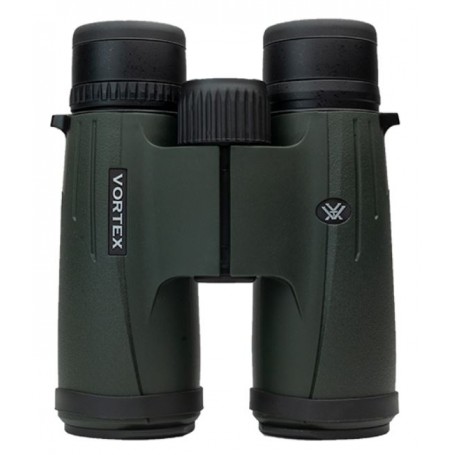
For western elk, a 10x42 is the standard for good reason. The 10x magnification lets you pick apart a timbered hillside at a mile, and the 42mm objective keeps the weight reasonable for all-day carry. An 8x42 is a viable alternative if you hunt predominantly in dark timber or heavy cover where wide field of view matters more than reach.
The Vortex Viper HD 10x42 sits in the sweet spot of performance and value for most elk hunters. The glass clarity and low-light performance punch well above the price point, and the VIP warranty means you are covered if they take a fall in the rocks. If your budget allows, stepping up to the Vortex Razor UHD, Leupold BX-5 Santiam, or Maven B.1 will deliver noticeably better edge-to-edge clarity and color fidelity during marathon glassing sessions.
Do not skimp on a bino harness. You will wear your binoculars for eight to twelve hours a day. A quality chest harness (FHF Bino Harness, Marsupial Gear, or Kuiu Bino Harness) distributes the weight, keeps them accessible in seconds, and protects the lenses from rain and brush.
Rangefinder
A laser rangefinder is not optional for elk hunting in the West. Distances in open mountain terrain are nearly impossible to judge by eye, and a 50-yard error at 400 yards is the difference between a clean kill and a wounded animal. We have watched experienced hunters misjudge distance by 100 yards or more on an open hillside that offered zero visual reference points.
You need a rangefinder that reaches at least 1,000 yards on reflective targets and gives you angle-compensated distance for steep uphill and downhill shots — which describes nearly every shot in elk country. Most modern rangefinders above $250 handle this well. Units with built-in ballistic solvers (like the Sig Kilo line or Vortex Fury HD with Applied Ballistics) are genuinely useful if you program your specific load data.
For a detailed look at rangefinder options, including several models well-suited to rifle hunting, see our best rangefinders guide.
Clothing System
Elk season in the West means everything from 80-degree September afternoons at 7,000 feet to single-digit mornings at 10,000 feet in October. You cannot bring a single outfit. You need a layering system that handles the full spectrum, keeps you dry when you are working hard, and keeps you warm when you are sitting still on a glassing knob for four hours.
Base Layer
Merino wool is the undisputed king of base layers for elk hunting. It regulates temperature in both warm and cool conditions, wicks moisture aggressively, and — this is the critical part — does not stink after multiple days in the field. On a five-day backcountry hunt, you are wearing the same base layer the entire time. Synthetic base layers will be unbearable by day three. Merino will still be tolerable by day five.
Carry two sets of base layers if you have the pack space — one lightweight set (150-weight) for warm days and hard hiking, and one midweight set (200- to 250-weight) for cold mornings and sitting. At a minimum, bring one midweight top and bottom. Smartwool, Kuiu, First Lite, and Minus33 all make excellent merino base layers.
Mid Layer
Your mid layer is your insulation. This is what keeps you warm when you stop moving. For elk hunting, we run a merino wool or synthetic fleece hoodie (like the Kuiu Peloton or Sitka Fanatic) as our everyday mid layer, supplemented by a puffy jacket (synthetic-insulated or down) for cold sits.
Synthetic insulation (PrimaLoft, Climashield) is the safer choice for elk hunting because it retains warmth when wet. Down packs smaller and weighs less, but if your down puffy gets soaked in a rainstorm with no chance to dry it, you have lost your insulation layer entirely. If you run down, carry it in a dry bag and treat it as a camp-and-sit layer only.
Outer Layer
You need a softshell for daily use and a waterproof hardshell for weather protection.
Softshell: A quality softshell jacket and pant will be your most-worn outer layer. They are quiet in brush, breathe well during physical effort, and shed light rain and wind. This is what you wear while actually hunting — hiking, stalking, sitting. Spend here. A good softshell set from Kuiu, First Lite, Sitka, or Stone Glacier will outperform a cheaper alternative in ways that compound over a multi-day hunt: less noise on a stalk, less sweat on a climb, more comfort on a sit.
Hardshell: Your waterproof layer is insurance. You might not pull it out for three days, and then a mountain storm rolls in and it saves your hunt. Get a 3-layer waterproof/breathable jacket and pant with fully sealed seams and pit zips. Gore-Tex and eVent are proven. Lighter is better here because you are carrying it in your pack most of the time. Do not wear your hardshell as a default outer layer — it is too noisy, too hot, and too stiff for active hunting.
Boots
Your boots are the most important piece of clothing on this list, and they are the most common source of catastrophic failure. Bad boots will end your hunt. Period.
For early season (September archery and early rifle), we recommend a mid-cut, lightweight hiking boot with moderate insulation or no insulation at all. You are covering big miles in warm temperatures, and a heavy, stiff boot will blister you and sap your energy. Crispi Thor II, Schnee’s Granite, Kenetrek Mountain Extreme (non-insulated), and Salomon X Ultra are all proven.
For late season (October rifle, November muzzleloader), step up to a taller, stiffer, insulated boot if you expect cold temperatures and snow. A 400-gram Thinsulate boot handles most late-season conditions. Go to 800-gram or 1000-gram only if you are sitting in a treestand or ground blind in genuinely frigid weather.
Break your boots in before the hunt. This is not a suggestion. Put at least 50 miles on a new pair of boots before you take them into elk country. If they are not comfortable after 50 miles, they are not the right boots for your feet. No amount of breaking in will fix a fundamental fit problem.
Rain Gear and Accessories
- Gaiters — Essential in wet conditions, early-morning dew, and snow. They keep your lower legs dry and prevent debris from entering your boots.
- Warm hat and gloves — A fleece or merino beanie and midweight gloves for cold mornings. Bring lightweight liner gloves as well.
- Buff/neck gaiter — Versatile for face concealment, sun protection, and warmth.
- Extra socks — Merino wool, at least two extra pairs. Dry socks are morale.
Pack and Load-Out
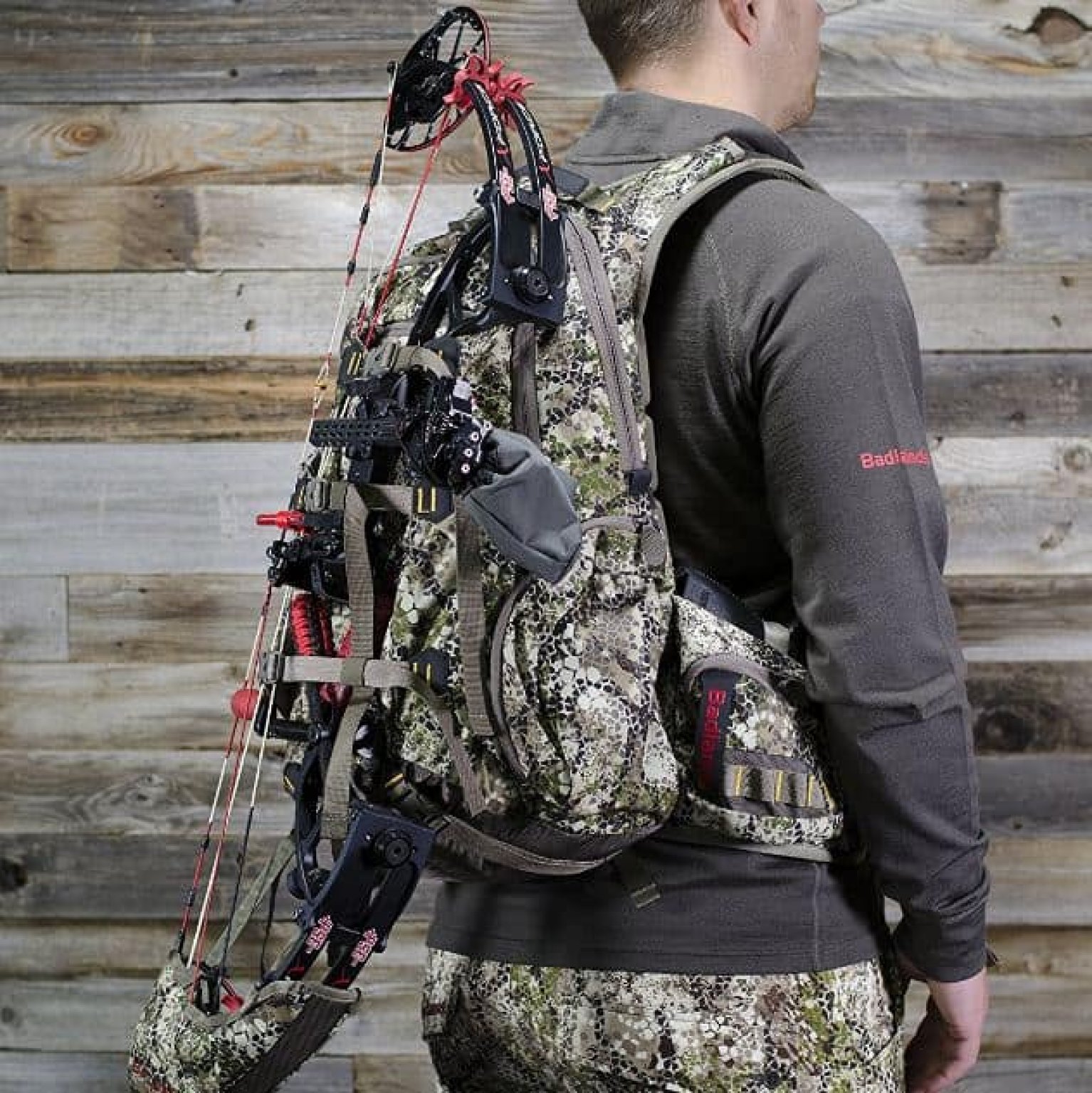
Your pack is the chassis of your entire system. Every other piece of gear rides in or on it. For elk hunting, you need a pack that carries a heavy load comfortably over rough terrain — because at some point, that load is going to include 60-plus pounds of elk meat on top of your gear.
Day Pack vs. Multi-Day Pack
If you are hunting from a truck camp or a base camp within a few miles of the road, a day pack in the 2,500- to 3,500-cubic-inch range works. You are carrying water, food, layers, optics, and a few essentials. The key requirement is a load shelf or external frame capability so you can strap on meat for the pack-out.
For backcountry hunts where you are camping two or more nights away from the truck, you need a 4,000- to 6,000-cubic-inch pack with a true load-hauling frame. This pack carries your shelter, sleep system, food, water, and all your hunting gear on the way in, then transitions to hauling elk quarters on the way out.
Frame Pack Recommendations
The best elk hunting packs on the market right now come from Stone Glacier, Mystery Ranch, Exo Mountain, and Kifaru. These companies build packs specifically for western big game hunting with load-hauling frames designed to carry 80 to 150 pounds.
- Stone Glacier Sky 5900 — Our go-to for multi-day backcountry elk. The Krux frame carries massive loads with remarkable comfort, and the bag has smart organization without unnecessary weight.
- Mystery Ranch Metcalf — The Guide Light frame is legendary for a reason. Slightly heavier than the Stone Glacier but extremely durable and well-organized.
- Exo Mountain K3 4800 — Excellent frame, modular design, and one of the more comfortable options under truly heavy loads.
Weight targets: Aim for a total pack weight (gear, food, water) under 45 pounds for a walk-in backcountry hunt. This is difficult but achievable with modern lightweight gear. For a day hunt from camp, stay under 25 pounds. Every extra pound on your back is energy you cannot spend on covering ground.
What Goes in the Pack
Beyond the gear covered in other sections, here is what we carry in our day pack on every elk hunt:
- Water — At least 3 liters, more above 8,000 feet. A hydration bladder plus a Nalgene or Smartwater bottle.
- Water purification — Sawyer Squeeze or BeFree filter for refilling from streams.
- Food — High-calorie, no-cook food. Bars, jerky, nuts, tortillas with peanut butter. Budget 3,000 to 4,000 calories per day on a backcountry hunt where you are covering serious miles at altitude.
- Fire kit — Lighter, ferrocerium rod, and petroleum jelly cotton balls in a waterproof bag.
- First aid — Blister care (moleskin, Leukotape), pain relievers, antihistamine, wound care, tourniquet, emergency blanket.
- Knife — A quality fixed-blade for field dressing and a smaller folder for camp tasks.
- Headlamp — With extra batteries. You will use it more than you expect. Packing out in the dark after a late-evening kill is common.
- Trekking poles — Not in the pack, but worth mentioning. Trekking poles save your knees on steep descents and improve stability under heavy pack-out loads. Carbon fiber poles in the 10- to 12-ounce range are worth their weight in saved knee cartilage.
Camp Gear
If you are running a backcountry camp, your shelter and sleep system need to balance weight with genuine livability. You are sleeping in this camp for three to seven nights, often in weather that would shut down a casual backpacking trip. Cutting too much weight here means cutting sleep quality, and sleep quality directly impacts your hunting performance.
Tent and Shelter
For solo backcountry elk, a single-wall ultralight tent in the 2- to 3-pound range is the standard. Tarptent, Zpacks, Durston, and Six Moon Designs all make proven options. If you are hunting with a partner, a two-person shelter in the 3- to 4-pound range keeps your split weight reasonable.
For early-season hunts, a tarp and bivy setup saves weight and works well in stable weather. But mountain weather is rarely stable for a full week, and waking up in a puddle at 3 AM when a storm blows through your tarp setup can derail your entire hunt. We have moved toward fully enclosed shelters for all elk hunts, even in September, because the weight penalty is modest and the insurance is worth it.
If you are base-camping with stock or ATVs, bring a bigger tent and be comfortable. A 4- to 6-person wall tent with a stove is the gold standard for multi-week base camps. The weight does not matter when a horse is carrying it.
Sleep System
Your sleeping bag or quilt needs to be rated 15 to 20 degrees below the lowest temperature you expect. September elk hunts above 9,000 feet routinely see overnight lows in the mid-20s. October hunts can see single digits. A 15-degree down bag is the most versatile choice for September through October across most elk country.
Pair it with a quality sleeping pad. An insulated inflatable pad with an R-value of 4.0 or higher keeps you off the cold ground and prevents convective heat loss that will make even a warm bag feel inadequate. Therm-a-Rest NeoAir XTherm and Nemo Tensor Insulated are both proven.
Do not cheap out on your sleep system. A hunter who sleeps poorly hunts poorly. This is not a philosophical statement — it is a field-tested observation. We have watched hunts fall apart because someone brought a 35-degree bag to a 20-degree night, shivered until 4 AM, and was too physically wrecked to hunt hard the next day. Buy the right bag and the right pad.
Cooking and Food
For backcountry elk, we keep the cooking system simple: a canister stove (Jetboil, MSR PocketRocket), a 700ml titanium pot, a long spoon, and freeze-dried meals supplemented with instant coffee, hot chocolate, and oatmeal. Total cooking kit weight: under one pound.
Bring more food than you think you need. Mountain hunting at altitude burns 4,000 to 6,000 calories per day, and most hunters pack for 3,000. By day four, you are running on fumes and making bad decisions. Budget 2 to 2.5 pounds of food per day and build your menu around caloric density: olive oil packets, peanut butter, summer sausage, cheese (hard varieties last without refrigeration), nuts, and chocolate.
Water availability matters. Study your maps and identify water sources near your planned camp locations. Camping near water eliminates the need to carry extra weight and ensures you stay hydrated in the dry mountain air that dehydrates you faster than you realize.
Navigation and Communication
Elk country is vast, steep, and often featureless from the ground even when it looks distinctive on a map. Getting lost is not just inconvenient — it can be life-threatening. And when you connect on a bull four miles from the trailhead, you need to know exactly how to get back to camp and back to the truck efficiently.
GPS Device
A dedicated handheld GPS (Garmin inReach Mini 2, Garmin GPSMAP 67i) is a non-negotiable piece of safety equipment for backcountry elk hunting. Your phone GPS is a useful supplement, but it is not a replacement. Phones die, screens crack, cold kills batteries, and cellular-dependent mapping apps fail when you are 15 miles from the nearest tower.
Download offline maps (onX Hunt, Gaia GPS, or HuntStand) on your phone as a backup, but carry a dedicated GPS with preloaded waypoints for camp, your truck, water sources, and planned hunting areas.
Satellite Communicator
If you are hunting more than a few miles from the road, carry a satellite communicator with SOS capability. The Garmin inReach Mini 2 does double duty as a GPS and a two-way satellite messenger. You can send and receive texts from anywhere on the planet, share your GPS location with family, and trigger an SOS to search and rescue if something goes wrong.
This is not paranoia. Elk hunting involves scrambling through steep, rocky, remote terrain with a heavy pack, often in the dark. Rolled ankles, falls, hypothermia, and cardiac events happen every season. A satellite communicator is a $300 to $400 investment that could save your life — or at the very least, let your family know you are safe when you are out of cell range for a week.
Paper Maps and Compass
Always carry a paper topo map of your hunting unit and a baseplate compass. Batteries die. Electronics fail. A map and compass cannot break, and the weight is negligible. Mark your camp, truck, and key waypoints on the paper map before you head in. If your GPS dies on day three of a backcountry hunt, you will be glad you have a backup you can trust.
Pack-Out Gear
Killing the elk is the beginning of the real work. An average bull yields 150 to 200 pounds of boneless, trimmed meat — plus the head and antlers if you are keeping the cape. Getting that weight out of the backcountry efficiently and cleanly is a skill that requires the right gear. Poor pack-out preparation is one of the leading causes of meat spoilage and wasted game.
Game Bags
Synthetic mesh game bags (the kind that come with your tag) are garbage. Use breathable, reusable game bags made from lightweight cotton or synthetic blends designed for airflow and insect protection. Caribou Gear and TAG game bags are the two we use and trust.
You need enough bags for four quarters, two backstrap sections, two tenderloins, neck meat, rib meat, and trim. A full set of 8 to 12 bags covers an entire elk. These bags allow the meat to develop a protective dry glaze (called a pellicle) while keeping flies, dirt, and debris off the surface. Hang bagged meat in shade with good airflow and the pellicle will form within hours, dramatically extending how long the meat stays good in the field.
Pack Frame
If your hunting pack has a removable bag and a standalone frame (like Stone Glacier’s Krux system or the Mystery Ranch load-hauling frame), you already have your pack-out frame. Strap a quarter directly to the frame, shoulder the load, and go. If your pack does not have this capability, consider a dedicated external frame like the Stone Glacier Solo frame or an Alaskan-style pack board.
Expect to make three to five trips from the kill site to camp or the truck for a bull elk, carrying 50 to 80 pounds per trip depending on your fitness and the terrain. This is where your pack’s load-hauling capability and your boot fit pay dividends. A mediocre pack under 40 pounds feels very different than that same pack under 80 pounds.
Meat Care in the Field
Temperature is the enemy. If daytime highs are above 50 degrees — which they often are in September — getting the elk quartered, bagged, and hung in shade is urgent. We try to have the animal fully broken down within 90 minutes of the kill. Debone the quarters to reduce weight and speed cooling. Remove all bloodshot meat. Get the quarters off the ground and into shade immediately.
Carry a few extra contractor trash bags for protecting meat from rain and for keeping your pack clean during the haul. A small amount of citric acid mixed with water in a spray bottle helps deter flies and extends the pellicle. Cheesecloth works in a pinch if you run out of game bags.
If temperatures are warm and the pack-out will take more than 24 hours, prioritize getting the meat to a cooler or a walk-in processor. Ice and coolers should be waiting at the truck. We pre-stage coolers with frozen water jugs in the truck before every hunt. Do not spend a week earning a bull and then lose 50 pounds of meat to spoilage because you did not plan the last mile.
The Gear Mistakes That Cost Elk Hunters
After two decades of elk hunting and watching others make avoidable errors, we have seen the same gear mistakes play out season after season. These are the ones that actually cost people elk — not the marginal stuff, but the decisions that end hunts or ruin meat.
New boots on opening day. We already covered this, but it bears repeating because it is the single most common gear failure we see. Every year, someone shows up at the trailhead in stiff, unbroken boots and is limping by lunch. Break them in. 50 miles minimum.
Skimping on optics to buy a fancier rifle. A $2,000 rifle with a $200 scope is a backwards allocation. That scope will fail you in the low-light moment that matters most. Buy a $900 rifle and a $700 scope. You will kill more elk.
No plan for the pack-out. Plenty of hunters obsess over the kill and give zero thought to what happens after. Where are your game bags? How many trips will it take? Where are your coolers? What is the temperature forecast? A dead elk is a ticking clock, and disorganization costs meat.
Overweight packs. Hunters routinely carry 55 to 65 pounds into the backcountry when 40 to 45 would cover everything they need. The extra weight comes from fear-based packing — extra clothes, extra food, extra gadgets, redundant systems. It slows you down, wears you out, and reduces the ground you can cover. Every pound in your pack is a pound of elk you cannot carry out.
Cotton anything. Cotton base layers, cotton t-shirts, cotton socks. Cotton absorbs moisture, holds it against your skin, and transfers heat out of your body 25 times faster than air alone. In cold, wet mountain conditions, cotton is dangerous. Every layer touching your skin should be merino wool or synthetic. No exceptions.
Ignoring the sleep system. Hunters who would never cheap out on a rifle happily bring a $60 sleeping bag on a $5,000 hunt. Then they freeze, sleep terribly, and hunt poorly for a week. Your sleep system directly determines how hard you can hunt. Invest accordingly.
Frequently Asked Questions
How much does a full elk hunting gear setup cost?
A complete DIY backcountry elk setup — including rifle, optics, clothing, pack, camp gear, and pack-out equipment — runs between $4,000 and $8,000 depending on where you choose to spend and where you choose to save. You can get into it for less if you already own a suitable rifle and some backpacking gear. The most budget-sensitive approach is to buy quality boots, optics, and a pack first, then upgrade everything else over time. Spreading the cost across two to three seasons is how most of us built our kits.
What caliber is best for elk hunting?
The 7mm Remington Magnum is the most versatile elk cartridge for most hunters. It shoots flat, hits hard enough for any shot angle inside 500 yards with premium bullets, and produces manageable recoil. The .300 Winchester Magnum is the next most popular choice and hits harder at the cost of more recoil. The 6.5 PRC, .28 Nosler, and .300 PRC are all excellent modern options. Any of these cartridges with a premium controlled-expansion bullet (Nosler Partition, Barnes TTSX, Hornady ELD-X, Federal Terminal Ascent) will cleanly kill any elk at any ethical range. Check out our hunting caliber guide for a full breakdown.
How heavy should my pack be for a backcountry elk hunt?
Target 40 to 45 pounds total pack weight (gear, food, water) for a walk-in backcountry hunt of three to five days. This is achievable with modern ultralight gear but requires discipline in what you bring. Your base weight (everything minus food and water) should be under 25 pounds. Each day of food adds roughly 2 to 2.5 pounds, and water adds 2.2 pounds per liter. On pack-out trips, expect 50 to 80 pounds per load depending on the quarter and whether you are carrying gear simultaneously.
Do I need camo for elk hunting?
Elk have excellent vision but rely more heavily on their nose and ears to detect danger than on sight alone. Camo helps, but it is less critical than with whitetail or predator hunting. What matters most is breaking up your silhouette and avoiding skyline profiles. Earth-tone clothing in greens, browns, and tans works nearly as well as dedicated camo patterns in most elk terrain. If you already own camo from another type of hunting, wear it. If you are buying from scratch, the popular western hunting camo lines from Kuiu, First Lite, and Sitka are designed for the terrain and conditions you will face, and they perform well — but they are not mandatory.
What is the most overlooked piece of elk hunting gear?
Trekking poles. Most rifle hunters ignore them because they feel like a backpacking accessory, but trekking poles transform your efficiency in steep mountain terrain. They reduce knee impact on descents by up to 25 percent, improve stability on loose talus and sidehills, and make heavy pack-out loads significantly more manageable. Collapsible carbon fiber poles weigh 10 to 12 ounces, strap to your pack when you do not need them, and will save your knees over a week of mountain hunting. We consider them as essential as a headlamp — you can technically hunt without them, but you are making the job harder than it needs to be.