
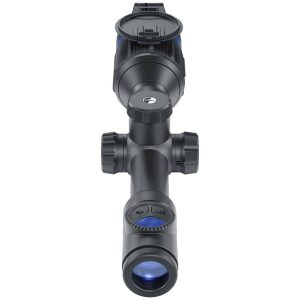
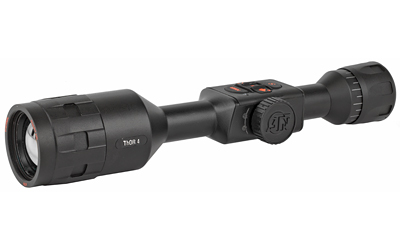
Thermal riflescopes have reshaped nighttime hunting, and two names dominate the conversation more than any others: Pulsar and ATN. The Pulsar Thermion 2 XP50 Pro sits near the top of the market as a premium performer, while the ATN ThOR 4 384 has become the default recommendation for hunters breaking into thermal on a budget. They represent fundamentally different philosophies — one prioritizes raw optical performance, the other packs features at an aggressive price point.
We’ve spent months running both scopes through identical testing conditions as part of our Benchmark testing methodology. Nighttime hog hunts in south Texas, predator stands in Oklahoma, and controlled range sessions where we could isolate variables like detection range, refresh performance, and image clarity. This isn’t a spec-sheet comparison. We’ve put rounds downrange behind both optics and have strong opinions about who should buy which.
If you’re cross-shopping these two scopes — or trying to decide whether to save money or spend up — this is the comparison you need. For broader context on the thermal scope market, check out our hunting optics hub and our best thermal scopes for hog hunting roundup.
Quick Verdict: Who Should Buy Which
Buy the Pulsar Thermion 2 XP50 Pro if you’re a serious nighttime hunter who needs to positively identify targets at extended range, demands the best image quality available in a traditional riflescope form factor, and considers thermal hunting a core part of your program — not an experiment. You hunt multiple nights per week, manage large properties, or run predator control operations where image confidence directly affects shot decisions. Read our full Pulsar Thermion 2 review for the deep dive.
Buy the ATN ThOR 4 384 if you want genuine thermal capability without the premium price tag, primarily hunt inside 200 yards over bait stations or feeders, and want smart-scope features like a built-in ballistic calculator and video recording. It’s also the right choice if you’re not yet sure thermal hunting is for you and want to test the waters without a massive financial commitment. See our full ATN ThOR 4 review for complete details.
The bottom line: The Pulsar Thermion 2 is the better thermal scope. The ATN ThOR 4 is the better value. Those are two different questions, and knowing which one you’re actually asking is the key to making the right purchase.
Specifications Comparison
| Spec | Pulsar Thermion 2 XP50 Pro | ATN ThOR 4 384 |
|---|---|---|
| Sensor Resolution | 640x480 (17µm) | 384x288 (12µm) |
| Magnification | 2x-16x | 4.5x-18x |
| Refresh Rate | 50Hz | 30Hz |
| Detection Range | 2,300 yards | ~600 yards |
| Objective Lens | 50mm | 50mm |
| Display | 1024x768 AMOLED | 1280x720 HD |
| NETD | ≤25 mK | ≤35 mK |
| Eye Relief | 50mm | 90mm |
| Battery Life | 7-8 hours | ~16 hours |
| Recording | Video/photo, 16GB onboard | 1080p video, Wi-Fi streaming |
| Weight | 31.7 oz | ~27.2 oz |
| MSRP | ~$5,500 | ~$2,000 |
The numbers tell a clear story before you even look through either scope. The Pulsar holds decisive advantages in sensor resolution, refresh rate, thermal sensitivity, and detection range. The ATN counters with a significantly lower price, longer battery life, lighter weight, and more eye relief. Let’s break down what each of those advantages actually means in the field.
Head-to-Head: Image Quality
This is where the Pulsar Thermion 2 creates the widest gap, and it’s the single most important category for any thermal optic.
The Thermion 2’s 640x480 sensor with 17µm pixel pitch produces images that are genuinely detailed. At 200 yards, we can clearly distinguish a hog’s head from its body, identify leg movement, and make confident shot placement decisions. The thermal image has depth and contrast — you’re not just seeing heat blobs, you’re seeing recognizable animal shapes with enough detail to assess size and behavior.
The ATN ThOR 4’s 384x288 sensor produces a noticeably softer image. Inside 100 yards, this barely matters. Hogs over a feeder at 75 yards are perfectly identifiable, and shot placement is straightforward. But push past 150 yards and details start dissolving. Body outlines get mushy, and distinguishing between a large coyote and a small hog becomes a judgment call rather than a certainty.
The refresh rate compounds this gap. The Thermion 2’s 50Hz refresh delivers smooth tracking when animals are moving. Pan across a field of hogs and the image stays crisp. The ThOR 4’s 30Hz refresh introduces visible judder when tracking moving targets — not enough to make the scope unusable, but enough that fast-moving coyotes at distance can appear to stutter across your field of view.
The Pulsar’s NETD rating (≤25 mK vs ≤35 mK) also means it picks up subtler temperature differences. In practice, this translates to better image contrast, especially in conditions where ambient temperature is close to body temperature — think warm summer nights in Texas where everything radiates heat.
Winner: Pulsar Thermion 2, by a significant margin. This is the category that justifies the price difference more than any other.
Head-to-Head: Detection Range
The spec sheets show a dramatic difference — 2,300 yards for the Pulsar versus roughly 600 yards for the ATN — but context matters here.
Detection range means the distance at which you can tell something warm is out there. It does not mean you can identify or shoot at that distance. In our testing, the Thermion 2 reliably detected human-sized heat signatures well past 1,500 yards and produced recognizable animal outlines at 600-800 yards. That kind of range is transformative for scanning large properties or open terrain. You can glass a 500-acre field from a single position and know where every warm body is before you even start your approach.
The ThOR 4’s detection range is more honestly described as 400-600 yards for a human-sized target under real conditions, with positive identification dropping off somewhere around 200-250 yards. On a standard hog hunt over a feeder at 50-150 yards, this is plenty. On an open-terrain coyote setup where you need to pick up an incoming dog at 400 yards, it falls short.
The practical implication: the Pulsar gives you strategic awareness that the ATN simply cannot match. You see more of the landscape, identify threats and targets sooner, and have substantially more time to set up a shot. For property management, predator control on big ranches, or any scenario where you’re covering ground, that range advantage is not just nice to have — it changes how you hunt.
Winner: Pulsar Thermion 2, decisively. The detection range gap is the second-biggest performance differentiator between these scopes.
Head-to-Head: Features and Smart Tech
Here’s where things get interesting, because the ATN ThOR 4 actually brings a compelling feature set to the table.
The ThOR 4 ships with ATN’s Obsidian Core processor, which powers a built-in ballistic calculator, rangefinding reticle, and one-shot zero system. The ballistic calculator is legitimately useful — input your load data and the scope adjusts your point of impact automatically. The rangefinding reticle lets you estimate distance based on known target sizes. And the one-shot zero system (Obsidian LT) simplifies the zeroing process to a degree that even thermal newcomers can get dialed in quickly.
ATN also offers video recording up to 1080p, Wi-Fi streaming to a phone or tablet, and a gallery for managing footage. If you record hunts for content or simply want to review your shots, this is genuinely useful functionality.
The Pulsar Thermion 2 takes a more traditional approach to features. You get 10 reticle styles with color options, built-in photo and video recording with 16GB onboard storage, and WiFi connectivity through the Stream Vision 2 app. The app works well for transferring footage and updating firmware, but Pulsar doesn’t try to cram a ballistic computer into the scope. Their philosophy is clearly: deliver the best possible thermal image and let the hunter do the thinking.
Both scopes support firmware updates, which is increasingly important as manufacturers refine their algorithms and add features post-launch.
Winner: ATN ThOR 4, narrowly. ATN packs more technology per dollar, and features like the ballistic calculator provide genuine utility that Pulsar doesn’t match at any price point. Whether those features matter more than image quality is a different question — but on a pure feature count, ATN wins this round.
Head-to-Head: User Interface
Operating a thermal scope in the dark, often with gloves, while trying to stay quiet, is a genuine usability challenge. Interface design matters more than many hunters realize before they’ve spent a freezing night fumbling with buttons.
The Pulsar Thermion 2 uses a clean, intuitive menu system accessed through physical controls. Menu navigation is quick, adjustments are responsive, and the interface rarely gets between you and your hunting. Color palette switching, magnification changes, and recording controls are all accessible without diving into sub-menus. The 1024x768 AMOLED display renders menus with sharp contrast and readable text.
The ATN ThOR 4’s interface is more ambitious but less polished. There are more options to navigate, which means more menus, more sub-menus, and more time spent scrolling when you should be scanning. We’ve experienced occasional sluggishness in menu transitions, particularly in cold weather. The 1280x720 HD display is perfectly adequate, but the overall interface experience feels like it was designed by software engineers rather than hunters. You’ll get used to it, but there’s a learning curve.
One specific complaint with the ThOR 4: changing between color palettes mid-hunt takes more button presses than it should. On the Pulsar, it’s nearly instant. When you’re scanning and need to flip from White Hot to Black Hot to pick up a target against a specific background, that speed matters.
Winner: Pulsar Thermion 2. Simpler, faster, more intuitive. The better interface for actual hunting conditions.
Head-to-Head: Battery Life
Battery life is a practical consideration that directly affects how you plan your hunts, and this is a category where the ATN has a genuine advantage.
The ATN ThOR 4 delivers approximately 16 hours of total runtime when using both internal and external battery packs. Even on the internal battery alone, you’re looking at solid performance through a full night of hunting with power to spare. ATN’s ecosystem of external battery options gives you flexibility for multi-night trips or extended sits.
The Pulsar Thermion 2 runs approximately 7-8 hours on its internal battery, with the option to extend runtime via USB-C power banks. In practice, 7-8 hours covers a single night of hunting comfortably, but you’ll want to top off between sessions. In extreme cold — below 20 degrees Fahrenheit — we’ve seen the Thermion 2’s runtime drop noticeably, sometimes below 6 hours. The USB-C option is a solid backup, but running a cable to an external battery isn’t always practical in the field.
Winner: ATN ThOR 4, clearly. Double the battery life is a meaningful practical advantage, especially for hunters who run long sits or multi-night hunting trips.
Head-to-Head: Build Quality
Both scopes need to survive recoil, weather, rough truck rides, and the general abuse that hunting gear endures. Neither scope should be treated like a Faberge egg, but there are differences in construction quality.
The Pulsar Thermion 2 feels like a premium instrument from the moment you pick it up. The aluminum alloy housing is solid, the controls have positive tactile feedback, and the overall fit and finish suggest a scope that was designed to last for years of hard use. Pulsar rates it for severe recoil calibers, and our testing on .308 and .30-06 platforms showed zero shift after hundreds of rounds. It’s IPX7 waterproof, meaning it can survive submersion — useful for hunts in heavy rain or the occasional drop in a creek crossing.
The ATN ThOR 4 is well-built for its price point but doesn’t match the Pulsar’s premium feel. The housing is solid and functional, and we haven’t experienced any durability issues during our testing. However, the controls feel slightly less refined, and the overall fit has a subtle “mass-produced” quality that you notice if you’ve handled premium optics. ATN rates the scope for standard hunting calibers, and we’ve had no issues with zero retention on .223 and .308 platforms.
Winner: Pulsar Thermion 2. Better materials, better fit and finish, more confidence-inspiring build. You can feel where the extra money went.
Head-to-Head: Value
This is the category that makes the entire comparison interesting, because value isn’t just about price — it’s about what you get for what you spend.
The ATN ThOR 4 384 at roughly $2,000 delivers thermal hunting capability, smart features, excellent battery life, and enough performance for the majority of hunting scenarios where shots happen inside 200 yards. For a hunter’s first thermal scope, or for a dedicated feeder/bait-station rig, it’s arguably the best value in the thermal market.
The Pulsar Thermion 2 XP50 Pro at roughly $5,500 costs nearly three times as much. But it doesn’t deliver three times the features — it delivers a categorically different level of image quality, detection range, and build quality. The difference between a 384 sensor and a 640 sensor isn’t incremental; it’s transformative. If your hunting scenarios demand identification at extended range, the Pulsar isn’t overpriced — it’s the only option that actually does the job.
The question is which hunting scenarios you actually face. A hunter running a feeder in thick east Texas brush at 75 yards will extract roughly 90% of the Pulsar’s performance from the ATN at 36% of the cost. A hunter scanning 500-acre open fields for coyotes at 400+ yards will find the ATN literally incapable of the task.
Winner: ATN ThOR 4, for most buyers. Unless your hunting demands specifically require premium detection range and image quality, the ThOR 4 delivers the most capability per dollar.
Final Verdict
The Pulsar Thermion 2 XP50 Pro is the better thermal scope. It wins on image quality, detection range, user interface, and build quality — the categories that matter most when glass is on a rifle and an animal is in the field. If we could only own one thermal riflescope and budget were not a factor, we’d choose the Thermion 2 without hesitation. It earned its place at the top of our hunting optics rankings.
But “better” and “right for you” aren’t always the same thing.
The ATN ThOR 4 384 is the right choice for more hunters than the Pulsar is. Most thermal hunting happens inside 200 yards. Most hunters are working feeders, bait stations, or calling stands in moderately open terrain. For those scenarios, the ThOR 4 delivers legitimately effective thermal performance at a price point that doesn’t require financial justification. It’s a genuine hunting tool, not a compromise.
Our recommendation: If you hunt open terrain, manage large properties, need to identify targets past 250 yards, or simply refuse to compromise on image quality — buy the Pulsar Thermion 2 XP50 Pro. It’s the best traditional thermal riflescope we’ve tested.
If you hunt tighter terrain, work feeders and stands inside 200 yards, want smart features like a ballistic calculator, or are entering the thermal market for the first time — buy the ATN ThOR 4 384 and invest the $3,500 you saved into ammunition, a quality tripod, and seat time behind the scope.
Both are strong scopes. Neither is a wrong choice. But matching the right scope to how you actually hunt is the difference between money well spent and money wasted.
Frequently Asked Questions
Can I use the ATN ThOR 4 for long-range coyote hunting?
You can, but with realistic expectations. The ThOR 4 384’s effective identification range is roughly 200-250 yards under good conditions. If your coyote setups typically produce shots inside that window — tight calling stands, brushy terrain — it works. If you’re hunting open plains where coyotes hang up at 350-500 yards, you’ll struggle to make confident identifications. For long-range predator work, the Pulsar Thermion 2 or a similar 640-resolution scope is a significantly better tool for the job.
Is the Pulsar Thermion 2 worth the extra $3,500 over the ATN ThOR 4?
It depends entirely on your hunting scenarios and how much you value image quality. If you hunt multiple nights per week, cover large properties, or need to identify targets past 250 yards, the Thermion 2’s sensor, refresh rate, and detection range provide capabilities the ThOR 4 simply cannot match — and that makes the price difference justified. If you hunt feeders inside 150 yards a few times per season, the ThOR 4 handles that job effectively, and the $3,500 difference is hard to justify on pure performance.
Which thermal scope holds zero better after heavy recoil?
Both scopes maintain zero reliably on standard hunting calibers like .223, .308, and .30-06. We ran hundreds of rounds through each during our testing without any zero shift that affected practical accuracy. The Pulsar Thermion 2 is rated for heavier recoil calibers and has a slightly more confidence-inspiring mount system, making it the safer choice if you’re mounting on a magnum platform. For standard hunting calibers, both perform well.
Does the ATN ThOR 4’s ballistic calculator actually work in the field?
Yes, it’s one of the ThOR 4’s genuinely useful features. Once you input your specific load data — bullet weight, muzzle velocity, ballistic coefficient — the scope calculates holdover adjustments automatically. It’s not a replacement for knowing your rifle’s trajectory, but it’s a legitimate aid that speeds up shot setup, especially at varying distances. We found it most useful for hunters who work multiple distances in a single sit rather than shooting from a fixed position at a known distance.
Should I buy a mid-range thermal scope instead of either of these?
The $3,000-4,000 range offers options like the Pulsar Thermion 2 XG50 (a step down from the XP50 Pro) and the ATN ThOR 5 series that split the difference on price and performance. These can be excellent choices if you want better image quality than the ThOR 4 384 but can’t stretch to the XP50 Pro’s price point. Check our best thermal scopes for hog hunting roundup for our current recommendations across every budget tier.
Quick Buy — Products in This Article