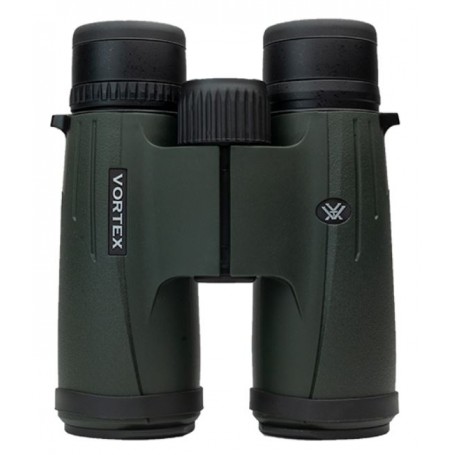
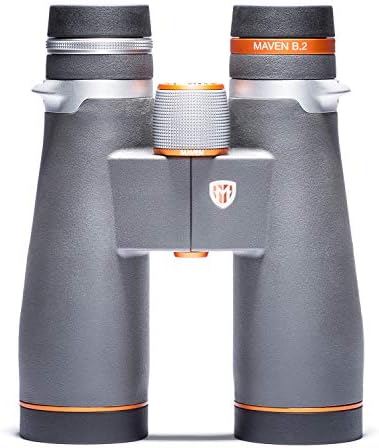
The mid-range binocular market has never been more competitive. Two optics consistently surface at the top of every recommendation list in the $400-600 range: the Vortex Viper HD 10x42 and the Maven B.2 10x42. They represent different philosophies from different kinds of companies — Vortex, the retail powerhouse with dealer networks spanning every outdoor shop in America, and Maven, the direct-to-consumer upstart building premium glass in Lander, Wyoming, and selling it without the retail markup.
We’ve run both binoculars through our Benchmark testing methodology across multiple seasons of western big game hunts, predator calling sessions, and controlled optical testing. We glassed elk at dawn in Montana, picked apart sagebrush hillsides for mule deer in Wyoming, and scanned open pastures for coyotes in the fading light of Oklahoma evenings. This comparison is built on field hours, not spec sheets.
If you’re cross-shopping these two — and you should be — this is the breakdown you need. For broader context on the optics market, visit our hunting optics hub or check our best budget hunting binoculars roundup if your budget runs tighter.
Quick Verdict: Who Should Buy Which
Buy the Vortex Viper HD if you want the safest, most proven mid-range binocular on the market backed by the most generous warranty in the industry. You value the ability to walk into any sporting goods store and handle them before you buy, and you want absolute confidence that any issue — even one you caused — gets resolved with a phone call and a shipping label. Read our full Vortex Viper HD review for the deep dive.
Buy the Maven B.2 if you value customization, lighter weight, and the ability to build a binocular tailored to your exact preferences. You’re comfortable buying direct, you appreciate supporting a smaller American company, and you don’t need a retail safety net. Maven’s direct model lets them put more money into glass and less into distribution, and it shows.
The bottom line: The Vortex Viper HD edges ahead as our overall pick for the broadest range of hunters. The Maven B.2 is an outstanding binocular that wins on weight and customization — and for some hunters, those advantages will matter more than anything the Viper offers.
Specifications Comparison
| Spec | Vortex Viper HD 10x42 | Maven B.2 10x42 |
|---|---|---|
| Magnification | 10x | 10x |
| Objective Lens | 42mm | 42mm |
| Field of View (ft @ 1,000 yds) | 319 ft | 341 ft |
| Close Focus | 5.0 ft | 6.5 ft |
| Eye Relief | 20mm | 16.5mm |
| Exit Pupil | 4.2mm | 4.2mm |
| Lens Coating | XR Fully Multi-Coated | ED Fully Multi-Coated |
| Prism Type | Roof (Schmidt-Pechan) | Roof (Schmidt-Pechan) |
| Waterproof | Yes (O-ring sealed, nitrogen purged) | Yes (O-ring sealed, nitrogen purged) |
| Weight | 24.4 oz | 22.2 oz |
| Width | 5.1 in | 5.0 in |
| MSRP | ~$500 | ~$475 |
| Warranty | Lifetime VIP (unconditional) | Lifetime (limited) |
The specs are remarkably close, which is exactly what makes this comparison interesting. Both are 10x42 roof prism binoculars with full multi-coated optics at nearly identical price points. The differences that matter live in the details: Maven takes the edge on field of view and weight, while Vortex counters with more eye relief and its legendary unconditional warranty. Let’s see how those differences play out in the field.
Head-to-Head: Optical Clarity
Optical clarity is the single most important measure of any binocular, and this is where both the Viper HD and B.2 demonstrate why the mid-range segment has gotten so good.
The Vortex Viper HD delivers sharp, high-contrast images with excellent color fidelity. Center sharpness is outstanding — fine details like individual branches on a distant tree or the texture of an elk’s hide resolve cleanly at distances where cheaper binoculars start to blur. Edge-to-edge sharpness is above average for this price class, with only minor softening in the outer 15% of the field of view. Chromatic aberration is well controlled; we only noticed purple fringing when deliberately looking for it at extreme contrast boundaries like a dark tree limb against a bright sky.
The Maven B.2 uses ED (extra-low dispersion) glass that delivers marginally better chromatic aberration control than the Viper HD’s XR coatings. In side-by-side testing, the B.2 produced slightly less color fringing on high-contrast edges — a subtle difference, but a real one. Center sharpness is essentially equal to the Viper HD. Where the B.2 distinguishes itself is in its wider field of view at 341 feet versus 319 feet at 1,000 yards. That 22-foot advantage translates to a noticeably wider picture when scanning terrain, which makes picking up movement at the edges of your view marginally easier.
In pure resolution terms, these binoculars are closer than most reviewers will admit. We had experienced hunters glass the same ridgeline through both optics without knowing which was which, and the preferences were nearly split. Both resolve fine detail at distance. Both produce natural, accurate color. Both handle contrast well.
Winner: Draw. We genuinely cannot pick a winner here. The Viper HD has a slight edge in edge sharpness. The B.2 has a slight edge in chromatic aberration control and field of view. In practical hunting scenarios, neither advantage is large enough to swing a purchasing decision on its own.
Head-to-Head: Low-Light Performance
Low-light performance separates good binoculars from great ones. The first and last thirty minutes of legal shooting light are when the biggest bucks move, and your glass needs to keep working when your eyes start to fail.
Both the Viper HD and B.2 have 42mm objective lenses and 4.2mm exit pupils, so the raw light-gathering capability is identical on paper. The difference comes down to glass quality and coating efficiency — how much of that gathered light actually makes it to your eye.
The Vortex Viper HD has long been praised for its low-light performance relative to its price, and our testing confirmed that reputation. During early morning elk hunts, we could distinguish antler tines and body shapes in timber a solid 8-10 minutes before we could make the same identifications with naked eyes. Images stayed bright and usable deep into legal shooting light, with contrast holding up well even as ambient light dropped.
The Maven B.2’s ED glass and coating system deliver comparable low-light performance with a marginal edge in maintaining contrast as light fades. In direct comparison during controlled dusk sessions, the B.2 appeared to hold detail slightly longer — specifically, we could resolve fine branch structure against a darkening sky for roughly 2-3 minutes longer than the Viper HD before the image collapsed into silhouettes. This is a narrow advantage, and we want to be careful not to overstate it. We’re talking about the extreme margins of usability.
The practical difference between these two in low light is small enough that most hunters will never notice it outside of a direct side-by-side test. Both perform well above their price class.
Winner: Maven B.2, by a whisker. The ED glass appears to extract marginally more usable detail in the final minutes of fading light. But this advantage is subtle enough that it shouldn’t be the deciding factor for most buyers.
Head-to-Head: Build Quality
Build quality determines whether your binoculars survive five seasons of hard hunting or develop problems after one. Both the Viper HD and B.2 are built for the field, but they take different approaches to durability.
The Vortex Viper HD feels overbuilt in the best possible way. The rubber armor is thick and grippy, providing genuine shock absorption and confident handling in wet or cold conditions. The exposed metal on the focus wheel and eyecups has a premium feel without adding unnecessary weight. The chassis is rigid — squeeze the barrels and there’s zero flex. O-ring sealing and nitrogen purging handle waterproofing and fog-proofing, and we’ve had zero issues after hunts in driving rain and rapid temperature changes from a warm truck to freezing morning air.
The Maven B.2 takes a more refined approach to construction. The magnesium chassis is lightweight but rigid, and the overall build has a precision-instrument feel that’s impressive at this price point. The rubber armor is slightly thinner than the Viper’s, which contributes to the weight savings but provides marginally less shock absorption. The focus wheel is noticeably smoother than the Viper’s out of the box — Maven clearly invests in the mechanical feel of their controls. Waterproofing and fog-proofing are on par with the Viper HD.
Both binoculars survived our testing without any issues. We intentionally subjected both to rain, dust, temperature extremes, and the general abuse of riding in a truck bed and getting tossed into packs. Neither showed any degradation in optical alignment, focus smoothness, or sealing.
Winner: Vortex Viper HD, narrowly. The thicker rubber armor and slightly more robust feel give us marginally more confidence for truly rough handling. But the B.2’s magnesium chassis and smoother focus mechanism are legitimate counterpoints. This one is close.
Head-to-Head: Ergonomics and Weight
Ergonomics matter more than most hunters realize — especially during long glassing sessions on a western hunt where you might spend four to six hours behind your binoculars in a single sitting.
The Maven B.2 weighs 22.2 ounces compared to the Viper HD’s 24.4 ounces. That 2.2-ounce difference doesn’t sound like much, but it adds up during a full day of glassing. Over a multi-day backcountry hunt where every ounce matters, the B.2’s weight advantage is a genuine practical benefit. The slightly more compact dimensions also contribute to a binocular that feels easier to handle for extended periods.
The Vortex Viper HD compensates with 20mm of eye relief versus the B.2’s 16.5mm. If you wear glasses while hunting — and many of us do — that 3.5mm difference is significant. More eye relief means a fuller, more comfortable image without pressing the eyecups into your glasses. For hunters with eyeglasses, the Viper HD is the clearly superior choice in comfort.
Both binoculars balance well in the hand. The Viper’s wider grip may suit larger hands better, while the B.2’s slimmer profile feels more natural for medium-sized hands. Neither has an uncomfortable pressure point during extended use.
Focus wheel placement and travel are similar. The B.2’s focus wheel is smoother, as mentioned, with less initial stiffness. The Viper’s wheel has slightly more resistance out of the box but loosens with use and arguably provides more precise control once broken in.
Winner: Maven B.2 for weight-conscious hunters and those with average vision. Vortex Viper HD for eyeglass wearers. We’ll call this one a split decision — your eyes and your pack weight determine the winner.
Head-to-Head: Warranty and Support
This is arguably the category where the gap between these two binoculars is widest, and it favors Vortex decisively.
The Vortex VIP Warranty is unconditional and lifetime. No receipt required. No questions about what happened. If your Viper HDs fall off a cliff, get run over by an ATV, or develop an optical issue after a decade of use, Vortex will repair or replace them. Period. We’ve personally witnessed Vortex honor claims that would void warranties from any other manufacturer. The VIP warranty isn’t just marketing — it’s a genuine safety net that eliminates the financial risk of owning the product.
The logistical support infrastructure behind the VIP warranty is equally impressive. Vortex has a massive service center, responsive customer support, and a dealer network that can facilitate exchanges. Turnaround times are typically two to four weeks, and the process is painless.
Maven offers a lifetime warranty that covers manufacturing defects but does not cover user-caused damage. If your B.2 develops an optical alignment issue or a coating defect, Maven will absolutely make it right. If you drop them off a mountain, that’s on you. Maven’s warranty is standard for the industry — it’s just that Vortex’s warranty is so far beyond standard that everything else looks limited by comparison.
Maven’s customer support is responsive and personal — a genuine advantage of the direct-to-consumer model. When you call Maven, you’re talking to people who build binoculars, not a call center. But the scope of what they cover under warranty is materially narrower than what Vortex offers.
Winner: Vortex Viper HD, decisively. The unconditional VIP warranty is a tangible asset that adds real value to the purchase. For hunters who put their gear through hell, it’s the best warranty in the optics industry.
Head-to-Head: Customization (Maven’s Direct Model)
This is Maven’s unique advantage and deserves its own section because it represents a fundamentally different buying experience.
Maven sells exclusively direct-to-consumer from their website and their Lander, Wyoming showroom. This isn’t just a sales channel decision — it’s a product philosophy. By cutting out distributors and retailers, Maven reinvests that margin into better glass and manufacturing while keeping retail prices competitive.
The most tangible benefit of Maven’s direct model is customization. When ordering a B.2, you can choose from a range of color and finish combinations for the chassis and armor. Want olive drab armor with a grey chassis? Done. Prefer all black? Also done. This isn’t just aesthetic indulgence — it lets you match your binoculars to your hunting environment or simply own a product that feels personally yours.
Maven also offers different magnification and objective lens configurations through the B.2 line, and because you’re buying direct, the process of asking questions, comparing options, and getting expert guidance is built into the purchase experience.
The Vortex Viper HD is available in standard configurations through retail channels. You pick the magnification and configuration you want, and you get it in Vortex’s standard green rubber armor. There’s no customization, but there’s also no waiting — you can walk into a store, handle the binoculars, and walk out with them the same day.
The tradeoff is clear: Maven offers personalization and a direct relationship with the manufacturer. Vortex offers instant availability, hands-on comparison at retail locations, and the confidence of buying a product you’ve already held.
Winner: Maven B.2. The ability to customize your optic and buy direct from the manufacturer at a competitive price is a genuine differentiator. If you know what you want and don’t need to handle it first, Maven’s model delivers real value.
Head-to-Head: Value
Both binoculars retail in the $475-$500 range, making this a true apples-to-apples comparison on price. The value question isn’t about which costs less — it’s about which delivers more for nearly the same money.
The Vortex Viper HD bundles proven optical performance, tank-like build quality, and the industry’s best warranty into a package that has been refined over multiple generations. You know exactly what you’re getting because thousands of hunters have tested these binoculars in every conceivable condition. The retail availability means you can try before you buy, and the VIP warranty means your investment is protected indefinitely regardless of what happens to the product.
The Maven B.2 delivers comparable optical performance with less weight, more customization, and the efficiency savings of a direct-to-consumer model. Maven arguably puts more of your purchase price into actual glass and build quality rather than distribution margins. The ED glass and wider field of view suggest that dollar-for-dollar, you might be getting slightly more optical engineering for your money.
For the average hunter buying one pair of mid-range binoculars to last a decade, the Vortex Viper HD’s unconditional warranty tips the value equation. That warranty is worth hundreds of dollars in risk reduction over the life of the product. For the weight-conscious backcountry hunter who takes meticulous care of their gear, the Maven B.2’s lighter build and ED glass arguably represent better pure optical value.
Winner: Vortex Viper HD, narrowly. The unconditional warranty is a financial asset that the B.2’s limited warranty cannot match. When two products are this close in performance and price, the tiebreaker goes to the one that protects your investment without conditions.
Who Should Buy Which
Choose the Vortex Viper HD if you:
- Want the most proven mid-range binocular with years of field validation
- Wear glasses while hunting (20mm eye relief is a major advantage)
- Put your gear through hard use and want unconditional warranty protection
- Prefer to handle binoculars in person before purchasing
- Value the security of a large company with extensive dealer support
Choose the Maven B.2 if you:
- Prioritize lightweight gear for backcountry or multi-day hunts
- Want to customize your binocular’s appearance and configuration
- Appreciate supporting a smaller, American-based manufacturer
- Don’t wear glasses (16.5mm eye relief is sufficient for unaided eyes)
- Take excellent care of your gear and don’t rely on a no-fault warranty
Final Verdict
The Vortex Viper HD 10x42 is our overall pick in this comparison, but the margin is thinner than most head-to-head reviews will tell you. It wins on eye relief, build ruggedness, warranty protection, and retail availability — practical advantages that matter to the broadest range of hunters. When we recommend a single mid-range binocular to a hunter we’ve never met and know nothing about, the Viper HD is the safer recommendation because it accommodates the widest range of needs and use cases.
The Maven B.2 10x42 is not a consolation prize. It matches or marginally beats the Viper HD in optical clarity, low-light performance, field of view, and weight. Its direct-to-consumer model delivers genuine value, and the customization options are a unique advantage no other mid-range binocular offers. For hunters who know exactly what they want and prioritize lightweight performance, the B.2 is the better binocular for their specific needs.
These are both outstanding optics. The mid-range binocular market has reached a point where $500 buys legitimately excellent glass, and both of these products prove it. Your decision should come down to the specific factors that matter most to your hunting — warranty versus weight, retail access versus customization, eye relief versus field of view.
Either way, you’re getting a binocular that punches well above its price class. For more recommendations across the hunting optics category, explore our hunting optics hub. And if your budget is tighter, don’t miss our best budget hunting binoculars roundup for excellent options under $300.
Frequently Asked Questions
Can I use either binocular for bird watching or general outdoor use?
Absolutely. Both the Vortex Viper HD and Maven B.2 are excellent general-purpose binoculars. The wide field of view on both models makes them well-suited for bird watching, and the optical clarity is more than sufficient for wildlife observation, sporting events, or astronomy. The Maven B.2’s wider 341-foot field of view gives it a slight edge for tracking birds in flight, while the Viper HD’s extra eye relief is more comfortable for extended observation sessions if you wear glasses.
How do these mid-range binoculars compare to premium options like the Vortex Razor HD?
Premium binoculars in the $1,500-2,500 range — including the Vortex Razor HD and Swarovski EL — deliver measurably better resolution, low-light transmission, and edge-to-edge sharpness. But the gap has narrowed significantly. We estimate the Viper HD and B.2 deliver roughly 85-90% of the optical performance of premium glass at 25-35% of the price. For most hunting scenarios, that remaining 10-15% of performance is only noticeable in extreme low-light conditions or when resolving very fine detail at maximum range. Unless you glass for a living, mid-range binoculars are the sweet spot for value.
Is Maven a reliable company given that they’re relatively new?
Maven was founded in 2014 in Lander, Wyoming, and has built a strong reputation for quality optics and excellent customer service in the decade-plus since. Their direct-to-consumer model keeps overhead low and customer relationships close. While they don’t have Vortex’s decades of history or massive infrastructure, Maven’s products are well-reviewed across the industry, and their customer support consistently earns praise. We’ve had no reliability concerns with any Maven product we’ve tested, and their warranty — while not unconditional — covers manufacturing defects for life.
Do I need 10x42 or would 8x42 be better for my hunting?
The 10x42 configuration is the standard recommendation for western big game hunting, open-country mule deer, and any scenario where you’re glassing at distances beyond 300 yards. The 8x42 configuration provides a wider field of view and a more stable hand-held image, making it better for eastern whitetail hunting in timber, bird watching, and situations where you’re scanning at closer ranges. Both the Viper HD and B.2 are available in 8x42 configurations. If you primarily hunt wooded terrain or use your binoculars from a treestand, strongly consider the 8x42. If you hunt open country or split time between western and eastern terrain, the 10x42 is more versatile.
What accessories should I buy with either binocular?
Both binoculars ship with a carrying case, neck strap, lens covers, and a cleaning cloth. We strongly recommend upgrading to a binocular harness system immediately — neither includes one, and a harness is the single best comfort upgrade you can make for all-day glassing. For the Viper HD, look at the Vortex GlassPak harness or the Marsupial Gear bino harness. For the Maven, their own harness system integrates cleanly. Beyond that, a quality lens pen for field cleaning and a tripod adapter for extended glassing sessions round out the essential accessories. If you’re hunting in dusty or rainy conditions, aftermarket tethered lens covers are a worthwhile upgrade over the stock covers on both models.
Quick Buy — Products in This Article