Finding the best budget hunting binoculars is the single most impactful gear decision you can make under $300. A solid pair of glass will do more for your success rate than any camo pattern, grunt call, or fancy pack system. The problem is that “budget” in the optics world is a minefield of marketing hype, recycled designs, and specs that sound impressive on paper but fall apart at dawn when you actually need them.
We spent three seasons testing binoculars in the sub-$300 range across whitetail sits in the Midwest, mule deer hunts in the Colorado high country, and predator calling sessions in the Texas brush. We glassed in rain, fog, single-digit mornings, and the harsh midday sun that exposes every flaw in cheap coatings. The four picks below earned their spots by performing — not by looking good on a spec sheet.
If you want to understand how we evaluate optics, check out our full Benchmark Score methodology. And if you want to explore the broader hunting optics category, we have in-depth reviews and comparisons across every price point.
Quick Picks
- Best Overall Under $300: Vortex Diamondback HD 10x42 — The benchmark for budget hunting glass. Period.
- Best for Weight-Conscious Hunters: Maven B.2 10x42 — Direct-to-consumer pricing on genuinely premium optics.
- Best for Low Light: Nikon Monarch M5 10x42 — Nikon’s ED glass punches above its weight when light gets thin.
- Best “Stretch Budget” Pick: Vortex Viper HD 10x42 — Occasionally dips below $300 on sale and obliterates everything else at this price.
What “Budget” Actually Means in Hunting Optics
Let’s get something straight: spending $150 on binoculars is not budget hunting optics. It’s a gamble. The glass, coatings, and build quality at that tier are a compromise you’ll feel every single time you raise them to your eyes in marginal light.
Real budget hunting binoculars live in the $180–$300 range. This is where manufacturers can afford to use ED (extra-low dispersion) glass, apply legitimate multi-coating to all air-to-glass surfaces, and build chassis that won’t fall apart after two seasons in your pack. Below $180, you’re getting last-generation designs and inferior coatings dressed up with aggressive marketing. Above $300, you enter mid-range territory where the optical gains per dollar start to get genuinely impressive — but that’s a different conversation.
The sweet spot we’re targeting here delivers roughly 85–90% of the optical performance of a $500 binocular at 40–60% of the cost. That remaining 10–15% matters if you’re a dedicated western hunter glassing for hours at extreme distance. For the vast majority of hunting scenarios — treestand whitetail, spot-and-stalk in reasonable terrain, calling predators, turkey hunting — a well-chosen sub-$300 binocular will not be the limiting factor. You will be.
Three things matter most in this price range:
-
Coating quality. Fully multi-coated lenses are non-negotiable. This is the single biggest factor in light transmission, and light transmission is the single biggest factor in how useful your binoculars are during the 30 minutes around sunrise and sunset when most game moves.
-
Glass type. ED glass dramatically reduces chromatic aberration — that purple or green fringing around high-contrast edges. It’s the difference between confidently identifying antler tines at 400 yards and squinting at a blurry mess.
-
Build integrity. O-ring sealing, nitrogen or argon purging, and rubber armor aren’t luxury features. They’re the baseline for any optic that’s going into the field. If a binocular at this price doesn’t have all three, walk away.
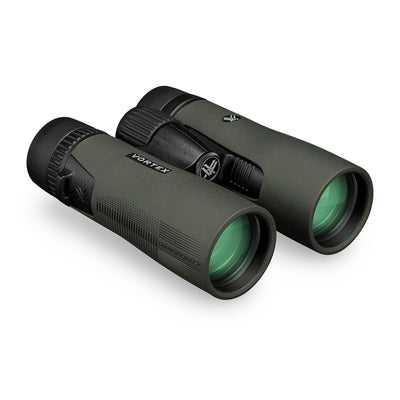
Vortex Diamondback HD 10x42
Best for: Hunters who want the safest, most proven pick under $250
The Vortex Diamondback HD has been the default recommendation in the budget hunting binocular space for several years running, and the 2025 refresh did nothing to change that. If anything, subtle improvements to the coating formula have widened the gap between the Diamondback HD and its competitors at this price point.
Optical clarity is genuinely impressive for a binocular that regularly sells in the $220–$240 range. Center sharpness is excellent, and edge-to-edge performance — traditionally the weak point of budget glass — holds up well enough that you won’t be frustrated when an animal appears at the periphery of your field of view. Color fidelity runs slightly warm, which is actually a benefit for hunting: it enhances contrast in autumn foliage and brown-on-brown scenarios where you’re trying to pick out a deer’s back from the oak brush behind it.
Low-light performance is where you feel the price. The Diamondback HD will give you a bright, usable image until about 15 minutes after sunset, but it falls off faster than optics in the $400+ range. For morning hunts, expect to wait a few minutes longer than your buddy with the Swarovski to start picking up detail. That said, the difference is smaller than most people expect. We’re talking minutes, not a half hour.
The build quality deserves its own paragraph. The Diamondback HD is overbuilt for its price. The rubber armor is thick and grippy, the focus wheel is smooth with good tension, and the whole package feels like it could handle a drop to rocky ground without catastrophic failure. Vortex’s unconditional lifetime VIP warranty seals the deal. They will repair or replace your binoculars regardless of how they were damaged, no receipt required. At this price, that warranty alone is worth the cost of entry.
The included accessories are basic — a nylon neck strap and lens covers that will eventually fall off. Budget $25 for a proper harness system. It’s a small price for the comfort upgrade, especially on all-day sits.
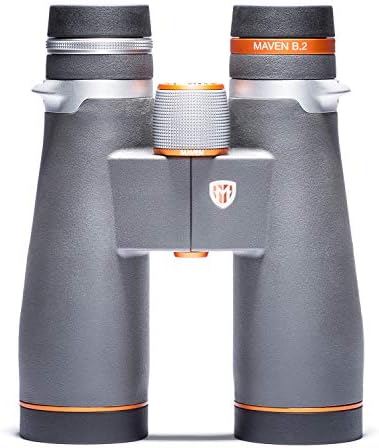
Maven B.2 10x42
Best for: Hunters who want premium glass without the retail markup
Maven is the direct-to-consumer disruptor that the big optics brands hoped would go away. It didn’t. The B.2 10x42 represents what happens when you strip out dealer margins, distributor costs, and massive marketing budgets — and put that money into the glass instead.
The B.2’s optical performance competes with binoculars costing $100–$150 more from traditional retail brands. The ED glass delivers clean, crisp images with minimal chromatic aberration. Resolution is a genuine strength here — fine details like feather patterns on a turkey at 60 yards or the texture of a buck’s antler velvet come through with surprising clarity. This is the binocular on our list that most often made us forget we were looking through sub-$300 glass.
Where Maven really differentiates is customization. You can configure the B.2 with your choice of body and accent colors directly on their site. This sounds like a gimmick until you realize it means Maven is building your binoculars to order rather than pulling them off a warehouse shelf where they’ve been sitting for 18 months. You’re getting a fresher product with tighter quality control.
The trade-off with Maven’s direct model is that you can’t walk into a store and put them to your eyes before buying. Maven’s return policy is generous, but there’s inherent friction in ordering optics sight-unseen. The other consideration is availability — popular configurations can have wait times of several weeks during peak hunting season. Order early. The build quality is solid, though the rubber armor feels slightly thinner than the Diamondback HD. The focus wheel action is excellent — smooth, precise, and easy to find with gloves. Maven’s warranty is lifetime and transferable, which also helps resale value if you eventually upgrade.
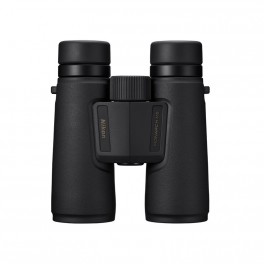
Nikon Monarch M5 10x42
Best for: Low-light hunters and anyone who’s trusted Nikon glass before
Nikon’s presence in the hunting optics market has fluctuated over the years, but the Monarch M5 is a strong argument for paying attention to what they’re doing right now. The M5 replaced the popular Monarch 5 with meaningful upgrades to both the optical system and the chassis, and the result is a binocular that competes aggressively at its $280–$300 street price.
The headline feature is Nikon’s ED glass paired with their dielectric high-reflective multilayer prism coatings. In plain English, this means more light gets through the optical system and reaches your eyes. The practical impact is most noticeable in low-light conditions — the M5 consistently delivered brighter, more detailed images during pre-dawn and post-sunset glassing sessions than the Diamondback HD. The difference isn’t dramatic, but it’s real and repeatable. If you hunt in heavy timber where light is always at a premium, or if most of your hunting happens in the last 20 minutes of legal light, the M5’s low-light advantage is worth the extra $40–$60 over the Diamondback HD.
Color accuracy is a Nikon hallmark, and the M5 doesn’t disappoint. Images are neutral and natural — no warm or cool cast. Some hunters prefer this; others prefer the slightly warm rendering of Vortex glass. It’s a preference, not a performance gap.
The M5 is also the most compact and lightest option in this roundup at just over 21 ounces. For hunters who cover serious miles — backcountry mule deer, mountain goat, or anyone who counts ounces — that weight savings adds up over a 10-hour day. The flip side is that the chassis doesn’t feel quite as indestructible as the Diamondback HD. It’s well-built and fully sealed, but the armor is thinner and the overall feel is more precision instrument than battle tank.
Nikon’s warranty is strong but not unconditional like Vortex’s. It covers manufacturing defects but not accidental damage. For a binocular that lives in a pack bouncing off rocks, that distinction matters to some hunters.
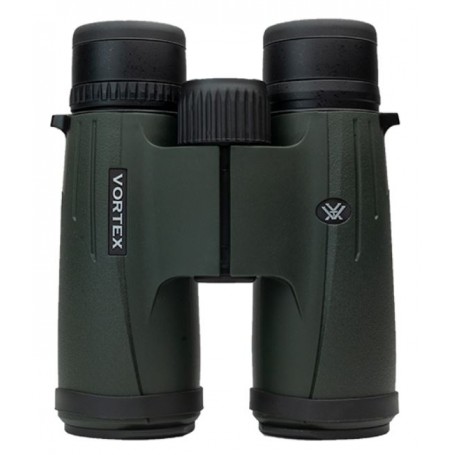
Vortex Viper HD 10x42
Best for: Patient shoppers who watch for sales and want the best glass they can get near $300
The Vortex Viper HD technically lives above our $300 ceiling at its standard retail price of $430–$450. We’re including it because it regularly drops into the $280–$320 range during major sales events — Black Friday, Amazon Prime Day, and Vortex’s own seasonal promotions. If you have time to wait for a deal, the Viper HD at $300 is the best value in this entire roundup by a significant margin.
We’ve covered the Viper HD extensively in our Vortex Viper HD review, so we’ll keep this focused on why it belongs in a budget conversation. The short version: the Viper HD’s XR fully multi-coated lenses and premium prism coatings deliver optical performance that embarrasses everything else under $500. Edge sharpness, color fidelity, chromatic aberration control, and low-light transmission are all a clear step above the other three binoculars in this roundup. The gap isn’t subtle.
Build quality is arguably the best in the Vortex lineup relative to price. The magnesium chassis is lightweight for its durability, the focus wheel has excellent feel and precision, and the overall fit and finish says $600 binocular, not $300. You also get the same unconditional VIP warranty that covers every Vortex product.
The only real drawback is weight. At 24.5 ounces, the Viper HD is the heaviest pick on this list. If you’re a backcountry hunter optimizing every ounce, the Nikon M5 or Maven B.2 will serve you better. For treestand hunters, blind hunters, and anyone who drives close to their hunting spots, the extra few ounces are irrelevant compared to the optical advantage.
The buying strategy here is simple: set price alerts on CamelCamelCamel for the Viper HD on Amazon, check Vortex’s dealer page for authorized retailers running sales, and be ready to pull the trigger when you see them under $300. It happens multiple times per year.
What to Look for in Budget Hunting Binoculars
Beyond the individual recommendations above, here’s the framework we use when evaluating any budget hunting binocular. Use these criteria to evaluate options we haven’t tested, or to gut-check any recommendation you read elsewhere.
Magnification and Objective Lens
For hunting, 10x42 is the standard for a reason. Ten-power magnification gives you enough reach to identify game at meaningful distances without making the image so shaky that you can’t hold steady freehand. The 42mm objective lens provides a good balance of light gathering and physical size.
Eight-power (8x42) binoculars have a wider field of view and more forgiving eye relief, making them better for dense timber and quick target acquisition. If you hunt exclusively in thick cover where your shots are under 150 yards, 8x42 is worth considering. For everything else — and especially for western hunting — go 10x42.
Avoid 12x magnification in a handheld binocular unless you have exceptionally steady hands or plan to always use a tripod. The image shake at 12x is significant enough to negate the resolution advantage for most people.
Lens Coatings — The Non-Negotiable
This is the single most important specification in any hunting binocular, and the one that manufacturers work hardest to obfuscate. Here’s the hierarchy:
- Coated: One layer on one surface. Garbage. Avoid.
- Fully Coated: One layer on all air-to-glass surfaces. Still inadequate for hunting.
- Multi-Coated: Multiple layers on at least some surfaces. Getting closer, but inconsistent.
- Fully Multi-Coated: Multiple layers on ALL air-to-glass surfaces. This is the minimum standard for a hunting binocular.
Every binocular in this roundup is fully multi-coated. Do not buy a hunting binocular in 2026 that isn’t.
Prism Type and Quality
All four picks use roof prisms (as opposed to Porro prisms). Roof prism binoculars are more compact, more durable, and easier to seal against moisture. Within the roof prism category, look for phase-corrected prisms — this corrects a light interference issue inherent to the roof prism design that reduces resolution and contrast. All four binoculars here are phase-corrected.
Eye Relief
If you wear eyeglasses while hunting, eye relief matters enormously. You need at least 16mm of eye relief to see the full field of view with glasses on. All four picks in this roundup meet that threshold, but verify this spec on any binocular you’re considering if you’re a glasses wearer.
Waterproofing and Fog-Proofing
O-ring sealed and nitrogen or argon purged. Both. Every time. No exceptions. A binocular that fogs internally in cold weather is useless at the exact moment you need it most. This is table stakes, not a premium feature.
When to Spend More
We’d be doing you a disservice if we pretended that $300 binoculars are all anyone ever needs. Here’s when it makes sense to save longer and buy better:
You glass for hours at a time. If you’re a dedicated western hunter sitting behind a tripod scanning hillsides for four or five hours straight, eye fatigue becomes a real factor. Premium optics in the $800–$1,500 range deliver noticeably less eye strain over extended glassing sessions. The difference in a 30-second look at a deer is negligible. The difference over four hours is substantial.
You hunt in extreme low light. The sub-$300 binoculars in this roundup perform well in low light, but they can’t match what a $1,000+ binocular does in the last five minutes of legal shooting light. If those final minutes are consistently where your hunting happens, better glass pays for itself.
You plan to keep them for 20+ years. Premium binoculars from Swarovski, Zeiss, and Leica hold their value remarkably well and can last a lifetime with basic care. A $300 binocular will serve you well for years, but it won’t become a piece of gear you hand down to your kid.
You’ve already optimized everything else. If your rifle, scope, pack, boots, and clothing are all dialed, binoculars are the right place to invest more. If you’re still hunting in cotton and shooting a budget scope, spend the extra $700 on those upgrades first. They’ll make a bigger difference than premium glass.
For everyone else — which is most hunters — a well-chosen binocular under $300 is a smart, responsible purchase that won’t hold you back.
Frequently Asked Questions
Are budget binoculars good enough for serious hunting?
Absolutely. The binoculars in this roundup are used by experienced hunters every season with excellent results. The gap between a $250 binocular and a $1,500 binocular has narrowed significantly in the last decade thanks to improvements in coating technology and glass manufacturing. A modern, fully multi-coated budget binocular outperforms mid-range optics from 10 years ago.
What magnification should I choose for hunting — 8x or 10x?
For most hunters, 10x42 is the best all-around choice. It provides enough magnification to identify game at distance while remaining usable handheld. Choose 8x42 if you primarily hunt dense timber or want a wider field of view for tracking moving animals. Avoid 12x unless you plan to use a tripod regularly.
Is the Vortex Diamondback HD better than the Nikon Monarch M5?
They’re optimized for different priorities. The Diamondback HD offers better build quality, a superior warranty, and slightly warmer color rendering. The Monarch M5 delivers better low-light performance and weighs less. If forced to choose one for a general-purpose hunting binocular, the Diamondback HD’s warranty tips the scales — but the M5 is the better pure optic.
How important is eye relief for hunting binoculars?
Critical if you wear glasses. You need at least 16mm of eye relief to see the full field of view with eyeglasses on. Even if you don’t wear glasses now, generous eye relief (17mm+) is beneficial because it makes finding the image easier in a hurry — like when a buck steps out and you have three seconds to evaluate him.
Can I use hunting binoculars for birdwatching or other activities?
Yes. All four binoculars in this roundup work well for birdwatching, sporting events, and general wildlife observation. The 10x42 configuration is one of the most versatile in the optics world. The only scenario where a dedicated hunting binocular might not be ideal is astronomy, where larger objective lenses (50mm+) are preferred.
Should I buy a binocular harness for hunting?
Yes, without question. A harness keeps your binoculars stable against your chest, distributes weight across your shoulders and back, and eliminates neck fatigue from a standard strap. Budget $25–$50 for a quality harness. It’s the most impactful binocular accessory you can buy, and it makes you more likely to actually use your glass throughout the day — which is the whole point.
How often do Vortex Viper HD binoculars go on sale below $300?
Multiple times per year. The most reliable sales happen during Black Friday and Amazon Prime Day, where we’ve seen the Viper HD drop to the $270–$300 range. Vortex-authorized dealers also run periodic promotions, and factory-refurbished models sometimes appear below $280. Set price alerts and be patient — the deals come around regularly.
Quick Buy — Products in This Article