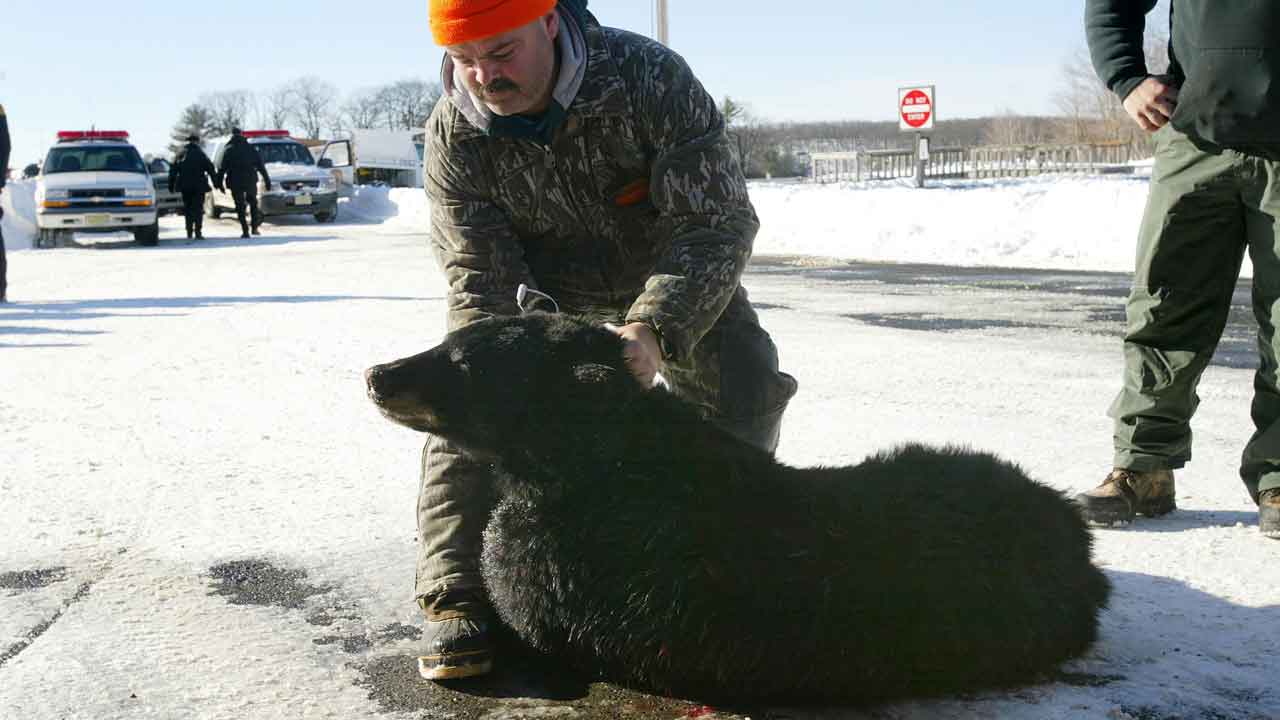
Black bear hunting is one of the most underrated pursuits in North American big game. It demands patience, woodsmanship, physical conditioning, and a willingness to hunt an animal that is far more intelligent and elusive than most hunters expect. Bears are not deer. They do not follow predictable travel corridors between bedding and feeding areas on a daily schedule. They move through thick cover, cover enormous distances in a single night, and possess a nose that makes a whitetail seem nearly anosmic by comparison. When you do find one, the animal is often in dense timber or heavy brush where shot opportunities are brief, ranges are short, and the margin for error on shot placement is unforgiving.
We have hunted black bears across the West and Southeast for years — spring hunts over avalanche chutes in Montana, fall bait hunts in Idaho, spot-and-stalk in the coastal mountains of Oregon, and over hounds in the thick hardwood hollows of the Appalachians. We have misjudged the size of bears at 200 yards, lost blood trails in dark timber, packed out heavy hides and rendered gallons of bear fat, and eaten bear roasts that rivaled the best beef we have ever put on a plate. This guide covers everything we have learned about hunting black bears effectively and ethically: seasonal strategies, hunting methods, rifles and calibers, optics, field judging, shot placement, meat care, safety, and where to go.
If you are new to big game hunting, start with our big game hunting hub for foundational content. For how we test and evaluate every piece of gear we recommend, visit our methodology page.
Spring vs Fall Bear Seasons
Black bear seasons in most states fall into two broad windows — spring and fall — and the hunting experience between them is so different that they might as well be separate pursues. Understanding the behavioral differences between spring and fall bears is the foundation of every tactical decision you will make in the field.
Spring Bear Hunting
Spring seasons typically open between April and June, depending on the state. Bears are emerging from hibernation lean, hungry, and singularly focused on finding food. In the early weeks after den emergence, boars are also actively seeking sows, which makes them more mobile and visible during daylight hours than at almost any other time of year. This combination of hunger and breeding drive is what makes spring bear hunting so productive.
The landscape itself works in your favor during spring. At higher elevations, snowline recession exposes fresh green vegetation on south-facing slopes and in avalanche chutes — and bears gravitate to these areas with remarkable consistency. You can glass a series of open slides from a ridge and cover an extraordinary amount of country. The contrast of a dark-bodied bear against green grass or lingering snow makes spotting straightforward compared to the leaf-covered chaos of fall timber. In coastal regions and lower elevations, bears key on skunk cabbage, clover, dandelions, and other early-season greens in meadows, clear-cuts, and along logging roads.
Spring bears carry their winter coats, which are typically at their best condition — thick, glossy, and deeply colored. If a quality hide is part of your motivation, spring is the season. The downside is that spring bears are lean. They have burned through their fat reserves over winter, and the meat, while still excellent, is leaner than what you will get from a fall bear that has been gorging for months.
One critical consideration during spring seasons is the presence of sows with cubs. In most states, it is illegal to harvest a sow accompanied by cubs, and in spring it can be difficult to determine whether a bear you are watching is a solitary sow or a sow whose cubs are simply out of sight in nearby brush. Take your time. Watch the bear for extended periods. If cubs are present, they will reveal themselves. When in doubt, do not shoot.
Fall Bear Hunting
Fall seasons generally run from August through November, with significant variation by state. The driving force behind fall bear behavior is hyperphagia — the biological imperative to consume as many calories as possible before winter denning. A black bear in hyperphagia can consume 20,000 calories per day, and this frantic feeding makes them more predictable and more visible than at any other time outside of spring.
Fall bears orient around high-calorie food sources. In the West, this means berry patches — huckleberries, serviceberries, chokecherries, and manzanita berries — along with acorns at lower elevations. In the East and Southeast, oak ridges dropping acorns and agricultural fields planted with corn or soybeans are bear magnets. Find the food, and you will find bears. It really is that straightforward in fall, though “finding the food” in vast expanses of mountain timber is itself a significant challenge that demands scouting.
Fall bears are fat. A mature boar that has been feeding hard since August can carry two to four inches of back fat by October, and the meat is rich, well-marbled, and exceptional on the table. The hides, however, are often less prime than spring — rubbing, scratching, and the beginning of the fall shed can leave bare patches, particularly on boars that have been fighting.
The disadvantage of fall hunting is vegetation density. Full leaf cover, tall grass, and thick underbrush make spotting bears significantly harder. Shots tend to be closer, and the window between spotting a bear and losing it in cover is measured in seconds rather than the minutes you might have in a spring alpine setting.
Hunting Methods: Spot-and-Stalk vs Bait vs Hounds
Black bears are hunted using three primary methods, each with its own tactical demands, gear requirements, and ethical considerations. The method available to you is largely dictated by state regulations, as not all states allow all methods.
Spot-and-Stalk
Spot-and-stalk is the purest form of bear hunting and the method most widely legal. It requires quality optics, patience, physical fitness, and a deep understanding of bear behavior and terrain. The concept mirrors spot-and-stalk mule deer hunting — find the bear from a distance with binoculars or a spotting scope, plan an approach that accounts for wind and terrain, and close to shooting range before the bear moves or detects you.
The challenge with spot-and-stalk bear hunting is that bears do not hold still the way a bedded mule deer does. A feeding bear is constantly moving — flipping rocks, tearing apart logs, grazing across a hillside — and its path is unpredictable. You might begin a stalk on a bear feeding across a slide at 600 yards, only to arrive at the spot where it was and find it has moved 300 yards in a direction you did not anticipate. Successful stalks require reading the bear’s feeding direction, anticipating where it is heading, and positioning yourself ahead of its travel rather than chasing behind it.
Spring hunts in mountainous terrain are the ideal setting for spot-and-stalk. Open slides, clear-cuts, and alpine meadows provide the visibility you need to locate bears at distance. In fall, spot-and-stalk is still viable but generally limited to areas with open terrain — high-country berry patches, agricultural edges, or clear-cuts where visibility allows you to pick up a bear before it is inside 100 yards.
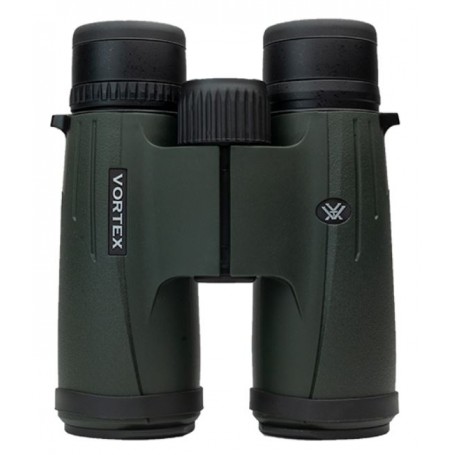
Good binoculars are essential. We run Vortex Viper HD 10x42s for bear hunting because the combination of magnification, field of view, and optical clarity at dawn and dusk — when bears are most active — hits the sweet spot for this pursuit. A spotting scope is valuable in open western terrain for evaluating size at distance, though it is less necessary in the tighter cover typical of eastern bear hunting.
Bait Hunting
Bait hunting is legal in roughly a dozen states, including Idaho, Maine, Wisconsin, Minnesota, and several Canadian provinces. It involves establishing a bait site — typically a 55-gallon drum or ground pit stocked with a combination of bakery waste, grease, dog food, trail mix, or other calorie-dense attractants — and hunting over it from a tree stand or ground blind.
Bait hunting is often dismissed by hunters who have never done it as unsporting. This is uninformed. Establishing and maintaining a productive bait site requires weeks of effort, multiple trips into remote country, hundreds of pounds of bait hauled on your back or ATV, and an intimate understanding of bear travel patterns, wind, and terrain. Getting a mature boar to commit to a bait station during daylight hours is genuinely difficult. Old bears are bait-shy, often circling downwind for 30 minutes or more before approaching, and they tend to hit sites after dark unless everything is in their favor.
The primary advantage of bait hunting is shot selection. You control the distance — typically 15 to 30 yards from a tree stand — and you have time to evaluate the bear. You can study its body proportions to judge size, confirm it is not a sow with cubs, and wait for a perfect broadside or slightly quartering-away shot. For bowhunters in particular, bait hunting provides the controlled shot opportunity that spot-and-stalk rarely delivers.
Hound Hunting
Hound hunting is legal in a limited number of states, including Idaho, Montana, Utah, and several southern states. It involves running trained hounds on a fresh bear track until the dogs tree the bear, then hiking to the tree and making a harvest decision.
Hound hunting is the most physically demanding method of bear hunting. You will follow dogs through some of the nastiest terrain imaginable — steep canyon walls, blowdown, creek bottoms choked with brush — for hours at a stretch. The chase can cover five miles or fifteen, depending on the bear and the terrain. When you arrive at the tree, you are often exhausted, breathing hard, and need to make a composed shot at a bear that may be 30 feet up in a Douglas fir.
The significant advantage of hound hunting is selectivity. With the bear treed, you have time to evaluate its size, sex, and condition thoroughly. Many hound hunters release more bears than they harvest, passing on sows, young boars, and bears with poor hides. This selective harvest is one of the reasons wildlife agencies use hound hunting as a management tool — it allows targeted removal of specific animals in areas where bear populations need to be controlled.
Rifle and Caliber Selection
Black bears are not particularly hard to kill with a well-placed shot, but they are deceptively tough if the shot is marginal. Their heavy bone structure, thick hide, and a layer of fat that can seal entrance wounds and reduce blood trails make adequate caliber and bullet selection more important than many hunters realize. A bear that would have dropped in sight with a good hit can travel 200 yards through impenetrable brush with a bad one, and blood trailing a wounded bear in thick cover is a scenario you want to avoid at all costs.
Minimum Calibers
We consider the .308 Winchester and .30-06 Springfield the baseline calibers for black bear hunting. Both drive a 165- to 180-grain bullet at velocities that deliver reliable expansion and penetration on bears at any reasonable range. The .308 is the more versatile option for hunters who want a rifle that handles well in tight timber, while the .30-06 offers a slight ballistic advantage at longer ranges.
For open-country spring hunts where shots may stretch to 300 yards or beyond, the 6.5 Creedmoor, 7mm Remington Magnum, and .300 Winchester Magnum all perform well. The magnums offer flatter trajectories and more energy at distance, though they are not necessary for the majority of black bear hunting scenarios. If you already own a rifle chambered for elk, it will work beautifully on bears.
For timber hunting where shots are inside 150 yards — which describes most bait, hound, and eastern bear hunting — lever-action rifles in .45-70 Government, .35 Remington, or .444 Marlin are excellent choices. The heavy, large-diameter bullets these cartridges throw are devastatingly effective at close range and handle well in dense brush.
For a comprehensive breakdown of hunting calibers across all big game species, our hunting caliber guide covers the ballistics and application of every major cartridge.
Bullet Selection
Bullet construction matters as much as caliber when hunting bears. You need a bullet that will expand reliably at impact velocities while retaining enough weight to penetrate through heavy muscle, fat, and bone to reach the vitals. Premium bonded bullets — Nosler AccuBond, Federal Trophy Bonded Tip, Swift A-Frame — are our first choice. They expand predictably and hold together through tough angles. Controlled-expansion monolithic bullets like the Barnes TTSX and Hornady GMX are equally effective and offer the added benefit of near-100-percent weight retention.
Avoid lightly constructed varmint or target bullets on bears. A thin-jacketed bullet that fragments on impact may not penetrate the fat layer, shoulder blade, and rib cage to reach the lungs on a frontal or quartering shot. You are looking for 60 to 90 percent weight retention after impact.
Optics for Bear Hunting
Effective bear hunting starts with effective glassing. Bears are most active during the first and last hours of daylight, which means your optics need to perform in low-light conditions where cheap glass falls apart. Chromatic aberration, loss of contrast, and reduced light transmission at dawn and dusk will cost you animals.
Binoculars
A quality pair of 10x42 binoculars is the single most important piece of bear hunting gear you will own. They are your primary tool for locating bears, evaluating size, confirming sex, and checking for cubs. Ten-power magnification is the right balance between field of view and the ability to pick up detail at distance. Eight-power is too weak for picking dark bears out of dark timber at 500 yards. Twelve-power is too shaky to hand-hold for extended glassing sessions without a tripod.
We have used the Vortex Viper HD 10x42 extensively on bear hunts and it remains our go-to recommendation for hunters who want premium optical performance without crossing into the four-figure price range of alpha-class glass. Edge-to-edge sharpness, excellent color fidelity, and strong low-light performance make it an outstanding bear hunting binocular.
Spotting Scopes
For western spot-and-stalk bear hunting, a spotting scope in the 15-45x or 20-60x range adds significant capability. When you pick up a bear at 800 yards with your binoculars, a spotting scope lets you evaluate its size, check for ear tags, look for cubs at its heels, and study the terrain for a stalk route — all before you commit to the approach. In eastern or timber-heavy bear hunting, a spotting scope is generally unnecessary.
Rangefinders
A laser rangefinder is a standard part of our bear hunting kit. Judging distance in mountain terrain is notoriously difficult — steep angles, uniform timber, and the sheer size of the landscape create optical illusions that make 300-yard shots look like 200 and 400-yard shots feel like 600. Range the bear, range a landmark near the bear, and know your holdover or dial before the shot presents itself.
Judging Bear Size in the Field
Misjudging bear size is the single most common mistake bear hunters make, and it is easy to understand why. Bears lack the obvious antler reference points that help hunters evaluate deer and elk. A bear in the field is a dark, roughly uniform shape, and without direct comparison to a known object, a 150-pound sow and a 250-pound boar can look remarkably similar at 300 yards.
Body Proportions
Forget about estimating weight — it is nearly impossible at distance. Instead, focus on body proportions that reliably indicate maturity and sex.
A mature boar has a head that appears small relative to his body. His ears sit wide on a massive skull and look like they are placed on the sides of his head rather than on top. His body is thick, barrel-shaped, and carried low to the ground on short, heavy legs. When he walks, his front end is wider than his hips, and his belly hangs close to or below his elbows. His gait is deliberate and rolling — mature boars swagger.
An immature bear or mature sow has a proportionally larger head relative to body size. The ears appear tall and prominent — the classic “Mickey Mouse ears” that experienced bear hunters use as the first indicator to pass on a bear. The body is leaner, the legs appear longer relative to body mass, and the overall impression is of a lighter, more athletic animal. Sows move with a quicker, more purposeful gait than the rolling lumber of a big boar.
Behavioral Cues
Mature boars and sows behave differently, and these behavioral patterns can help confirm what body proportions suggest. A big boar feeding alone in an open area is almost certainly a mature male — sows with cubs avoid open areas where boars can reach their young, and subdominant boars avoid areas where dominant boars are feeding. A bear that feeds confidently in the open, unhurried and unconcerned, is displaying the behavior of an animal at the top of the local dominance hierarchy.
If you see a bear checking its backtrail, pausing frequently to look and listen, or feeding in short, nervous bursts, it is likely a younger bear or a sow aware of a boar in the area. A sow with cubs will periodically stop and look behind her, and the cubs — even if temporarily out of sight — will usually appear within 10 to 15 minutes of patient observation.
The Ear Rule
If you can see the ears clearly and they look big, the bear is small. If the ears look like they are barely there on a massive, blocky head, you are looking at a shooter. This rule is imperfect and should be one data point among several, but it is the single fastest field assessment tool available.
Shot Placement on Black Bears
Shot placement on bears is different from shot placement on deer, and failing to understand the anatomy will cost you animals. A bear’s vital zone is positioned slightly farther forward and lower in the chest than on a deer, and the heavy shoulder bones, thick hide, and fat layer demand precision.
Broadside
The broadside shot is the gold standard. Place your crosshairs tight behind the front shoulder, one-third of the way up from the bottom of the chest. On a broadside bear, the lungs fill a large area of the chest cavity, and a bullet placed here will pass through both lungs, producing rapid blood loss and a short recovery distance. Do not aim at the center of the visible body mass — this places the shot too far back and risks a gut hit.
A common mistake is shooting too high on a broadside bear. The thick hump of fat and muscle over the shoulders can make the bear’s back appear lower than it is, causing hunters to aim above the vitals. Focus on the lower third of the chest, directly behind the shoulder joint.
Quartering Away
The quartering-away shot is the second-best opportunity and is extremely effective with a well-constructed bullet. Aim for the offside shoulder — picture where the opposite front leg meets the body — and angle your shot through the ribcage to exit through or near that point. The bullet will pass through the rear of the near-side lung, through the heart or both lungs, and ideally exit through the offside shoulder, leaving a substantial exit wound and a reliable blood trail.
Quartering Toward and Frontal
Quartering-toward and frontal shots should be taken only when you are confident in your caliber, bullet construction, and marksmanship. These angles require the bullet to penetrate heavy shoulder bone and muscle before reaching the vitals. Place the shot at the center of the chest on a frontal bear, aiming for the point where the neck meets the chest between the front legs. On a quartering-toward bear, aim at the near-side shoulder joint and drive the bullet back through the vitals.
These are not shots for light calibers or fragile bullets. A 180-grain bonded bullet from a .30-06 or a 200-grain partition from a .300 magnum will handle the job. A 130-grain from a 6.5 Creedmoor may not.
Shots to Avoid
Never take a straight-on headshot on a bear. The skull is heavily built, steeply angled, and a bullet can easily deflect. Never take a rear-end or Texas heart shot — the pelvic girdle is massive, and even if the bullet reaches the body cavity, the wound is not immediately fatal, resulting in a wounded bear in thick cover. If the only shot available is one of these, wait. The bear will move and eventually present a better angle.
Field Dressing and Meat Care
Bear meat is some of the finest wild game available when handled correctly and some of the worst when handled poorly. The difference comes down to temperature management and how quickly you separate the hide from the carcass.
Getting the Hide Off Fast
A bear’s thick hide and insulating fat layer trap heat far more effectively than a deer’s thinner hide. Internal temperatures in an unprocessed bear carcass can remain dangerously high for hours, even in cool ambient conditions. Your first priority after the kill is getting the hide off and the body cavity open to begin cooling the meat.
Skin the bear as soon as possible — ideally within 30 minutes of the kill. If you plan to keep the hide for a rug or mount, skin carefully from the back side, keeping the face, paws, and claws intact for the taxidermist. If you are not keeping the hide, speed trumps aesthetics. Get it off, get the guts out, and get air circulating around the meat.
Quartering and Packing
Once skinned and gutted, quarter the bear the same way you would an elk — front shoulders, hindquarters, backstraps, and tenderloins. Place each quarter in a breathable game bag to protect from flies and debris while allowing airflow. If temperatures are above 50 degrees, you need to get the meat to a cooler with ice within a few hours. Bears carry more body heat than similarly sized ungulates, and spoilage happens fast.
Bear fat is valuable. Unlike deer tallow, which is waxy and unpalatable, bear fat renders into a clean, mild cooking oil that is outstanding for frying, baking, and pastry work. Trim the fat from the quarters and render it at home — it stores well in the freezer for months.
Trichinella and Food Safety
Black bear meat can carry Trichinella parasites, which cause trichinosis in humans. This is not optional knowledge — it is a non-negotiable food safety requirement. All bear meat must be cooked to an internal temperature of 165 degrees Fahrenheit. No rare or medium-rare bear steaks. No exceptions. A reliable meat thermometer is as essential as your rifle when bear hunting. Freezing does not reliably kill Trichinella in bear meat the way it does in pork, so thorough cooking is the only safe approach.
When properly cooked, bear meat is rich, slightly sweet, and remarkably versatile. Slow-cooked roasts, sausage, chili, and stew are all excellent applications. The hindquarters respond well to braising, and the backstraps are outstanding in a hot skillet with butter and garlic, cooked to a safe but not overdone internal temperature.
Bear Safety and Awareness
Hunting an apex predator demands a level of situational awareness that other big game pursuits do not. Black bears are rarely aggressive toward humans, but wounded bears, sows with cubs, and bears surprised at close range in thick cover are legitimate safety concerns that every bear hunter must prepare for.
Approaching a Downed Bear
Never assume a bear is dead until you have confirmed it. Approach from uphill or from behind, with your rifle loaded and ready. Watch the bear’s chest for any sign of breathing. Look for the eyes — a dead bear’s eyes will be open, fixed, and dull. A bear that is unconscious but alive will often have closed or half-closed eyes. Poke the bear’s hindquarters with a long stick or your rifle barrel from a safe distance before approaching to make physical contact. If the bear moves, step back and shoot again. This is not a drill you want to learn through experience.
Bear Spray
Carry bear spray on every bear hunt, regardless of the species you are targeting. Keep it accessible — on your chest harness or belt, not buried in your pack. Bear spray has a documented effectiveness rate above 90 percent in stopping charging bears, and it works on both black bears and grizzlies. In areas where grizzly bears overlap with black bear habitat — much of Montana, Wyoming, Idaho, and parts of Washington and Colorado — bear spray is not optional gear. It is mandatory equipment.
Grizzly Bear Awareness
If you are hunting black bears in grizzly country, you need to be able to distinguish between the two species instantly and at distance. Grizzly bears are federally protected in the lower 48 states, and shooting one accidentally during a black bear hunt carries severe legal consequences. Key identification features: grizzlies have a prominent shoulder hump, a dished or concave facial profile, and shorter, more rounded ears. Black bears lack the shoulder hump, have a straighter facial profile, and taller, more pointed ears. Color is not a reliable identifier — black bears can be brown, cinnamon, or blonde, and grizzlies can appear quite dark.
When packing out meat from a kill in grizzly country, hang your game bags at least 200 yards from your route and your camp, and make noise on your approach each time you return to the kill site. A grizzly that has claimed a carcass will defend it aggressively. If you return to your kill site and find it has been covered with debris or buried, a grizzly has claimed it. Leave immediately and contact your state wildlife agency.
Best States for Black Bear Hunting
Black bear populations are healthy and growing across much of North America, and hunting opportunities range from over-the-counter tags that cost less than a tank of gas to highly sought-after draw hunts in premium units. Here are the states we consider the best options for black bear hunters.
Idaho offers some of the finest black bear hunting in the lower 48. Spring and fall seasons are long, hound and bait hunting are legal, OTC tags are available, and bear densities in the central mountain zones are outstanding. The Frank Church Wilderness and surrounding national forests hold exceptional numbers of bears in remote, rugged country.
Montana provides excellent spring bear hunting, particularly in the western third of the state. Open alpine terrain along the Continental Divide offers world-class spot-and-stalk opportunities. Bear densities are high, and both spring and fall seasons are available with OTC tags.
Wisconsin is the premier eastern bear hunting state, with a well-managed population and a bait-hunting tradition that produces consistently high success rates. The tradeoff is a preference point system that requires several years of applications for the most productive units.
Maine offers both bait and hound hunting, long seasons, and high bear densities in the northern counties. Nonresident tags are available over the counter, making it one of the most accessible eastern bear hunts.
Colorado has an enormous and growing black bear population, with OTC rifle tags available in many units during the fall season. The San Juan Mountains, the Flat Tops, and the Gunnison area are all productive. Bait and hound hunting are not legal in Colorado, so spot-and-stalk and incidental harvest during deer and elk seasons are the primary methods.
North Carolina and Virginia offer underrated bear hunting in the southern Appalachians. Bear populations have expanded significantly in recent decades, and both states offer hound hunting traditions with deep cultural roots.
For hunters planning their first multi-species western trip, combining a bear tag with an elk hunt is an outstanding strategy. Many western states allow you to carry a bear tag while hunting elk, and incidental bear encounters in elk country are common. Our elk hunting gear checklist covers the full packing list for a western mountain hunt that can easily accommodate bear hunting.
Frequently Asked Questions
What is the best caliber for black bear hunting?
The .308 Winchester and .30-06 Springfield are the two most versatile calibers for black bear hunting across all terrain types and hunting methods. Both drive a 165- to 180-grain bullet with enough energy to handle any black bear at any reasonable range, and both are available in a wide range of rifle platforms. If you hunt primarily in open western terrain where shots may exceed 300 yards, step up to a 7mm Remington Magnum or .300 Winchester Magnum. For timber hunting inside 150 yards, a .45-70 lever action is hard to beat. Bullet construction matters as much as caliber — always use bonded or monolithic bullets designed for controlled expansion and deep penetration. Our hunting caliber guide covers all major cartridges in detail.
How do you tell a big bear from a small bear at distance?
Focus on body proportions rather than trying to estimate weight. A mature boar has a blocky, barrel-shaped body with short legs that appear almost too small for the mass they carry. His head looks small relative to his body, and his ears appear low-set and widely spaced — they almost disappear into the width of his skull. An immature bear or sow has proportionally longer legs, a leaner body, and prominent ears that stand tall on the head. Watch the bear move — mature boars walk with a slow, deliberate, rolling gait, while younger bears and sows move more quickly and nervously. If the ears are the first thing you notice, the bear is too small.
Is black bear meat good to eat?
Black bear meat is outstanding when handled and cooked properly. It is rich, slightly sweet, and carries more fat than most wild game, which makes it exceptionally flavorful and forgiving in a variety of recipes. The critical food safety requirement is cooking all bear meat to an internal temperature of 165 degrees Fahrenheit to eliminate the risk of Trichinella parasites. Slow-cooked roasts, braised shanks, sausage, chili, and ground bear in any application where you would use ground beef are all excellent. Rendered bear fat is a prized cooking oil. The key to good bear meat is getting the hide off quickly after the kill and cooling the carcass as fast as possible — bears retain body heat far longer than deer, and spoilage is the most common reason hunters have a negative experience with bear meat.
Do you need bear spray while bear hunting?
Yes. Carry bear spray on every bear hunt, and keep it immediately accessible on your chest harness or belt. This applies whether you are hunting in grizzly country or not. A wounded black bear in thick cover, a sow defending cubs, or an unexpected close encounter can escalate faster than you can shoulder a rifle. Bear spray has over a 90 percent documented effectiveness rate at stopping charging bears of all species. In areas where grizzly and black bear ranges overlap — most of Montana, Wyoming, Idaho, and parts of Washington, Colorado, and the northern Cascades — bear spray is not optional. It is the single most effective tool for preventing a bad situation from becoming a catastrophic one.
What are the best states for a first black bear hunt?
For a first black bear hunt, we recommend Idaho or Montana for western hunters and Maine or Wisconsin for eastern hunters. Idaho combines long seasons, legal bait and hound hunting, over-the-counter tags, and high bear densities — it is the most complete package in the lower 48. Montana offers exceptional spring spot-and-stalk hunting in open alpine terrain where you can glass bears at distance and learn to judge size without the pressure of dense cover. Maine provides OTC nonresident tags, legal bait hunting, and high success rates in the northern counties. Wisconsin has an outstanding bait-hunting tradition and a well-managed population, though the preference point system means planning ahead. Regardless of which state you choose, hiring a guide or hunting with an experienced bear hunter for your first trip is worth the investment — the learning curve on judging bear size alone will save you from a harvest you regret.