
A rifle scope is the single piece of gear that determines whether a well-placed shot connects or a season ends in disappointment. We can put together the perfect rifle, handload the ideal cartridge, and spend months scouting — but if the optic sitting on top can’t resolve detail at distance, hold zero through recoil, or gather enough light in the final minutes of legal shooting time, none of that preparation matters. The scope is where everything converges.
We’ve spent hundreds of hours behind these optics in the field — glassing ridgelines for mule deer, tracking elk through dark timber at last light, and confirming shot placement on whitetails from elevated stands. Every scope in this roundup has been mounted, zeroed, dragged through weather, and evaluated against our testing methodology under the conditions that actually matter to big game hunters. These aren’t spec-sheet comparisons. We know how these scopes perform when your hands are cold, the light is fading, and the animal you’ve been chasing for a week is standing broadside at 300 yards.
The best rifle scopes for big game hunting under $1,000 deliver a combination of optical clarity, reliable tracking, appropriate magnification range, and the kind of durability that survives years of hard use in rough country. Below, we cover the five scopes that earned their place in this roundup, break down what separates a good big game scope from a great one, and walk through the decisions that help you match the right optic to your specific hunting style. If you’re also working through the rifle side of the equation, our guide to choosing a hunting rifle covers that process in detail.
Quick Picks
- Best All-Around: Vortex Viper PST Gen II 3-15x44 — The most versatile scope in this roundup. Exceptional tracking, clear glass, and a feature set that handles everything from whitetail stands to western mule deer hunts without compromise.
- Best Glass Quality: Leupold VX-5HD 3-15x44 — The clearest, sharpest optic under $1,000. Leupold’s HD lens system produces an image that punches well above this price class, and it’s built lighter than anything else in this group.
- Best Smart Features: Sig Sauer SIERRA3BDX 4.5-14x44 — Bluetooth-enabled ballistic data synced directly to your reticle. If you want technology doing the holdover math in real time, this is the scope that delivers it.
- Best Low-Light Performance: Burris Veracity 3-15x50 — The 50mm objective lens pulls in more light than any other scope here. When you’re hunting the edges of the day, this is the optic that keeps the image bright and usable longest.
- Best Value: Athlon Midas TAC 4-16x44 — A scope that delivers features and optical quality typically found at twice its price point. For hunters who want serious performance without approaching the $1,000 ceiling, this is where to look.
What Makes a Great Big Game Hunting Scope
Not every quality scope is a great hunting scope. Target optics, competition scopes, and tactical glass all have different priorities. A big game hunting scope needs to excel in five specific areas, and getting the balance right between them is what separates the scopes that thrive in the field from the ones that look impressive on a spec sheet but frustrate you in practice.
Magnification Range
The magnification range defines the scope’s versatility. For big game hunting across varied terrain, we’ve found that a 3-15x or 4-16x range covers virtually every realistic scenario. The low end — 3x or 4x — gives you a wide field of view for close encounters in timber, brush, or when an animal appears suddenly at short range. The high end — 15x or 16x — provides enough magnification for precise shot placement on targets out to 500 yards and beyond, and for confirming animal details (antler points, body condition, species identification) at distance before committing to a shot.
Avoid the temptation to go higher than you need. A 5-25x scope sounds impressive, but at 25x you’re looking through a narrow straw with a shallow depth of field. Mirage, heartbeat, and breathing become magnified to the point where they interfere with shot execution. For the vast majority of big game hunting scenarios, 15x or 16x on the top end is more magnification than you’ll use on most shots. We rarely dial past 12x in the field, even on longer western shots.
Objective Lens Size
The objective lens — the front lens of the scope — determines how much light enters the optical system. A larger objective collects more light, which translates to a brighter image in low-light conditions. For big game hunting, 44mm is the standard that balances light gathering with practical mounting height and overall scope weight. A 50mm objective pulls in noticeably more light, which matters if you consistently hunt the first and last thirty minutes of legal shooting time.
The trade-off with a larger objective lens is weight and mounting height. A 50mm scope requires taller rings, which raises the optical axis further above the bore. This increases the offset between where you aim and where the bullet exits, which can create issues at very close range and requires more precise cheek weld. For most hunters, 44mm is the sweet spot. If low-light performance is your primary concern, 50mm is worth the trade-offs.
Reticle Design
The reticle is your aiming reference, and for big game hunting, simplicity and speed tend to beat complexity. A duplex-style reticle with heavier outer posts that taper to a fine crosshair in the center is the fastest reticle design to use in the field. Your eye is naturally drawn to the center of the crosshair, and the thick outer posts frame the target quickly in any light condition.
BDC (Bullet Drop Compensator) reticles add holdover reference points calibrated to specific cartridge trajectories. These can be genuinely useful for hunters who take shots beyond 300 yards and don’t want to dial their turrets. The key is making sure the BDC subtensions are calibrated for your specific load — a BDC reticle designed around a .308 Winchester trajectory won’t give you accurate holdovers with a .300 Win Mag. Some manufacturers provide custom turrets or apps that let you match the reticle to your specific ballistics. For a deeper breakdown on adjustment systems, our MOA vs. MIL guide covers the differences and which system makes more sense for hunting applications.
Durability and Weather Resistance
A big game scope lives a hard life. It’s exposed to rain, snow, dust, extreme temperature swings, and repeated heavy recoil. It gets banged against rocks, dropped in mud, and left in a truck bed in freezing conditions before being expected to perform perfectly at the moment of truth. Every scope in this roundup is nitrogen or argon purged for fog resistance and sealed against water intrusion. But durability goes beyond sealing.
The tube construction, turret mechanism, and internal erector system all need to withstand sustained abuse without shifting zero. We specifically test for zero retention after repeated impacts and temperature cycling, because a scope that drifts zero after a day of hiking rough terrain is worse than useless — it’s actively working against you. Aircraft-grade aluminum tubes, one-piece construction, and quality internal springs and bearings are the hallmarks of a scope that holds up over years of hard hunting use.
Weight
Ounces matter when you’re carrying a rifle for miles through mountain terrain at elevation. A heavy scope tips the balance of an otherwise well-designed rifle, and the cumulative weight of rifle, scope, rings, ammunition, and a loaded pack adds up fast on a multi-day backcountry hunt. The scopes in this roundup range from roughly 18 to 24 ounces. For a dedicated mountain rifle, every ounce of scope weight is worth scrutinizing. For a stand hunter or a truck-based operation, weight is less of a concern and you can prioritize other attributes.
Vortex Viper PST Gen II 3-15x44
Best for: Hunters who need one scope that handles everything from eastern hardwood whitetail hunts to open-country western big game without compromise.
The Vortex Viper PST Gen II 3-15x44 is the scope we’d recommend if someone told us they could only own one big game optic and needed it to work across every hunting scenario they’d encounter. It doesn’t have the absolute best glass in this roundup, nor the lightest weight, nor the most advanced features. What it has is the best overall balance of every attribute that matters — and in a hunting scope, balance is the hardest thing to get right.
The optical system uses Vortex’s extra-low dispersion glass with XR fully multi-coated lenses, and the image quality is genuinely impressive at this price point. Center sharpness is excellent at every magnification setting, and edge-to-edge clarity holds well even at the higher end of the zoom range where lesser scopes start softening at the periphery. Color fidelity is accurate without the warm or cool tints that some scopes introduce. When we’re glassing a hillside trying to pick apart a mule deer bedded in sagebrush, we want the scope to show us what’s actually there — not an interpretation of it. The Viper PST Gen II does this consistently.
The turrets are what elevate this scope above its competition in the sub-$1,000 category. They’re capped for protection during normal hunting use, but they expose a tall, tactile turret with audible and tactile clicks that are as good as turrets we’ve used on scopes costing twice the price. Tracking is precise and repeatable. When we dial 12 MOA of elevation, the point of impact moves exactly 12 MOA. When we return to zero, it’s at zero — not a quarter-inch off. This repeatability is something we verify in our testing methodology, and the Viper PST Gen II has passed every tracking test we’ve subjected it to.
The first focal plane reticle option (the EBR-7C MRAD is our preference) means the subtensions remain accurate at every magnification setting. This is a significant advantage for hunters who use holdovers rather than dialing — your holdover reference points are correct whether you’re at 3x or 15x. The reticle itself is well-designed for hunting, with a fine center crosshair that doesn’t obscure small targets at distance and heavier outer elements that frame the target quickly in low light.
At 23 ounces, the Viper PST Gen II isn’t the lightest scope in this roundup, but it’s not heavy enough to meaningfully change the handling of any reasonable hunting rifle. The 30mm tube provides ample adjustment range for long-range shooting, and the overall build quality — machined aluminum construction, quality anodizing, solid turret feel — reflects Vortex’s reputation for producing serious optics at accessible prices. The unconditional lifetime warranty, which covers any damage regardless of cause, removes the financial risk entirely. We’ve seen Vortex replace scopes that were clearly abused by the owner without a single question asked.
For hunters who primarily hunt big game across varied terrain and want a scope that does everything well without a glaring weakness, the Viper PST Gen II 3-15x44 is the safest, most versatile choice under $1,000. If you want a complete walkthrough of scope selection, our how to choose a rifle scope guide pairs well with this recommendation.
Leupold VX-5HD 3-15x44
Best for: Hunters who prioritize optical clarity and light weight above all other scope attributes, and are willing to pay near the top of the budget for the best glass in the class.
The Leupold VX-5HD delivers the best glass quality we’ve found under $1,000. This isn’t a marginal difference — put the VX-5HD side by side with the other scopes in this roundup and the image quality is visibly superior. Resolution is sharper, contrast is higher, chromatic aberration is better controlled, and the twilight performance (the amount of usable image quality in the last minutes before dark) is noticeably extended. If optical purity is your highest priority, the Leupold ends the search.
Leupold’s proprietary lens coatings and HD glass elements produce an image that’s remarkably clean and high-contrast. When we’re trying to pick apart a dark-timbered ridge looking for the shape of an elk in shadows, the VX-5HD resolves detail that other scopes at this price simply blur into a dark mass. The edge sharpness is excellent — nearly as good as the center across the field of view — which matters when you’re scanning across a wide area and need consistent image quality from edge to edge. Colors are rendered naturally without the color fringing that indicates poorly corrected chromatic aberration.
The twilight factor — the calculated metric for low-light performance — doesn’t tell the full story with the VX-5HD. On paper, its 44mm objective should perform identically to the other 44mm scopes in this roundup. In practice, the superior lens coatings transmit more light with less internal scatter, which means the VX-5HD delivers a brighter, higher-contrast image in low light than its objective lens size alone would suggest. Leupold has been refining these coatings for decades, and the accumulated expertise shows.
Weight is where the VX-5HD truly separates from the field. At just under 18 ounces, it’s the lightest scope in this roundup by a meaningful margin. That weight savings matters on a mountain rifle build, where we’re chasing elk at 10,000 feet and every ounce on the rifle is an ounce we feel on our back during the fourth hour of a climb. Leupold achieves this partly through their 30mm tube design and partly through thoughtful material selection and engineering that eliminates unnecessary mass without compromising structural integrity.
The turret system is functional and protective with finger-adjustable capped turrets that keep the zero setting safe from accidental bumps and snags. The clicks are positive and the tracking is accurate, though the turret feel isn’t quite as refined as the Vortex Viper PST Gen II. For hunters who primarily use holdovers rather than dialing, this is irrelevant. The Twilight Max Light Management System controls internal reflections aggressively, eliminating the glare and stray light that can degrade image quality in challenging lighting conditions — like shooting toward a low-angle sun during early morning or late evening hunts.
The Custom Dial System (CDS) is worth mentioning for hunters who do dial for distance. Leupold will create a custom elevation turret matched to your specific cartridge, load, and environmental conditions. You send them your ballistic data, they machine a turret marked in yards (not MOA or MIL), and you dial directly to your yardage. It’s an elegant system that removes the mental math from field shooting. We’ve used CDS turrets on several hunts and the simplicity is genuine — range the animal, dial to the number, hold center, press the trigger.
The Leupold VX-5HD is American-made, backed by Leupold’s lifetime guarantee, and carries the accumulated credibility of a company that has been building hunting optics longer than most of its competitors have existed. For the hunter who demands the absolute best image quality and lightest weight under $1,000, and is willing to accept slightly less feature density to get it, the VX-5HD is the definitive choice.
Sig Sauer SIERRA3BDX 4.5-14x44
Best for: Technology-forward hunters who want Bluetooth-connected ballistic intelligence integrated directly into their scope for precise holdover data at any range.
The Sig Sauer SIERRA3BDX represents a fundamentally different approach to the hunting scope. While the other optics in this roundup are purely optical instruments, the SIERRA3BDX is a connected device that communicates wirelessly with Sig’s BDX-compatible rangefinders to display a calculated holdover point directly in your field of view. When it works — and in our testing, it works reliably — it removes the most error-prone step in long-range field shooting: translating a range reading into the correct aiming point.
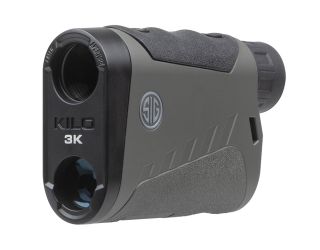
Here’s how the system operates. You pair the SIERRA3BDX with a BDX-enabled rangefinder (like the Sig KILO series) through Sig’s Ballistic Data Xchange app. You input your cartridge, load data, and environmental parameters into the app. When you range a target with the paired rangefinder, the ballistic solution is transmitted via Bluetooth to the scope, which illuminates a calculated holdover dot in the reticle at the precise point where you need to aim. The dot accounts for distance, angle, ballistic trajectory, and environmental conditions. You put the illuminated dot on the animal and fire.
The practical advantage in a hunting scenario is real. Consider a situation we encounter regularly in western big game hunting: an elk appears on a far slope, you range it at 425 yards, there’s a moderate downhill angle, and you have maybe thirty seconds before the animal moves. With a conventional scope, you need to range, calculate or recall your drop at that distance, adjust for angle, either dial the turret or determine the holdover, and then execute the shot. With the BDX system, you range the animal and the scope tells you where to aim. The mental workload drops dramatically, which means you can focus on shot execution — breathing, trigger press, follow-through.
The optical quality of the SIERRA3BDX is good but not class-leading. Glass clarity and resolution are solid and competitive at this price point, but the Leupold VX-5HD and Vortex Viper PST Gen II both produce a slightly sharper, higher-contrast image. The SIERRA3BDX trades a small margin of optical refinement for its technology suite, and for many hunters, that’s a trade worth making. Low-light performance is adequate, with the illuminated BDX dot remaining visible and useful in twilight conditions.
The 4.5-14x magnification range is slightly more restrictive at the low end than the 3-15x scopes in this roundup. At 4.5x, the field of view is narrower, which can be a disadvantage in thick timber or on close-range encounters where you need to find the animal quickly in the scope. For hunters who primarily take shots at moderate to long range in open terrain — mule deer, pronghorn, open-country elk — this is unlikely to matter. For hunters who split time between timber and open country, the slightly higher minimum magnification is worth considering.
Battery life for the BDX system is measured in thousands of hours on a single CR2032 cell, which is more than sufficient for even extended backcountry hunts. The system pairs quickly and maintains its connection reliably at the distances that matter in a hunting context. Setup through the app is straightforward, and once your ballistic profile is configured, the system is essentially transparent in use.
The SIERRA3BDX isn’t the right choice for the hunter who wants the best pure optic under $1,000. It is the right choice for the hunter who recognizes that technology can meaningfully improve shot placement probability at distance, and who values that advantage enough to accept a small optical compromise to get it. In an era where rangefinding and ballistic calculation are increasingly integrated into the hunting workflow, the BDX system represents where scope technology is heading.
Burris Veracity 3-15x50
Best for: Hunters who consistently hunt in low-light conditions — dawn, dusk, heavy timber, overcast days — and need maximum light-gathering capability in their optic.
The Burris Veracity 3-15x50 carries the largest objective lens in this roundup, and that 50mm front element is the defining feature that sets it apart. Those extra 6 millimeters of objective diameter compared to a 44mm scope translate into a meaningfully brighter image when ambient light drops, which is precisely when the most consequential shots in big game hunting tend to happen. If your hunting consistently puts you behind the scope in marginal light, the Veracity delivers where it matters most.
Light transmission through the Veracity’s optical system is excellent. Burris uses their Hi-Lume multi-coatings across all air-to-glass surfaces, and the combination of those coatings with the larger objective produces an image that remains bright and clear well past the point where 44mm scopes start struggling. We’ve compared the Veracity against 44mm scopes in controlled twilight conditions, and the difference is not subtle. Fine crosshair details remain visible longer, target definition stays sharper, and the overall image retains contrast and color accuracy deeper into the low-light window. For a whitetail hunter sitting a stand during the rut, waiting for a mature buck to step out in the last ten minutes of legal light, this advantage is the difference between a confident shot and a pass.
The optical quality in bright daylight is very good but not quite at the level of the Leupold VX-5HD. Center sharpness is strong, edge performance is respectable, and chromatic aberration is well-controlled. The Veracity won’t embarrass itself next to any scope in this roundup during midday shooting. Its real advantage manifests at the boundaries of the day, and if that’s when you do most of your hunting, it’s the most important advantage a scope can offer.
The 3-15x magnification range matches the standard we’ve identified as ideal for big game versatility. At 3x, the field of view is wide enough for close-range work in timber. At 15x, you have enough magnification for precise shot placement at extended distances and for evaluating animal details at range. The zoom ring moves smoothly with appropriate resistance, and the eyepiece delivers consistent eye relief across the magnification range — no head-position hunting required when you power up quickly for a distance shot.
Turret construction on the Veracity is robust with a clean, positive click feel. Tracking accuracy is reliable in our testing, with consistent and repeatable adjustments. The turrets are capped for field protection, and the adjustment range is sufficient for reasonable hunting distances with most common big game cartridges. The parallax adjustment side knob provides parallax correction from 50 yards to infinity, which eliminates parallax error that can shift your point of impact at various ranges.
The Ballistic Plex E1 reticle option is worth highlighting. It’s a clean, hunting-oriented reticle with wind drift and elevation holdover marks that don’t clutter the field of view. The design lets you use holdovers without dialing, and the subtension values are well-matched to common big game cartridge trajectories. An illuminated center dot option enhances visibility against dark backgrounds in low light.
Weight is the trade-off. The 50mm objective adds mass compared to the 44mm scopes in this roundup, and the Veracity tips the scales at roughly 24 ounces. It also requires taller mounting rings, which raises the optical axis and increases the cheek-weld height. For a stand-hunting rifle or a truck-accessible hunting scenario, this is negligible. For a dedicated mountain rifle where every ounce is scrutinized, the weight penalty is real and worth evaluating against the low-light advantage. For more on building a complete big game setup, our big game hunting hub covers gear selection across categories.
Athlon Midas TAC 4-16x44
Best for: Budget-conscious hunters who want serious optical performance and feature density without approaching the $1,000 price ceiling.
The Athlon Midas TAC 4-16x44 is the scope that should make every other manufacturer in this roundup uncomfortable. At a street price that typically falls between $300 and $400, it delivers optical quality, turret performance, and build quality that compete with scopes costing two to three times as much. The value proposition is genuinely remarkable, and for hunters who want to allocate more of their budget toward the rifle, ammunition, or other gear, the Midas TAC frees up significant dollars without forcing meaningful compromises.
The glass is the first surprise. Athlon uses advanced fully multi-coated optics that produce a clear, sharp image with good contrast and accurate color rendition. Is it as optically refined as the Leupold VX-5HD? No — there’s a visible difference in edge sharpness and twilight performance when you compare them side by side. But judged on its own merits and against its actual price peers, the Midas TAC’s glass quality is exceptional. Center sharpness is strong, chromatic aberration is well-managed, and the image remains usable in low light well past the point where many budget optics fall apart.
The turret system is where the Midas TAC punches furthest above its price class. The exposed, locking turrets feature precise clicks with distinct tactile and audible feedback. Tracking accuracy in our testing has been excellent — adjustments move the point of impact exactly as indicated, and return to zero is consistent. These are turrets that would be impressive on a $700 scope. On a $350 scope, they’re borderline unfair to the competition. For hunters who want the option to dial for distance on longer shots, the Midas TAC provides that capability without requiring a premium-tier investment.
The 4-16x magnification range is slightly tighter at the low end than a 3x scope, but 4x still provides an adequate field of view for moderate-range encounters. The extra magnification on the top end — 16x versus 15x — is a marginal difference that’s unlikely to matter in practice. The 44mm objective lens is the standard big game size, balancing light gathering with practical mounting height and weight. Parallax adjustment runs from 15 yards to infinity via a side-focus knob, giving you clean parallax correction across all realistic hunting distances.
The first focal plane reticle (the APRS1 MIL in our testing sample) stays dimensionally accurate across the entire magnification range, providing correct holdover values at any power setting. The reticle design incorporates a Christmas-tree-style subtension pattern at the lower half of the crosshair, with wind-hold references and elevation marks that are useful for longer-range shots. The center crosshair is fine enough for precise aiming without obscuring small targets. If you prefer a simpler reticle, Athlon offers SFP versions with more traditional hunting reticle patterns.
Build quality is solid. The 30mm tube is machined from 6061 aluminum, and the scope feels substantive and well-assembled. It’s nitrogen purged and sealed against water and fog. The finish is utilitarian but durable. At roughly 23 ounces, it’s in line with the Vortex Viper PST Gen II for weight. Athlon backs the Midas TAC with a lifetime warranty that, while not as unconditional as Vortex’s, provides comprehensive coverage for manufacturing defects and normal use failures.
The honest assessment is this: if you handed the Athlon Midas TAC to a competent hunter who’d never seen the brand name and asked them to evaluate it blind, most would estimate its price at $600 to $800. The gap between the Midas TAC and the premium options in this roundup is real but narrower than the price difference would suggest. For hunters who are building their first serious big game rifle setup, or who simply prefer to allocate budget toward experiences over equipment premiums, the Midas TAC is a genuinely excellent scope. For more options at an even lower price point, our roundup of rifle scopes under $500 is worth exploring.
Magnification Guide by Game Type
Choosing the right magnification range depends on the game you’re pursuing and the terrain you’re hunting it in. Here’s how we match magnification to common big game scenarios based on our field experience.
Whitetail Deer (Eastern Timber/Stand Hunting): Most shots happen inside 200 yards, often in thick cover with narrow shooting lanes. A scope that bottoms out at 3x or lower gives you the wide field of view to pick up a moving deer in brush. You rarely need more than 9x or 10x. A 3-15x scope works well here, spending most of its time at lower magnification settings.
Mule Deer and Pronghorn (Open Country): Western hunting puts you in terrain where animals are spotted at long distances and shots beyond 300 yards are common. Higher magnification is useful for both identifying animals and making precise shots. A 4-16x or 3-15x scope spends most of its time in the 8-14x range in this environment. The top end matters here more than in timber hunting.
Elk (Varied Terrain): Elk hunting spans everything from tight dark timber to wide-open alpine basins, sometimes within the same day. This demands the full range of a versatile scope. You need 3x or 4x for the close encounters in timber and 12-15x for confirming shot placement at distance across meadows and open slopes. The 3-15x range is our strong preference for elk, as it covers both extremes without compromise.
Moose (Dense Cover/Moderate Range): Moose hunting typically involves closer-range shots in dense boreal forest, willow thickets, or along waterways. The animals are large, and shot distances beyond 250 yards are uncommon. A scope that performs well at 3-9x covers nearly every moose hunting scenario. A 3-15x scope gives you extra capability you may not need, but the low-end performance is what matters most here.
Bear (Varied Conditions): Black bear hunting over bait or on spot-and-stalk hunts rarely requires extreme magnification. Most shots happen inside 150 yards, often in thick cover or fading light. Low-light performance and a low minimum magnification are more important than high top-end power. Grizzly and brown bear hunts in Alaska add the variable of potentially close encounters in dense brush, where a scope set at 3x with a wide field of view could be the most critical safety factor.
First Focal Plane vs. Second Focal Plane for Hunting
This decision deserves specific attention because it meaningfully affects how your scope performs in hunting scenarios. The distinction is about where the reticle is positioned within the scope’s optical system, and it determines whether the reticle’s size changes relative to the target as you adjust magnification.
First Focal Plane (FFP) scopes place the reticle ahead of the magnification assembly. As you increase magnification, both the target image and the reticle grow proportionally. This means the subtension values — holdover marks, windage references, ranging features — remain dimensionally accurate at every magnification setting. If your reticle indicates a 2 MIL holdover at 15x, it indicates a 2 MIL holdover at 8x as well. For hunters who use reticle-based holdovers rather than dialing turrets, FFP eliminates the need to be on a specific magnification setting before taking a holdover shot.
The trade-off is that at low magnification, an FFP reticle can appear very fine and difficult to see, especially in low light or against a busy background. At 3x on a 3-15x scope, a MIL-based FFP reticle can be nearly invisible. An illuminated reticle helps mitigate this, but it’s a genuine drawback for hunters who frequently shoot at the bottom end of their magnification range.
Second Focal Plane (SFP) scopes place the reticle behind the magnification assembly. The reticle appears the same size regardless of magnification. This means the reticle is always bold and visible, even at low magnification settings — a real advantage in fast, close-range situations. The downside is that the subtension values are only accurate at one specific magnification (usually the maximum). At any other magnification, your holdover marks don’t correspond to the indicated values. If you dial your turrets rather than hold over, this limitation is irrelevant — but if you use reticle holdovers, you need to be at the calibrated magnification for accurate results.
Our recommendation for most big game hunters: If you primarily dial your turrets for elevation adjustment at distance and want the best reticle visibility across all magnification settings, SFP is the more practical choice. If you frequently use reticle holdovers, shoot at varying magnification settings, and value the subtension accuracy FFP provides, it’s worth the trade-off of a finer reticle at low power. Both systems work. The right choice depends on your shooting style, and understanding the difference is what matters.
Mounting and Zeroing Tips
A scope is only as good as the system that holds it to the rifle. Poor mounting is the single most common reason scopes fail to perform in the field, and it’s entirely preventable with basic attention to the process.
Ring and base selection should match your scope’s tube diameter (30mm or 1-inch, most scopes in this roundup use 30mm) and your rifle’s receiver. Use quality rings from reputable manufacturers — Vortex, Leupold, Warne, and Nightforce all produce reliable ring systems. Avoid the cheapest options available. A $15 set of rings on a $700 scope is a false economy that will cost you a missed animal or a scope that won’t hold zero.
Proper torque is critical and often overlooked. Every ring manufacturer specifies torque values for their ring screws, typically in the 15-25 inch-pound range. Use a torque wrench — not a guess and a standard screwdriver. Over-torquing can crush the scope tube, distort the internal mechanisms, and crack ring caps. Under-torquing allows the scope to shift under recoil. Both will destroy zero retention. A quality inch-pound torque wrench costs around $25 and is one of the best investments you’ll make in your shooting system.
Lapping rings (using a lapping bar and abrasive compound to true the ring surfaces) is a step that most hunters skip and some experts debate. Our position: if your rings are quality machined products from a reputable manufacturer, lapping is usually unnecessary. If you’re using less expensive rings or mounting on a receiver that may have imperfect machining, lapping can improve the contact surface and reduce stress on the scope tube.
Eye relief and reticle level need to be set before the rings are torqued to final specification. Mount the scope, set the rings to a light snug (just enough to hold the scope in position without slipping), shoulder the rifle naturally with your eyes closed, then open your eyes. The full, clear scope image should appear without any black shadowing around the edges. Adjust the scope forward or backward in the rings until the eye relief is correct at both low and high magnification. Then level the reticle using a scope leveling kit — an unlevel reticle introduces cant error that increases with distance, pulling shots to one side at longer ranges.
Zeroing should be done methodically. Start at 25 yards to get on paper, then move to 100 yards for your final zero. A 100-yard zero is the standard for most big game cartridges and provides a manageable trajectory across typical hunting distances. Fire three-shot groups, adjust, and repeat until your point of impact matches your point of aim. Let the barrel cool between groups — a hot barrel shifts point of impact and will give you a false zero. Document your zero conditions (temperature, altitude, ammunition lot) for reference when hunting in different environments.
Frequently Asked Questions
Do I need an illuminated reticle for big game hunting?
An illuminated reticle is a genuine advantage in certain conditions, but it’s not essential for all hunters. The primary benefit is visibility against dark backgrounds — when you’re aiming at an animal standing in deep shadow, against a dark timber backdrop, or in heavy twilight, an illuminated center dot or crosshair stands out where a black reticle can disappear. For stand hunters who consistently shoot during the golden hour edges of the day, illumination adds real value. For hunters who take most of their shots in reasonable daylight, a quality non-illuminated reticle with proper duplex design is perfectly adequate. The trade-off is battery dependency and slightly increased complexity, though modern battery life is measured in hundreds or thousands of hours.
What tube diameter should I choose — 30mm or 1 inch?
The 30mm tube has become the standard for mid-to-high-end hunting scopes, and all five scopes in this roundup use 30mm tubes. The larger tube diameter provides more internal space for the erector system, which allows for greater total elevation and windage adjustment range. This matters for long-range shooting where you may need to dial significant elevation. A 30mm tube does not inherently transmit more light than a 1-inch tube — light transmission is determined by the objective lens, eyepiece, and lens coatings, not the tube diameter. The practical advantages of 30mm are greater adjustment range and, in many designs, more robust internal construction. The only reason to specifically seek a 1-inch tube scope is if you have an existing set of quality 1-inch rings you want to use, or if you’re building the lightest possible setup and the 1-inch scope option is meaningfully lighter.
How much should I spend on rings and bases?
Plan to spend 10-15% of your scope’s price on quality mounting hardware. For scopes in the $500-$1,000 range, that means $50-$150 on rings and bases. This isn’t an area to cut corners. A $100 set of Vortex Precision Matched Rings or Leupold Mark 4 rings will hold a scope in alignment and maintain zero through thousands of rounds and years of field abuse. Cheap rings are the number one reason hunters experience unexplained zero shifts in the field. If you’re investing $700 in a scope, a $75-$100 ring set is proportional and appropriate. If you’re running the Athlon Midas TAC at $350, a $50-$60 set of quality rings from Vortex or Warne is the right match.
Can I use these scopes for long-range target shooting as well?
All five scopes in this roundup are capable of accurate shooting at distances well beyond typical hunting ranges. The Vortex Viper PST Gen II and Athlon Midas TAC, with their precise turrets and FFP reticle options, are the most suitable for transitioning between hunting and recreational long-range shooting. The exposed, locking turrets on both scopes allow for the kind of rapid, repeatable adjustments that long-range shooting demands. The other three scopes — with capped hunting turrets — can certainly be used for target shooting, but the process of uncapping and dialing is less efficient for a range session where you’re constantly adjusting for different distances. None of these scopes have the extreme magnification (20x+) that dedicated long-range competition demands, but for recreational steel shooting out to 600-800 yards, any scope in this roundup will perform well.
Is the Vortex warranty really as good as people say?
Yes. Vortex’s VIP (Very Important Promise) warranty is unconditional and unlimited. If your scope breaks for any reason — including damage that is clearly your fault, like dropping it off a cliff or running it over with a truck — Vortex will repair or replace it at no charge. There’s no receipt required, no registration, and no time limit. We’ve personally witnessed Vortex honor warranty claims on scopes with obvious impact damage, water intrusion from user-caused seal failures, and cosmetic damage that made the scope look like it survived a war. The warranty applies to the original purchaser and to anyone who subsequently owns the scope. For a hunting optic that lives a hard life in the field, this kind of coverage is a meaningful part of the value proposition and eliminates the financial risk of investing in a quality scope that might get damaged through normal hunting use.
Choosing the right scope is one of the most important decisions in building a big game hunting setup, and the five optics in this roundup represent the best options available under $1,000 in 2026. Match the scope’s strengths to your hunting style, mount it properly, zero it carefully, and trust it in the field. For the complete picture on building your rifle system from the ground up, start with our how to choose a hunting rifle guide and work through our big game hunting hub for gear recommendations across every category.
Quick Buy — Products in This Article