
Choosing a hunting rifle is one of those decisions that can feel paralyzing. The market offers hundreds of models across dozens of calibers, three or four major action types, and a price spread that runs from a few hundred dollars to well past five thousand. Walk into a gun shop and the opinions start flying before you’ve finished looking at the first rack. Everybody has a favorite, everybody has a strong take on caliber, and almost nobody asks you the questions that actually matter — what are you hunting, where are you hunting it, how far will you shoot, and what can you realistically spend?
We’ve spent years testing rifles in the field and at the range, putting rounds through everything from budget bolt guns to premium mountain rifles across hunts for whitetail, mule deer, elk, and predators. What we’ve learned is that the “best” hunting rifle is the one that fits your specific combination of game, terrain, shooting ability, and budget. There is no universal answer, but there is a reliable process for arriving at the right one for you.
This guide walks through every decision point in sequence: action type, caliber selection, barrel and stock considerations, trigger quality, optic compatibility, and budget tiers with specific rifle recommendations at each level. If you’re also working through the cartridge question, our hunting caliber guide goes deep on ballistics and game-specific recommendations. For how we evaluate and score every piece of gear, see our testing methodology. And if you want to browse our top picks by category, our big game hunting hub is the best starting point.
Action Types: Bolt-Action vs. Semi-Auto vs. Lever-Action
The action is the mechanical heart of the rifle — it’s how the cartridge gets loaded, fired, and ejected. Your choice of action type affects accuracy potential, reliability, weight, speed of follow-up shots, and the overall character of the rifle. Each type has clear strengths, and each makes the most sense in specific hunting contexts.
Bolt-Action
The bolt-action is the dominant hunting rifle platform for a reason. You manually cycle the bolt to load and eject rounds, which gives you a mechanically simple, strong, and inherently accurate system. The lockup between a bolt-action’s lugs and the receiver is rigid and consistent, which translates to excellent shot-to-shot precision. There are fewer moving parts than any other repeating action, which means fewer things that can break in cold, wet, or dirty conditions.
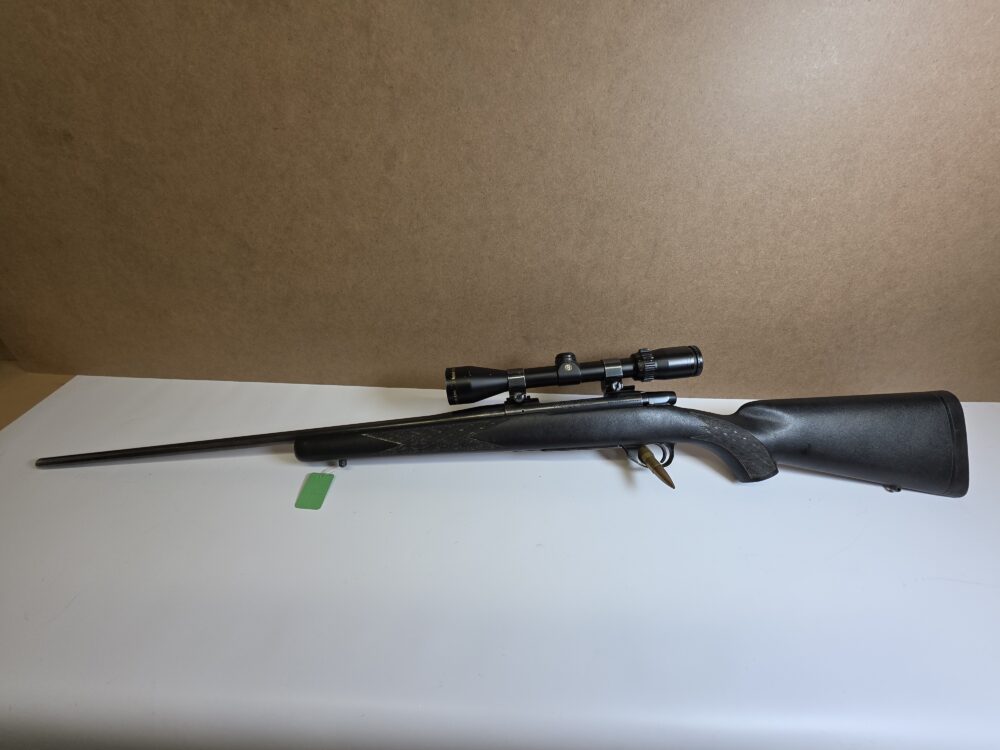
Bolt-actions are available in virtually every caliber from .223 Remington through the heavy magnums. They tend to be lighter than semi-autos of comparable caliber, they’re easier to maintain in the field, and the vast majority of modern hunting rifles in every price bracket are bolt-actions. If you’re buying your first hunting rifle or your tenth, a bolt-action should be your default starting point unless you have a specific reason to go another direction.
The tradeoff is speed. You get one shot before you need to cycle the bolt, which takes roughly one to two seconds for a trained shooter. For most hunting situations — a single, well-placed shot at a stationary or slowly moving animal — this is not a limitation. For situations where fast follow-up shots matter, such as driven hunts or thick-cover hunting where animals appear and disappear quickly, a bolt-action demands more discipline and proficiency.
Our best bolt-action hunting rifles roundup covers the top models we’ve tested across every budget.
Semi-Automatic
Semi-automatic rifles fire one round per trigger pull and automatically cycle the next round into the chamber using gas or recoil energy. The primary advantage is speed. Follow-up shots are nearly instantaneous — you simply reacquire the target and press the trigger again. For hunting wild hogs, where you may encounter groups of animals at close range, or for predator hunting where a coyote gives you a two-second window, a semi-auto’s rate of fire is a genuine tactical advantage.
The AR-15 and AR-10 platforms have become increasingly popular for hunting over the past decade. The AR-15, chambered in cartridges like .223 Remington, 6.5 Grendel, or .300 Blackout, handles predators and varmints capably. The AR-10, chambered in .308 Winchester, 6.5 Creedmoor, or similar cartridges, is a viable option for deer and even elk-sized game with appropriate loads.
The tradeoffs are weight, complexity, and — in some cases — accuracy ceiling. Semi-autos are generally heavier than bolt-actions by a half pound to a full pound, and the gas system adds components that require cleaning and maintenance. While modern semi-auto hunting rifles can be impressively accurate, the average bolt-action will outshoot the average semi-auto at comparable price points. Some states also restrict semi-automatic rifles for big game hunting, so check your local regulations before committing.
Lever-Action
The lever-action is the classic American hunting rifle. Chambered traditionally in cartridges like .30-30 Winchester, .45-70 Government, and .35 Remington, lever guns are fast-handling, compact, and carry well in dense timber and brush. The action is cycled by working the lever downward and back up, which a practiced shooter can do remarkably quickly — not as fast as a semi-auto, but faster than most bolt-action cycling.
Where lever-actions shine is in close-to-moderate range hunting in thick cover. A .30-30 lever gun is one of the finest whitetail deer rifles ever made for eastern hardwoods and southern swamps where shots rarely exceed 150 yards. The .45-70, especially in a modern lever-action like the Marlin 1895, is a serious big game cartridge that handles anything in North America at woods ranges.
The lever-action’s limitations are real. Traditional lever-action cartridges are not long-range performers — they use blunt-nosed or flat-point bullets designed for tubular magazines, which sacrifice ballistic efficiency. Modern lever-action cartridges and some newer rifles with rotary magazines have addressed this partially, but if your hunting involves shots beyond 200-250 yards with any regularity, a bolt-action in a modern cartridge will serve you better.
Which Action Should You Choose?
For the majority of hunters pursuing the majority of game in the majority of terrain, a bolt-action rifle is the right call. It’s the most versatile, the most accurate per dollar, and the easiest to maintain. Choose a semi-auto if speed of follow-up is critical to your hunting style — hog eradication, predator calling, or thick-brush scenarios where animals appear at close range. Choose a lever-action if your hunting is primarily close-range in heavy cover and you value the tradition, handling, and compact profile these rifles offer.
Caliber Selection by Game
Caliber is where most new hunters get overwhelmed, and understandably so. We cover the subject exhaustively in our hunting caliber guide, but here we’ll focus on matching caliber to game type with practical recommendations. For a detailed comparison of two of the most popular modern options, see our 6.5 Creedmoor vs .308 Winchester breakdown.
The following table provides a quick reference. Below it, we’ll explain the reasoning.
| Game Category | Recommended Calibers | Minimum Energy (ft-lbs) | Practical Max Range |
|---|---|---|---|
| Varmint (prairie dog, groundhog) | .223 Rem, .22-250 Rem, .204 Ruger | 200+ | 400 yds |
| Predator (coyote, fox) | .223 Rem, .22-250 Rem, .243 Win | 400+ | 350 yds |
| Deer (whitetail, mule deer) | .243 Win, 6.5 Creedmoor, .270 Win, .308 Win, .30-06 | 1,000+ at impact | 400 yds |
| Elk | .270 Win, .308 Win, .30-06, 7mm Rem Mag, .300 Win Mag, 6.5 PRC | 1,500+ at impact | 400 yds |
| Moose | .30-06, .300 Win Mag, .338 Win Mag, .375 H&H | 1,800+ at impact | 350 yds |
| Mixed big game (deer through elk) | 6.5 Creedmoor, .270 Win, .308 Win, .30-06 | Varies by target | 400 yds |
Deer
Whitetail and mule deer are the most commonly hunted big game in North America, and the caliber options are extensive. For most deer hunting scenarios, anything from .243 Winchester through .30-06 Springfield will perform well. The 6.5 Creedmoor has earned its massive following for good reason — it offers flat trajectory, mild recoil, excellent accuracy, and enough energy for deer at any reasonable distance. The .270 Winchester and .308 Winchester are time-tested classics that continue to deliver. If recoil sensitivity is a factor, the .243 Winchester or 6.5 Creedmoor are the best starting points.
Elk
Elk are large, tough animals that demand adequate caliber selection. We’ve seen underpowered cartridges fail to deliver clean kills on elk, and it’s an experience nobody wants to repeat. The .270 Winchester with premium 150-grain bullets is on the lighter end of acceptable. The .30-06, 7mm Remington Magnum, and .300 Winchester Magnum are the proven standards. The 6.5 PRC has emerged as a modern option that offers excellent long-range ballistics in a short-action platform, though we’d recommend it only with heavy, bonded or monolithic bullets for elk.
The key with elk cartridges is not just muzzle energy but energy retention and bullet construction at the distance you expect to shoot. A .308 Winchester with a 180-grain Partition at 200 yards is a decisive elk cartridge. That same .308 at 450 yards is marginal. Know your cartridge’s effective range and stay within it.
Moose
Moose are the largest game animal most North American hunters will pursue. They are not particularly hard to kill if you put the bullet in the right place with enough energy, but their sheer mass — a mature bull can exceed 1,500 pounds — rewards calibers that create large wound channels and penetrate deeply. The .30-06 with 200-220 grain bullets is the minimum we’d recommend. The .300 Winchester Magnum, .338 Winchester Magnum, and .375 H&H are better choices, particularly for shots where the angle demands deep penetration through heavy muscle and bone.
Predator and Varmint
Predator and varmint hunting reward accuracy and flat trajectory over raw power. The .223 Remington is the most popular predator caliber for good reason — it’s accurate, affordable, low-recoil, and available in nearly every rifle platform. The .22-250 Remington offers higher velocity and flatter trajectory for longer shots. The .243 Winchester bridges the gap between predator and deer cartridges, which makes it a smart choice if you want one rifle that handles coyotes and whitetail.
Barrel Length and Weight
Barrel length directly influences velocity, overall rifle length, weight, and handling characteristics. Longer barrels extract more velocity from the powder charge, but the gains diminish beyond certain lengths depending on the cartridge.
For standard hunting cartridges like the .308 Winchester, .270 Winchester, or 6.5 Creedmoor, a 22-inch barrel captures the vast majority of the cartridge’s velocity potential. Going to 24 inches may add 30-60 fps, which is rarely meaningful in a hunting context. Magnum cartridges with larger powder charges — the .300 Winchester Magnum, 7mm Remington Magnum, and similar — benefit more from 24 to 26 inch barrels because they need the additional bore length to burn their powder efficiently.
Shorter barrels — 18 to 20 inches — are increasingly popular for backcountry and mountain hunting where every ounce matters and shots are typically inside 300 yards. A 20-inch barreled rifle in 6.5 Creedmoor will sacrifice roughly 80-100 fps compared to a 24-inch barrel. At typical hunting distances, that’s a negligible difference in terminal performance, and you gain a rifle that’s noticeably handier in thick timber and lighter on the mountain.
Overall rifle weight is a function of barrel length, barrel profile (contour), stock material, and action. A hunting rifle destined for stand hunting or vehicle-accessible hunting does not need to be ultralight — 7.5 to 8.5 pounds with optic is comfortable for most hunters. A rifle you’ll carry 10 miles a day in steep terrain should ideally weigh 6.5 to 7.5 pounds with optic. Going below 6 pounds scoped starts introducing handling issues: light rifles amplify recoil, are harder to hold steady, and amplify shooter-induced movement. There is a practical floor to how light a hunting rifle should be, and it’s lower than most people assume but higher than the marketing departments suggest.
Stock Material: Wood, Synthetic, and Chassis
The stock is your physical interface with the rifle. It determines how the rifle feels in your hands, how it shoulders, how it performs in weather, and — increasingly — how it looks on your Instagram feed. Material choice matters more than most hunters realize.
Wood
Walnut is the traditional stock material and remains the most aesthetically appealing option. A well-figured walnut stock on a blued action is one of the finest-looking objects in the sporting world. Wood stocks offer a warm feel, excellent hand-to-stock contact, and a character that synthetic materials simply cannot replicate.
The practical downsides are real. Wood absorbs moisture, which causes it to swell and shift, which in turn can change the barrel’s point of impact. Extreme temperature swings compound this effect. Wood stocks are more susceptible to dings, scratches, and cracks in hard use. They also tend to be heavier than synthetic alternatives. If your hunting takes you through rain, snow, humidity, or rough country where your rifle takes hits against rocks and trees, a wood stock demands more careful maintenance to preserve both appearance and accuracy.
Synthetic
Synthetic stocks — made from fiberglass, polymer, carbon fiber, or combinations thereof — dominate the modern hunting rifle market. They are dimensionally stable regardless of temperature or humidity, resistant to impacts, lighter than wood, and require essentially zero maintenance. A synthetic-stocked rifle can sit in a wet scabbard for a week of horseback hunting and shoot to the same point of impact it did when you zeroed it on a dry, 70-degree day at the range.
The quality range within synthetic stocks is enormous. Budget injection-molded polymer stocks flex under pressure, feel hollow, and do not provide a confident shooting platform. Mid-grade fiberglass-reinforced stocks are significantly stiffer and lighter. Premium carbon fiber stocks from companies like AG Composites, Manners, and McMillan are among the finest stock options available at any price — rigid, light, weatherproof, and available with precise bedding that maximizes accuracy.
Chassis
Chassis systems are aluminum or polymer frames that the barreled action drops into. They originated in the precision rifle competition world and have migrated into hunting. A chassis provides a rigid, repeatable interface between the action and the stock with adjustable length of pull, cheek height, and sometimes grip angle. For hunters who also shoot precision rifle matches or who value the ability to customize their ergonomics precisely, a chassis is appealing.
The tradeoff is typically weight. Most chassis systems add 8 to 16 ounces over a comparable synthetic stock. They also look distinctly tactical, which matters to some hunters and doesn’t matter at all to others. For a primary hunting rifle that will see backcountry use, we’d lean synthetic. For a rifle that doubles as a range gun and sees moderate hunting use, a chassis is worth considering.
Trigger Quality: What to Look For
The trigger is the most critical interface between you and the shot. A poor trigger makes accurate shooting exponentially harder. A good trigger makes it feel effortless. When evaluating a hunting rifle, the trigger should be one of your top three considerations alongside accuracy and ergonomics.
What defines a good hunting trigger is consistency and a clean break. You want a trigger that releases at the same pull weight every time, with minimal creep (movement before the break) and minimal overtravel (movement after the break). The pull weight should be light enough to press without disturbing your sight picture but heavy enough to be safe under field conditions. For most hunters, 2.5 to 3.5 pounds is the sweet spot. Competition shooters go lighter, but in the field — with cold hands, adrenaline, and awkward shooting positions — a trigger under 2 pounds can be a liability.
Many modern hunting rifles in the $800-and-above range ship with excellent adjustable triggers. The Tikka T3x trigger is one of the best factory triggers in any price range — crisp, adjustable from roughly 2 to 4 pounds, and remarkably consistent. Savage’s AccuTrigger, Ruger’s Marksman trigger, and Browning’s Feather Trigger are also good factory units. Weatherby’s two-stage trigger on the Vanguard series offers a predictable first stage and a clean second-stage break.
If a rifle’s factory trigger is mediocre, aftermarket triggers from Timney and TriggerTech can transform it for $100-$200. This is one of the highest-value upgrades you can make to any hunting rifle.
Optic Compatibility: Scope Bases and Rail Types
A hunting rifle is only as useful as its ability to mount an optic securely, and not all rifles handle this equally well. Before you buy, understand what mounting system the rifle uses and whether it accommodates the scope you intend to run.
Mounting Systems
Most modern hunting rifles use one of three mounting interfaces:
Drilled and tapped receiver. The receiver has threaded holes that accept two-piece scope bases. This is the traditional system and remains common on many bolt-action rifles. It’s reliable and offers the widest range of base and ring options. You’ll typically need a matched pair of bases and a set of rings appropriate for your scope tube diameter (1 inch or 30mm for most hunting scopes).
Integral scope bases. Some rifles come with scope bases machined directly into the receiver, eliminating the need for separate bases. The Tikka T3x, for example, ships with integral dovetail rails. This simplifies mounting and can improve consistency, but it limits you to rings designed for that specific dovetail profile.
Picatinny rail. An increasing number of hunting rifles ship with a full-length Picatinny rail on the receiver. This provides maximum flexibility — virtually any ring, mount, or optic attachment system designed for Picatinny will work. It also makes it easy to add accessories like a bubble level or a night vision device if your state allows them for hunting.
Practical Considerations
Ensure the rifle’s mounting system provides adequate eye relief adjustment for your chosen scope. Eye relief — the distance between your eye and the rear lens — varies by scope design and magnification setting. You need enough fore-and-aft adjustability in the mounting system to position the scope where it gives you a full, shadow-free field of view at your natural cheek weld position. If you’re running a scope with shorter eye relief (common in higher-magnification optics), a 20 MOA canted base can help with long-range elevation adjustment while keeping the scope positioned correctly on the receiver.
Budget Tiers: What Your Money Gets You
How much you spend on a hunting rifle determines the quality of the action, barrel, trigger, and stock you receive. Here’s what to expect at each price tier, with specific rifles we’ve tested and recommend.
Under $500: Reliable Workhorse
At this price point, you’re getting a rifle that functions well, shoots acceptably, and comes with a stock and trigger that are adequate rather than impressive. These rifles will kill game. They won’t win benchrest competitions, and they won’t feel refined. But a $400 bolt-action that shoots 1.5 MOA with factory ammo is more than enough rifle for the majority of hunting done in North America.
Ruger American — Available in a wide range of calibers, the Ruger American offers a surprisingly good adjustable trigger (the Marksman trigger), a smooth action for the price, and sub-MOA accuracy with many factory loads. The polymer stock is basic but functional. At roughly $400-$450 street price, it’s the benchmark budget hunting rifle.
Savage Axis II — The Axis II includes Savage’s AccuTrigger, which is genuinely excellent for a rifle in this price range. Accuracy is typically 1 to 1.5 MOA with factory ammunition. The stock flexes more than we’d like, but the core components — action, barrel, trigger — punch above their price.
Mossberg Patriot — An underrated option that offers a fluted bolt, adjustable LBA trigger, and decent accuracy. It’s a no-frills rifle that does what it needs to do.
$500 to $1,000: The Sweet Spot
This is where the value proposition peaks for most hunters. You get significantly better triggers, stiffer stocks, smoother actions, and improved accuracy over the budget tier. Many of the rifles in this range will shoot under 1 MOA consistently and come with features — like adjustable triggers, detachable magazines, and better bedding — that were reserved for premium rifles a decade ago.
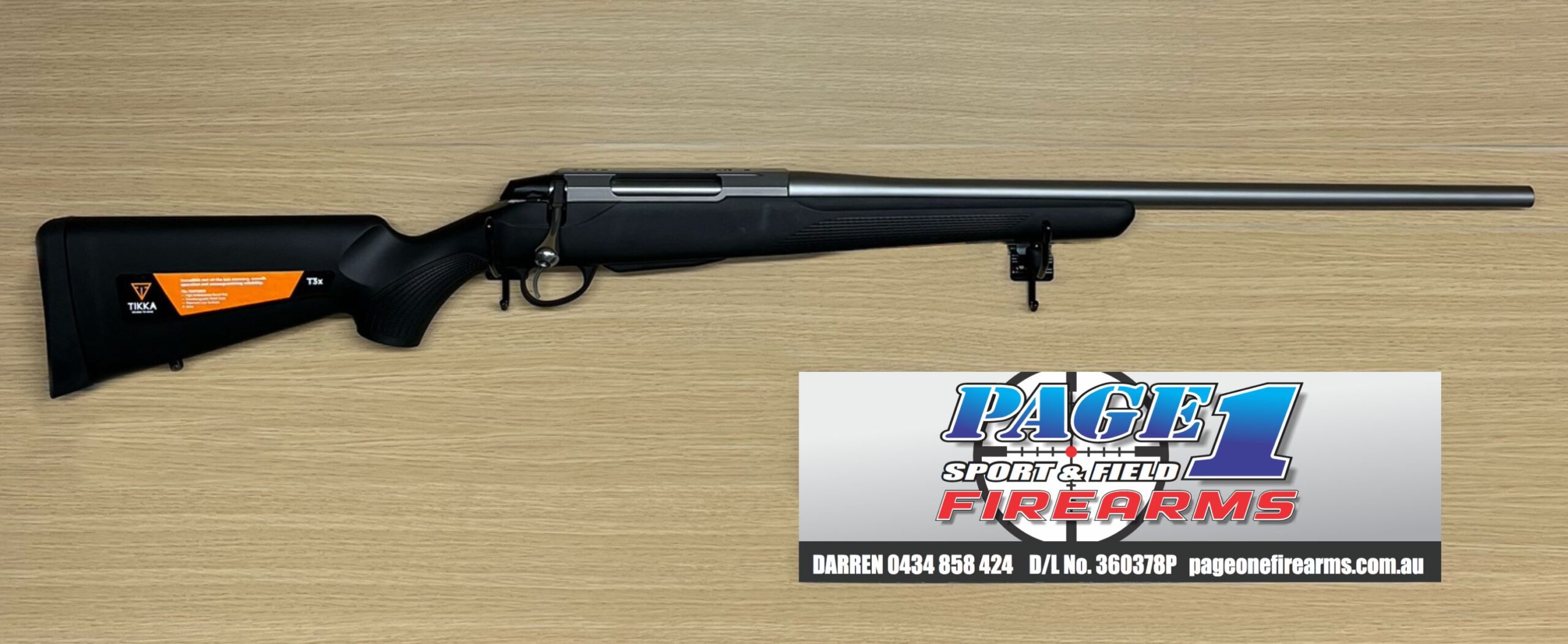
Tikka T3x Lite — The Tikka T3x Lite is arguably the best value in hunting rifles today. The action is glass-smooth, the factory trigger is outstanding, and accuracy typically runs 0.5 to 0.75 MOA with quality ammunition. At roughly $700-$800, it competes with rifles costing twice as much in the areas that matter most for hunting: accuracy and trigger quality. It’s the rifle we recommend most frequently to hunters asking the question this guide is trying to answer.
Weatherby Vanguard — The Vanguard ships with a sub-MOA accuracy guarantee and backs it up in practice. The two-stage trigger is clean and adjustable, the action is built on a robust platform, and the rifle is available in a wide range of calibers. The synthetic-stocked models run around $600-$700, putting them firmly in the best-value conversation alongside the Tikka.
Bergara B-14 Hunter — Built on a Remington 700 footprint, the Bergara B-14 uses a proprietary barrel and action that deliver accuracy typically in the 0.5 to 1 MOA range. The B-14 trigger is crisp, and the Remington 700 compatibility means the aftermarket for stocks, triggers, and accessories is enormous.
Winchester XPR — A solid mid-range option with a decent trigger and reliable accuracy. Not as refined as the Tikka or Bergara, but a functional hunting rifle that won’t let you down.
$1,000 to $1,500: Premium Performance
At this level, you’re getting refined actions, premium barrel steel, better stock options, and the kind of fit and finish that makes a rifle feel like a precision instrument. Accuracy is consistently sub-MOA, triggers are excellent out of the box, and the rifles are designed to perform under demanding field conditions.
Browning X-Bolt — The X-Bolt’s rotary bolt head provides a smooth, reliable cycling action. The Feather Trigger is crisp and adjustable. Fit and finish are excellent, and the rifle is available in both standard and mountain configurations. The X-Bolt Pro with a carbon fiber stock is one of the best mountain rifles on the market.
Christensen Arms Ridgeline — If weight is your primary concern, the Ridgeline with its carbon-fiber-wrapped barrel and carbon stock comes in remarkably light. Accuracy is excellent, and the rifle carries like it barely exists on a mountain pack frame. The tradeoff is cost — the Ridgeline sits at the top of this tier and into the next.
Tikka T3x Superlite — Takes the already excellent T3x platform and cuts weight through a fluted barrel and slimmed stock. For backcountry hunters who want Tikka’s accuracy and trigger in a lighter package, this is a compelling choice.
$1,500 and Above: No Compromises
Past $1,500, you’re paying for the finest materials, the tightest tolerances, hand-fitted components, and stocks made from advanced composites. These are rifles built for hunters who demand the best and who will notice the difference between a good trigger and a great one, between a 0.75 MOA rifle and a 0.3 MOA rifle.
Christensen Arms Mesa Ti — Titanium action, carbon fiber barrel wrap, and a carbon stock combine to create a rifle that weighs under 6 pounds and shoots sub-half-MOA. This is a serious mountain hunting tool.
Seekins Precision Havak — A precision-built action with a match-grade barrel, excellent trigger, and carbon stock. Built by a company with deep roots in competition shooting, the Havak brings that accuracy focus to a hunting platform.
Cooper Firearms Model 52 — Hand-built in Montana with some of the finest wood-to-metal fit in the industry. If you want a traditional-styled hunting rifle that shoots like a benchrest gun, Cooper delivers. The price reflects the craftsmanship.
The “One Rifle” Question
If you could only own a single hunting rifle to cover the widest possible range of game and hunting scenarios in North America, what would it be? We get asked this question constantly, and the answer has remained consistent for years.
A bolt-action rifle chambered in .30-06 Springfield or .308 Winchester, with a synthetic stock and a quality 3-15x or 3-18x scope.
The .30-06 does everything. It pushes 150-grain bullets fast enough for deer at 400 yards, drives 180-grain bonded bullets deep enough for elk at 300, and with 200-220 grain loads it handles moose at any reasonable range. It is the most versatile hunting cartridge in existence. Ammo is available in every town in America that sells ammunition. It’s chambered by every major rifle manufacturer.
The .308 Winchester is the short-action alternative that sacrifices a small amount of velocity for a slightly lighter, more compact rifle. It handles everything from deer through elk capably, and its military and law enforcement adoption means ammunition availability and variety are unmatched.
If we were building this one rifle today with a budget of $800-$1,000 for the rifle alone, we’d buy a Tikka T3x Lite in .30-06 or a Weatherby Vanguard in .308 Winchester, mount a mid-range variable scope, zero it at 200 yards, and hunt everything from coyotes to moose without a second thought. It’s not the optimal tool for any single species, but it’s an adequate-to-excellent tool for all of them.
The 6.5 Creedmoor deserves mention as a modern alternative for the deer-through-elk hunter. Its flat trajectory, low recoil, and exceptional accuracy make it perhaps the best all-around deer cartridge available today. Where it falls short of the .30-06 is on the heavy end — for moose-sized game and for shots requiring deep penetration at steep angles, the .30-caliber magnums and the .30-06 carry more authority.
New vs. Used Hunting Rifles
The used rifle market is one of the best-kept values in hunting. A well-maintained bolt-action rifle has a service life measured in tens of thousands of rounds, and most hunting rifles see fewer than 500 rounds in their lifetime. A used Remington 700, Winchester Model 70, or Savage 110 in good condition will function identically to a new one at 40-60% of the price.
Advantages of Buying Used
The financial argument is straightforward. A used Tikka T3x that retails for $800 new might sell for $550-$600 on the secondary market with minimal wear. That savings can fund a better scope or a season’s worth of ammunition for practice. Discontinued models — the original Weatherby Vanguard Series 1, Remington 700 BDL, or pre-2007 Winchester Model 70s — are often available used at prices that don’t reflect their quality. Some of these older rifles were built to standards that current budget rifles don’t match.
What to Inspect on a Used Rifle
Examine the bore with a bore light. You’re looking for sharp, well-defined rifling with no pitting, erosion, or dark spots in the throat (the area just forward of the chamber). Throat erosion is the primary indicator of a heavily-used barrel. Minor surface rust in the bore can often be cleaned, but pitting is permanent damage.
Check the crown — the very end of the muzzle. A damaged or uneven crown will destroy accuracy regardless of how good the barrel is otherwise. Look for nicks, dings, or asymmetry.
Cycle the action. It should be smooth without binding, catching, or excessive play. Open the bolt and check the bolt face and lugs for unusual wear patterns. Close the bolt on an empty chamber and dry-fire it (where safe and appropriate) to assess the trigger. If the trigger feels gritty, heavy, or inconsistent, factor in the cost of an aftermarket trigger replacement.
Inspect the stock for cracks, especially around the tang (where the stock meets the rear of the receiver) and the forend tip. Cracks in a wood stock can compromise rigidity and accuracy. Check that the action screws are tight and that there’s no excessive play between the action and the stock.
If possible, take the rifle to a range and fire a group. Three to five shots at 100 yards will tell you everything you need to know about whether the rifle still shoots.
Where to Buy Used
Local gun shops that accept trade-ins are the safest option — you can inspect the rifle in person and many shops offer some form of guarantee. Online platforms like GunBroker expand your selection dramatically but require you to transfer through a local FFL dealer. Private sales at gun shows or through local listings offer the best prices but provide no recourse if something is wrong. Regardless of where you buy, always verify the serial number is intact and undamaged, and comply with all applicable federal, state, and local transfer laws.
Frequently Asked Questions
What is the best caliber for a first-time deer hunter?
The 6.5 Creedmoor or .308 Winchester are the two best starting points for a first-time deer hunter. Both produce manageable recoil that allows new shooters to practice extensively without developing a flinch. Both are accurate, widely available, and affordable to shoot. The 6.5 Creedmoor has a slight edge in trajectory and recoil, while the .308 offers more versatility if you later pursue larger game. Pair either with a quality bolt-action in the $500-$800 range and you’ll have a rifle that serves you for decades. Our hunting caliber guide breaks down the full comparison.
How much should I spend on my first hunting rifle?
We recommend allocating $500 to $800 for the rifle and $300 to $500 for the optic. This combination puts you in the sweet spot where rifle quality is genuinely good — not just adequate — and your scope is clear, reliable, and properly matched to the rifle’s capability. Spending less than $400 on a rifle is possible, and those budget guns work, but you’ll immediately notice the difference if you ever handle a Tikka T3x or Bergara B-14. Spending more than $1,000 on your first rifle is unnecessary unless you know exactly what you want and why.
Is a .30-06 too much for whitetail deer?
No. The .30-06 with appropriate 150-grain bullets is an excellent whitetail cartridge. The notion that it’s “too much gun” comes from a misunderstanding of terminal ballistics. With a quality controlled-expansion bullet, a .30-06 kills deer cleanly without excessive meat damage. Where the .30-06 earns its reputation as an “all-arounder” is that the same rifle handles elk, moose, and bear without a caliber change. You’ll experience more recoil than a .243 or 6.5 Creedmoor, but it’s well within the manageable range for most adult shooters.
Should I buy a rifle and scope combo or buy them separately?
Buy them separately. Rifle-and-scope combos offered at big-box retailers typically pair a decent rifle with a mediocre scope. The scope is the component that puts your crosshair on the target in low light, in rain, and at distance — it’s not the place to accept the cheapest available option. Buying the rifle and scope independently lets you match a quality optic to your specific hunting conditions. A $300 scope from Vortex, Leupold, or Primary Arms will dramatically outperform the no-name optics bundled with most combo packages.
What barrel length should I choose for a hunting rifle?
For standard cartridges (.308 Win, 6.5 Creedmoor, .270 Win, .30-06), a 22-inch barrel is the practical standard. It captures nearly all of the cartridge’s velocity potential while keeping overall rifle length manageable. For magnum cartridges (.300 Win Mag, 7mm Rem Mag), a 24-inch barrel allows the larger powder charge to burn more completely. For a dedicated mountain or brush rifle, 20 inches works well — you sacrifice minimal velocity and gain a noticeably shorter, handier rifle. Avoid going shorter than 18 inches on centerfire hunting rifles, as muzzle blast and flash increase substantially and velocity losses become significant.
Quick Buy — Products in This Article