There’s a reason competition fly anglers across Europe were quietly outfishing everyone else for decades before the rest of the fly fishing world caught on. They weren’t using secret flies or fishing hidden water. They were using a method that keeps you in direct contact with your nymph from the moment it hits the water until the moment a trout eats it — and they were catching fish at rates that made traditional indicator nymphing look like a coin flip.
That method is euro nymphing, and it has fundamentally changed how we approach subsurface trout fishing in the Pacific Northwest and beyond. Whether you’re working pocket water on a Cascade Range freestone or probing the slots of a spring creek, euro nymphing gives you a level of sensitivity and control that no other nymphing technique can match. We’ve watched anglers pick it up in a single afternoon and immediately start detecting strikes they would have missed for years under a bobber.
If you’ve been curious about tight-line nymphing, this guide covers everything you need to get started — the gear, the rigging, the flies, the technique, and the water-reading skills that tie it all together. For a broader introduction to the sport, our fly fishing beginner’s guide covers foundational gear and casting. This article picks up where that leaves off, diving deep into the most effective subsurface method in modern fly fishing. You can also explore our full fly fishing hub for rod reviews, line guides, and river recommendations.
What Is Euro Nymphing and Why Is It So Effective?
Euro nymphing — also called tight-line nymphing, Czech nymphing, or competition-style nymphing depending on who you ask — is a method of fishing weighted nymphs on a long rod with a direct connection between your rod tip and your flies. There is no strike indicator. There is no fly line on the water. Instead, you use a long, thin leader with a brightly colored sighter section that acts as your visual reference, and you maintain constant tension on the line throughout the drift.
The technique originated in competitive fly fishing circles in Central Europe, where anglers in the Czech Republic, Poland, France, and Spain refined methods to catch the most fish in timed competition beats. Rules prohibited the use of strike indicators, split shot, and multiple-fly rigs beyond a certain number of flies, so these anglers developed a style built entirely around feel and direct contact. The results were devastating. European teams dominated international competitions for decades, and when American anglers finally started adopting the method, they experienced the same dramatic improvement in catch rates.
Why does it work so well? Three reasons stand out.
First, direct contact means instant strike detection. When a trout eats a nymph under a traditional indicator setup, the fish has to move the nymph, pull the tippet, overcome the slack in the leader, and then move the indicator before you see anything happen. That chain of events introduces delay, and trout spit flies fast — often in under a second. With euro nymphing, there is essentially zero slack between your rod tip and the fly. You feel the take the instant it happens, and subtle takes that would never register on a bobber become obvious ticks in your sighter or gentle pulls against your rod tip.
Second, you achieve a more natural drift. A strike indicator sitting on the surface is subject to the current speed at the surface, which is always faster than the current near the bottom where trout feed. That speed differential drags your nymph downstream faster than the naturals are drifting, creating an unnatural presentation that wary fish reject. Euro nymphing eliminates surface line entirely, so your flies drift at the speed of the bottom current — exactly where the food is moving.
Third, you can adjust depth in real time. By raising or lowering your rod tip during the drift, you can control how deep your flies ride without re-rigging. Hit a shallow riffle and raise the tip. Drop into a plunge pool and lower it. This adaptability means you spend more time fishing productively and less time fiddling with indicator depth and split shot configurations.
How Euro Nymphing Differs from Traditional Nymphing
If you’ve been nymphing under an indicator — a thingamabobber, yarn indicator, or dry-dropper rig — you already understand that trout eat subsurface most of the time. That foundational truth doesn’t change. What changes is the delivery system, and the differences are significant enough that euro nymphing feels like learning a new discipline.
No strike indicator. This is the most obvious difference and the one that intimidates beginners most. Your sighter section — a length of brightly colored monofilament built into your leader — replaces the indicator. You watch it for hesitations, dips, and lateral movement rather than watching a bobber plunge.
No fly line on the water. In traditional nymphing, your fly line lands on the surface and creates drag. In euro nymphing, you keep all fly line off the water. Only your leader and tippet touch the surface, and ideally, only your tippet and flies are in the water at all. This requires a different casting stroke and a much closer working distance — typically 15 to 30 feet rather than the 40-plus feet common in indicator nymphing.
Tight line, not slack line. Traditional indicator rigs rely on slack to allow the nymph to sink and drift. Euro nymphing works on the opposite principle — you maintain slight tension at all times, leading the flies through the drift with your rod tip. This tension is what gives you the sensitivity to detect strikes.
Active rod management. Instead of casting, mending, and waiting, euro nymphing demands that you actively guide the drift with your rod from start to finish. Your rod tip tracks the flies downstream, maintaining the sighter at a consistent angle, and you stay engaged with every inch of the drift. It’s a more physical, more engaged style of fishing, and many anglers find it more satisfying for exactly that reason.
Closer working distance. Because you need to keep fly line off the water and maintain direct contact, euro nymphing is most effective within about two rod lengths. That means you’re fishing closer to the bank, wading into position more carefully, and targeting specific seams and pockets rather than bombing casts across the river. This closer approach rewards stealth and precise wading.
The Euro Nymphing Rod
You can euro nymph with a standard 9-foot, 5-weight fly rod, and if that’s what you own, don’t let the lack of a specialized rod stop you from trying the technique. But purpose-built euro nymphing rods make the method dramatically easier and more effective, and there’s a reason nearly every serious euro nympher upgrades within the first season.
Length matters most. Euro nymphing rods run 10 to 11 feet long, with 10’6” being the sweet spot for most anglers. That extra length compared to a standard 9-foot rod does three critical things: it lets you reach further across currents without putting line on the water, it gives you more range to lead flies through a drift, and it provides a longer lever for absorbing the shock of light tippets during the fight.
Line weight runs light. Most euro nymphing rods are rated 2-weight to 4-weight, with 3-weight being the most versatile choice. The light rating isn’t about casting tiny flies — it’s about building a rod with a sensitive enough tip section to detect subtle takes while maintaining enough backbone in the butt section to cast heavy nymph rigs and control fish in current. A good euro rod has a progressive action that loads deeply under the weight of the flies alone, since you’re not using the mass of fly line to load the rod the way you do in traditional fly casting.
What to look for in a first euro rod. If you’re buying your first dedicated euro nymphing rod, look for a 10-foot or 10’6” rod in 3-weight. Rods from Moonshine, DG Fly Rods, and Cortland in the $200 to $400 range offer excellent performance for the price and are specifically designed for tight-line work. Higher-end options from Sage, Hardy, and Orvis push into the $500-plus range with lighter swing weights and more refined tip sensitivity, but the mid-price rods are genuinely capable tools that won’t hold you back.
If you’re exploring rods across disciplines — including for steelhead where longer rods also shine — our best fly rods for steelhead roundup covers the two-hand and switch rod options that share some DNA with euro nymphing rods.
Leader and Tippet Setup
The leader is where euro nymphing gets technical, and it’s the single most important piece of rigging to understand. Unlike traditional fly fishing where you buy a pre-tapered leader and tie on a fly, euro nymphing leaders are built from scratch using specific materials in a deliberate sequence.
The basic euro nymphing leader has four sections:
Butt section. This is 15 to 20 feet of level monofilament in 15- to 20-pound test, connecting your fly line to the sighter. Its job is to extend your reach and transfer energy during the cast. Standard Maxima Chameleon or any stiff, level monofilament works well. Some anglers use the butt section of old fly lines or purpose-built euro nymph lines for this section.
Sighter section. This is 18 to 24 inches of brightly colored monofilament — typically bicolor in combinations like chartreuse and orange, or pink and yellow. The sighter is your strike indicator. You watch it for any hesitation, dip, or change in angle that signals a fish has intercepted your fly. Commercial sighter material from companies like Rio, Hends, and Semperfli comes in pre-spooled bicolor options that make building leaders simple. The sighter connects to the butt section with a simple blood knot or tippet ring.
Tippet ring. A tiny micro ring (2mm) tied between the sighter and the tippet section. This small piece of hardware saves you from cutting into your sighter every time you change tippet, and it serves as a visual reference point during the drift. Tippet rings are inexpensive and virtually weightless — there’s no reason not to use one.
Tippet section. From the tippet ring to your point fly, run 3 to 5 feet of fluorocarbon tippet in 5X to 6X (4- to 5-pound test). Fluorocarbon sinks faster than nylon and is less visible underwater, both of which matter in euro nymphing. If you’re running a two-fly rig — which is the standard approach — tie a dropper tag off the tippet 18 to 24 inches above the point fly using a simple surgeon’s knot, leaving the tag end long enough (4 to 6 inches) to attach your second fly.
Total leader length typically runs 20 to 25 feet from fly line to point fly. This sounds unwieldy, but remember — you’re not casting this leader in the traditional sense. The weight of the flies loads the rod, and the cast is more of a lob than a tight loop.
Fly Selection for Euro Nymphing
Euro nymphing fly design is driven by one principle: get down fast and stay down. The flies need to sink quickly to the feeding zone, maintain depth through the drift, and present a convincing profile to trout that are inspecting food inches from the bottom. This drives specific design choices in hook, bead, and body construction.
Jig Hooks
The jig hook is the defining hook style in euro nymphing. Unlike standard nymph hooks that ride point-down, jig hooks have a 60-degree bend behind the eye that causes the fly to ride point-up when weighted with a slotted bead. This orientation dramatically reduces snags on the bottom — and since euro nymphing is all about getting flies deep and keeping them there, snagging less means fishing more. Jig hooks from Hanak, Fulling Mill, and Firehole Sticks are the standards.
Slotted Tungsten Beads
Tungsten is roughly 1.7 times denser than lead and almost twice the density of brass, so tungsten beads sink flies faster and keep them deeper. Slotted tungsten beads are designed specifically for jig hooks — the slot accommodates the offset eye, allowing the bead to sit flush against the hook shank. Bead size determines sink rate: 3.0mm to 3.5mm beads cover most trout fishing situations, with heavier 4.0mm beads for deep or fast water.
Essential Euro Nymphing Fly Patterns
You don’t need dozens of patterns. These four cover the vast majority of euro nymphing situations we encounter across Pacific Northwest waters.
Perdigon. A slim, dense, resin-coated nymph that cuts through the water column like a bullet. Perdigons are the workhorse fly of competition euro nymphing — they sink fast, drift naturally, and trigger strikes from fish that refuse bulkier patterns. Tie or buy them in sizes 14 to 18 with a mix of natural pheasant tail and flashy hot-spot body colors.
Walt’s Worm (and variations). A simple, buggy pattern tied with hare’s mask dubbing on a jig hook with a tungsten bead. Walt’s Worms are devastatingly effective because they suggest a wide range of aquatic larvae — they don’t imitate any single organism, but they look like food to every trout in the river. Sizes 12 to 16 cover most situations.
Frenchie. Essentially a beadhead Pheasant Tail with a hot-spot collar of fluorescent dubbing behind the bead. The hot spot acts as an attractor element that pulls fish from further away, while the natural pheasant tail body provides a convincing mayfly nymph profile. Sizes 14 to 18.
Pat’s Rubber Legs / Girdle Bug (jig version). For heavy water and larger trout, a tungsten-beaded stonefly imitation on a jig hook gives you the mass to reach the bottom in fast, deep runs. This serves as the anchor fly in a two-fly rig, dragging a smaller Perdigon or Frenchie along behind it.
The Euro Nymphing Technique: Cast, Lead, Drift, Detect, Set
Here’s where the theory becomes practice. The euro nymphing sequence is simple to describe and takes time to master, but the basics are accessible from your first session.
The Cast
Forget the tight-loop overhead cast of traditional fly fishing. Euro nymphing uses a lob cast or tuck cast that launches the weighted flies upstream using the rod’s loading under the weight of the rig alone. With your rod tip high, smoothly accelerate the flies from behind you in an oval or straight-back path, releasing forward with a slight upward trajectory. The flies should land upstream of your target with the tippet entering the water before the sighter — this is the “tuck” that drives the flies to the bottom immediately.
The casting distance is short. You’re typically placing flies 15 to 30 feet away, and that’s fine. The method’s effectiveness comes from presentation quality, not casting distance.
The Lead
Once the flies hit the water, immediately raise your rod tip to take slack out of the system and position your sighter above the water. Your rod tip should lead the flies slightly downstream, tracking their progress through the drift at a pace that matches the current. The sighter should hang at roughly a 45-degree angle from your rod tip to the water’s surface. If it’s dragging on the surface, raise your rod tip higher. If it’s pulling the flies up off the bottom, lower it slightly.
The Drift
The drift is the critical phase. Your flies should be ticking along the bottom — you want to feel occasional contact with rocks and substrate, which tells you that you’re in the zone. If you’re not touching bottom at all, your flies aren’t deep enough. If you’re constantly snagging, you’re too deep or leading too slowly.
Maintain a consistent speed that matches the bottom current. This is slower than the surface current, which is why indicator nymphing so often drags flies unnaturally fast. Your rod tip tracks downstream at the pace of the subsurface flow, and the sighter maintains its angle throughout.
Strike Detection
This is what makes euro nymphing addictive. Watch your sighter for any of the following:
- A pause or hesitation in the sighter’s downstream movement — the most common strike indicator
- A lateral twitch — the sighter jumps sideways, indicating a fish has intercepted the fly from the side
- A slight upstream pull — the sighter draws back against the current as a fish moves the fly
- Any movement that looks different from the drift — when in doubt, set the hook
You’ll also feel strikes directly through the rod. A subtle tick, a faint heaviness, or a sharp tap — all of these are fish. Euro nymphing rewards anglers who set the hook on anything suspicious. You’ll hook the bottom sometimes, but you’ll also hook fish that you never would have detected under an indicator.
The Hook Set
Use a lift set, not a strip set. When you detect a strike, raise the rod tip with a smooth, firm upward motion. The long, flexible euro nymphing rod absorbs the shock and prevents you from snapping light tippets on aggressive sets. Avoid the violent snap-set that works with indicator rigs — the tight-line connection means the hook is already in position, and a controlled lift drives it home without risking a break-off.
Reading Water for Euro Nymphing
Euro nymphing rewards a strategic approach to water. Because you’re fishing at close range and covering small sections of river at a time, choosing the right water to fish matters enormously.
Seams and current edges. The transition zones where fast water meets slow water are prime euro nymphing territory. Trout hold in the slower side of the seam and intercept food being carried along the faster lane. Position yourself across from or slightly downstream of the seam and drift your flies right along the edge.
Pocket water. The cushions behind and in front of boulders create small holding lies where trout sit and wait for food to come to them. Euro nymphing excels in pocket water because you can target each pocket individually with short, precise drifts. Work upstream through a boulder garden, hitting every pocket and cushion, and you’ll be surprised how many fish are holding in water you might have walked past.
Tailouts. The smooth, gradually shallowing water at the tail of a pool often holds feeding fish, especially in the morning and evening. Euro nymph tailouts with lighter flies and longer tippets, as the slower current gives fish more time to inspect your offering.
Riffles. Broken, choppy water between knee-deep and waist-deep is euro nymphing paradise. The turbulent surface hides your approach, fish feel secure in the oxygen-rich current, and food is concentrated along the bottom. Riffles are where euro nymphing consistently produces the highest catch rates, and they’re water that many traditional nymphers walk past entirely.
For a deeper look at productive trout water in the region, our guide to the best fly fishing rivers in Washington covers specific runs and reaches that reward these techniques.
Common Mistakes Beginners Make
Having taught euro nymphing to dozens of anglers on PNW rivers, we see the same mistakes come up repeatedly. Knowing them in advance will accelerate your learning curve.
Too much slack in the system. The single most common error. If your sighter is dragging on the water or there’s a belly of line between your rod tip and the flies, you’ve lost the direct contact that makes the method work. Keep your rod tip high enough that the sighter hangs cleanly, and maintain constant slight tension.
Fishing too far away. Ego casting has no place in euro nymphing. If you’re trying to fish at 40 or 50 feet, you’re outside the method’s effective range and you’re missing strikes. Move closer, wade carefully, and fish at 15 to 30 feet where you can maintain control and sensitivity.
Setting the hook too aggressively. A violent strip set or snap set on 5X fluorocarbon tippet ends one way — with a broken-off fly and a fish swimming away. Use a smooth, controlled lift set and let the rod do the work.
Not getting deep enough. If you’re not occasionally ticking the bottom, your flies are riding too high and you’re above the feeding zone. Add a heavier bead, lengthen your tippet, or slow your lead to allow the flies more time to sink.
Neglecting stealth. You’re fishing closer to the fish than you would with indicator gear. Heavy wading, tall silhouettes against the sky, and sloppy approaches spook fish before your fly ever reaches them. Wade slowly, stay low, and approach from downstream whenever possible.
Ignoring the dead drift. Some anglers try to add action to their flies by twitching or jigging the rod tip. While a subtle lift at the end of the drift — called the Leisenring lift — can trigger strikes, constant twitching destroys the natural presentation that makes euro nymphing effective. Let the drift do the work.
When NOT to Euro Nymph
Euro nymphing is not the answer to every situation, and knowing when to switch to another method is as important as knowing the technique itself.
Large rivers with wide runs. When the productive water is 50 to 80 feet away on the far side of a broad river, you simply cannot reach it with a tight-line approach. This is where traditional indicator nymphing, swing techniques, or streamer fishing take over. You need fly line on the water to cover that distance.
When fish are rising. If trout are actively feeding on the surface, put the nymphs away and tie on a dry fly. Matching a hatch with a well-presented dry fly is one of fly fishing’s greatest experiences, and it’s more effective than nymphing when fish are committed to surface feeding.
Stillwater. Euro nymphing is a moving-water technique. On lakes and ponds, the method’s advantages — tight-line contact, natural drift speed, reading current seams — don’t apply. Chironomid fishing under an indicator or slow-stripped wet flies are better approaches for stillwater trout.
Extremely deep, slow pools. When the water is 8 feet deep and barely moving, getting euro nymphing flies to the bottom and keeping them there through a meaningful drift is nearly impossible. A heavily weighted indicator rig or a streamer stripped through the pool will be more productive.
High, dirty water. When visibility drops to a few inches during runoff or after heavy rain, trout can’t see small nymphs drifting past. Switch to large, dark streamers that push water and create a silhouette fish can locate by feel.
Understanding when a technique doesn’t serve you is a sign of maturity as an angler. We talk more about this kind of strategic thinking in our methodology — the same principles of honest assessment apply to choosing your technique on the water.
Frequently Asked Questions
Can I Euro Nymph with My Regular Fly Rod?
Yes, and you should try it before investing in a dedicated euro rod. A standard 9-foot, 5-weight rod will let you practice the fundamentals — the casting motion, maintaining sighter contact, reading strikes, and working the drift. The experience won’t be as refined as it would with a purpose-built 10-foot, 3-weight euro rod, but it’s good enough to determine whether the technique appeals to you. Many anglers fall in love with euro nymphing on their trout rod and upgrade later. If you don’t yet own a fly rod at all, our fly fishing beginner’s guide will help you choose your first setup.
Do I Need a Special Fly Line for Euro Nymphing?
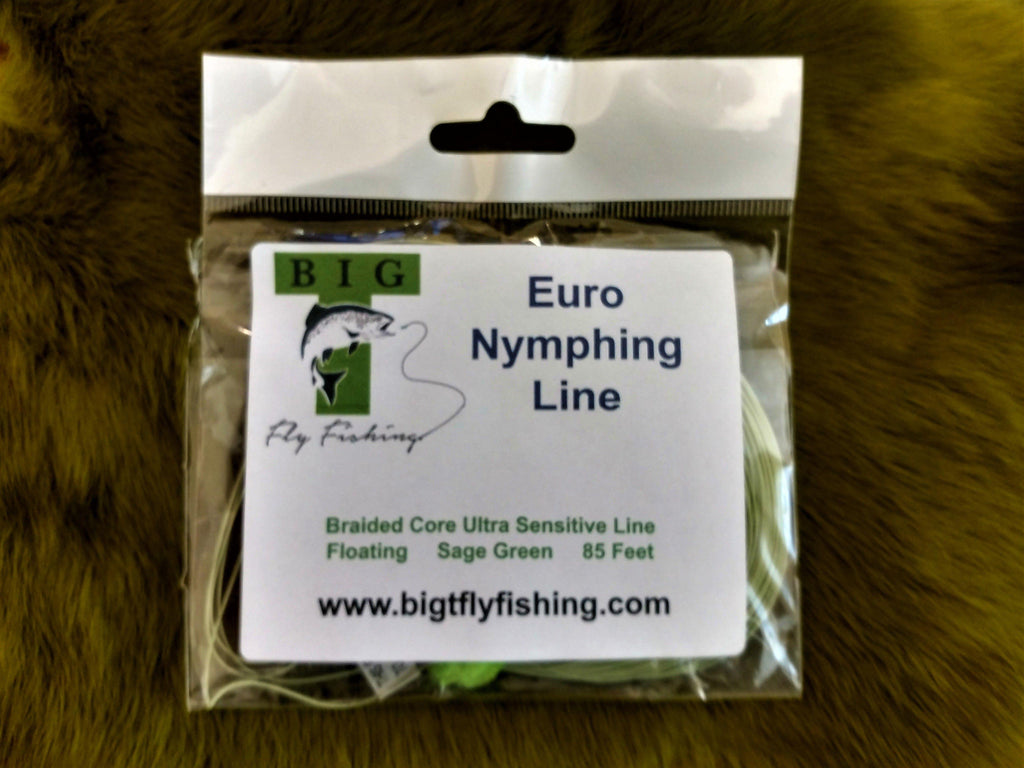
You don’t strictly need one, but a thin, level euro nymphing line (sometimes called a competition line) makes the technique significantly easier. These lines are typically 0.022” in diameter — much thinner than a standard weight-forward fly line — which reduces sag between the rod tip and the sighter, improving sensitivity and contact. Companies like Rio, Cortland, and Scientific Anglers all make euro-specific lines in the $30 to $50 range. If you’re testing the method on your existing rod, your standard fly line will work — just keep more of it off the water.
How Many Flies Should I Fish on a Euro Nymphing Rig?
Two flies is the standard and most effective setup. Run a heavier anchor fly (larger bead, bigger hook) on the point and a lighter searching pattern on the dropper tag 18 to 24 inches above. The anchor fly gets the rig to the bottom, while the dropper rides slightly higher in the water column, covering two feeding lanes simultaneously. Some anglers fish a single fly when conditions demand extreme precision — technical spring creeks with spooky fish, for example — and some competition formats allow three flies. For everyday fishing, two flies is the sweet spot between coverage and manageability.
Is Euro Nymphing Legal Everywhere?
Check local regulations before you fish. Most U.S. states and Canadian provinces allow euro nymphing without restriction, but some special-regulation waters have rules that affect the technique. Certain catch-and-release sections prohibit weighted flies or limit the number of flies per rig. A few waters mandate barbless hooks, which is easy to comply with since most jig hooks are available barbless. Always read the regulations for your specific body of water, as rules vary not just by state but by individual river section.
How Long Does It Take to Learn Euro Nymphing?
Most anglers can make functional casts and detect obvious strikes within their first outing — perhaps two to three hours of focused practice on the water. Reaching a level of proficiency where you’re consistently outfishing indicator rigs typically takes five to ten full days on the water spread across a season. The learning curve is less about physical skill and more about developing the sensitivity to read your sighter and the water sense to position yourself correctly. If you already have experience with traditional nymphing, the transition is faster because you understand subsurface trout behavior, food sources, and how to read holding water. That foundational knowledge transfers directly — you’re simply upgrading the delivery system.
Euro nymphing has changed how we fish for trout more than any other technique in the last decade. It’s not a gimmick, it’s not a fad, and it’s not just for competition anglers. It’s a method that puts you in direct contact with what’s happening at the bottom of the river, where trout do the vast majority of their feeding, and it rewards the skills that make fly fishing deeply satisfying — reading water, understanding insects, presenting flies with precision, and detecting the subtle moment when a fish decides your offering is real.
Start with the gear you have, build a simple leader, tie on a couple of tungsten-beaded jig nymphs, and go find a riffle. The fish are there. Euro nymphing just lets you find them faster.