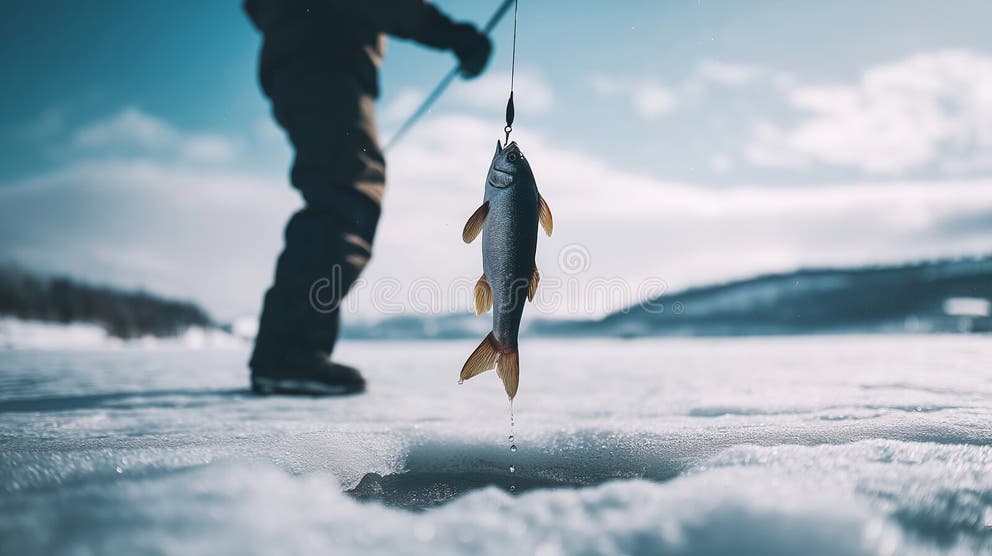
There’s something about standing on a frozen lake at dawn — the silence, the cold air biting your cheeks, and the knowledge that right below your feet, fish are moving. Ice fishing strips the sport down to its most elemental form. No boat, no trolling motor, no casting into the wind. Just you, a hole in the ice, and whatever you’ve brought to convince a fish to bite.
If you’ve been curious about ice fishing but haven’t taken the plunge yet, we get it. The sport can look intimidating from the outside. There’s gear you’ve never seen before, safety considerations that don’t exist in open-water fishing, and a learning curve that feels steep when you’re staring at a frozen expanse for the first time. But here’s the truth: ice fishing is one of the most accessible and rewarding ways to fish, and getting started is simpler than most people think.
We’ve been fishing through the ice for a combined couple of decades, and we still get fired up every time we hear that first safe-ice report. This guide covers everything a beginner needs to know — from staying safe on the ice to choosing gear, finding fish, and learning the techniques that put them on the ice. For more hardwater coverage, explore our full ice fishing hub where we review gear and break down advanced strategies.
Safety First: Respecting the Ice
Before we talk about gear or technique, we need to talk about safety. Ice fishing is inherently safe when you respect the conditions, and genuinely dangerous when you don’t. Every season brings stories of anglers who fell through because they assumed the ice was thick enough. Don’t be that story.
Ice Thickness Guidelines
Not all ice is created equal. Clear, hard ice formed during sustained cold is dramatically stronger than white or opaque ice that formed quickly, thawed partially, and refroze. The commonly accepted minimums for clear, solid ice are:
| Ice Thickness | Safe For |
|---|---|
| 4 inches | Walking / ice fishing on foot |
| 5-6 inches | Snowmobile or ATV |
| 8-12 inches | Small car or light truck |
| 12-15 inches | Medium truck |
These numbers apply to clear, hard ice only. White ice, also called snow ice, is roughly half as strong. If you’re walking on 4 inches of white ice, you’re walking on the equivalent of 2 inches of clear ice — and that is not safe. Always check ice thickness yourself with a spud bar or ice chisel as you walk out. Check early, check often, and check again when you move to a new area. Ice thickness can vary dramatically across a single lake due to springs, current, pressure cracks, and areas where snow insulated the surface and slowed freezing.
The Buddy System
Never fish alone on the ice, especially as a beginner. Fishing with a partner means someone is there if you break through, get injured, or run into trouble. If you absolutely must go solo, tell someone exactly where you’re going, what access point you’re using, and when you plan to be back. Carry a fully charged phone in a waterproof case in an inside pocket where your body heat keeps the battery alive.
What to Carry for Safety
Every time you step onto the ice, you should have the following on your person — not in your sled, not in your shelter, on your body:
- Ice picks (ice claws): Wear these around your neck. If you fall through, you dig them into the ice surface and pull yourself out. They cost under ten dollars and are the single most important piece of safety gear you own.
- A throw rope: A 50-foot length of rope in a throwable bag. If your fishing partner goes through, you throw this to them from a safe distance rather than approaching the weak ice yourself.
- A whistle: Sound carries across frozen lakes. A whistle helps rescuers locate you.
- Dry clothes in a waterproof bag: Hypothermia kills faster than drowning on the ice. Having a dry base layer in your sled could save your life or your partner’s.
This is not optional gear. It’s the cost of entry. Treat it the same way you’d treat a life jacket on a boat.
Essential Gear Checklist
Ice fishing doesn’t require a massive investment to get started, but there are certain items you can’t do without. Here’s what we recommend for a beginner building their first ice fishing kit, organized from most essential to nice-to-have.
An Ice Auger
You need to make holes. A hand auger is the cheapest way in — a quality 6-inch or 8-inch hand auger runs around $40 to $70 and will cut through a foot of ice with reasonable effort. If you plan to fish regularly, a battery-powered electric auger is the single best quality-of-life upgrade in the sport. They’re quiet, light, and cut through thick ice in seconds. Propane and gas augers are powerful but heavier and louder, making them better suited for anglers who drill dozens of holes in a session.
For beginners, we recommend starting with a hand auger in 8-inch diameter. It’s affordable, reliable, and forces you to be selective about where you drill — which is actually a good habit.
A Shelter
You don’t strictly need a shelter to ice fish, but you’ll want one. Wind on a frozen lake is relentless, and a shelter transforms the experience from endurance test to genuinely comfortable. For beginners, a pop-up hub-style shelter is the best balance of cost, portability, and protection. They set up in minutes, pack down small, and block wind and snow effectively. We’ve reviewed the best options in our portable ice fishing shelters guide if you want a detailed breakdown.
A flip-over style shelter that integrates with a sled is the next step up — you load your gear in the sled, drag it to your spot, and flip the shelter portion over to create an enclosed fishing space. These are more expensive but incredibly efficient for mobile anglers.
A Flasher or Sonar
This is the piece of gear that separates frustration from success for most beginners. A flasher or sonar unit shows you the depth, the bottom composition, your bait’s position in the water column, and — crucially — whether fish are present and how they’re reacting to your presentation. Without one, you’re fishing blind. With one, you’re making informed decisions every second.
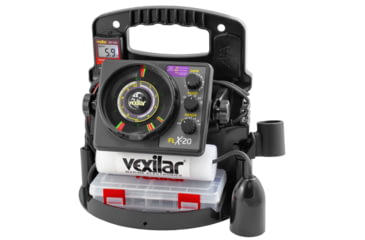
The Vexilar FLX-20 is the flasher we most often recommend to beginners. It delivers proven Vexilar performance, excellent target separation, and reliability at a price point that makes sense for someone entering the sport. We tested and compared it against the field in our best ice fishing flashers and sonar roundup. A flasher feels confusing for the first hour. By the end of your first full day, you’ll wonder how anyone fishes without one.
Ice Rods and Reels
Ice rods are short — typically 24 to 36 inches — because you’re fishing directly below you through a hole, not casting. A medium-light action rod paired with a small spinning reel spooled with 4- to 6-pound monofilament or fluorocarbon is the most versatile starting setup. It’ll handle panfish, walleye, and smaller pike without feeling over- or under-gunned.
Buy two rods to start. One for active jigging and one for deadsticking (a technique we’ll cover below). Having a second rod lets you fish two presentations simultaneously, which doubles your chances of figuring out what the fish want.
Tackle
Ice fishing tackle is smaller and more finesse-oriented than most open-water tackle. Your starter tackle box should include:
- Tungsten jigs in 3mm to 5mm sizes (heavy for their size, sink fast, transmit feel)
- Jigging spoons like the Kastmaster or Swedish Pimple in 1/8 oz to 1/4 oz
- Small jigging rapalas or lipless crankbaits for aggressive fish
- Wax worms and spikes (maggots) as live bait — these are universal ice fishing attractors
- Small bobbers and split shot for deadstick rigs
- A few plain hooks in sizes 8 to 12 for live bait presentations
Start simple. A dozen jigs, a handful of spoons, and a tub of wax worms will catch fish everywhere ice forms.
Clothing
Cotton kills. That’s not hyperbole — cotton absorbs moisture, loses insulation value when wet, and accelerates heat loss. Dress in synthetic or wool layers:
- Base layer: Moisture-wicking synthetic long underwear (top and bottom)
- Mid layer: Fleece or wool insulating layer
- Outer layer: Windproof and waterproof ice fishing bibs and jacket
- Feet: Wool socks inside insulated, waterproof boots rated to at least -40°F
- Hands: Thin liner gloves under insulated mittens (mittens keep fingers warmer than gloves)
- Head: Insulated hat that covers your ears, or a balaclava on brutal days
Your feet are the first thing to get cold on the ice because you’re standing on a frozen surface. Invest in the best boots you can afford. Everything else can be layered and adjusted, but cold feet will end your day early every single time.
Where to Start: Finding Beginner-Friendly Water
The best place to start ice fishing is a stocked lake with easy access and known fish populations. Most state DNR websites publish stocking reports that tell you exactly which lakes received fish, what species, and how many. A lake that was stocked with trout or walleye in the fall is virtually guaranteed to hold fish in winter, and those fish are typically less pressured and more willing to bite than wild populations in heavily fished waters.
Look for lakes with:
- Public access and a maintained parking area (you need somewhere to park and stage your gear)
- Modest depth (15 to 30 feet is ideal for learning — deep enough to hold fish, shallow enough to keep things simple)
- A reputation for panfish (bluegill and crappie are the easiest species to catch through the ice and the most forgiving of beginner mistakes)
- Other ice anglers already on the water (they’ve already verified ice safety and located fish — follow the crowd when you’re learning)
Local bait shops are gold mines of information. Walk in, tell them you’re new to ice fishing, and ask where they’d send a beginner this weekend. Bait shop owners want you to catch fish because that means you’ll come back and buy more bait.
Basic Techniques: Three Ways to Catch Fish Through the Ice
Ice fishing techniques boil down to three fundamental approaches. Master these and you can catch virtually any species that swims under the ice.
Jigging
Jigging is the most active and engaging technique in ice fishing. You lower a jig or spoon to your target depth, then use your rod tip to impart action — lifts, drops, shakes, pauses, and everything in between. The goal is to mimic a small baitfish, insect, or crustacean that triggers a predatory or feeding response.
Start with this basic jigging cadence: Lower your bait to within a foot of the bottom. Lift your rod tip 6 to 12 inches, then let the bait fall back on a controlled slack line. Pause for 3 to 5 seconds. Repeat. When you see a fish approach on your flasher, slow down and add more pause. Most bites happen on the pause or the initial fall.
The key insight that takes most beginners weeks to learn is this: do less, not more. Aggressive, constant jigging attracts fish from a distance, but it’s the subtle, barely-there movements and dead pauses that trigger bites. Think of jigging as a conversation — the loud part gets their attention, and the quiet part closes the deal.
Deadsticking
Deadsticking is the polar opposite of jigging. You rig a plain hook with a live minnow or wax worm under a small bobber, lower it to your target depth, and set the rod in a holder. Then you leave it alone. The live bait does all the work, swimming naturally and sending out vibrations that attract fish.
This technique is devastatingly effective for walleye and crappie, especially when fish are in a neutral or negative mood and won’t commit to an actively jigged presentation. Many experienced anglers fish a jigging rod and a deadstick rod simultaneously — the jigging attracts fish to the area, and the deadstick provides an easy, natural meal for fish that aren’t willing to chase.
Deadsticking tip: Watch your bobber. A slow, steady pull-down is a fish eating your bait. Resist the urge to set the hook immediately. Let the bobber go fully under the surface, wait one second, then set with a firm but controlled upward sweep.
Tip-Ups
Tip-ups are mechanical devices that hold a line in the water and signal a bite by tripping a flag. They let you cover more water by fishing multiple holes simultaneously (check your state’s regulations for how many lines you’re allowed). The standard rig is a large, lively minnow on a treble or single hook below a leader, targeting predators like pike, walleye, and lake trout.
Set your tip-ups across a range of depths and locations to pattern where fish are moving. When a flag trips, approach the tip-up, grab the line, and feel for the weight of a fish. Set the hook with a sharp hand-over-hand pull. Tip-ups are effective and exciting — there’s nothing quite like seeing a flag pop across the lake and sprinting over to find a fish on the line.
Reading Your Flasher
A flasher displays real-time sonar information on a circular dial. Understanding what you’re looking at is one of the most important skills in ice fishing, and it’s simpler than it appears.
The bottom shows up as a thick, bright band (usually red) at whatever depth the lake floor sits. If your flasher reads 20 feet, that red band appears at the 20-foot mark on the dial.
Your bait appears as a mark in the water column. As you lower your jig, you’ll see a colored band descend from the surface toward the bottom. This is your jig. Once you know where your bait is, you can precisely control its depth.
Fish appear as marks that move. A stationary return is structure or your bait. A mark that appears, moves up or down, and disappears is a fish. The color of the return indicates signal strength — red is strongest (fish is directly in the cone), orange is moderate, and green is weakest (fish is at the edge of the cone or small).
The sequence you want to see: You’re jigging, and a green mark appears below your bait. It turns orange as the fish moves closer to the center of the cone. It rises toward your bait. You slow your jigging. The mark merges with your bait mark. Set the hook.
Practice reading your flasher by lowering your bait to known depths and watching how it displays. Drop your jig to the bottom and watch the mark merge with the bottom return. Reel up 5 feet and see the mark separate. This calibration exercise builds the visual language you need to interpret what the flasher is telling you in real fishing situations.
For an in-depth comparison of the best units on the market, our flasher and sonar roundup covers everything from entry-level to forward-facing sonar.
When to Go: Timing Your Trips
Fish under the ice follow predictable patterns tied to light levels, barometric pressure, and seasonal progression. Understanding these patterns helps you pick the right days and the right hours to fish.
Time of Day
Early morning and late afternoon are the most productive windows on most lakes. The low-light transitions at dawn and dusk trigger feeding activity in nearly every freshwater species. Panfish move shallow and feed aggressively during the first two hours of daylight. Walleye are famously crepuscular — their large eyes give them a low-light advantage, and they feed most actively during the 30 minutes before and after sunrise and sunset.
Midday can be productive too, especially for panfish in deeper water or on overcast days when light penetration is reduced. Don’t write off the middle of the day entirely, but if you can only fish a few hours, fish the transitions.
Seasonal Patterns
The ice season breaks into three distinct phases, and fish behavior shifts with each:
- First ice (early season): Fish are still in fall patterns, relatively aggressive, and often found in shallower water near weed edges and structure. This is the easiest time to catch fish through the ice. The weeds are still green and producing oxygen, attracting baitfish and the predators that follow.
- Mid-winter: The toughest period. Lower oxygen levels, reduced forage activity, and colder water temperatures push fish into deeper basins and slow their metabolism. Presentations need to be smaller, slower, and more finesse-oriented. Patience matters more than any piece of gear during mid-winter.
- Late ice: As days lengthen and snowmelt begins introducing fresh oxygen, fish activity ramps up dramatically. Panfish push toward shallow, dark-bottomed bays that absorb sunlight and warm first. Walleye begin staging near spawning areas. Late ice can produce some of the best fishing of the entire year — but ice conditions deteriorate rapidly, so safety awareness is paramount.
Common Beginner Mistakes
We’ve made every one of these mistakes ourselves, and we’ve watched hundreds of beginners make them too. Avoid these and you’ll be ahead of most first-year ice anglers.
Fishing too aggressively. New anglers tend to jig hard and constantly, thinking more action equals more fish. In reality, aggressive jigging usually spooks fish in the clear, quiet underwater environment of a frozen lake. Slow down. Add pauses. Let the fish commit.
Ignoring your flasher. If you invest in electronics, actually use them. Too many beginners set up their flasher, glance at it occasionally, and spend most of their time staring at their rod tip. Your flasher tells you whether fish are present, what depth they’re at, and how they’re reacting to your presentation. It should be the center of your attention.
Staying in one spot too long. If you haven’t marked a fish in 20 to 30 minutes, move. Ice fishing rewards mobility. Drill new holes, check different depths and structures, and let your flasher tell you where the fish are. The worst thing you can do is sit on a dead hole for hours hoping something shows up.
Fishing the wrong depth. Fish in a 30-foot lake aren’t necessarily on the bottom. Crappie and perch often suspend halfway up the water column or higher. Use your flasher to scan the entire column, and don’t assume fish are always on the bottom. Start your bait near the bottom, then work it up through the column until you find where the fish are holding.
Neglecting scent. Under-ice fishing often requires scent to close the deal. Tip your jigs and spoons with live bait — even a single wax worm or spike on the hook adds scent and taste that can turn a follower into a biter.
Overdressing or underdressing. The first is almost as bad as the second. If you sweat through your base layer because you overdressed, that moisture will chill you rapidly once you stop moving. Dress in layers you can add or remove, and bring your sled so you have somewhere to stash extra clothing.
Frequently Asked Questions
How Thick Does Ice Need to Be for Ice Fishing?
You need a minimum of 4 inches of clear, solid ice to safely walk and fish on foot. This is the universally accepted threshold supported by most state DNR guidelines and ice safety organizations. White or opaque ice is substantially weaker — roughly half the strength of clear ice — so 4 inches of white ice is not safe. Always verify thickness yourself with a spud bar, ice chisel, or auger as you walk out, and check at multiple points since ice thickness varies across a lake. If you’re unsure, contact your local bait shop or DNR office for current conditions.
What Is the Best Beginner Ice Fishing Setup?
A solid beginner ice fishing setup includes a medium-light 28-inch ice rod, a small spinning reel spooled with 4-pound fluorocarbon, a handful of tungsten jigs and jigging spoons, and a tub of wax worms. Add a hand auger to make holes, a 5-gallon bucket to sit on (and carry your gear in), and ice picks around your neck for safety. That’s a fully functional first kit for under $150. As you get more serious, a flasher like the Vexilar FLX-20 and a portable shelter are the next investments that make the biggest difference. We detail our gear evaluation criteria on our methodology page.
What Fish Can You Catch Ice Fishing?
You can catch virtually any freshwater species through the ice. The most commonly targeted species are bluegill, crappie, perch, walleye, northern pike, lake trout, and rainbow trout. Panfish (bluegill and crappie) are the best species for beginners because they’re abundant in most fisheries, they school up in predictable locations, and they respond well to small jigs and live bait. Walleye are the most popular target for experienced ice anglers due to their excellent table quality and the challenge they present, especially during the tough mid-winter bite.
Do You Need a Fishing License for Ice Fishing?
Yes. Ice fishing requires a valid fishing license in every state and province. The rules are the same as open-water fishing — you need the appropriate license for the state you’re fishing in, and you must follow all regulations regarding species limits, size restrictions, number of lines, and legal fishing hours. Many states also have ice-fishing-specific regulations that govern the number of tip-ups or rods you can use simultaneously. Check your state’s DNR website before you head out. License fees directly fund fisheries management and stocking programs that keep the lakes we fish productive.
How Do You Stay Warm While Ice Fishing?
Staying warm on the ice comes down to layering, moisture management, and wind protection. Wear a moisture-wicking synthetic base layer, an insulating fleece or wool mid layer, and a windproof outer layer. Your feet are the most vulnerable — insulated boots rated to -40°F with wool socks are non-negotiable. A portable shelter eliminates wind chill entirely and can be heated with a small portable propane heater for all-day comfort. Beyond clothing, stay active: move between holes, jig standing up periodically, and avoid sitting motionless for extended periods. Bring high-calorie snacks and warm drinks in a thermos — your body burns fuel to stay warm, and keeping that fuel supply steady makes a measurable difference on long days.
Ice fishing rewards the prepared and the patient. The gear doesn’t need to be expensive, the techniques don’t need to be complicated, and the fish are right there under your feet waiting to be caught. Start with a stocked lake, a basic setup, and a buddy who’ll keep you safe, and you’ll discover why millions of anglers look forward to the hardwater season every year. Check out our ice fishing hub for gear reviews, advanced techniques, and everything else you need to build on the foundation this guide gives you.