Pros
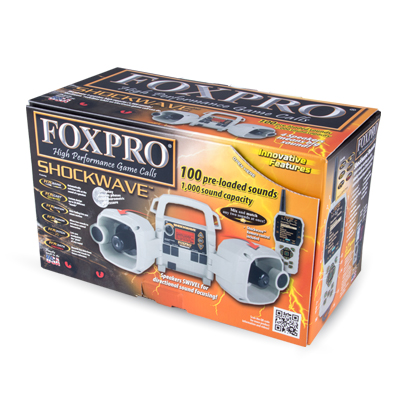
- Dual speaker design delivers exceptional volume and realism
- 400+ sound library with FOXBANG technology
- TX-1000 remote with 300+ yard reliable range
- Rugged weatherproof construction
- Decoy jack for motion decoy integration
Cons
- Premium price point — most expensive in its class
- Remote learning curve for all features
- Heavier than single-speaker competitors
- Sound library management requires desktop software
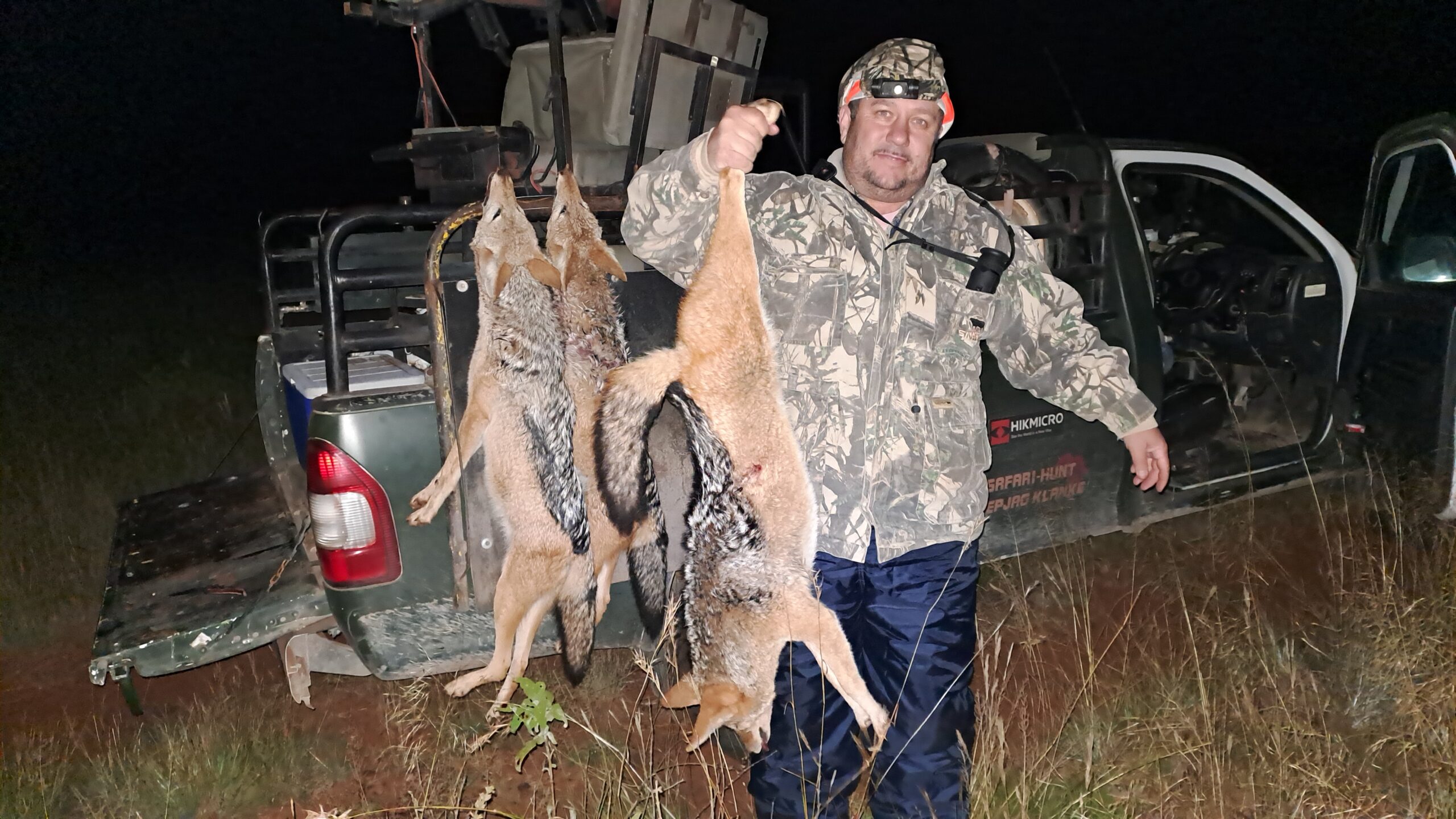
We have run the FOXPRO Shockwave for an entire season of predator hunting — early-fall coyotes on open prairie, late-winter dogs in frozen hardwoods, and everything between. Over sixty stands, two states, and conditions ranging from dead-calm 70-degree evenings to 15-degree mornings with 20 mph wind. After all of that, we have a definitive answer to the question in the title: yes, the Shockwave is the gold standard. But “gold standard” comes with a gold-standard price tag, and the details matter. Here is the full breakdown.
Who Should Buy the FOXPRO Shockwave
The Shockwave is built for serious predator hunters who call frequently and demand the best audio performance available. If you run 30+ stands a season, hunt competitive ground where coyotes have heard every rabbit distress on the market, or simply refuse to compromise on gear that matters, this is the caller that matches your intensity.
It is also the right choice if you hunt wide-open Western terrain where sound needs to carry 400+ yards to pull distant coyotes, or if you stack setups back to back on long calling days where battery life and remote reliability cannot afford to fail.
Skip the Shockwave if: You are new to predator calling and still learning setup fundamentals — start with something more affordable and invest once your calling strategy matures. If you exclusively hunt tight Eastern timber where shots happen inside 100 yards, a lighter single-speaker unit like the FOXPRO X2S delivers excellent results at less weight and cost. And if budget is the primary concern, the ICOtec GC500 provides strong performance at a fraction of the price.
Key Specifications
| Spec | FOXPRO Shockwave |
|---|---|
| Speaker Configuration | Dual speakers (horn + cone) |
| Preloaded Sounds | 400+ |
| Remote | TX-1000 with LCD display |
| Rated Remote Range | 300+ yards |
| Battery | 8x AA (lithium recommended) |
| Battery Life | 8-10+ hours (lithium AAs) |
| FOXBANG | Yes |
| Decoy Jack | Yes (3.5mm) |
| Custom Sound Capacity | 1,000+ via USB |
| Weight | ~3.5 lbs with batteries |
| Weather Resistance | Sealed, weatherproof housing |
| MSRP | ~$600 |
Sound Quality and Volume
This is the category where the Shockwave separates itself from every other caller we have tested, and it is the single most important reason to buy it.
The dual-speaker system pairs a horn speaker for high-frequency projection with a cone speaker that handles midrange and low-end reproduction. The result is a full-spectrum audio output that sounds remarkably natural at field distances. When we play a cottontail distress through the Shockwave and walk 200 yards downwind, it does not sound like a recording being played through a speaker. It sounds like a rabbit dying. That distinction matters more than any spec sheet can convey, because coyotes that have been burned by cheap callers have learned to associate tinny, distorted sound with danger. The Shockwave does not trigger that association.
We A/B tested the Shockwave against the ICOtec GC500 and the FOXPRO X2S using the same cottontail distress track at matched volume levels. The difference was immediately and consistently apparent. The Shockwave’s low-end warmth gave the distress call a visceral quality that the single-speaker units could not reproduce. At maximum volume, the GC500 started clipping on high-frequency peaks while the Shockwave stayed clean. The X2S held together better than the GC500 but lacked the bass response that makes close-range distress calls truly convincing.
Volume is absurd. On calm mornings, we had coyotes responding from beyond 600 yards — not just acknowledging the sound with a distant howl, but committing hard and closing the distance at a dead sprint. In 15-20 mph wind, the Shockwave still projected effectively at 300+ yards when oriented correctly. We learned to angle the horn speaker into the wind and let the cone speaker handle downwind coverage, which maximized reach in the direction that mattered most.
The independent volume control for each speaker via the remote is a feature we did not appreciate until we started using it strategically. Running the cone speaker at 60% with the horn at full blast creates a sound profile that carries distance without overwhelming nearby coyotes that are already closing in. That kind of fine-tuning simply is not possible on single-speaker units.
Remote Control
The TX-1000 remote is the best e-caller remote we have used, though it earns that title with a caveat about learning curve.
Range is outstanding. FOXPRO rates it at 300+ yards, and our field testing consistently exceeded that in open terrain. On flat Kansas pasture, we maintained reliable signal transmission at 350+ yards with no signal drops, lag, or misfires. In rolling terrain with moderate hills and draws, we kept solid control at 200-250 yards. Not once across sixty stands did we experience a signal drop that cost us a setup. When you are lying prone behind a rifle waiting for a coyote to commit, knowing your remote will respond every time you press a button is worth more than any feature list.
The LCD display is backlit and readable in both bright daylight and predawn darkness without throwing enough light to give away your position. You can scroll through sounds, adjust volume on each speaker independently, trigger FOXBANG mode, and build on-the-fly sequences without removing your eyes from the field for more than a second or two.
The learning curve is real, though. The TX-1000 has nested menus for sound categories, sequence programming, speaker configuration, and FOXBANG settings. During our first three outings, we fumbled through menus with cold fingers while coyotes closed distance. By stand number ten, the menu system felt intuitive and we could make adjustments without conscious thought. Our advice: spend thirty minutes at home navigating every menu option before you take the Shockwave into the field. Memorize the button sequences for your five most common adjustments — volume, sound selection, play/pause, FOXBANG toggle, and sequence start. That front-loaded practice eliminates the in-field frustration entirely.
Sound Library and FOXBANG
The Shockwave ships with over 400 preloaded sounds, and the quality of FOXPRO’s sound library is an advantage that compounds over time.
Every sound in the FOXPRO library is recorded from real animals in real situations. The distress calls capture the authentic cadence and frequency variation of genuine prey distress — the irregular gasps, the rising intensity, the moments of silence that make a coyote lean in. Compare that to some competing libraries where sounds are clearly looped, clipped, or digitally generated. Pressured coyotes notice the difference. We have watched educated late-season dogs hang up at 250 yards on a competing caller’s distress track, then commit aggressively when we switched to the Shockwave running a different FOXPRO recording of the same species. The source recording quality matters.
The library covers everything a predator hunter needs: multiple rabbit species, bird distress, rodent distress, fawn distress, coyote vocalizations (howls, barks, pup distress, challenge sequences), fox vocalizations, and a deep catalog of regional prey sounds. You can also load custom sounds via USB through FOXPRO’s desktop programming utility, expanding capacity to well over 1,000 sounds. We loaded several coyote vocalizations recorded from local packs in our hunting area, and those custom sounds outperformed generic howls by a significant margin. Coyotes respond more aggressively to familiar voices.
FOXBANG is the feature that changed how we hunt. When enabled, FOXBANG automatically switches to a predetermined sound the instant you fire your rifle. The caller detects the gunshot and immediately transitions — typically to a coyote pup distress or a ki-yi sound — without any input from you. Why does this matter? Because on stands where multiple coyotes respond, the first shot often sends the second or third dog running. With FOXBANG, the sound changes within a fraction of a second of your shot, and that pup distress or ki-yi frequently stops a fleeing coyote in its tracks or even pulls it back toward the caller. We doubled on stands four times this season directly because of FOXBANG. On one memorable morning, we tripled — the third coyote turned and came back after the second shot because the FOXBANG sound hit before the dog could process what had happened. That feature alone has more than justified the Shockwave’s premium price for our hunting.
The downside is that managing the sound library requires FOXPRO’s desktop software. You cannot organize, rename, or load sounds from a phone app. The software works, but it is a desktop-only affair that feels dated compared to the app-based management some competitors offer. It is a minor inconvenience that only surfaces when you are at home organizing your library, never in the field.
Build Quality
The Shockwave is built like it expects to be treated poorly, and that confidence is well-placed. The housing is a heavy-duty polymer shell that shrugs off drops, impacts, and the general abuse that e-callers absorb during a season of hard hunting. The speaker grilles are recessed and protected. The battery compartment seals securely with a rubber gasket. All external connections — the decoy jack, the USB port, the charging port — are gasketed or covered.
We have used the Shockwave in driving rain, sub-freezing sleet, blowing dust, and the kind of mud that coats everything within a hundred yards of a stock tank. It has been knocked off truck tailgates, stepped on in the dark, and buried under gear bags. The Shockwave looks like it has been used hard because it has, and it functions identically to the day we unboxed it.
The 3.5mm decoy jack is a valuable addition. We run a motion decoy on roughly 75% of our stands, and the direct connection means one remote controls both the caller and the decoy. No separate remote, no separate battery management. Plug in the decoy, set it near the caller, and the TX-1000 handles both. If you are not already using a motion decoy with your e-caller, read our coyote hunting beginner’s guide for setup advice — a decoy paired with the Shockwave’s audio is one of the most effective predator hunting combinations available.
The weight trade-off is the one area where build quality works against the Shockwave. At roughly 3.5 pounds with batteries, it is noticeably heavier than single-speaker competitors like the FOXPRO X2S (under a pound) or the Lucky Duck Revolt. If your hunting involves long hikes into public land walk-in areas, that extra weight adds up. We pack the Shockwave in a dedicated compartment of our predator hunting vest and honestly do not notice it while walking to stands inside a quarter mile. Beyond that distance, we start considering the X2S as an alternative.
Battery Life
FOXPRO recommends lithium AA batteries, and so do we — emphatically. On lithium AAs, the Shockwave delivered consistent performance through multi-stand days without a battery change. Our longest single-day session ran eleven consecutive stands over about nine hours of intermittent calling, and the Shockwave was still pushing full volume on stand eleven with the battery meter showing roughly 30% remaining.
In cold weather, the lithium advantage becomes even more critical. Alkaline AAs lost noticeable output below 25 degrees, with volume dropping and remote responsiveness becoming inconsistent by the fifth or sixth stand. Lithium AAs maintained flat performance down to the single-digit temperatures we encountered during late-January hunts.
The battery meter on the TX-1000 remote provides reliable, granular readings of the caller’s remaining power. We never experienced a surprise dead battery — the meter gave us honest, predictable depletion curves that let us plan our calling days with confidence. We carry a spare set of eight lithium AAs in our vest as standard practice, but across the full season we only swapped batteries mid-hunt twice.
Benchmark Score Breakdown
We score every electronic predator call against our standardized testing methodology to ensure fair, consistent evaluation. Here is how the FOXPRO Shockwave breaks down:
- Sound Quality: 9.5/10 — Dual-speaker design produces the most natural, full-spectrum audio we have tested in any e-caller at any price
- Remote Range and Reliability: 9.5/10 — The TX-1000 exceeded its rated range consistently and never dropped signal across sixty stands
- Sound Library: 9/10 — 400+ high-quality preloaded sounds, expandable via USB, with FOXBANG as a genuine game-changer
- Build Quality: 9/10 — Overbuilt weatherproof construction that absorbs punishment; only dinged for weight
- Battery Life: 8.5/10 — Full-day performance on lithium AAs with reliable metering; no rechargeable option is the only miss
- Value: 8/10 — Premium pricing is justified by performance, but the investment is significant
Overall: 9.0/10
The Shockwave scores at the top of our e-caller rankings because it leads or ties for first place in every performance category that matters in the field. The only area where it gives ground is value — and even there, the price is justified by the performance delta over the competition. For the complete picture on how we arrive at these numbers, visit our methodology page.
How the Shockwave Compares
FOXPRO Shockwave vs. ICOtec GC500
The GC500 is the most common alternative we see hunters considering against the Shockwave, and the comparison comes down to how much sound quality and remote range are worth to you.
The Shockwave wins decisively on sound quality. The dual-speaker system produces richer, more natural audio with better low-end response and cleaner high-volume output. On pressured ground where coyotes have been educated by e-callers all season, that difference translates directly to more committed responses. The Shockwave also wins on remote range (300+ yards vs. ~200 yards) and remote ergonomics. FOXBANG is a feature the GC500 simply does not have.
The GC500 wins on price and programmability. At roughly half the cost of the Shockwave, the GC500 is a capable, reliable caller that will put coyotes on the ground. Its custom sequence programming is actually more flexible than the Shockwave’s out of the box, allowing you to build automated stand sequences with volume ramps and timed transitions. Build quality on the GC500 is also strong — it is not as refined as the Shockwave, but it handles abuse well.
Our take: If you call 50+ stands a season on competitive ground and view your e-caller as a long-term investment, the Shockwave’s sound quality and FOXBANG capability justify the premium. If you are calling frequently and need a tough, programmable unit that delivers strong performance without the top-tier price, the GC500 is an excellent caller that earns its reputation. We break down the GC500 in detail in our best electronic predator calls roundup.
FOXPRO Shockwave vs. FOXPRO X2S
This is less a competition and more a question of how you hunt.
The Shockwave wins on sound quality, volume, remote range, and library depth. It is the better caller by every measurable performance metric. On open ground where sound projection and audio fidelity determine how many coyotes respond, the Shockwave is in a different tier. FOXBANG and the decoy jack add capability the X2S does not offer.
The X2S wins on portability. At under a pound with batteries, the X2S fits in a cargo pocket and adds negligible weight to a walk-in kit. For hunters who cover miles of public land on foot, run-and-gun calling across multiple properties in a single morning, or want a backup caller in the truck, the X2S is purpose-built for mobility.
Our take: Own both if your budget allows. The Shockwave is the primary caller for drive-to stands, open country setups, and any situation where maximum performance matters. The X2S is the caller you grab when the walk is long and the pack is already heavy. If you can only own one, choose based on how you hunt most often. The full predator hunting hub covers more on matching gear to hunting style.
Frequently Asked Questions
Is the FOXPRO Shockwave worth the price over cheaper electronic callers?
For hunters who call regularly on pressured ground, yes. The sound quality difference between the Shockwave and callers in the $200-300 range is not subtle — it is immediately apparent in the field, and coyotes respond to it. FOXBANG alone has given us multiple doubles and a triple that would not have happened with a standard caller. If you view the Shockwave as a multi-season investment (and the build quality supports that), the per-stand cost becomes very reasonable over the life of the unit. If you call a handful of times per year or are still learning the basics, start with a more affordable option and upgrade when your experience outpaces your gear.
How does FOXBANG actually work in the field?
FOXBANG uses a built-in microphone to detect the sound of a gunshot. When it registers the shot, the caller automatically switches from whatever sound is currently playing to a predetermined FOXBANG sound — typically coyote pup distress, a ki-yi, or another reactionary vocalization. The transition happens within a fraction of a second of the shot. You preset the FOXBANG sound and volume before your stand via the TX-1000 remote. In practice, it works seamlessly. We have never had a false trigger from wind, vehicle noise, or other environmental sounds, and the switch is fast enough that fleeing coyotes react to the new sound before they clear the area. It is most effective on stands where multiple coyotes are responding, giving you a realistic chance at doubles.
Can I use rechargeable batteries in the FOXPRO Shockwave?
You can use rechargeable NiMH AA batteries, and they will power the unit. However, we strongly recommend lithium AAs for several reasons. Lithium batteries maintain consistent voltage output throughout their discharge cycle, which means the Shockwave delivers full volume and clean sound from the first stand to the last. NiMH batteries drop voltage as they deplete, which can cause gradual volume reduction and subtle audio quality loss before the battery meter shows a low reading. Lithium AAs also perform dramatically better in cold weather. The cost of lithium batteries over a season is modest compared to the cost of the caller itself — budget roughly $40-50 in lithium AAs per season depending on your calling frequency.
How do I load custom sounds onto the FOXPRO Shockwave?
Custom sounds are loaded via USB using FOXPRO’s free desktop programming utility, available for Windows and Mac. The process involves connecting the Shockwave to your computer with the included USB cable, opening the programming software, and dragging sound files into the caller’s library. FOXPRO accepts standard audio formats (WAV and MP3) and the software allows you to organize sounds into categories, rename files, and set default volumes. The process takes a few minutes per batch of sounds. We recommend recording local coyote vocalizations with a quality field recorder and loading those alongside the stock library — area-specific howls and group vocalizations consistently outperform generic recordings against educated coyotes in our experience.
What is the best motion decoy to pair with the FOXPRO Shockwave?
The Shockwave’s 3.5mm decoy jack works with any compatible FOXPRO or third-party motion decoy. We have had the best results with the FOXPRO Jack-in-the-Box and the FOXPRO Shockwave-compatible Foxjack series, which plug directly into the caller and are controlled through the TX-1000 remote. Place the decoy within two to three feet of the caller so the visual movement and audio source appear to originate from the same location. The combination of the Shockwave’s natural sound and a motion decoy’s erratic movement produces remarkably committed responses — coyotes lock onto the decoy and close distance aggressively, often ignoring the instinct to circle and scent-check that hangs up dogs on sound-only setups. If you are new to decoy use, our coyote hunting beginner’s guide covers placement strategy and setup fundamentals.