
Caribou hunting is one of the last truly wild pursuits in North American big game. There are no food plots, no tree stands, no trail cameras capturing movement patterns from a suburban woodlot. You are on open tundra or boreal wilderness, miles from the nearest road, glassing herds that may number in the thousands as they push across landscapes that have not changed in ten thousand years. The animals are nomadic, the terrain is relentless, and the weather can turn lethal between breakfast and lunch. Everything about a caribou hunt is governed by remoteness, and that remoteness is both the appeal and the challenge.
We have hunted caribou in Alaska, researched tag logistics across the Canadian territories, spoken with outfitters and bush pilots from Kotzebue to Nunavut, and packed out bulls in conditions that tested every layer and every piece of gear we carried. This caribou hunting guide covers the full scope of planning an arctic adventure — from choosing a herd and understanding license logistics to selecting a rifle, building a tundra gear list, and getting several hundred pounds of meat out of the backcountry on a bush plane with strict weight limits.
If you are new to big game hunting or want broader context, start with our big game hunting hub. For details on how we evaluate and recommend gear, see our methodology page. Caribou hunting shares significant logistical overlap with moose, so our moose hunting guide is worth reading if you are building an Alaska trip that targets both species.
Where to Hunt Caribou
Caribou range extends across the Arctic and subarctic regions of North America, but not all populations are equal in terms of accessibility, herd health, tag availability, and trophy potential. Your choice of hunting destination shapes every other decision in the planning process.
Alaska
Alaska is the most accessible caribou hunting destination for American hunters and holds the largest caribou populations in the United States. The state manages roughly 30 distinct caribou herds, though only a handful are relevant for most hunters.
The Western Arctic Herd is the largest in Alaska, with populations that have fluctuated between 200,000 and 490,000 animals over the past several decades. This herd ranges across the western Brooks Range and the North Slope, and it is accessible primarily through bush flights out of Kotzebue or Bettles. The Western Arctic Herd produces solid bulls, and the sheer volume of animals means opportunities are consistent when you time the migration correctly. Hunting pressure is moderate because of the logistics and cost involved in reaching the range.
The Central Arctic Herd occupies the area between the Dalton Highway and the Canning River, including portions of the North Slope that are accessible from the Dalton Highway corridor. This is one of the few caribou hunts in Alaska that does not absolutely require a bush flight — hunters can drive the Dalton Highway and hunt on foot from road-accessible areas, though the best hunting is still away from the road. The Central Arctic Herd has been relatively stable, hovering around 20,000 to 30,000 animals.
The Mulchatna Herd in southwestern Alaska experienced a severe population decline from roughly 200,000 animals in the late 1990s to under 30,000 in recent years. Check current Alaska Department of Fish and Game regulations carefully — harvest restrictions and emergency closures have been implemented for this herd, and hunting opportunity may be extremely limited or closed entirely depending on population status.
The Fortymile Herd in eastern interior Alaska has been a recovery success story, growing from roughly 6,000 animals in the 1970s to over 80,000 in recent years. The state has increased harvest opportunity for this herd, and it offers a more affordable hunt for resident and nonresident hunters because portions of the range are accessible by road from Tok and the Taylor Highway.
Canadian Territories
Canada holds the majority of the world’s caribou, but hunting access for nonresidents is more complicated than Alaska. Regulations vary dramatically by province and territory, and many caribou populations across Canada are in decline, leading to harvest restrictions or outright closures.
Nunavut offers hunting for the barren-ground caribou herds that migrate across the central and eastern Arctic. Nonresident hunters must use a licensed outfitter. The Beverly, Qamanirjuaq, and Bathurst herds are the primary populations hunted, though the Bathurst Herd has experienced catastrophic declines and may be closed or severely restricted. Nunavut hunts are expensive — $8,000 to $15,000 or more — but the tundra hunting experience is unmatched.
The Northwest Territories historically offered outstanding caribou hunting, particularly for the Bathurst and Bluenose herds. However, ongoing population declines have resulted in significant harvest restrictions. Check current NWT regulations before planning, as seasons and tag availability change frequently based on population surveys.
Quebec and Labrador hold the George River and Leaf River caribou herds. The George River Herd crashed from over 800,000 animals in the early 2000s to fewer than 10,000, and hunting has been closed. The Leaf River Herd is also in decline with restricted harvest. These were once among the most popular caribou hunting destinations on the continent, but current conservation status makes them largely unavailable.
British Columbia closed its caribou hunting season entirely due to severe population declines across southern mountain caribou herds. There is no legal caribou hunting in BC.
Greenland
Greenland offers a unique caribou hunting experience for the adventurous hunter willing to navigate international logistics. The island holds a population of approximately 10,000 to 15,000 caribou (known locally as “tuttu”), primarily in the western and southwestern regions. Nonresident hunters must obtain a license through the Greenland government and typically hunt with a local outfitter. The animals are not pressured heavily, and the landscape is strikingly different from North American tundra — fjords, glacial valleys, and coastal hills. Greenland caribou are smaller-bodied than their Alaskan counterparts, but the experience is unlike anything else in the caribou hunting world. Expect to budget $6,000 to $12,000 for a guided Greenland hunt, plus international airfare.
Tag and License Logistics
Understanding the tag system is critical, because caribou hunting regulations are some of the most dynamic in North American big game management. Herd populations shift, and seasons open and close in response.
Alaska Tags
Alaska makes caribou hunting remarkably accessible compared to most Lower 48 big game opportunities. Residents can purchase over-the-counter caribou tags for general season hunts in most game management units. The cost is minimal — a resident caribou tag runs around $10.
Nonresidents can also purchase over-the-counter caribou tags in Alaska. The nonresident caribou tag costs approximately $650, and no guide is required for caribou — unlike moose and brown bear, which mandate a guide for nonresidents. This makes caribou the most accessible big game species in Alaska for visiting hunters. However, certain units or herds may fall under draw-only or registration permit systems, particularly when populations are declining. Always verify the current year’s regulations for your target unit through the Alaska Department of Fish and Game before booking flights and outfitters.
The bag limit in most units is one bull caribou, though some units allow a cow or a second bull under specific season structures. A few units, particularly those targeting the Fortymile and Central Arctic herds, allow up to five caribou in certain seasons when herd management objectives call for increased harvest.
Guided vs DIY
The guided-versus-DIY decision for caribou hinges almost entirely on logistics rather than hunting difficulty. Caribou are not hard to find when you are in the right place at the right time. The challenge is getting to that place.
DIY hunts are absolutely viable in Alaska, particularly along the Dalton Highway for the Central Arctic Herd or in the Fortymile area accessible from the road system. A DIY bush plane hunt targeting the Western Arctic Herd is also possible but requires significant planning — you need to coordinate with an air taxi operator for drop-off and pick-up, manage your own camp, handle all meat processing and packing, and stay within the weight limits for your return flight. Budget $2,000 to $5,000 for a DIY Alaska caribou hunt once you factor in tags, bush flights, food, fuel, and gear.
Guided hunts simplify the logistics enormously. A quality caribou outfitter manages the air transportation, camp, food, and meat care, and they know the migration timing and patterns for the herd you are targeting. Guided caribou hunts in Alaska typically run $6,000 to $14,000 depending on location, duration, and whether you are combining caribou with moose or other species.
Transporter hunts are a middle option that has become popular in Alaska. A transporter drops you and your gear at a pre-scouted location, you hunt on your own, and they pick you up at a scheduled time. This is less expensive than a fully guided hunt but removes the logistical burden of finding and coordinating with an independent air taxi. Transporter hunts typically run $3,000 to $6,000.
Canadian Tags
Nonresidents hunting caribou in Canadian territories must use a licensed outfitter. This is non-negotiable — unguided nonresident caribou hunting is not legal in Nunavut, the Northwest Territories, or any province with an active caribou season. Tags are issued through the outfitter’s allocation, so your tag logistics are handled as part of the guided hunt booking. Expect the tag and license fees to add $200 to $500 on top of the hunt cost depending on the jurisdiction.
Caliber and Rifle Selection
Caribou are medium-sized big game animals — a mature bull weighs 350 to 400 pounds on the hoof, with some exceptionally large bulls pushing 450. They are lighter-bodied than elk and much lighter than moose, which opens up your caliber options significantly. The real constraint is not stopping power but rather the conditions under which you will shoot: wind, distance, and the need for flat trajectory across open tundra where 300-yard shots are common and 400-yard shots are not unusual.
Best Calibers for Caribou
The ideal caribou cartridge delivers enough energy to cleanly kill a 400-pound animal at 350 yards while shooting flat enough that wind and distance do not demand extreme holdover adjustments. This is squarely in the wheelhouse of the standard Western big game calibers.
- 6.5 Creedmoor — Flat-shooting, mild recoil, outstanding accuracy, and widely available. A 140-grain bonded or monolithic bullet from a 6.5 Creedmoor is perfectly adequate for caribou inside 400 yards. This is our go-to recommendation for hunters who want minimal recoil and maximum precision on caribou-sized game.
- 7mm Remington Magnum — Hits harder than the 6.5 Creedmoor, shoots almost as flat, and is available in every sporting goods store in North America. A 160- to 162-grain bullet at 2,950 fps is devastating on caribou at any sane range.
- .308 Winchester — Absolutely capable with quality 165- to 180-grain bullets inside 350 yards. Less reach than the magnums, but easy to shoot well and inexpensive to practice with. If your caribou hunt also targets moose, you might want more gun.
- .300 Winchester Magnum — More cartridge than caribou strictly require, but if you already own one for elk or moose, it works beautifully. The extra energy provides a wider margin on quartering shots and windy days.
- 6.5 PRC — Pushes the same high-BC bullets as the Creedmoor but 200 fps faster, extending effective range and improving wind performance. Excellent choice for open-tundra hunting.
For a comprehensive comparison of these cartridges across multiple big game applications, our hunting caliber guide breaks down trajectory, energy, and recoil in detail.
Rifle Considerations
Your caribou rifle needs to be lightweight and weather-resistant above all else. You will carry it across miles of tundra in rain, sleet, and wet snow. A stainless or cerakote action paired with a synthetic stock is the practical choice. We would take a 6.5-pound synthetic-stocked bolt action over an 8.5-pound walnut rifle every time in caribou country. Weight matters when you are covering ground on foot across uneven tundra, and it matters even more when you are watching every ounce for the bush plane ride out.
Optics for Open Tundra
Caribou country is the most optics-dependent hunting environment in North America. The tundra is vast, open, and largely featureless — you can see for miles in every direction, and caribou can appear as distant specks that take an hour of observation to identify and pattern. Quality glass is not optional here. It is the single most important tool in your kit after the rifle.
Binoculars
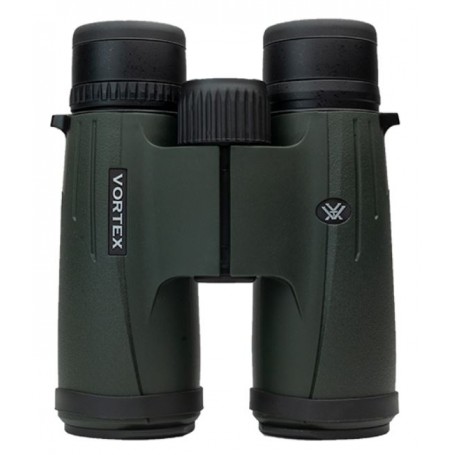
A quality 10x42 binocular is the foundation of your caribou optics setup. You will spend far more time behind binoculars than behind your rifle. Caribou hunting is predominantly a glassing game — you are scanning vast expanses of tundra for movement, identifying bulls from cows at distance, and planning stalk routes across terrain with minimal cover. A full-size 10x42 like the Vortex Viper HD delivers the magnification and field of view you need for extended tundra scanning sessions without destroying your eyes over a full day of glassing.
Do not bring compact binoculars as your primary glass on a caribou hunt. The small objective lenses and reduced optical quality of compact models will strain your eyes within hours of the sustained glassing that tundra hunting demands. Compacts are fine as a backup in a chest pouch, but your main binocular needs to be a quality full-size unit.
Spotting Scope
A spotting scope in the 15-45x60 to 20-60x80 range is a genuine asset on a caribou hunt, particularly if you are hunting during migration season when herds may be visible at extreme distances. A spotter lets you identify trophy bulls at a mile or more, count points, assess antler width, and make go or no-go decisions on a stalk before you commit hours of effort crossing open ground. If you are weight-conscious for a bush plane hunt, a compact 15-45x60 model saves several ounces over a full-size 80mm unit with minimal loss of field utility.
For detailed optics recommendations, our elk hunting gear checklist covers spotting scopes and riflescopes that translate directly to caribou hunting.
Riflescope
For caribou, we prefer a variable scope in the 3-15x or 4-16x range with an objective lens of 44mm to 50mm. The 3x or 4x low end provides enough field of view for close encounters — caribou occasionally appear at 50 yards when a migration group crests a ridge directly in front of you — while the 15x or 16x top end is sufficient for precise shot placement at 400 yards in windy conditions. A BDC or mil-based reticle matched to your cartridge simplifies holdover calculations when you do not have time to dial.
Hunting Tactics
Caribou behave differently from every other North American big game species. They are nomadic herd animals driven by migration patterns, insect pressure, and seasonal forage availability. Traditional whitetail or elk tactics — patterning individual animals, calling, setting up on food sources — are largely irrelevant. Caribou hunting is about positioning yourself in the path of moving animals and executing a stalk when opportunity arrives.
Intercepting Migration Routes
The most productive caribou hunting strategy is positioning yourself along a known migration corridor and waiting. Caribou herds follow broadly predictable routes between their calving grounds, summer range, and winter range, and these routes funnel through specific river valleys, mountain passes, and ridgelines that experienced outfitters and pilots have identified over decades.
Timing the migration is the single most important variable in your hunt. Arrive a week early and you may sit on an empty tundra for days. Arrive a week late and the herd may have already passed. Work closely with your outfitter or transporter to nail the timing window for the herd you are targeting. Migration typically occurs from August through October depending on the herd and latitude, with September being the peak window for most popular Alaska hunts.
Spot-and-Stalk on Open Tundra
When you locate bulls on the tundra, the stalk presents a unique challenge: there is almost no cover. The tundra is flat to gently rolling, with vegetation rarely exceeding knee height. Caribou have good eyesight, and any standing figure on the horizon is immediately visible for miles.
Use terrain features — creek drainages, tundra hummocks, low ridgelines, and tussock fields — to break your silhouette and close distance. Move when the animals have their heads down feeding. Freeze when heads come up. Caribou are less spooky than mule deer or pronghorn in our experience, but they will absolutely relocate if they spot you approaching openly at 600 yards.
One advantage of hunting herd animals is that they are often focused on each other. Bulls during the pre-rut and rut are distracted by cows and sparring partners, which can provide windows to close distance that would not exist if you were stalking a solitary animal.
River Crossings
Caribou frequently cross rivers during migration, and these crossings create predictable, high-opportunity ambush points. Animals are vulnerable and committed once they enter the water, and they tend to exit at the same locations year after year. Many successful caribou hunts — particularly float trip hunts in Alaska — are built entirely around positioning near known crossing points and waiting.
Set up on the bank where caribou will exit the water, with the wind in your favor. Let the animals come to you. They will typically pause and shake off after crossing, giving you a standing broadside shot at moderate range. This is one of the most reliable setups in caribou hunting, and it is a primary tactic on float trips down rivers like the Kobuk, Noatak, and Koyukuk.
Physical Preparation
Caribou hunting is not a technical climbing challenge like sheep or mountain goat, but it demands a different kind of endurance. The tundra punishes your legs in ways that mountain trails do not. Tussock fields — clumps of grass on raised mounds with wet gaps between them — are ankle-twisting, energy-draining terrain that can cut your pace to under one mile per hour while carrying a pack.
Terrain and Conditioning
Focus your physical preparation on load-bearing endurance over uneven ground. Hiking with a 40- to 60-pound pack on rough, off-trail terrain is the best training. Stair climbers and incline treadmills build relevant leg strength, but nothing replicates the ankle instability of tussock tundra like actually walking on uneven ground with weight on your back.
Plan for 5 to 12 miles of walking per day depending on your hunting strategy. Migration intercept hunts involve less daily mileage but may require a long initial hike from your landing strip to your glassing position. Spot-and-stalk hunts on open tundra can cover significant ground when you are closing distance on mobile herds.
Weather and Remoteness
The arctic and subarctic are unforgiving environments. Temperatures on a September caribou hunt can range from the mid-40s down to the low teens at night, with wind chill pushing effective temperatures well below zero. Rain, sleet, and wet snow are common. Hypothermia is a real risk for underprepared hunters, particularly during river crossings or unexpected weather changes.
You are also genuinely remote. In much of caribou country, the nearest medical facility is a bush flight away, and weather can ground aircraft for days. Carry a satellite communicator (inReach, Zoleo, or similar), know basic wilderness first aid, and communicate your itinerary with someone who will initiate a search if you miss your check-in.
Gear for Arctic Conditions
Your gear list for a caribou hunt is shaped by two competing forces: the need for warmth and weather protection in a harsh environment, and the strict weight limits imposed by bush plane logistics. Every ounce matters. You cannot bring everything you want, so you bring exactly what you need.
Layering System
A merino wool or synthetic base layer, an insulating mid-layer (fleece or lightweight puffy), and a waterproof-breathable outer shell is the standard three-layer system for caribou. We strongly prefer synthetic insulation over down for caribou hunting — wet conditions are nearly constant, and down loses its loft when soaked. A synthetic puffy retains warmth even when damp and dries dramatically faster in the field.
Footwear
Rubber-bottomed, insulated hunting boots are the standard for tundra work. You will cross creeks, wade through saturated tundra, and stand on wet ground for hours. Leather boots, even waterproof ones, will eventually wet through in this environment. A quality pair of 800- to 1200-gram insulated rubber boots (Kenetrek, LaCrosse, Danner) with good ankle support handles the vast majority of caribou hunting terrain. Bring gaiters if your boots are shorter than mid-calf to keep tundra water from pouring over the tops.
Camp Gear
A four-season tent rated for high winds is non-negotiable. Freestanding dome designs handle tundra wind better than trekking-pole shelters because you can anchor them with rocks where stakes will not hold in frozen or saturated ground. Your sleeping bag should be rated to at least 10 degrees Fahrenheit, and pair it with a quality insulated sleeping pad with an R-value of 5 or higher. The ground in caribou country is cold, and an inadequate pad will sap your body heat all night regardless of your bag rating.
Essential Extras
Pack a comprehensive game-processing kit: sharp knives, a lightweight bone saw, game bags (breathable cotton, not synthetic), paracord for hanging meat, and citric acid or a similar treatment to protect meat from flies during warm spells. Bring more game bags than you think you need. A plastic ground cloth for meat processing keeps things clean on the tundra.
Field Care and Meat Logistics
Getting meat out of the field is the defining logistical challenge of a caribou hunt, particularly on bush plane hunts where weight limits are absolute and non-negotiable.
Bush Plane Weight Limits
Most bush planes operating in caribou country — Super Cubs, Beavers, Cessna 206s, and Otters — have strict payload limits. A Super Cub typically carries one hunter and 250 to 300 pounds of gear and meat. A Cessna 206 or Beaver can handle more, but you will share the load with another hunter or two. This means you must know your inbound gear weight precisely and plan your outbound weight to include 100 to 200 pounds of boned-out caribou meat, the cape if you are doing a shoulder mount, and the antlers.
Weigh every piece of gear before you leave home. Bring a luggage scale to the field. Work with your pilot or transporter to establish exact weight limits for your aircraft and plan accordingly. Pilots in Alaska do not bend weight rules — they will leave gear or meat behind before they will overload an aircraft, and you do not want to discover at the landing strip that you are 50 pounds over.
Meat Processing in the Field
A mature caribou bull yields roughly 100 to 150 pounds of boned-out meat. You should break the animal down as quickly as possible after the kill — the combination of warm days and blowflies can compromise meat quality within hours in early September. Remove the quarters, debone the meat from the bone, and get it into breathable game bags hung off the ground or draped over willows for air circulation.
Keep meat in the shade and off the tundra surface. A light breeze is your best friend for cooling — position game bags where airflow can circulate around them. If temperatures are warm (above 50 degrees), consider applying a citric acid wash to the exterior of the meat to deter insects and slow bacterial growth.
Caping and Antler Care
If you plan to do a shoulder mount, cape the animal carefully and salt the hide as soon as possible. Bring two to three pounds of fine-grain non-iodized salt for the cape. Work the salt into every fold, particularly around the eyes, ears, nose, and lips — these are the areas that spoil first. Fold the cape skin-to-skin and roll it for transport.
Caribou antlers are surprisingly heavy, particularly a mature bull with long main beams and multiple points. A large set of antlers can weigh 15 to 25 pounds. Factor this into your bush plane weight calculations. Some hunters choose to saw the skull plate in half to save weight and facilitate packing. Discuss your trophy plans with your pilot or transporter ahead of time so there are no surprises at the airstrip.
Shot Placement
Caribou are not particularly difficult to kill with a well-placed shot, but poor shot placement on any big game animal creates problems that multiply exponentially in remote country. A wounded caribou on the open tundra can run a surprising distance, and tracking across featureless terrain without a blood trail is a losing proposition.
The standard broadside double-lung shot is your primary target. Place the crosshair tight behind the front shoulder, roughly one-third of the way up from the belly line. On a caribou, this puts your bullet through both lungs and possibly the top of the heart. A well-hit caribou with a double-lung shot rarely goes more than 50 to 100 yards.
On a quartering-to shot, place the bullet at the point of the near shoulder to angle through the vitals and into the off-side lung. Quartering-away shots should enter behind the last rib on the near side and angle forward through the lungs. Both quartering angles demand a tough, controlled-expansion bullet that will hold together through muscle and potentially bone. This is where premium bullet selection pays dividends — refer back to our caliber section and our hunting caliber guide for bullet recommendations.
Avoid head and neck shots. The target is small, a miss by two inches results in a wounded animal, and there is no advantage to a neck shot on caribou that a double-lung shot does not provide with dramatically more margin for error.
Frequently Asked Questions
When is the best time to hunt caribou in Alaska?
September is the peak month for most Alaska caribou hunts. Migration activity is highest, bulls are in hard antler with velvet recently shed, and the weather — while cold — is generally manageable. Early September offers the warmest temperatures and the longest daylight, but timing depends entirely on the specific herd and the migration schedule that year. Late August can be productive for early-moving herds, and early October works for southern herds that migrate later. Coordinate with your outfitter, transporter, or air taxi to dial in the timing window for the specific herd you are targeting.
How much does a caribou hunt cost?
Costs vary enormously by hunt type and destination. A DIY Alaska caribou hunt with bush plane access runs $2,000 to $5,000 including tags, flights, and supplies. A transporter-assisted hunt in Alaska costs $3,000 to $6,000. Fully guided Alaska hunts range from $6,000 to $14,000. Guided hunts in the Canadian territories run $8,000 to $15,000 or more. Greenland hunts cost $6,000 to $12,000 plus international airfare. Budget separately for taxidermy, meat processing and shipping, and travel to and from your departure point.
Can I combine a caribou hunt with other species?
Yes, and many hunters do. A caribou and moose combo hunt is one of the most popular offerings in Alaska. Many outfitters and transporters offer 10- to 14-day hunts that cover both species, which saves on bush flight costs since you are already in the field. Caribou and grizzly bear is another common combination in northern Alaska. Check our moose hunting guide for details on adding moose to your Alaska trip.
Do I need a guide for caribou hunting in Alaska?
No. Unlike moose and brown or grizzly bear, Alaska does not require nonresident caribou hunters to use a registered guide. You can hunt caribou on your own, with a transporter, or with a guide — the choice is yours. That said, a transporter or guide dramatically simplifies logistics, particularly for first-time Alaska hunters who are unfamiliar with bush plane operations, tundra navigation, and field meat care in remote conditions.
How do I get caribou meat home after the hunt?
For Alaska hunts, most hunters ship meat home via air freight or a specialty game meat shipper. Freeze the boned-out meat solid — many remote lodges and some air taxi operations have freezer access — then pack it in insulated shipping coolers with dry ice. Services like Alaskan Wild Ship, Northern Air Cargo, and local freight operators handle game meat shipments routinely. Budget $200 to $500 for shipping depending on weight and destination. If you drive to Alaska via the Alaska Highway (or the Dalton Highway for Central Arctic Herd hunts), you can haul meat in quality coolers with ice, though the drive south requires regular ice replenishment and careful temperature management over multiple days.