
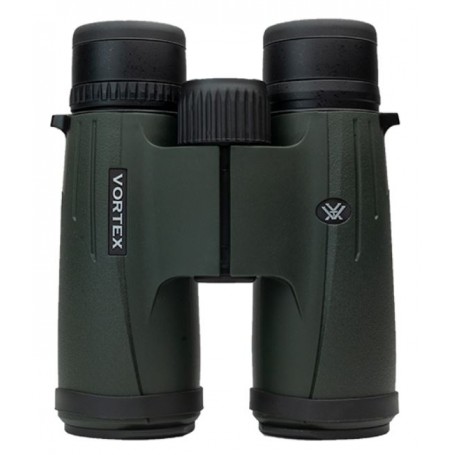
The difference between a hunter who fills tags consistently in the West and one who eats tag soup every October almost always comes down to one skill: glassing. Not shooting. Not calling. Not even fitness — though all of those matter. The hunters who find animals year after year are the ones who sit down, mount their optics on a tripod, and systematically pick apart terrain until they find what they are looking for.
We have spent hundreds of hours behind binoculars and spotting scopes across Colorado, Wyoming, Montana, Idaho, and Nevada. We have glassed elk out of dark timber at first light, watched mule deer bucks materialize on sage benches at a mile, picked out bedded pronghorn on flats that looked completely empty, and spotted bighorn sheep on cliff faces that most people would walk past without a second look. Every one of those animals was found because we committed to a disciplined glassing approach instead of hiking aimlessly and hoping to bump into something.
This guide covers everything we have learned about glassing for big game — from choosing a position and working a grid pattern, to reading terrain features and adjusting strategy by species. Whether you are hunting with quality binoculars like the Vortex Viper HD or a full spotting scope setup, the fundamentals here will put more animals in your field of view. For a deeper look at how we test and evaluate optics, see our Benchmark Score methodology.
Why Glassing Beats Walking
The math on glassing for big game is brutally simple. A hunter on foot covers maybe two to three miles per hour in broken western terrain. Their effective detection range while walking is roughly 200 to 400 yards — and that is being generous, because movement, noise, and swirling thermals announce your presence long before you see anything. You are playing defense the entire time.
A hunter glassing from a good vantage point covers exponentially more ground. A quality pair of 10x binoculars on a tripod lets you methodically scan a square mile of terrain in 20 minutes without moving, without making noise, and without spreading scent. In an hour of focused glassing, you can visually cover more huntable terrain than you could walk through in an entire day.
There is also a detection asymmetry that works in your favor. Animals are evolved to detect movement. When you are hiking, you are broadcasting your presence to every animal within line of sight. When you are sitting still on a ridge glassing, you are functionally invisible. We have had elk feed within 100 yards of our glassing position without noticing us — something that would never happen if we were moving through their drainage.
The bottom line: walking is for closing distance on animals you have already located. Glassing is how you locate them in the first place. Hunters who reverse this order spend most of their time pushing animals out of the country without ever seeing them.
Choosing a Glassing Position
Where you sit down to glass matters as much as how you glass. A perfect technique executed from a poor position will still produce poor results. We evaluate every potential glassing setup against four criteria before committing to it.
Elevation Advantage
You want to be looking down into terrain, not across it or up at it. Elevation gives you angles into pockets, bowls, and timbered benches that are invisible from the valley floor. A 500-foot elevation advantage over the terrain you are glassing can triple your visible coverage area compared to glassing from the same elevation as the animals.
That said, do not default to the highest point on the ridgeline. Skylining yourself on a peak makes you visible to every animal in the drainage. The ideal position is just below a ridgeline or on a bench that gives you the downward angle without putting your silhouette against the sky.
Sun Angle
Always glass with the sun at your back or to your side. Glassing into the sun creates glare, reduces contrast, and makes it nearly impossible to pick out animals against terrain. Morning glassing positions should face west. Evening positions should face east. This is non-negotiable — no amount of technique compensates for having the sun in your eyes.
Sun angle also affects the animals you are trying to spot. When the sun hits a hillside, it creates contrast between sunlit and shaded terrain. Animals often show up as slightly different tones against this contrast, especially early and late in the day when shadows are long.
Wind Direction
Your scent column drifts downwind and disperses over a surprisingly large area. If you are glassing a basin and the wind is carrying your scent directly into it, you are educating every animal below you even though they cannot see you. Choose positions where prevailing thermals carry your scent away from the terrain you are watching.
In mountain terrain, thermals are predictable. Cool air sinks downhill in the morning. Warm air rises uphill as the day heats up. Use this to your advantage — glass from above in the morning when thermals are pulling your scent up and away from lower terrain.
Proximity to Escape Routes
Great glassing positions are worthless if you cannot get to the animals you find. Before you settle in, think about your stalk route. Can you drop off the back side of your ridge and circle into range? Is there a timbered finger you can use for cover on the approach? If the only path to the animal requires crossing 800 yards of open sagebrush, you might want to find a closer vantage point even if it covers less terrain.
We build this into our planning before we ever leave camp. Looking at satellite imagery and topo maps the night before, we identify glassing positions that pair a good field of view with viable approach routes to likely animal locations.
Binocular Technique: Working a Systematic Grid
Random scanning is the single most common mistake we see in western hunters. Sweeping your binoculars back and forth across a hillside in broad strokes feels productive, but it misses far more than it finds. Animals are small, they match their environment, and they are often partially obscured by terrain or vegetation. You need a system.
The Grid Pattern
Divide the terrain in front of you into a mental grid. Start at one edge — we typically start at the far left — and glass a horizontal strip across the entire visible terrain at the farthest distance. Move slowly. Overlap each “frame” of your binocular view by about 30 percent so nothing falls in the gaps. When you reach the right edge, drop down one strip and glass back to the left.
The speed at which you move through this grid matters enormously. Most hunters glass too fast. We aim for roughly five to eight seconds per binocular “frame” of view. That is long enough for your brain to register anomalies — a horizontal line in a vertical landscape, a color that does not match, a flicker of movement. At 10x magnification, your field of view is roughly 300 to 350 feet at 1,000 yards. Moving too fast through each frame means your brain never has time to process what it is seeing.
What to Look For
You will almost never see a whole animal through your binoculars on the first pass. What you are looking for are fragments and anomalies:
- Horizontal lines. Nature is overwhelmingly vertical — trees, grass, rock faces. A horizontal line is often a back, a belly, or an antler beam.
- Color mismatches. The tawny brown of an elk’s body against gray-green sage. The white rump patch of a mule deer against brown dirt. Even subtle differences in shade stand out if you are moving slowly enough.
- Movement. A flicking ear. A swishing tail. A head turning to feed. Movement is the easiest thing to detect, which is why slow, methodical scanning gives you the best chance of catching it.
- Geometric shapes. Antler tines, the round curve of a rump, the straight line of a leg — any shape that does not fit the organic randomness of the terrain.
- Texture differences. The smooth hair of an animal’s hide reads differently than surrounding rock, bark, or grass, especially in direct sunlight.
When something catches your eye, stop. Do not move your binoculars. Stare at it. Let your brain process the shape. Many times it will resolve into a rock or a stump. But sometimes that odd shape will move, and you will realize you are looking at the top of an elk’s back in a wallow 1,200 yards away.
When to Upgrade to a Spotting Scope
Binoculars are your primary search tool. A spotting scope is your identification and evaluation tool. There is a clear handoff point between the two, and understanding it will save you time and prevent unnecessary stalks on the wrong animals.
Use binoculars to find something that looks like an animal. Then switch to a spotting scope at 20x to 40x magnification to confirm the species, sex, and — if you are being selective — the quality of the animal. Trying to do both jobs with binoculars alone means you are either under-magnified for identification or carrying binoculars too heavy and high-powered for effective scanning.
We keep our spotting scope mounted on the tripod alongside our binoculars for exactly this reason. When we spot something interesting at 10x, we can immediately swing the spotting scope onto it for a closer look. For a breakdown of the best options for this kind of western hunting, see our guide to the best spotting scopes for western hunting.
The exception is pronghorn on open flats, where distances are huge but the terrain is featureless enough that binoculars alone can usually confirm what you are looking at. For species like mule deer in broken country or elk in timber edges, the spotting scope is essential.
Tripod Setup: The Non-Negotiable Foundation
If you take one thing from this guide, make it this: use a tripod. Handheld binoculars are fine for a quick scan from a treestand, but for sustained western glassing, they are useless. Your hands shake. Your arms fatigue. Your eyes strain. After 10 minutes of handheld glassing, your detection ability drops dramatically because your brain is spending most of its processing power on stabilizing the image instead of analyzing what it sees.
A tripod-mounted binocular setup transforms glassing from a physically draining exercise into something you can do for hours. The image is rock-steady. Your arms are free. Your eyes can focus entirely on picking apart terrain instead of fighting vibration.
Weight Considerations
We understand the hesitation. A tripod adds weight to a pack that already feels too heavy. But the trade-off is overwhelmingly in your favor. A quality carbon fiber tripod with an appropriate head weighs between 1.5 and 3 pounds. That is less than a water bottle. And that small weight investment will do more for your success rate than any other piece of gear in your pack — including your rifle.
For backcountry hunts where every ounce matters, look at compact carbon fiber tripods designed for hunters. Pair them with a binocular adapter that lets you quickly mount and dismount your optics. The setup should take less than 30 seconds from pack to glassing position.
For a reference on the kind of optical quality that makes tripod-mounted glassing worthwhile, read our Vortex Viper HD review. Sharp glass on a stable platform is the foundation of everything else in this guide.
Time of Day Strategy
Animals are not distributed randomly across the landscape throughout the day. Their location and visibility shift predictably with the sun, and your glassing schedule should match.
First Light
The 30 minutes before and after sunrise are the single most productive glassing window of the day. Animals are on their feet, feeding, watering, and moving from nighttime feeding areas toward bedding cover. Visibility is increasing, and the low sun angle creates long shadows that make animals stand out against terrain.
Be in your glassing position before first light. Settled, tripod deployed, optics focused. You do not want to be hiking to your spot when the best glassing window of the day opens. We set alarms early enough to reach our position in the dark with time to spare.
Midday
Most hunters pack it in by mid-morning, and that is a mistake. Midday glassing is different from morning glassing — you are not looking for animals on their feet. You are looking for bedded animals. And bedded animals are everywhere, hiding in the shade of lone trees, tucked under rock overhangs, nestled in north-facing pockets on south-facing slopes.
Midday glassing requires more patience and a sharper eye. You are looking for antler tips poking above sage, an ear flick in a patch of shade, or the subtle outline of a body tucked behind a bush. This is where the spotting scope earns its keep. A bedded mule deer buck at 1,000 yards is nearly impossible to spot with the naked eye but shows up clearly at 40x if you know where to look.
Last Light
The evening session mirrors the morning. Animals leave their beds and move toward feeding and watering areas. The last 90 minutes before dark are prime time. Evening has an advantage over morning in that you have had all day to observe the terrain and identify likely bedding areas — you can focus your evening glassing on the transition zones between beds and feed.
Reading Terrain: Where to Focus Your Glass
Not all terrain is created equal. Learning to read a landscape and prioritize where you spend your glassing time is a skill that separates experienced western hunters from beginners.
Feeding Benches
A bench is a relatively flat shelf on an otherwise steep slope. These are magnets for big game, especially mule deer. Benches collect moisture, grow better forage, and give animals a comfortable place to feed while maintaining an uphill escape route. Glass every bench you can see, paying special attention to the edges where the flat meets the slope above and below. For a deeper dive on hunting muleys in this kind of terrain, see our mule deer hunting guide.
Saddles and Passes
Saddles — the low points between two higher ridges — are natural travel corridors. Animals use them to cross between drainages without expending unnecessary energy on steep climbs. Glass saddles during transition periods (early morning, late evening) when animals are most likely to be moving.
Water Sources
In arid western terrain, water dictates animal movement patterns. Springs, seeps, stock tanks, and creek crossings concentrate animals predictably. In early season when temperatures are high, glassing water sources during midday can produce sightings when nothing else is moving.
Shade Lines and Timber Edges
The line where timber meets open country is one of the most productive features to glass. Animals — especially elk — feed in openings and retreat to timber for security and shade. Glass the first 50 to 100 yards of timber edge carefully. You are looking for legs, antler tips, and body outlines that are partially obscured by trees. For more on finding elk in this kind of terrain, our backcountry elk hunting guide covers it in detail.
North-Facing Slopes
In warm weather, north-facing slopes stay cooler and retain more moisture. They grow thicker vegetation and provide more shade. Animals gravitate to them during midday heat. Conversely, south-facing slopes warm up faster in cold weather and attract animals looking to take the edge off a frigid morning.
Glassing for Specific Species
Every big game animal uses terrain differently, and your glassing strategy should adjust accordingly.
Elk
Elk are the largest animal you will glass for in the lower 48, and you would think that makes them easy to spot. It does not. Elk are masters at disappearing into timber, and they spend the majority of daylight hours in dark, north-facing drainages where visibility is measured in yards, not miles.
Focus your elk glassing on timber edges at first and last light. Look for the distinctive tan body contrasting against dark timber. Wallow areas, meadow edges, and burn scars are all high-probability zones. Midday, look for bedded elk in the shade of heavy timber — you are often spotting legs or antlers rather than whole bodies.
Mule Deer
Mule deer are a glassing species. They live in open, broken country that rewards patience behind binoculars. Focus on sagebrush benches, rocky ridges, and the transition zones between feeding areas and bedding cover.
Mule deer bucks bed predictably. They want shade, a view of the approach below them, and wind at their backs. Look for them just below ridgelines on the shaded side, in isolated pockets of brush on open slopes, and at the base of rimrock. Midday glassing for bedded mule deer bucks is one of the most effective — and underutilized — tactics in western hunting.
Pronghorn
Pronghorn live in wide-open country where distances are vast and there is minimal terrain to break up their outline. The good news is that they do not hide. The bad news is that they can be extremely far away and difficult to locate on featureless flats.
Glass pronghorn country with binoculars at a wider view than you would use for deer or elk. You are looking for white rumps and bellies against tan grass. Pronghorn are almost always on their feet and moving, which makes them easier to spot with movement detection. Focus on water sources, fence crossings, and the edges of agricultural fields.
Bighorn Sheep
Sheep live in the most visually complex terrain you will ever glass — steep cliff faces, talus slides, alpine basins with endless rock. They are also incredibly well camouflaged against gray and brown rock.
Glass sheep terrain slowly. Painfully slowly. Give every rock formation the five-second stare. Look for the white rump patch, which is the most visible part of a bighorn at distance. Early and late light is critical because the low sun angle creates shadows that help separate animals from rock. Sheep also tend to bed on prominent points and ledges where they can watch for predators, so focus on exposed features rather than hidden pockets.
Common Glassing Mistakes
After years of glassing alongside other hunters, we see the same errors repeatedly.
- Glassing too fast. Slow down. Then slow down again. If you think you are moving through terrain slowly enough, you probably are not.
- Not using a tripod. We covered this above, but it bears repeating. Handheld glassing is dramatically less effective for sustained sessions.
- Picking the wrong position. Spending 20 minutes choosing the right glassing spot saves hours of unproductive scanning from a bad one.
- Only glassing mornings and evenings. Midday glassing for bedded animals is one of the most underrated tactics in western hunting.
- Glassing the same terrain from the same spot. If you glass a basin thoroughly and do not find anything, move. Change your angle. Animals that were hidden behind a ridge feature from one position may be fully visible from another vantage point 300 yards down the ridge.
- Ignoring the near ground. Many hunters focus their binoculars on the far hillside and miss the buck bedded 400 yards below them. Always glass the near terrain first before pushing out to distance.
- Failing to mark animals. When you spot something, immediately identify landmarks around it — a distinctive rock, a lone tree, a terrain feature. Animals move, and without reference points you will lose them when you take your eyes away from the glass.
Frequently Asked Questions
What magnification binoculars are best for glassing big game?
For most western big game glassing, 10x42 binoculars are the standard. The 10x magnification provides enough power to pick apart terrain at distance while maintaining a field of view wide enough for efficient scanning. The 42mm objective lens gathers enough light for effective use in low-light conditions without making the binoculars too heavy for all-day carry. Some hunters prefer 12x or 15x binoculars for wide-open pronghorn or sheep country, but these require a tripod even more urgently and sacrifice field of view. For most hunters in most situations, 10x42 is the right answer.
How long should I glass one area before moving to a new position?
Give each glassing position a minimum of 30 to 45 minutes before deciding it is unproductive, assuming you are glassing during a prime movement window. In the morning and evening, animals may not appear until conditions are right — a shadow recedes, thermals shift, or the sun hits a feeding slope. Moving too quickly means you might abandon a position five minutes before a buck stands up from his bed 800 yards away. During midday sessions when you are targeting bedded animals, plan on an hour or more per position because you are looking for far subtler signs.
Can I effectively glass for big game without a spotting scope?
You can find animals with binoculars alone, but you cannot always identify them. The spotting scope is what lets you determine sex, count antler points, and evaluate an animal at distances beyond 600 to 800 yards. In rifle hunting, where legal shooting distances often overlap with detection distances, some hunters manage with binoculars only. For archery hunters who need to close distance regardless, binoculars are sufficient for locating targets. But if you are hunting in tag-limited units where you need to judge an animal before committing to a stalk, a spotting scope is essential. Check our guide to the best spotting scopes for western hunting for our top recommendations.
What is the best way to practice glassing skills before hunting season?
Go glassing without a rifle. Seriously. Pick a weekend in July or August, drive to your hunting area or similar terrain, and spend an entire morning behind your binoculars. Glass for deer, elk, livestock — anything. This does three things: it builds the physical endurance and mental discipline for sustained glassing, it teaches you what animals look like in the terrain you will be hunting, and it lets you refine your grid pattern and speed without the pressure of a ticking season. Many western states allow scouting year-round, and the information you gather during summer glassing sessions is invaluable.
Does weather affect glassing strategy?
Absolutely. Overcast skies eliminate harsh shadows and glare, which can actually make glassing easier because animals contrast more uniformly against terrain. Rain and fog obviously limit visibility but also push animals into predictable cover and create excellent post-storm feeding activity. Wind is a double-edged sword — strong winds push animals into sheltered terrain (lee slopes, timber, draws), which concentrates them but also limits the area you can productively glass. Snow is the ultimate glassing advantage. A fresh layer of snow makes every animal in the landscape visible at extreme distances. If you have the opportunity to glass after a fresh snowfall, take it — you will see more animals in one morning than you might see in a week of glassing bare ground.