
Picking the right deep sea fishing reel is one of those decisions that follows you on every trip. Get it right and you’ve got a reliable tool that fights fish in punishing conditions season after season. Get it wrong and you’re watching a drag system overheat, a frame flex under load, or a spool run dry at the worst possible moment. The stakes are higher offshore than in any other style of fishing — the fish are bigger, the depths are more extreme, and the saltwater environment eats lesser equipment alive.
We’ve fished all three major reel types in deep water — conventional, electric, and spinning — across a range of techniques from trolling blue water for billfish to dropping baits to the bottom in 1,500 feet for swordfish. Each type exists because it solves a specific set of problems, and no single reel handles every deep sea scenario equally well. Understanding which reel fits your fishing style, target species, and budget is the most consequential tackle decision you’ll make before stepping on the boat.
This guide breaks down how each reel type works, when it excels, and where it falls short. We’ll compare them head to head on the specs that matter offshore, walk through how to match a reel to your specific fishing style, cover realistic budget tiers, and address the saltwater maintenance reality that keeps these reels alive. If you’re new to the offshore world, our deep sea fishing hub provides a broader foundation. For our picks on specific models, see our best deep sea fishing reels roundup. Everything here reflects our hands-on experience evaluated through our testing methodology.
Conventional Reels: The Workhorse of Offshore Fishing
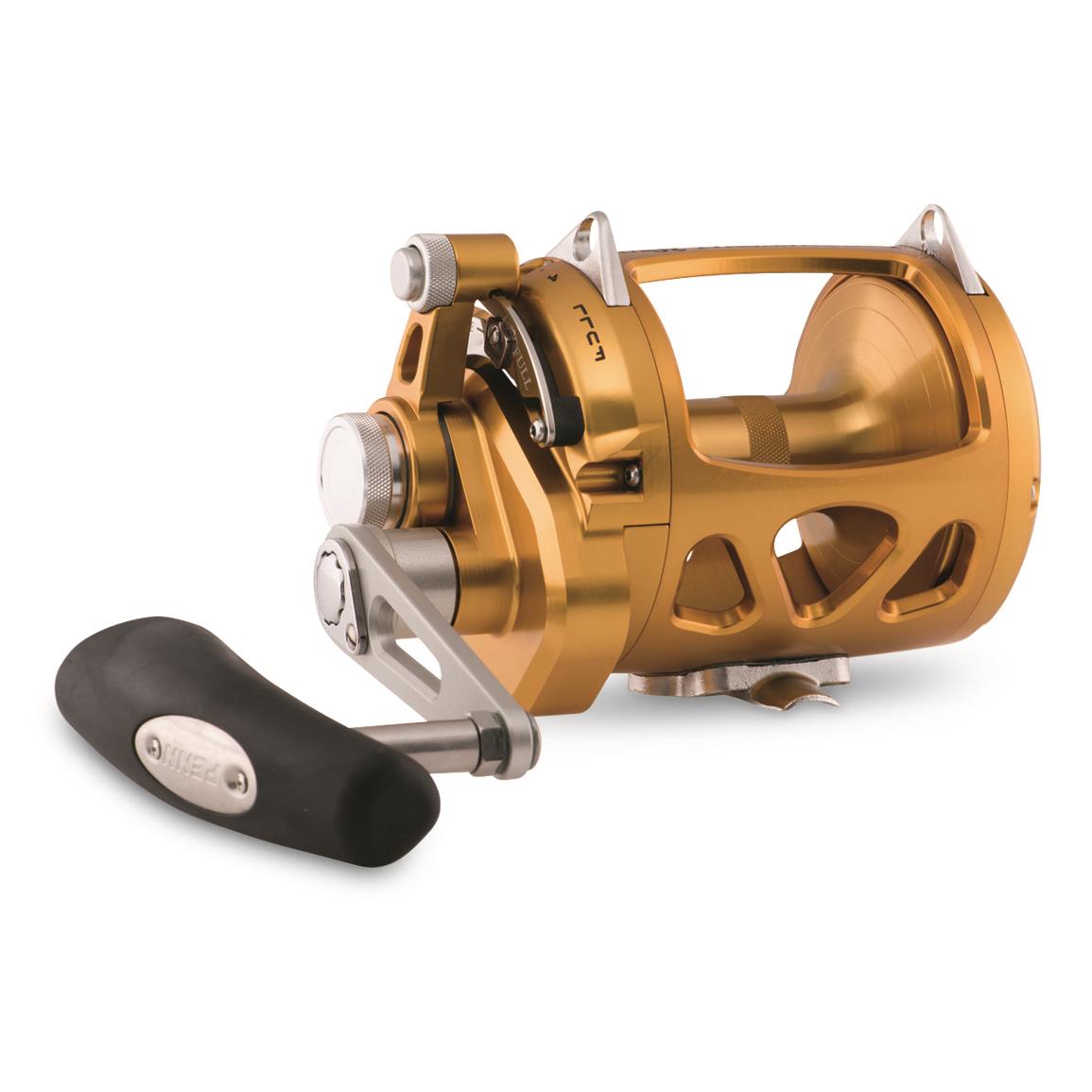
Conventional reels — also called lever-drag reels or overhead reels — are the backbone of deep sea fishing and have been for decades. If you’ve ever seen footage of an angler strapped into a fighting chair wrestling a marlin, the reel mounted on that rod is a conventional. They dominate offshore fishing because their design is fundamentally suited to the demands of big fish, heavy line, and sustained mechanical pressure.
How Conventional Reels Work
A conventional reel sits on top of the rod with the spool oriented perpendicular to the rod blank. Line feeds off the spool directly in line with the guides, which eliminates the line twist issues inherent in spinning reel designs. The angler controls the spool with a lever drag system — a mechanical mechanism that applies graduated friction to the spool as you push the lever forward. At the back of the lever travel, you’re in free spool. Push it forward to the strike position and you’ve got your fighting drag. Push it past strike to full and you’re applying maximum pressure.
The gear train in a quality conventional reel is built from machined stainless steel and bronze components designed to translate your cranking effort into retrieval power with minimal energy loss. Many offshore conventional reels offer a two-speed gear system, allowing you to toggle between a high-speed retrieve for recovering line quickly and a low-speed power gear for grinding against heavy fish. This two-speed capability is a significant advantage during extended fights where the dynamics shift constantly.
When to Use a Conventional Reel
Conventional reels are the right choice for the majority of deep sea fishing applications. They excel at:
- Trolling for pelagics. Billfish, tuna, wahoo, mahi-mahi — when you’re dragging lures or rigged baits through the water column and waiting for a strike, a conventional reel with a quality lever drag system is the standard. The drag progression from free spool to strike to full is designed for this exact scenario: letting a fish eat, coming tight, and then fighting it to the boat.
- Bottom fishing in moderate depths. For working structure in 100 to 400 feet of water — targeting grouper, snapper, amberjack, and other reef species — a conventional reel gives you the drag power and line capacity to pull fish away from the bottom before they can cut you off. Check our guide to bottom fishing rigs and techniques for the terminal tackle side of this equation.
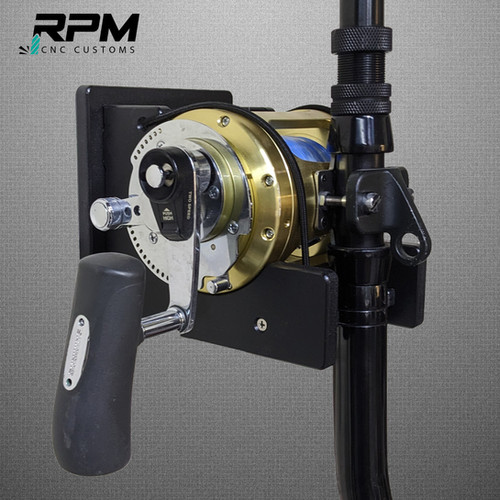
- Stand-up and chair fighting. The ergonomics of a conventional reel in a rod holder, gimbal belt, or fighting chair are unmatched. The reel sits on top of the rod, the lever drag is within easy reach of your cranking hand, and the spool orientation allows for powerful, mechanical retrieval during long pump-and-wind sequences.
Pros and Cons of Conventional Reels
Advantages. Conventional reels are mechanically simple, which means fewer points of failure in a harsh saltwater environment. They offer the highest drag capacities of any manual reel type — premium models deliver 50 to 100-plus pounds of maximum drag. Line capacity is substantial, often holding 600 to 1,000 yards of braided line in sizes appropriate for offshore work. They’re lighter than electric reels at comparable power levels, and the lever drag system provides the most intuitive and precise drag control available. Parts availability and serviceability are excellent, especially for established brands. Charter captains worldwide rely on conventional reels precisely because they can be maintained and repaired without specialized electronics.
Disadvantages. The primary limitation is physical effort at extreme depths. Manually retrieving terminal tackle from 500 or 600 feet — let alone fighting a fish at those depths — is genuinely exhausting. After three or four deep retrieves, you feel it in your arms, back, and shoulders, and your fishing efficiency drops as fatigue accumulates. Conventional reels also require more skill to cast than spinning reels, though casting is rarely a factor in deep sea fishing where baits and lures are deployed by lowering or trolling. For anglers with physical limitations, extended fights on heavy conventional tackle can be prohibitively demanding.
Electric Reels: Power for the Deep
Electric reels transformed deep water fishing from a niche pursuit into an accessible technique for a much wider range of anglers. They solve the singular problem that makes extreme depth fishing miserable on conventional tackle: the retrieve. When you’re fishing in 800, 1,200, or 1,800 feet of water, the simple act of winding line back onto the spool becomes a physical ordeal that limits how many drops you can make in a day and how effectively you can fight fish after hours on the water.
How Electric Reels Work
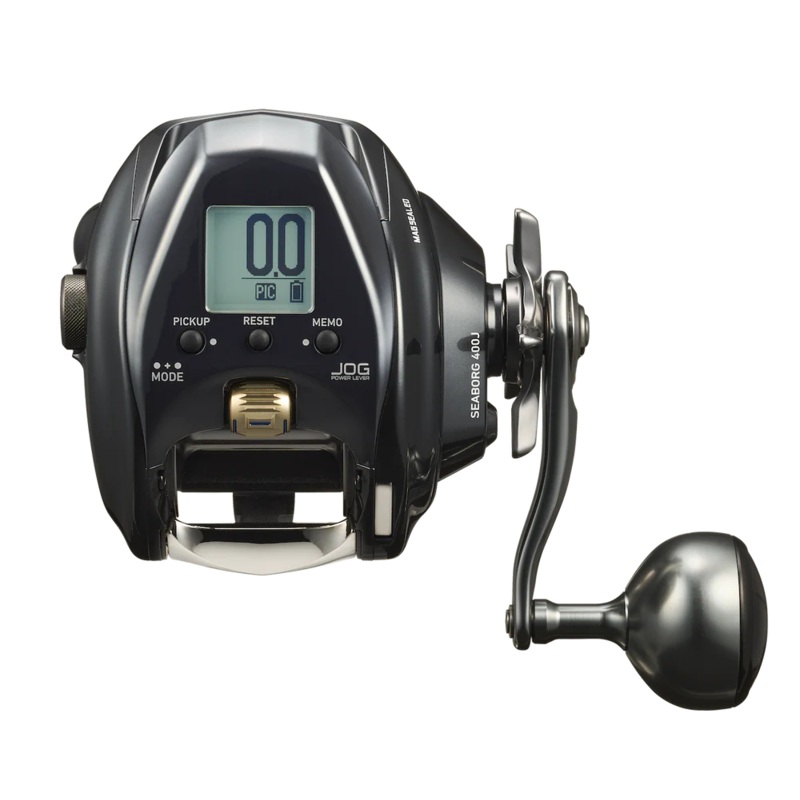
An electric reel is essentially a conventional reel with an integrated electric motor that powers the spool. The motor is typically driven by the boat’s 12-volt electrical system or a dedicated deep-cycle battery. You still have a manual drag system — usually a lever drag identical to what you’d find on a conventional reel — and you can still crank the handle by hand at any time. The electric motor assists or replaces the manual retrieve at the push of a button.
Modern electric reels from Daiwa and Shimano include programmable features like automatic jigging functions, variable speed retrieval, and digital line counters that display depth in real time. The motor power is measured in pounds of winding force, and the better electric reels deliver enough torque to winch heavy fish and tackle from extreme depths without slowing down. The manual override is always available, which means you can fight a fish entirely by hand if you choose to, using the motor only for retrieval of terminal tackle between drops.
When to Use an Electric Reel
Electric reels are purpose-built for situations where depth and repetition would overwhelm a manual reel:
- Deep dropping for swordfish. Daytime swordfishing happens at 1,200 to 1,800 feet, and you may make dozens of drops per day. An electric reel turns a 15-to-20-minute manual retrieve into a 3-to-5-minute powered retrieval, dramatically increasing your number of drops and your chances of finding fish. Our swordfish deep drop guide covers this specialized technique in detail.
- Deep bottom fishing. Tilefish, deep water grouper, golden crab, and other species living in 400 to 1,000 feet of water are far more accessible with electric reels. You can make more drops, stay fresher through the day, and focus your physical energy on fighting fish rather than winding up empty rigs.
- Speed jigging. Some electric reels can generate jigging cadences — rapid, repetitive vertical motions — that are physically impossible to sustain by hand. Programmable jigging functions allow you to set a specific speed and stroke length, which is effective for species that respond to aggressive vertical presentations deep in the water column.
- Anglers with physical limitations. Electric reels make deep water fishing accessible to anglers who might not have the upper body strength or endurance to fish extreme depths on conventional tackle. Older anglers, anglers recovering from injuries, and anyone who wants to fish longer without physical exhaustion benefits from electric assist.
The Deep Drop Advantage
The math on electric reels for deep water work is straightforward. If you’re fishing at 1,000 feet with a conventional reel, a single retrieve takes roughly 10 to 15 minutes of sustained cranking. With an electric reel, the same retrieve takes 2 to 4 minutes. Over the course of a 10-hour fishing day, that difference translates into significantly more drops, more time with bait in the strike zone, and less accumulated fatigue that degrades your ability to fight fish when they bite. For any fishery where you’re consistently working deeper than 300 feet, an electric reel pays for itself in productivity.
Advantages. Electric reels eliminate retrieval fatigue and allow you to fish deeper water for longer days. Digital line counters provide precise depth information. Programmable features like auto-jigging expand your technique options. Most quality electric reels retain full manual capability, so you’re not giving up anything from a conventional reel — you’re adding a motor.
Disadvantages. Electric reels are heavy. A quality electric reel weighs two to four pounds more than a comparable conventional reel, and when you add a battery pack, the total system weight increases further. They’re significantly more expensive, with quality models starting around $500 and top-tier options exceeding $2,000. The electronics introduce a failure point that doesn’t exist on conventional reels — a corroded connection, a dead battery, or a motor failure can leave you with an expensive paperweight at the worst moment. Maintenance is more demanding, and repairs often require factory service rather than the kind of tear-down-and-rebuild that an experienced angler can do on a conventional reel in a garage.
Spinning Reels: Limited but Useful Deep Sea Applications
Spinning reels are the most versatile reel design in fishing, but their role in deep sea fishing is more limited and specialized than many anglers assume. The physics of the spinning reel design — a fixed spool oriented parallel to the rod, with line wrapping around it via a rotating bail — creates inherent limitations in line capacity, drag output, and retrieval power that restrict their usefulness at extreme depths and against the largest offshore species.
How Spinning Reels Work in Deep Water
A spinning reel hangs below the rod. Line peels off the end of the fixed spool during a cast or drop, and the bail arm wraps line back onto the spool during retrieval. This design makes spinning reels incredibly easy to cast and virtually eliminates backlash — the spool doesn’t rotate during line deployment, so there’s nothing to overrun. The drag system is typically a multi-disc stack (front drag) or knob-adjusted mechanism (rear drag) that applies friction to the spool.
In a deep sea context, spinning reels are built in sizes ranging from 6000 to 20000+, with the larger sizes offering enough line capacity and drag power to handle legitimate offshore species. A premium 10000-size spinner can hold 400 or more yards of 65-pound braid and deliver 40 to 60 pounds of maximum drag. That’s a capable tool for many offshore situations, but it still falls short of what a comparably sized conventional reel offers in raw capacity and drag output.
When to Use a Spinning Reel Offshore
Spinning reels fill specific niches in deep sea fishing that neither conventional nor electric reels handle as well:
- Vertical jigging. Speed jigging and slow-pitch jigging are techniques where spinning reels genuinely shine. The ability to free-fall a jig on an open bail — without the backlash risk of a conventional reel — allows for cleaner, more natural jig presentations. The fast retrieve rates of large spinning reels let you rip jigs through the water column at speeds that trigger aggressive reaction strikes from amberjack, yellowfin tuna, and other predatory species.
- Light tackle sportfishing. Some anglers deliberately fish lighter gear to increase the challenge and sporting quality of the fight. A large spinning reel paired with a light stand-up rod is a thrilling way to fight mahi-mahi, blackfin tuna, or smaller yellowfin. The spinning reel’s smooth drag and versatile casting ability make it ideal for throwing live baits or plugs at fish breaking the surface.
- Popping and plug casting. Surface plugging for species like giant trevally, tuna, and wahoo requires long, accurate casts with heavy topwater lures. Spinning reels are the only practical option for this technique, as the open-bail design allows smooth, distance-maximizing casts that a conventional reel simply cannot replicate.
Advantages. Spinning reels are versatile, easy to use, and excel at casting and free-spooling jigs. They’re generally less expensive than conventional or electric reels at comparable quality levels. The best offshore spinners deliver smooth, reliable drag performance. They’re lighter and more comfortable to use on lighter rod setups.
Disadvantages. Line capacity is limited compared to conventional reels in the same size class, because the spool geometry is less efficient for line storage. Maximum drag output is lower. Line twist is inherent to the design and worsens with depth and heavy loads. The bail mechanism and line roller introduce failure points in high-stress offshore situations. Spinning reels are poorly suited for trolling, heavy bottom fishing, and any application where you need to winch fish from extreme depths. Above 400 feet, they become increasingly impractical for most anglers.
Head-to-Head Comparison
| Specification | Conventional | Electric | Spinning |
|---|---|---|---|
| Max Drag (typical range) | 30 - 130 lbs | 40 - 100 lbs | 25 - 60 lbs |
| Line Capacity (65lb braid) | 600 - 1,200+ yds | 800 - 1,500+ yds | 300 - 600 yds |
| Effective Depth Range | Surface - 500 ft | Surface - 2,000+ ft | Surface - 300 ft |
| Reel Weight | 24 - 55 oz | 40 - 80 oz | 16 - 36 oz |
| Price Range | $150 - $1,500+ | $400 - $2,500+ | $100 - $800+ |
| Best For | Trolling, general offshore, bottom fishing | Deep drop, deep bottom fishing, swordfishing | Jigging, light tackle, casting |
| Retrieval Power | High (manual) | Very high (motor-assisted) | Moderate |
| Learning Curve | Moderate | Low-moderate | Low |
| Maintenance Complexity | Low-moderate | High | Low |
This table reflects general ranges across the models relevant to deep sea fishing, not the entire product spectrum for each reel type.
Key Specs Explained
When you’re comparing deep sea fishing reels, four specifications matter more than anything else. Understanding what each number actually means on the water — not just on the spec sheet — prevents expensive mistakes.
Gear Ratio
Gear ratio describes how many times the spool rotates for each full turn of the handle. A reel with a 5.2:1 gear ratio turns the spool 5.2 times per handle revolution. Higher ratios mean faster line retrieval per crank. Lower ratios mean more cranking torque per turn.
For deep sea fishing, the gear ratio decision depends on your technique. Trolling reels benefit from lower ratios (2.0:1 to 3.5:1) that deliver maximum cranking power during long, heavy fights. Jigging reels favor higher ratios (5.0:1 to 6.5:1) that move jigs quickly through the water column. Two-speed conventional reels solve this trade-off by offering both — a high gear for fast retrieval and a low gear for power. If you can only have one gear ratio for general offshore use, something in the 4.0:1 to 5.0:1 range provides a workable balance.
Max Drag
Maximum drag is the highest amount of resistance a reel can apply to the spool before line pays out, measured in pounds. But max drag is a ceiling you’ll rarely touch during a fight. Your working drag — the actual pressure you apply during a battle — is typically 25 to 30 percent of the reel’s maximum capacity. A reel rated at 50 pounds of max drag gives you a comfortable working drag of roughly 12 to 15 pounds, which is appropriate for most offshore species short of the largest tuna and billfish.
Drag quality matters more than max drag numbers. A reel that delivers 40 pounds of smooth, consistent, progressive drag pressure will outperform a reel rated at 60 pounds but with jerky, inconsistent drag engagement. Smooth startup drag — the initial resistance when a fish takes a run after being stationary — is the single most important drag characteristic for preventing pulled hooks and broken line during those critical first seconds of a run.
Line Capacity
Line capacity tells you how much line the spool will hold at a given line weight. For deep sea fishing, this spec is non-negotiable — you need enough line to reach the depth you’re fishing plus enough reserve to survive long runs from powerful fish. A swordfish hooked at 1,200 feet that makes a 300-yard run is putting over 2,400 feet of total line demand on your reel. If the spool runs dry, the fight is over.
Braided line has largely replaced monofilament as the primary line for deep sea fishing because its thinner diameter per pound-test allows dramatically more line on the same spool. A reel that holds 400 yards of 50-pound monofilament might hold 800 yards of 65-pound braid. This is a meaningful advantage at depth, where every yard of capacity creates margin for longer runs and deeper targets.
Frame Material
The frame is the structural skeleton of the reel, and in deep sea fishing it’s subjected to enormous forces — both from the mechanical stress of fighting large fish and from the corrosive assault of saltwater. Frame material determines how rigid the reel stays under load and how long it resists corrosion.
Machined aluminum is the standard for premium offshore reels. It’s lightweight relative to its strength, resists corrosion when properly anodized, and doesn’t flex under heavy drag loads. Graphite frames are lighter and less expensive but flex under heavy stress, which can cause gear misalignment and inconsistent drag performance during hard fights. One-piece frames — where the entire frame is machined from a single block of aluminum — are the gold standard for offshore reels because they eliminate flex points at frame junctions. If you’re spending real money on a deep sea reel, insist on machined aluminum construction.
Matching Reel to Fishing Style
The best deep sea fishing reel is the one that matches what you actually do on the water. Here’s how to match reel type to the four most common deep sea fishing techniques.
Bottom Fishing
Bottom fishing in 100 to 400 feet is the most common deep sea application and the most forgiving in terms of reel requirements. A medium-sized conventional reel in the 30 to 50 size class with 25 to 40 pounds of max drag handles the vast majority of bottom fishing scenarios. You need enough line capacity to reach bottom with reserve, enough drag to pull grouper and amberjack away from structure, and enough retrieval power to crank heavy rigs and fish back to the surface repeatedly throughout the day.
For bottom fishing deeper than 400 feet, an electric reel starts making sense — not because the fish demand it, but because the repetitive retrieval from those depths accumulates fatigue that shortens your productive fishing time.
Trolling
Trolling is conventional reel territory, period. You need a lever drag system for precise drag control, substantial line capacity for long runs, a low-gear-ratio power train for sustained fights, and a reel that can live in a rod holder under tropical sun and salt spray for hours at a time. A quality conventional reel in the 30 to 80 size class covers everything from dolphin fishing with 30-pound tackle to fighting blue marlin on 130-pound gear.
Two-speed reels are especially valuable for trolling because the high gear lets you recover line quickly when a fish turns toward the boat, and the low gear gives you maximum leverage during the grinding phase of the fight.
Deep Dropping
Deep dropping — targeting species in 500 to 2,000 feet — is where electric reels are indispensable. An electric reel with at least 1,000 yards of 65-to-80-pound braided line and a digital line counter is the minimum for serious deep drop fishing. The motor handles deployment and retrieval, the line counter tells you exactly where your bait sits in the water column, and the manual drag system lets you fight fish traditionally once they’re hooked.
The investment in an electric reel for deep dropping pays dividends in fishing time. More drops per day means more opportunities to find and hook fish, and the reduced physical toll means you’re still fishing effectively in the afternoon when the conventional reel angler is nursing sore arms and slowing down.
Jigging
Vertical jigging is the one deep sea technique where spinning reels legitimately compete with and often outperform conventional reels. A 8000 to 14000-size spinning reel with a high gear ratio and smooth drag is the standard for speed jigging. The open-bail free fall delivers the most natural jig action, the high retrieve rate generates the aggressive speed that triggers strikes, and the lighter weight reduces fatigue during a day of active jigging.
For slow-pitch jigging in deeper water (200 to 500 feet), many anglers prefer a narrow-spool conventional reel designed specifically for the technique, as the spool design reduces line twist and the mechanical advantage of the overhead configuration helps when fighting fish vertically. Both approaches work — the choice often comes down to personal preference and the specific depths you’re working.
Budget Tiers: What Your Money Buys
Deep sea fishing reels span an enormous price range, and the differences between tiers are real and meaningful. Here’s what you can realistically expect at each budget level.
Under $200: Entry Level
At this tier you’ll find basic conventional reels from Penn, Daiwa, and Shimano that are functional for lighter offshore applications. Graphite or composite frames, acceptable drag systems, adequate line capacity for fishing in under 300 feet. These reels handle bottom fishing on party boats and lighter trolling applications reasonably well, but they lack the drag power, frame rigidity, and corrosion resistance to survive years of hard offshore use.
Realistic expectation: A good reel for getting started, learning the mechanics, and catching fish in moderate conditions. Plan to upgrade once you identify your preferred fishing style and species.
$200 to $500: Serious Enthusiast
This is where deep sea fishing reels get genuinely capable. Machined aluminum frames, quality drag systems with smooth progressive engagement, two-speed options on conventional models, and enough line capacity for most offshore scenarios. Reels in this range from Penn (Fathom, Squall), Shimano (Torium, Tranx), and Daiwa (Saltist, Lexa) represent excellent value for the dedicated offshore angler who fishes regularly but isn’t competing in tournaments.
Entry-level electric reels also appear at the top of this range, though they’re typically smaller models suited for deep bottom fishing rather than serious swordfishing. A $400 to $500 electric reel is a legitimate tool for fishing down to 600 or 800 feet.
Realistic expectation: A reliable, well-built reel that performs consistently in offshore conditions and lasts for years with proper maintenance. This is the sweet spot for most recreational deep sea anglers.
$500 to $1,000+: Premium and Professional
Above $500, you’re buying the best materials, the most refined drag systems, and the engineering that stands up to the most demanding offshore fishing on the planet. Premium conventional reels like the Penn International VI and Shimano Tiagra live in this range. Mid-tier and upper-tier electric reels from Daiwa (Seaborg, Marine Power) and Shimano (Beastmaster, Forcemaster) fill the $700 to $2,000-plus bracket.
At this level, you’re getting one-piece machined frames that won’t flex under any load, drag systems that maintain smooth consistent pressure through hours of fighting, gear trains built to endure decades of hard use, and corrosion resistance that shrugs off saltwater exposure. These are the reels that charter captains trust with paying clients and tournament anglers trust with prize money.
Realistic expectation: A reel that performs at the highest level in the most demanding conditions and lasts a career with proper care. The performance gap between a $700 reel and a $1,500 reel is smaller than the gap between a $200 reel and a $700 reel, but it exists — and for anglers who fish hard and often, it’s worth paying for.
Saltwater Maintenance: Keeping Your Reel Alive
Saltwater will destroy any fishing reel that isn’t maintained. This isn’t a matter of if — it’s a matter of how fast. A $1,500 conventional reel that gets rinsed with fresh water after every trip and receives an annual service will outlast a $300 reel that gets the same treatment, but a $1,500 reel that gets thrown in the garage wet will fail faster than a $300 reel that’s properly cared for. Maintenance is the great equalizer.
After every trip:
- Rinse the entire reel thoroughly with fresh water. Use a gentle stream, not high-pressure spray, which can force salt water deeper into the reel’s internals. Pay attention to the drag stack area, the handle knobs, the level wind (if equipped), and any crevices where salt crystals accumulate.
- Back off the drag completely. Leaving a reel stored under drag tension compresses the drag washers, which causes them to set and lose their smooth engagement characteristics over time.
- Wipe the reel dry with a clean cloth and apply a light coat of reel oil or corrosion inhibitor to exposed metal surfaces. A product like Corrosion-X or Penn reel oil works well here.
- For electric reels, disconnect the power cord, dry the connection terminals, and apply a small amount of dielectric grease to the power plug contacts.
Every three to six months (or more frequently if you fish hard):
- Remove the spool and clean the spool shaft. Apply a thin layer of reel grease to the shaft and any bearing surfaces.
- Inspect the drag washers for wear, glazing, or contamination. Replace them if they feel rough, uneven, or show visible deterioration. Quality drag washers are inexpensive relative to the cost of the reel.
- Clean and lubricate the handle bearings and any accessible gear surfaces. Use manufacturer-recommended lubricants — the wrong grease can dissolve drag washer materials or attract salt and debris.
- Inspect the frame, foot, and clamp for corrosion, paying close attention to any junction points or screw heads.
Annually (or after heavy use seasons):
- Send the reel for a professional service, or perform a full teardown if you’re comfortable doing so. A professional reel service typically costs $30 to $75 for a conventional reel and $75 to $150 for an electric reel, and it’s one of the best investments you can make in your gear.
- Replace line if it shows signs of abrasion, UV degradation, or reduced strength. Braided line lasts longer than monofilament but is not immune to wear, particularly at the terminal end where it contacts guides and structure.
Frequently Asked Questions
Can I use a spinning reel for deep sea fishing?
Yes, but with realistic expectations about its limitations. A large spinning reel in the 8000 to 14000 size class handles jigging, light tackle sportfishing, and casting applications well in an offshore environment. It is not a substitute for a conventional or electric reel when trolling, bottom fishing in deep water, or targeting the largest offshore species. If jigging is your primary interest, a spinning reel is often the best choice. If you’re doing general deep sea fishing across multiple techniques, a conventional reel is the more versatile foundation.
How much should I spend on my first deep sea fishing reel?
For most anglers entering deep sea fishing, the $250 to $500 range delivers the best balance of capability, durability, and value. A quality conventional reel in this range handles bottom fishing and trolling effectively and lasts for years with proper care. Spending less than $200 typically means compromising on frame rigidity and drag quality in ways that become frustrating as you encounter bigger fish and tougher conditions. Spending more is justified once you know your preferred techniques and species well enough to buy specialized, high-performance equipment with confidence.
Do I need an electric reel?
You need an electric reel if you fish consistently in water deeper than 300 to 400 feet. The retrieval effort at those depths is simply too demanding on a conventional reel for most anglers to fish productively all day. If your fishing is primarily trolling, jigging, or bottom fishing in under 300 feet, a conventional reel handles those jobs more than adequately. The most versatile offshore setup for anglers who fish a variety of techniques is a conventional reel for trolling and upper-column work paired with an electric reel for deep water applications.
What gear ratio is best for deep sea fishing?
There is no single best gear ratio because the optimal ratio depends on your technique. For trolling and heavy bottom fishing, a lower gear ratio (2.0:1 to 3.5:1) delivers maximum cranking power. For jigging and faster retrieval applications, a higher ratio (5.0:1 to 6.5:1) is more effective. A two-speed conventional reel that offers both a high and low gear is the most versatile option for anglers who fish multiple techniques. If you’re choosing a single-speed reel for general offshore use, a ratio in the 4.0:1 to 5.0:1 range provides a reasonable compromise between speed and power.
How do I prevent my deep sea reel from corroding?
Freshwater rinse after every trip, back off the drag for storage, and apply corrosion inhibitor to exposed metal surfaces. These three steps, performed consistently, prevent the vast majority of saltwater corrosion damage. Store your reels in a cool, dry location — not in a sealed rod locker on the boat where humidity and residual salt accelerate corrosion. Schedule a full cleaning and inspection every three to six months, and consider an annual professional service for reels that see heavy use. Electric reels require additional attention to power connections, which should be cleaned and treated with dielectric grease after every trip to prevent terminal corrosion that can kill the motor circuit.
Quick Buy — Products in This Article