Pros
- Feather Trigger is one of the best factory triggers in any hunting rifle
- 60-degree bolt throw is the fastest cycling action in its class
- Exceptional fit and finish — the Browning name still means something
- Inflex recoil pad genuinely reduces felt recoil
- Detachable rotary magazine feeds flawlessly in every caliber
Cons
- Price premium over competitors like Tikka and Weatherby
- Proprietary scope base — requires X-Bolt specific rings or bases
- Synthetic stock models feel less premium than the wood versions
- 7+ lb base weight isn't the lightest option for mountain hunts
There’s a category of hunting rifle that doesn’t try to be the lightest, the cheapest, or the most modular. It tries to be the best-built. The Browning X-Bolt sits squarely in that space — a bolt-action platform where every surface, mechanism, and contour reflects a commitment to doing things the right way rather than the cheapest way.
We’ve carried X-Bolts across multiple seasons now, through early-season pronghorn in Wyoming, late-season whitetail sits in the Midwest, and more range sessions than we can count. This review reflects hundreds of rounds across three calibers and enough field time to separate marketing claims from mechanical reality.
If you want to see how the X-Bolt stacks up against other top bolt guns, we covered it in our best bolt-action hunting rifles roundup. For a deeper dive into how we score and evaluate gear, read our Benchmark Score methodology.
Who Should Buy the Browning X-Bolt?
The X-Bolt is built for hunters who care about the details — the crispness of a trigger break, the smoothness of a bolt stroke, the way a stock actually fits a human body instead of approximating one. If you’ve shot enough rifles to know the difference between a good action and a great one, you’ll feel it the first time you cycle this bolt.
It’s a strong choice for whitetail hunters, western big game, and anyone who values a refined shooting experience over shaving every possible ounce. The X-Bolt rewards patience at the bench and composure in the field. It’s the kind of rifle you buy once and hand down.
Skip this rifle if: You’re building a dedicated mountain rifle where every ounce matters (look at the Tikka T3x Lite or Kimber Hunter), you’re on a strict budget under $800 (the Weatherby Vanguard delivers serious performance for less), or you need maximum aftermarket modularity (the Remington 700 footprint still dominates that world).
Key Specifications
| Spec | Details |
|---|---|
| Action | Bolt-action, 60-degree bolt throw |
| Trigger | Feather Trigger, adjustable 3–5 lbs |
| Magazine | Detachable rotary, flush-fit |
| Barrel | Free-floated, hand-chambered, sporter profile |
| Weight | 6 lbs 13 oz – 7 lbs 3 oz (varies by model/caliber) |
| Overall Length | 42.75” – 46.75” (varies by barrel length) |
| Stock Options | Walnut (Medallion), composite, laminate, carbon fiber (Hell’s Canyon) |
| Safety | Tang-mounted, two-position |
| Available Calibers | .243 Win, 6.5 Creedmoor, .270 Win, 7mm Rem Mag, .308 Win, .30-06, .300 Win Mag, and others |
| MSRP | $900 – $2,100+ (model dependent) |
Not sure which chambering to go with? Our hunting caliber guide breaks down the trade-offs across every popular option.
Performance
The Feather Trigger
We’ll say it plainly: the Feather Trigger is the single best reason to buy a Browning X-Bolt.
Factory triggers are the weak point of most production hunting rifles. They’re either too heavy, too mushy, or so inconsistent that you’re shopping for a Timney before you’ve finished the first box of ammo. The Feather Trigger is none of those things. It breaks clean at roughly 3.5 pounds out of the box — a crisp, glass-rod snap with virtually zero creep and a short, positive reset. It’s adjustable from 3 to 5 pounds without removing the stock, though we found the factory setting nearly perfect for field use.
What makes it special isn’t just the break weight. It’s the consistency. Over hundreds of rounds across multiple range sessions and field conditions — cold mornings, sweaty hands, gloves, no gloves — the Feather Trigger delivered the same tactile feedback every single time. That kind of mechanical consistency builds trust, and trust is what lets you execute a shot at 300 yards on an elk without second-guessing the pull.
We’ve tested factory triggers from Tikka, Weatherby, Winchester, Savage, and Bergara. The Tikka T3x trigger is the closest competitor in terms of raw feel, but the Feather Trigger edges it out on crispness and reset quality. It’s genuinely one of the few factory triggers we’d never bother replacing.
Bolt Action and the 60-Degree Throw
Browning’s 60-degree bolt lift is the shortest throw of any major production hunting rifle. For context, most competitors run 90 degrees (Winchester Model 70, Remington 700) or 70 degrees (Tikka T3x). That 60-degree arc means two things in practice: faster cycling for follow-up shots and more clearance between the bolt handle and your scope’s ocular bell.
The first point matters more than most hunters think. On a double-lung shot where the animal doesn’t drop immediately, the speed with which you can cycle that bolt and get back on target can be the difference between a clean harvest and a long tracking job. We ran timed drills cycling the X-Bolt against a Tikka T3x and a Winchester Model 70 from a shouldered position. The X-Bolt was consistently fastest — not by a dramatic margin over the Tikka, but noticeably faster than the 90-degree Model 70.
The second point — scope clearance — is a genuine practical advantage. If you’re running a large-objective scope (50mm+), the reduced bolt lift keeps your hand and the handle well clear of the eyepiece. No knuckle-banging, no awkward workarounds. It’s a small thing until you’re cycling fast in the field with cold hands, and then it matters.
The bolt itself is a three-lug design that locks up with authority. There’s minimal play between the lugs and the receiver, which translates to a solid, confidence-inspiring lockup. The stroke is smooth — not quite Tikka-smooth, if we’re being honest, but well above average. It improves noticeably after a break-in period of about 50 rounds.
Accuracy
We tested the X-Bolt in three calibers: 6.5 Creedmoor, .308 Win, and .300 Win Mag. All testing was done at 100, 200, and 300 yards using quality factory ammunition — Hornady ELD-X, Federal Premium Terminal Ascent, and Nosler AccuBond.
At 100 yards, our 6.5 Creedmoor test rifle produced three-shot groups averaging 0.82 MOA with Hornady 143gr ELD-X. The .308 came in at 0.90 MOA with Federal 175gr Terminal Ascent. The .300 Win Mag averaged 0.95 MOA with Nosler 180gr AccuBond — respectable for a magnum cartridge from a sporter-weight barrel.
At 200 and 300 yards, those groups opened proportionally but stayed consistent. Cold bore shots — the ones that actually matter in a hunting context — landed within 0.5 MOA of the group center across all three rifles. That tells us the free-floated, hand-chambered barrel is doing its job and the bedding is solid.
Is this the most accurate factory rifle we’ve ever tested? No — the Bergara B-14 HMR and Tikka T3x both edged it out in raw group size. But the X-Bolt’s accuracy is more than sufficient for any ethical hunting shot, and the combination of accuracy plus the Feather Trigger makes the shooting experience as a whole arguably the best in its class.
Stock Options and Ergonomics
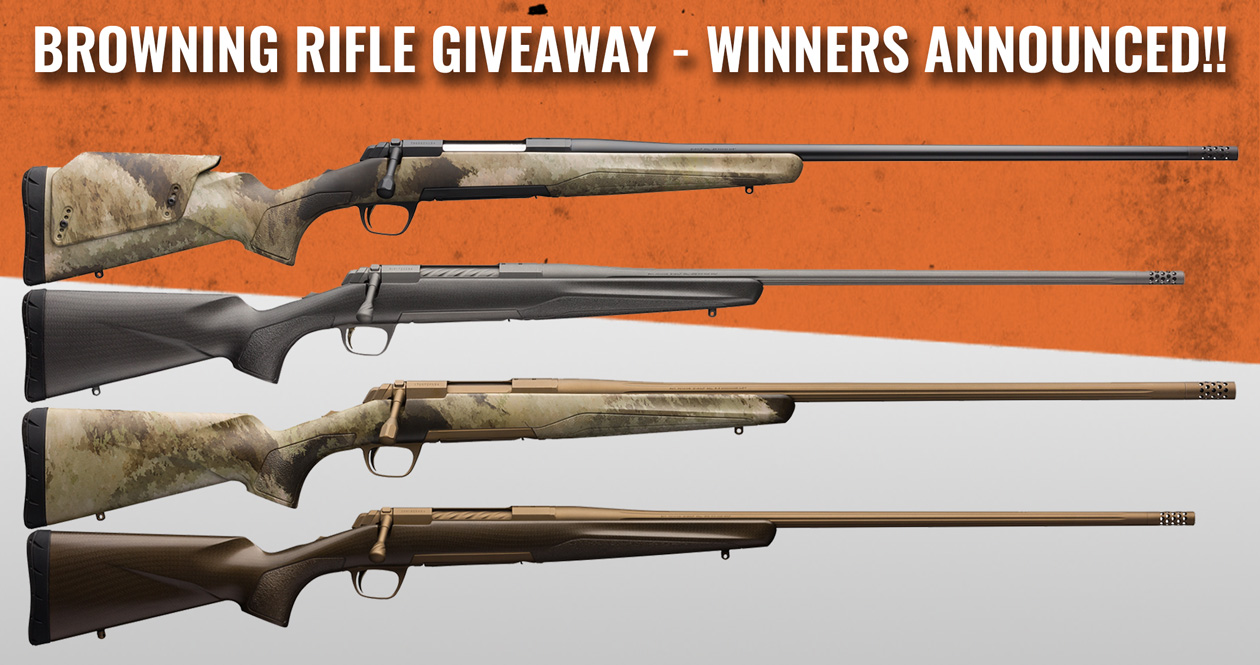
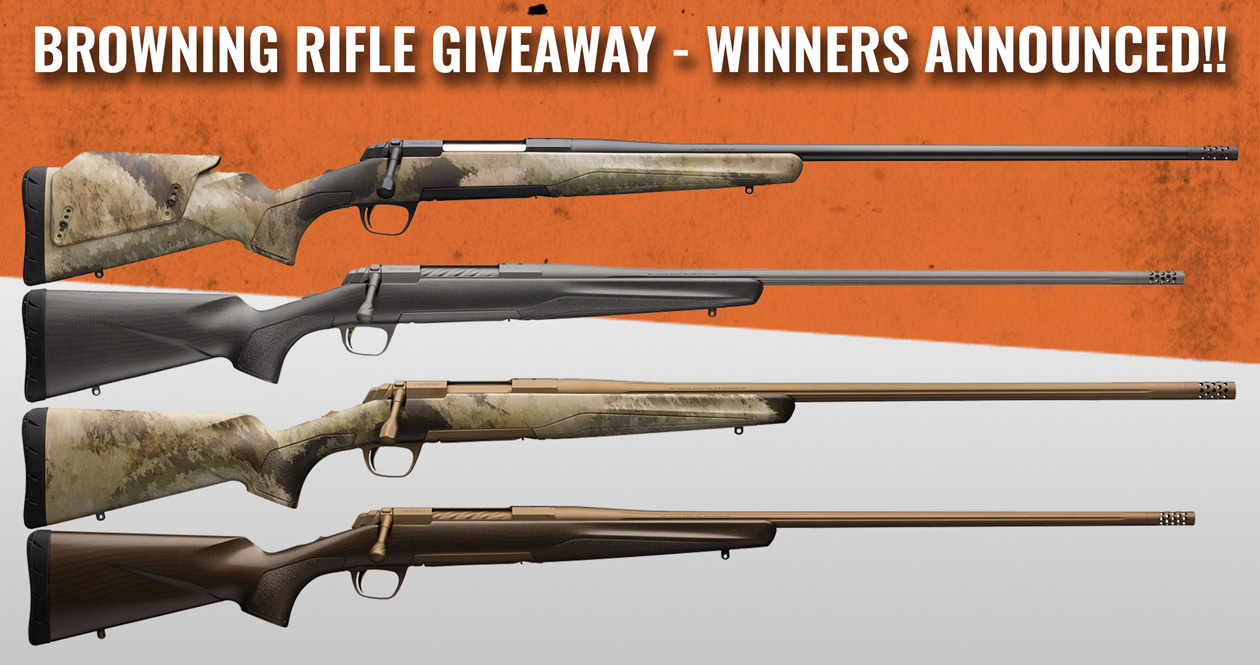
Browning offers the X-Bolt in more stock configurations than any competitor we’re aware of. The lineup includes the Medallion (grade I walnut with rosewood fore-end), Hunter (satin-finished walnut), Micro Midas (short length of pull for smaller shooters), Stalker (composite), Hell’s Canyon (burnt bronze cerakote with composite stock), and several others. This breadth means there’s an X-Bolt for nearly every aesthetic preference and use case.
We spent the most time with two models: the Medallion and the Hell’s Canyon Speed. The difference in feel is dramatic.
The Medallion is the one that reminds you why Browning has the reputation it does. The walnut stock has a consistent, attractive grain pattern with clean checkering that actually provides grip rather than just looking decorative. The fit between wood and metal is tight — we couldn’t slide a piece of paper between the stock and the receiver on our test rifle. The rosewood fore-end cap and grip cap are classic Browning touches that won’t appeal to everyone but signal a level of craftsmanship rare at this price point.
The Hell’s Canyon Speed, by contrast, is the field-duty version. The composite stock with textured grip panels handles weather and abuse without concern, and the burnt bronze cerakote on the receiver and barrel looks sharp while providing genuine corrosion resistance. But — and this is a meaningful “but” — the composite stock feels noticeably less refined in the hand than the walnut. The grip texture is adequate rather than excellent, and the overall feel is closer to a Tikka or Weatherby than to the premium experience the Browning name implies.
Across all models, the ergonomics are strong. The palm swell fits a natural grip. The length of pull (13.625” on standard models) suits most adult shooters without feeling stretched or cramped. The comb height works well with most scope mounting heights, delivering a natural cheek weld without the need for aftermarket risers.
One ergonomic detail worth noting: the tang-mounted safety. Browning has used this design for decades, and it remains one of the most intuitive safety locations on any rifle. Your thumb naturally falls to it. Clicking it off is silent and instinctive. In a moment of truth, that matters.
Recoil System
The X-Bolt ships with Browning’s Inflex Technology recoil pad, and it’s one of the more underappreciated features on this platform.
Most factory recoil pads are an afterthought — a slab of rubber that technically occupies the space at the end of the buttstock. The Inflex pad is a different animal. Its design redirects recoil energy downward, pulling the comb away from your cheekbone rather than driving it into your face. The result is a noticeable reduction in perceived recoil, particularly in magnum calibers.
We compared felt recoil between the X-Bolt in .300 Win Mag and a Winchester Model 70 in the same chambering at similar weight. Both rifles kicked — there’s no magic around Newton’s laws — but the X-Bolt was consistently more pleasant to shoot across extended range sessions. After 40 rounds of .300 Win Mag, the cheekbone soreness that usually sets in was significantly less pronounced with the X-Bolt.
For standard calibers like .308 and 6.5 Creedmoor, the Inflex pad makes an already manageable recoil level feel almost mild. It’s the kind of feature that doesn’t headline a product page but meaningfully improves the ownership experience.
Field Performance
We carried the X-Bolt Hell’s Canyon Speed in .300 Win Mag on an elk hunt in Montana and the Medallion in 6.5 Creedmoor through whitetail season in the Midwest. Both saw rain, snow, mud, and the general indignity of being shoved in and out of truck scabbards and ground blinds for weeks.
The rotary magazine deserves specific praise in a field context. Unlike traditional box magazines that can pop open if bumped or hung up on brush, the flush-fit rotary design sits completely within the stock profile. We never had an accidental release, even when crawling through timber or climbing into treestands. Feeding was flawless in both calibers — every round chambered smoothly without the nose-diving or rim-catching issues that plague some detachable magazine systems.
The 60-degree bolt throw proved its value in a real-world scenario during the Montana elk hunt. After a first shot at 280 yards that hit well but didn’t anchor the bull immediately, cycling the bolt and getting back on target for a follow-up happened fast enough that the animal was still within the scope’s field of view. That speed comes from the short throw combined with the Feather Trigger’s quick reset — you’re not fighting the rifle to get the next shot off.
The tang safety was reliable across all conditions. No freezing, no stiffness, no accidental engagement. It worked exactly as it should, every time.
One field note on the proprietary scope base: Browning uses its own integrated scope mounting system that requires X-Bolt-specific rings or bases. This limits your mounting options compared to rifles built on the Remington 700 footprint. Quality options exist from Leupold, Talley, and Warne, but you won’t have the aftermarket depth of a 700-pattern rifle. Factor this into your planning when selecting optics — our guide on how to choose a rifle scope covers mounting considerations in detail.
If you’re building an elk hunting gear checklist, the X-Bolt in .300 Win Mag or .30-06 earns a spot. It’s not the lightest option for backcountry packouts, but its reliability and shooting performance in a high-pressure moment are exactly what you want when a bull steps out at 300 yards.
Benchmark Score Breakdown
We evaluate every rifle across five core criteria. Here’s how the X-Bolt scored:
- Accuracy: 8/10 — Sub-MOA capable with quality ammo. Not the tightest groups we’ve recorded, but consistent and confidence-inspiring for hunting applications.
- Action Quality: 9/10 — The 60-degree bolt throw is best-in-class for speed. Smooth lockup, flawless feeding. Loses a point only because the initial bolt stroke isn’t quite as buttery as a broken-in Tikka.
- Trigger: 9.5/10 — The Feather Trigger is exceptional. Clean break, zero creep, consistent pull weight. One of the few factory triggers we’d never replace.
- Ergonomics: 8.5/10 — Excellent stock geometry across all models. Tang safety is intuitive. Wood models feel genuinely premium. Synthetic models are merely good.
- Value: 7.5/10 — The X-Bolt costs more than its direct competitors. You’re paying for fit, finish, and the Browning name. Whether that premium is “worth it” depends on how much you value craftsmanship over raw specs.
Overall Benchmark Score: 8.5/10
For the full breakdown of how we arrive at these numbers, visit our methodology page.
How Does the Browning X-Bolt Compare?
Browning X-Bolt vs. Tikka T3x
The Tikka T3x is the X-Bolt’s closest competitor and the comparison we get asked about most. Here’s the honest breakdown:
The Tikka wins on action smoothness (the smoothest factory bolt on the market), weight (roughly half a pound lighter in comparable configurations), and value (typically $200–$400 less depending on model). Its accuracy is also marginally better in our testing — tighter average groups, especially in 6.5 Creedmoor.
The X-Bolt wins on trigger quality (the Feather Trigger edges out Tikka’s already-excellent trigger), bolt cycling speed (60 vs. 70 degrees), fit and finish (particularly in walnut-stocked models), and recoil management (the Inflex pad is superior to Tikka’s standard pad).
Bottom line: If you’re optimizing for shooting performance per dollar, buy the Tikka. If you want a more refined overall package and the trigger matters deeply to you, the X-Bolt justifies its premium. Both are excellent rifles. You won’t regret either purchase.
Browning X-Bolt vs. Winchester Model 70
The Model 70 is the heritage play. Its controlled-round-feed (CRF) action is the gold standard for dangerous game and hunters who want absolute certainty that every round will chamber regardless of how aggressively or gently you work the bolt. The X-Bolt’s push-feed action is reliable — we’ve never had a feed failure — but the CRF design provides an extra layer of mechanical confidence that matters to some hunters.
The Model 70 wins on action reliability (CRF vs. push-feed), heritage and aftermarket support (Remington 700 footprint compatibility on many models), and raw accuracy in some configurations.
The X-Bolt wins on trigger quality, bolt speed (60 vs. 90 degrees — this is a significant difference), ergonomics, recoil pad technology, and overall fit and finish.
Bottom line: The Model 70 is a legendary rifle with a CRF action that’s hard to argue against for serious big game hunting. But the X-Bolt is a more modern, refined platform with better ergonomics and a meaningfully faster action. For most North American hunting scenarios, the X-Bolt is the more practical choice.
Browning X-Bolt vs. Kimber Hunter
The Kimber Hunter is the mountain rifle in this comparison. At roughly 5.5 to 6 pounds depending on caliber, it’s a full pound or more lighter than the X-Bolt — and that pound matters when you’re climbing above 10,000 feet chasing mule deer or mountain goats.
The Kimber wins on weight (significantly lighter), and it’s a solid value for a lightweight platform.
The X-Bolt wins on trigger quality, action smoothness, recoil management (lighter rifles kick harder), stock ergonomics, and overall build quality. The Kimber’s lightweight build comes with trade-offs in felt recoil and, in our testing, slightly less consistent accuracy with magnum calibers.
Bottom line: If you’re building a dedicated mountain rifle and weight is the priority, the Kimber Hunter is hard to beat. For everything else — whitetail, elk from a basecamp, range shooting, general-purpose use — the X-Bolt is the stronger all-around platform.
Browse the full hunting rifles category for more head-to-head comparisons and buyer’s guides.
Frequently Asked Questions
Is the Browning X-Bolt worth the price?
For hunters who appreciate the tactile experience of shooting — the trigger break, the bolt feel, the stock fit — yes, absolutely. The Feather Trigger alone is worth a significant portion of the price premium over competitors. If you’re purely optimizing for accuracy-per-dollar and don’t mind a less refined feel, the Tikka T3x or Weatherby Vanguard deliver comparable ballistic performance for less money. But the X-Bolt is the rifle you pick up at the shop and don’t want to put down. That intangible quality counts for something.
What is the best caliber for the Browning X-Bolt?
It depends on your primary quarry. For a do-everything North American hunting rifle, the .30-06 Springfield remains the most versatile choice — adequate for whitetail through elk with proper bullet selection. 6.5 Creedmoor is the best option for shooters who prioritize low recoil and long-range precision on deer-sized game. .300 Win Mag is the call if elk, moose, or large-bodied game at extended range is your focus. Our hunting caliber guide covers each option in depth with recommended loads.
How accurate is the Browning X-Bolt out of the box?
In our testing, the X-Bolt produced three-shot groups averaging 0.82–0.95 MOA at 100 yards across three calibers using quality factory ammunition. That’s consistent sub-MOA capability with the right loads, which exceeds the accuracy requirements for any ethical hunting scenario. Handloaders will likely tighten those groups further, particularly with the free-floated, hand-chambered barrel responding well to load development.
Can you use standard scope mounts on the Browning X-Bolt?
No — and this is one of the platform’s few genuine drawbacks. The X-Bolt uses a proprietary scope mounting system with an integrated recoil lug that requires X-Bolt-specific bases or rings. Browning, Leupold, Talley, and Warne all make compatible options, so quality choices exist. But you won’t have the vast aftermarket selection available for Remington 700-pattern rifles. Plan your optic and mounting solution together before purchasing, and budget for X-Bolt-compatible hardware. The Talley Lightweight rings are our go-to recommendation for most hunting setups.
How does the X-Bolt’s Feather Trigger compare to aftermarket triggers?
It’s genuinely competitive. The Feather Trigger’s break quality, consistency, and reset rival aftermarket units from Timney and TriggerTech in the $150–$200 range. Where those aftermarket triggers offer an advantage is adjustability — most can be set well below the Feather Trigger’s 3-pound minimum. For hunting applications where a 3–4 pound pull is ideal anyway, the factory Feather Trigger eliminates the need (and cost) of an aftermarket swap. It’s one of the rare cases where a factory component matches the quality of dedicated specialty parts.