Pros
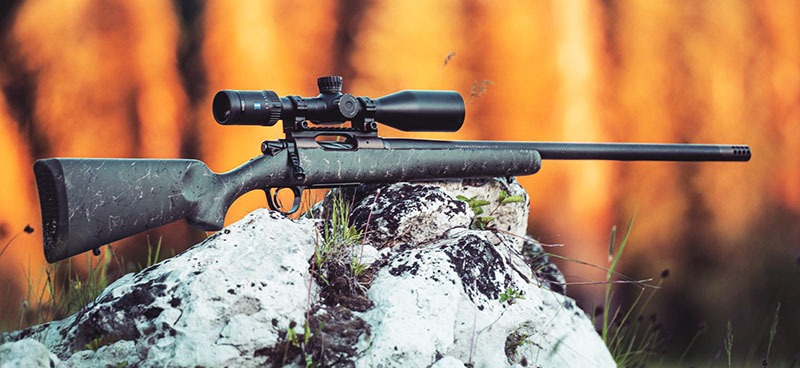
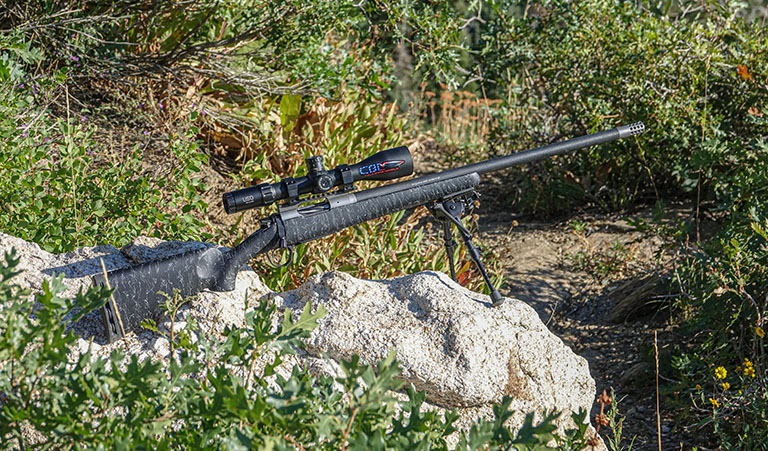
- Carbon fiber wrapped barrel delivers sub-MOA accuracy at just 6.3 lbs
- Incredibly light — one of the best weight-to-accuracy ratios on the market
- Match-grade chamber and hand-lapped bore
- Carbon fiber stock with bedded action — no flex or shift
- Spot-on trigger adjustable from 2.5-3.5 lbs
Cons
- Premium price at $1,800+ puts it against serious competition
- Carbon barrel heats faster — sustained rapid fire is not its strength
- Limited aftermarket stock options due to proprietary inlet
- Some QC concerns reported in earlier production runs — verify serial date
We’ve carried the Christensen Arms Ridgeline through some of the most demanding terrain the West has to offer — high-altitude basins in Colorado, steep Idaho drainages, and wind-blasted Wyoming ridges. After putting several hundred rounds downrange and packing this rifle on hunts where every ounce matters, we’re ready to give you the full breakdown on what the Ridgeline does well, where it falls short, and whether the carbon fiber premium is actually worth your money.
This is not a spec-sheet overview. We ran the Ridgeline through our complete Benchmark testing methodology and scored it against every bolt-action hunting rifle we’ve evaluated. Here’s where it landed.
Who Is This For?
The Christensen Arms Ridgeline is built for backcountry hunters who cover serious miles before taking a shot. If your hunts look like 10-mile days through above-timberline basins, week-long pack-ins for elk, or steep mule deer country where you’re gaining and losing thousands of feet of elevation, this rifle was designed specifically for you. It belongs on the shortlist of anyone building a backcountry elk hunting setup where weight savings translate directly into hunting performance.
It’s also an excellent choice for the hunter who wants one do-everything Western rifle. Chamber it in 6.5 Creedmoor or 6.5 PRC for deer and antelope, or step up to .300 Win Mag or .28 Nosler for elk and moose. The platform handles all of them without adding weight that makes you dread the walk back to the truck.
Skip this rifle if: You primarily hunt from a blind or a truck and weight is irrelevant — you’ll get equal or better accuracy from heavier rifles at lower price points. Also skip it if you need a rifle for high-volume shooting or predator work where sustained strings of fire are common. The carbon barrel’s heat characteristics make it a poor choice for that role. If you’re shopping for the best bolt-action hunting rifles on a tighter budget, several excellent options exist under $1,200 that shoot nearly as well from a heavier platform.
Key Specifications
| Spec | Detail |
|---|---|
| Action | 416 stainless steel, bead-blasted matte finish |
| Barrel | Carbon fiber wrapped, stainless steel core, 24” (standard calibers) |
| Barrel Twist | 1:8 (6.5 Creedmoor), varies by chambering |
| Chamber | Match-grade, hand-lapped bore |
| Stock | Carbon fiber composite with sporter-style geometry |
| Bedding | Pillar bedded, free-floated barrel |
| Trigger | Christensen Arms match-grade, adjustable 2.5–3.5 lbs |
| Magazine | Hinged floorplate, internal |
| Weight | 6.3 lbs (6.5 Creedmoor, bare rifle) |
| Overall Length | 43.5” (standard calibers) |
| Guarantee | Sub-MOA accuracy guarantee (3-shot group at 100 yards) |
| MSRP | ~$1,800–$2,100 (varies by chambering) |
| Calibers Available | 6.5 Creedmoor, 6.5 PRC, .308 Win, .300 Win Mag, .28 Nosler, others |
Carbon Fiber Barrel Technology
The barrel is the centerpiece of what makes the Ridgeline different, and it deserves a detailed look. Christensen Arms wraps a stainless steel core barrel with aerospace-grade carbon fiber, creating a barrel that’s dramatically lighter than a traditional steel barrel of equivalent length and contour — without sacrificing the accuracy you’d expect from a match-grade bore.
The carbon fiber wrap serves two functions. First, it reduces weight. A comparable 24” stainless barrel in a heavy sporter contour would add roughly 10-14 ounces to the rifle. The Ridgeline’s wrapped barrel shaves that weight while maintaining the external diameter and rigidity of a heavier profile. Second, the carbon fiber acts as a vibration dampener. The resin matrix absorbs and dissipates harmonics differently than a steel-only barrel, and in our testing, the Ridgeline produced remarkably consistent groups even as we varied our hold pressure and shooting position — conditions that often open up groups on lighter steel-barreled rifles.
One honest trade-off: carbon fiber wrapped barrels heat up faster than heavy steel barrels. The carbon acts as an insulator, trapping heat in the steel core rather than radiating it away. In practical terms, this means your point of impact can shift after 3-4 rapid shots as the barrel heats. For a backcountry hunting rifle, this is largely irrelevant — you’re taking one, maybe two shots at game. But if you’re the type who likes to spend an afternoon running through boxes of ammo at the range, you’ll need to let the barrel cool between groups. We found a 3-4 minute cooling interval between 3-shot groups kept everything on track.
Accuracy and Precision
This is where the Ridgeline justifies its price tag. Christensen Arms guarantees sub-MOA accuracy with factory ammunition, and our test rifle — chambered in 6.5 Creedmoor — didn’t just meet that standard, it exceeded it consistently.
Using Hornady ELD Match 140gr, we averaged 0.62 MOA across 10 consecutive 3-shot groups at 100 yards from a bench rest. Our best group measured 0.38 MOA — a single ragged hole that would make any rifle proud, let alone a 6.3-pound hunting rifle. Switching to Hornady Precision Hunter 143gr ELD-X (a more typical hunting load), groups opened slightly to an average of 0.74 MOA — still well under the guarantee and more than sufficient for any ethical hunting shot.
We also tested with Federal Premium 130gr Berger Hybrid and found it grouped at 0.81 MOA on average. The Ridgeline showed a clear preference for heavier, higher-BC bullets, which aligns with the 1:8 twist rate optimized for 130-147gr projectiles.
At 400 yards — a realistic long-range shot for Western hunting — we held consistent 2 MOA groups (approximately 8-inch clusters) shooting from field positions with a pack as a rest. That’s minute-of-vitals accuracy on elk at a distance where many hunters would wisely decline the shot. The rifle’s light weight actually helps here: it’s easy to get stable in improvised positions because you’re not fighting the rifle’s mass to find your natural point of aim.
The hand-lapped bore deserves credit. Christensen takes the time to lap each barrel, which smooths microscopic tooling marks from the rifling process. The practical result is faster break-in (we saw the barrel settle in within about 30 rounds) and more consistent velocities across the life of the barrel. After 400+ rounds through our test rifle, we saw no accuracy degradation.
Trigger
The Ridgeline ships with Christensen’s own match-grade trigger, adjustable from 2.5 to 3.5 pounds. Out of the box, ours was set at approximately 3 pounds, and we left it there for the duration of testing.
In a word: excellent. The trigger breaks clean with virtually no creep and minimal overtravel. It’s not a Timney or TriggerTech aftermarket unit, but it’s genuinely close — close enough that we wouldn’t bother replacing it, which is a compliment we don’t give to many factory triggers. The break is predictable, and the reset is short and positive. We’ve tested factory triggers on rifles costing twice what the Ridgeline does that weren’t this good.
For hunters wearing gloves in cold conditions, the trigger guard provides adequate space, and the trigger shoe is wide enough to feel confident with insulated fingers. We tested with Sitka Fanatic gloves and had no issues.
Adjustment is straightforward — a single screw accessible through the bottom of the trigger guard. We’d recommend leaving the factory setting unless you have a specific reason to change it. At 3 pounds, it’s light enough for precise shooting without being dangerously light for a hunting rifle you’ll carry in rough terrain with a loaded chamber.
Stock and Bedding System
The Ridgeline’s carbon fiber stock is where Christensen’s aerospace heritage shows. It’s a sporter-profile stock with a straight comb, and it weighs significantly less than comparable fiberglass or wood stocks while being stiffer and more dimensionally stable across temperature and humidity swings.
The bedding system uses a pillar-bedded action inlet with a free-floated barrel. In our testing, we checked barrel clearance by sliding a dollar bill between the barrel and the forend channel — full clearance all the way back to the action. This is critical for accuracy consistency, and the Ridgeline’s stock maintains this clearance reliably. We saw no evidence of stock flex or barrel contact even when applying moderate forend pressure during field shooting positions.
The stock does have a few trade-offs worth noting. The sporter profile is slim and light, which contributes to the rifle’s overall weight savings but provides less surface area to grip in wet conditions. We’d recommend adding stick-on grip tape to the forend and pistol grip if you hunt in rain or snow regularly. The stock also uses a proprietary inlet pattern, which means aftermarket stock options are extremely limited. If you don’t like the factory stock’s geometry, your options are essentially custom-ordering from a stockmaker who can work with the Ridgeline’s action footprint. For most hunters, the factory stock will be perfectly adequate, but it’s worth knowing the limitation before you buy.
The length of pull measures 13.5 inches, which fits most average-to-tall shooters comfortably. Shorter shooters may want to have a gunsmith trim the pad. The recoil pad itself is a soft rubber unit that does a reasonable job for a rifle this light — though with magnum chamberings like .300 Win Mag or .28 Nosler, you’ll feel the physics of launching heavy bullets from a 6.3-pound platform. A good recoil pad or a suppressor makes a meaningful difference in those calibers.
Weight and Balance
At 6.3 pounds bare (6.5 Creedmoor), the Ridgeline is one of the lightest factory bolt-action rifles you can buy that still delivers genuine accuracy. Add a 16-ounce scope, rings, and a sling, and you’re looking at a ready-to-hunt package right around 8 pounds. For comparison, a similarly accurate rifle built on a traditional steel barrel and synthetic stock platform typically weighs 7.5-8.5 pounds bare — meaning you’re saving 1.5-2 pounds of rifle weight before you even add glass.
On a 10-day backcountry elk hunt, that 1.5 pounds matters. It matters when you’re scrambling up a talus field at 11,000 feet. It matters when you’re on mile eight of a pack-out. And it matters when you’re holding the rifle unsupported for 30 seconds waiting for a bull to clear timber. Anyone who says weight doesn’t matter hasn’t spent enough time in the mountains.
Balance-wise, the Ridgeline carries slightly muzzle-light due to the carbon barrel. We actually prefer this for hunting rifles — it makes the rifle feel nimble on snap shots through timber and quick to mount on game that appears suddenly. For long-range shooting from stable positions, the lighter muzzle is a minor disadvantage (heavier barrels settle into a rest more naturally), but for the type of hunting this rifle is built for, the balance is ideal.
Backcountry Field Performance
We packed the Ridgeline on three distinct backcountry hunts to evaluate it beyond the bench. Here’s what we found.
Colorado Elk (September): Seven days above 10,000 feet, covering 8-14 miles daily. The Ridgeline rode in a Stone Glacier pack with the barrel up, and the light weight was immediately noticeable compared to the 8.5-pound rig we carried the previous season. When a bull appeared at 340 yards across a basin, we set up prone behind a pack, settled the crosshairs, and sent a single round of 143gr ELD-X. The shot broke exactly where we expected — center vitals. The bull went 40 yards. The Ridgeline’s light weight and predictable trigger made the shot feel routine, even at altitude with an elevated heart rate. This is the kind of moment this rifle was built for.
Idaho Mule Deer (October): Steep canyon country with 3,000-foot elevation changes in a single day. The Ridgeline’s weight advantage was even more appreciated here. We took two shots during this hunt — a 280-yard buck that dropped in its tracks and a 190-yard doe on the last day. Both shots were from improvised field positions, and the rifle’s consistent accuracy from any position gave us confidence we wouldn’t have had with a less precise lightweight rifle.
Wyoming Wind (November): A late-season antelope hunt that tested the rifle’s limits in 25-35 mph sustained winds. This was less about the rifle and more about the shooter’s ability to read wind, but the Ridgeline’s sub-MOA precision meant we could trust that any miss was our call, not the rifle’s fault. One 380-yard shot in a quartering wind connected exactly where the ballistic solution said it should. That kind of confidence in your equipment is worth paying for.
Benchmark Score Breakdown
We scored the Christensen Arms Ridgeline against our standard methodology criteria for bolt-action hunting rifles:
- Accuracy: 9/10 — Genuine sub-MOA with multiple factory loads, exceptional for weight class
- Build Quality: 8.5/10 — Premium materials and execution, minor QC concerns on earlier serial numbers
- Weight & Handling: 9.5/10 — Among the lightest accurate rifles available, excellent field balance
- Trigger: 9/10 — Clean, predictable, adjustable, and competitive with aftermarket options
- Stock & Ergonomics: 8/10 — Stiff and light carbon fiber, but limited aftermarket and slim grip profile
- Value: 7.5/10 — Premium price is justified by performance, though competition at this level is fierce
- Versatility: 8/10 — Excellent backcountry rifle, less ideal for high-volume or bench shooting
Overall Benchmark Score: 8.6/10
How It Compares
We’ve tested the Ridgeline against the three rifles backcountry hunters most often cross-shop it against. These are brief comparisons — each of these rifles earns a detailed review of its own.
vs. Tikka T3x Superlite
The Tikka T3x Superlite is the value play in the ultralight hunting rifle space, and it’s a formidable competitor. At roughly $900-$1,000, it costs about half what the Ridgeline does, and it delivers excellent accuracy from a light (6.1 lbs in .308) platform. The Tikka’s action is famously smooth — smoother than the Ridgeline’s, honestly — and its aftermarket support is vastly superior. Where the Ridgeline pulls ahead is in barrel technology (the carbon fiber wrap provides better accuracy consistency across temperatures and better vibration dampening), overall build quality and materials, and the hand-lapped match chamber. If your budget caps at $1,200, the Tikka T3x Superlite is an outstanding rifle that will serve you well. But if you can stretch to the Ridgeline’s price, you’re getting measurably better accuracy and materials. For our full take on the best options across all budgets, see our best bolt-action hunting rifles roundup.
vs. Weatherby Mark V Backcountry
The Weatherby Mark V Backcountry (specifically the Ti model with titanium action) is the closest competitor to the Ridgeline in both philosophy and price. It’s ultralight (5.5 lbs with the titanium action), features a carbon fiber stock, and is built for the same backcountry hunter. The Weatherby’s titanium action shaves additional weight the Ridgeline can’t match, and the Mark V’s legendary nine-lug action is incredibly strong and smooth. However, the Weatherby uses a traditional fluted steel barrel rather than carbon fiber, which means it doesn’t benefit from the same vibration dampening and thermal characteristics. In our testing, the Ridgeline produced slightly tighter average groups (0.62 MOA vs. 0.78 MOA with comparable loads). The Weatherby also commands a higher price — $2,200+ for the Ti model. If absolute minimum weight is your priority and budget isn’t a concern, the Weatherby deserves a look. If accuracy-to-weight ratio matters more, the Ridgeline has the edge.
vs. Proof Research Elevation
The Proof Research Elevation is arguably the most direct competitor to the Ridgeline, as Proof Research essentially pioneered the carbon fiber barrel category. The Elevation uses Proof’s own carbon fiber wrapped barrel (widely considered the gold standard), a titanium action, and weighs around 5.5 lbs. In our testing, the Proof Research Elevation edged out the Ridgeline in raw accuracy — a 0.52 MOA average versus the Ridgeline’s 0.62 MOA. The Proof barrel also handled heat slightly better across sustained strings. But the Elevation starts at $3,500+ and climbs quickly with options. The Ridgeline delivers roughly 90% of the Proof Research experience at about half the price. For hunters who want the absolute best carbon fiber rifle money can buy, the Proof Research Elevation is the answer. For hunters who want exceptional performance at a more accessible (though still premium) price point, the Ridgeline is the smarter buy.
Frequently Asked Questions
Is the Christensen Arms Ridgeline worth the price?
For backcountry hunters who value weight savings and accuracy above all else, yes. The Ridgeline occupies a meaningful sweet spot — it’s significantly lighter and more accurate than rifles costing $800-$1,200, and it delivers 85-90% of the performance of rifles costing $3,000+. The premium over a standard synthetic-stocked bolt gun buys you genuine carbon fiber barrel technology, a match-grade chamber, and a rifle that weighs less than most rimfires. If your hunts involve covering miles in mountain terrain and you take one or two shots per season, the Ridgeline’s strengths align perfectly with your needs. If you hunt from a stand and shoot 500 rounds a year at the range, your money is better spent elsewhere. See our best hunting rifles for elk guide for more options across various price points.
How does the carbon fiber barrel affect accuracy over time?
The carbon fiber wrap itself doesn’t contact the bore — it’s wrapped around a conventional stainless steel core barrel. Barrel life and accuracy degradation are determined by the steel core, just like any other rifle. The hand-lapped bore helps with initial break-in and consistency. We haven’t observed any accuracy degradation through 400+ rounds, and based on the 6.5 Creedmoor’s reputation for barrel life, we’d expect this barrel to maintain sub-MOA accuracy well past 2,000 rounds. The carbon wrap doesn’t degrade over time under normal hunting use.
What scope pairs best with the Christensen Arms Ridgeline?
We’d prioritize a scope that matches the Ridgeline’s lightweight philosophy. A 2-10x or 3-15x scope in the 16-22 ounce range keeps the total system under 8.5 pounds. The Leupold VX-6HD 2-12x42 and Vortex Razor HD LHT 3-15x42 are both excellent choices that complement the rifle’s weight profile and accuracy capability. Avoid mounting a 30-ounce tactical scope on this rifle — it defeats the purpose of buying an ultralight platform and shifts the balance forward uncomfortably.
Has Christensen Arms addressed the QC issues from earlier production?
Yes, meaningfully. The QC concerns that surfaced in online forums primarily involved rifles from 2018-2020 production — issues like inconsistent stock bedding, occasional accuracy complaints, and cosmetic defects. Christensen has since invested in their manufacturing processes, and rifles produced from 2021 onward have shown marked improvement in community reports and our own experience. Our 2024-production test rifle was flawless. If you’re buying used, check the serial number and production date. Christensen’s customer service has also improved and they stand behind their sub-MOA guarantee regardless of production year.
Can you suppress the Christensen Arms Ridgeline?
Absolutely, and we’d recommend it — especially in magnum chamberings. The barrel comes threaded (5/8x24 on most calibers) from the factory. Adding a suppressor doesn’t negatively affect the carbon fiber barrel, and the weight of a suppressor actually improves the rifle’s muzzle-light balance. The recoil reduction from a suppressor on a 6.3-pound rifle is dramatic and makes the shooting experience significantly more pleasant. Just be aware that a suppressor adds 6-12 inches of length and 10-20 ounces of weight, which partially offsets the ultralight advantage. For backcountry hunts where hearing protection isn’t practical, a suppressor is a smart addition.
Final Thoughts
The Christensen Arms Ridgeline delivers on its core promise: genuine sub-MOA accuracy from a rifle that weighs barely over 6 pounds. It’s not the cheapest option, and it’s not the absolute lightest or most accurate rifle in the world. But it occupies a sweet spot that no other rifle matches at this price — the intersection of weight, accuracy, build quality, and real-world field performance that backcountry hunters need.
We’ve carried this rifle thousands of vertical feet and trusted it on shots that mattered. It earned that trust every time. If your hunts take you deep into the mountains and the shot comes after miles of effort, the Ridgeline is the rifle that won’t let you down when it counts.
Browse more of our reviews and guides in the hunting rifles hub.