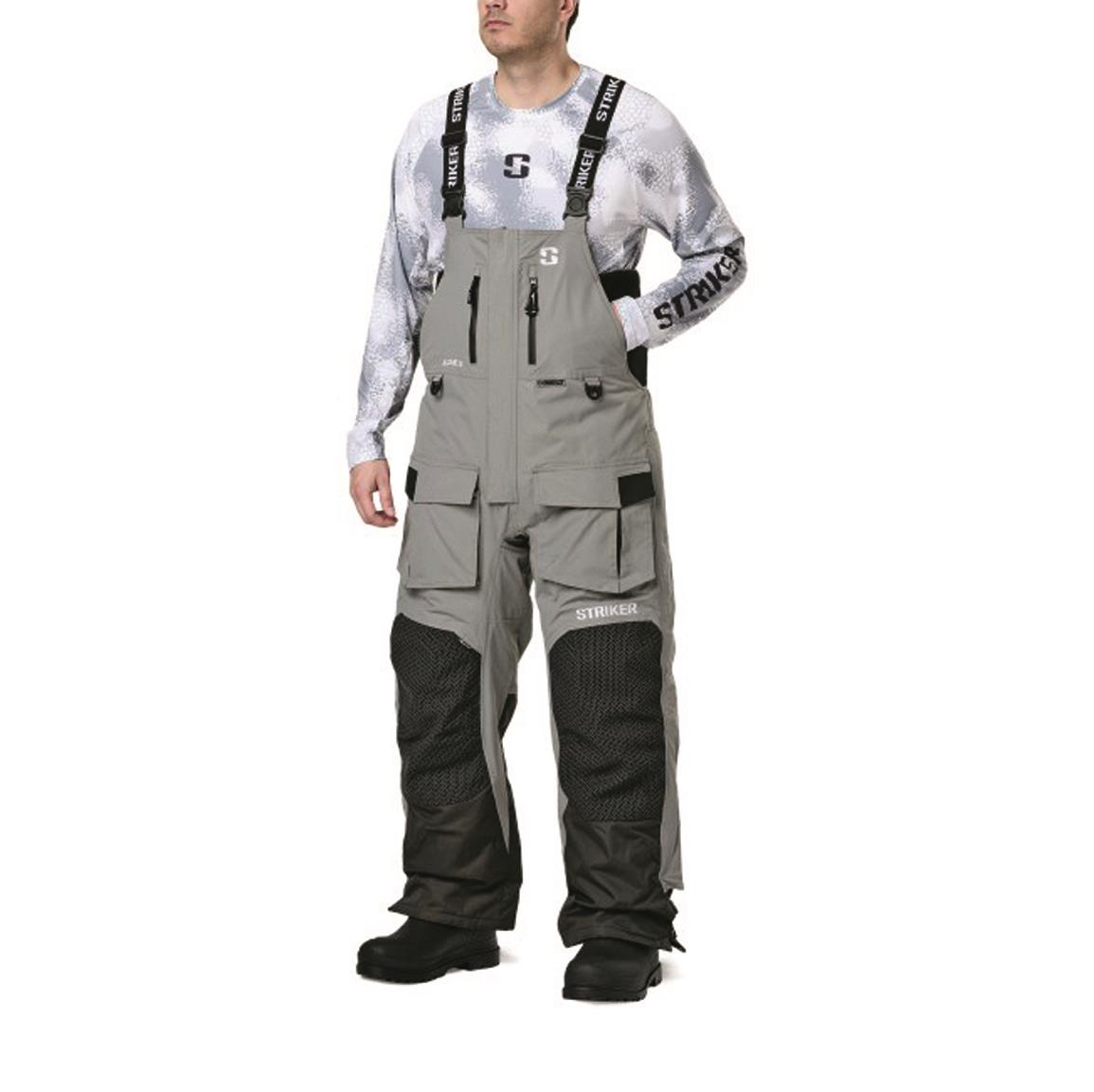
Nothing ends an ice fishing trip faster than cold, wet clothing. You can own the best flasher on the market, fish the most productive lake in the state, and drill into a school of walleyes stacked like cordwood — but if your bibs are soaked through and your core temperature is dropping, you’re done. We’ve learned that lesson the hard way more than once over the years, and it’s why we take ice fishing bibs and suits as seriously as any piece of gear we test.
We spent the 2025-2026 hardwater season evaluating four of the best ice fishing bibs and suits available, wearing them through full-day sessions in temperatures ranging from the mid-twenties down to minus-30 wind chills across lakes in Minnesota, Wisconsin, and northern Ontario. Every product on this list was tested through our Benchmark Score system, which evaluates warmth, waterproofing, breathability, mobility, durability, and feature set. For more hardwater coverage, visit our ice fishing hub. If you’re still building out your ice setup, our beginner’s guide to ice fishing covers the foundational gear and knowledge you need.
Quick Picks
- Best Overall Suit: Striker Ice Climate Suit — A complete jacket-and-bib system with class-leading warmth, integrated flotation, and the fit and mobility of gear designed by people who actually fish. The benchmark for serious hardwater outerwear.
- Best Float Bibs: Clam IceArmor Ascent Float Bibs — Purpose-built flotation bibs that deliver genuine warmth and waterproofing without the bulky, restrictive feel that plagues lesser float bibs. The best balance of safety and fishability.
- Best Value Bibs: Eskimo Keeper Bibs — Honest insulation, solid waterproofing, and a practical feature set at a price point that makes quality ice bibs accessible to every angler. The smart buy for budget-conscious hardwater anglers.
- Best Lightweight Float Bibs: Frabill I-Float Bibs — The lightest flotation bibs in our roundup with a slim, articulated fit that moves like non-float bibs. The pick for mobile anglers who want float protection without the bulk.
Float Bibs vs. Non-Float Bibs: A Conversation About Risk
This is a topic we take seriously, and we think every ice angler should too. Float bibs — bibs with integrated buoyancy material built into the insulation — are designed to keep you at the surface if you break through the ice. Non-float bibs are standard insulated bibs without any flotation assistance. The question of which to buy is ultimately about how you weigh safety against cost, weight, and bulk.
We’ll be direct about where we stand: if you fish early ice, late ice, or any situation where ice quality is uncertain, float bibs are the single most important piece of safety gear you can wear. Falling through the ice in standard winter clothing is a life-threatening emergency. Heavy insulated bibs, boots, and a parka can pull you under within seconds. Float bibs buy you time — time to get your arms on the ice edge, time to kick yourself out, time for your fishing partners to reach you. That margin can be the difference between a terrifying story you tell later and a tragedy.
The argument against float bibs typically comes down to three things: cost, bulk, and warmth-to-weight ratio. Float bibs are more expensive than comparably warm non-float bibs. The buoyancy material adds some thickness and weight. And some older float bib designs earned a reputation for being stiff and restrictive, which discouraged adoption. All three of those objections have been largely addressed by the current generation of float bibs from brands like Striker, Clam, and Frabill. Modern float bibs are warmer, more articulated, and less bulky than anything available even five years ago.
That said, non-float bibs still have a legitimate place. If you exclusively fish thick, mid-season ice on well-known lakes and you prioritize maximum mobility and minimum weight, a quality pair of non-float bibs paired with ice picks around your neck is a reasonable choice. We carry ice picks on every trip regardless of what bibs we’re wearing, and you should too. But for the majority of ice anglers, especially those who fish varying conditions throughout the season, we believe float bibs represent the best combination of warmth, protection, and safety available. Two of the four products in this roundup include flotation, and that’s deliberate.
Striker Ice Climate Suit
Best for: Serious ice anglers who want a complete, purpose-built outerwear system with integrated flotation, premium insulation, and a fit designed for all-day fishing in extreme cold.
The Striker Ice Climate Suit is the standard against which we measure every other piece of ice fishing outerwear, and after another full season of hard use, nothing has displaced it. This is a matched jacket-and-bib system engineered specifically for ice fishing from the ground up — not repurposed hunting gear, not adapted snowmobile apparel, but purpose-designed hardwater outerwear that accounts for how ice anglers actually move, sit, and work on the ice.
The warmth is the first thing you notice. Striker uses their proprietary Sureflote insulation throughout both the jacket and bibs, which serves double duty as both thermal insulation and integrated flotation material. The result is a suit that keeps you genuinely comfortable in sustained sub-zero temperatures without layering yourself into immobility. We fished multiple full-day sessions in minus-15 to minus-20 ambient temperatures with a merino base layer, a midweight fleece, and the Climate Suit as our outer shell. We were warm. Not surviving — warm. There’s a meaningful difference, and the Climate Suit lives on the right side of that line.
Waterproofing is handled through Striker’s hydrapore membrane, and it’s effective. We knelt on wet ice, sat in slush, drilled through overflow, and managed ice and snow all day without moisture penetration. The sealed seams held up, and the fabric shed snow and ice crystals without absorbing moisture. Breathability is above average for the insulation level — we didn’t experience the clammy, sweat-soaked feeling that plagues less breathable ice suits during the walk from the truck to the spot or during the physical work of drilling and setting up a shelter. Moisture management matters more than most anglers realize because sweat-dampened insulation loses thermal efficiency rapidly, and the Climate Suit handles that transition from high exertion to stationary fishing better than any suit we’ve tested.
Mobility is where Striker’s ice-fishing-specific design philosophy really shows. The bibs feature articulated knees and a gusseted crotch that let you move naturally — kneeling to clear a hole, bending to grab tackle, twisting to set a tip-up flag. The jacket’s arms allow full range of motion for jigging without the suit riding up or binding. We’ve worn general-purpose insulated bibs that felt like wearing a sleeping bag with leg holes, and the Climate Suit is a different experience entirely. You can actually fish in this thing, not just endure the cold while wearing it.
The feature set is comprehensive without being gimmicky. The bibs include reinforced knees for kneeling on ice, adjustable shoulder straps with a quick-release buckle system, and multiple zippered pockets positioned where you can actually reach them while seated. The jacket has a high, insulated collar that shields your neck and lower face without obstructing your vision, and the adjustable hood fits over a winter hat without creating pressure points. Both pieces feature reflective accents for visibility in low-light conditions, which is a practical safety consideration for anglers fishing dawn and dusk on remote ice.
The integrated flotation is rated to keep you at the surface for extended periods, and the Sureflote material maintains its buoyancy properties even after years of use and compression — it doesn’t degrade the way some foam-based flotation systems do. Combined with the waterproof exterior that slows water ingress, the Climate Suit provides a meaningful survival advantage in the event of a breakthrough. We sincerely hope you never need that feature, but knowing it’s there changes how confidently you approach marginal ice.
The investment is real — the Climate Suit is the most expensive option in our roundup by a notable margin. But this is a piece of gear that serves as your primary defense against the most dangerous aspect of ice fishing: the cold itself. We’ve worn the Climate Suit for three consecutive seasons with zero degradation in insulation performance, waterproofing, or zipper function. The cost per season of use makes it one of the more sensible long-term investments in our hardwater rotation.
Clam IceArmor Ascent Float Bibs
Best for: Anglers who want dedicated flotation bibs that deliver serious warmth and waterproofing with a fit that doesn’t feel like wearing a life jacket on your legs.
The Clam IceArmor Ascent Float Bibs represent the current state of the art in standalone float bibs, and they’ve earned a permanent spot in our gear rotation. Where some float bibs feel like they’re fighting you — stiff panels of buoyancy foam that restrict your movement and turn simple tasks into awkward wrestling matches — the Ascent bibs move with you. Clam clearly invested engineering effort into the articulation and panel layout, and the result is a pair of float bibs that feel far closer to conventional insulated bibs than the float designation suggests.
The insulation package delivers warmth that competes with heavier, non-float bibs. Clam uses a combination of their float-assist insulation and supplemental thermal material to create a heat-retention profile that handled temperatures down to minus-10 comfortably during our testing, provided we had a proper base and mid layer underneath. In the coldest conditions we tested — a minus-25 wind chill day on Mille Lacs — we added a thin down mid layer and remained comfortable through a seven-hour session. That’s impressive for bibs that also keep you afloat.
Waterproofing is critical for any ice fishing bib because you’re constantly in contact with snow, slush, ice shavings, and meltwater. The Ascent bibs use a fully sealed waterproof shell that kept us dry through every condition we encountered. We deliberately knelt in standing slush around a freshly drilled hole for ten minutes and checked for moisture penetration — bone dry inside. The knee areas are reinforced with abrasion-resistant panels that serve double duty as waterproof barriers and durability insurance against the rough, abrasive surface of drilled ice.
The fit system uses adjustable bib straps with a comfortable H-back configuration that distributes the weight of the bibs and their insulation across your shoulders without creating pressure points. The waist is adjustable to accommodate different layering configurations underneath, which matters because your layering changes throughout the season — lighter setups in early ice and late ice, heavier builds during the January deep freeze. The leg openings are sized to fit over ice fishing boots without excessive bunching, and internal gaiters keep snow and wind from creeping up your legs.
Pocket placement is practical. The chest pocket sits high enough to access while seated on a bucket, and the hand-warmer pockets on the upper bib panel are fleece-lined and positioned for natural hand placement. Side-zip thigh pockets are deep enough for a phone or a few tackle boxes without items bouncing around. None of the pockets compromise the flotation panels, which means the buoyancy rating remains consistent regardless of what you’re carrying.
The flotation rating provides enough buoyancy to keep your upper body above the waterline, buying you the critical minutes needed to self-rescue or receive assistance. The buoyancy material is distributed throughout the bib panels rather than concentrated in a single area, which helps the bibs float you in a natural, upright position rather than tipping you forward or backward. We’ve seen float bibs from other manufacturers that position their foam poorly, causing the wearer to float face-down — defeating the entire purpose. The Ascent bibs don’t have that problem.
For anglers who want the safety margin of float bibs without sacrificing the warmth and comfort they expect from premium ice fishing apparel, the Clam IceArmor Ascent Float Bibs are the strongest standalone option available. They pair well with any quality ice fishing jacket, giving you the flexibility to mix and match your upper body layer based on conditions rather than committing to a full suit system.
Eskimo Keeper Bibs
Best for: Budget-conscious anglers who want solid insulation, reliable waterproofing, and a practical design without paying flagship prices.
The Eskimo Keeper Bibs are the bibs we recommend when someone asks us what to buy for their first season on the hard water or when they need dependable ice bibs without the financial commitment of a premium float suit. These are honest, well-made insulated bibs that do exactly what they promise — keep you warm and dry on the ice — at a price that doesn’t require justifying the purchase to your spouse.
Let’s be clear about what the Keeper Bibs are and aren’t. They are not float bibs. They don’t include integrated buoyancy material, and they don’t carry a flotation rating. If flotation is a priority for you — and we’ve made our case for why it should be — look at the Clam Ascent or Frabill I-Float options on this list. What the Keeper Bibs are is a genuinely warm, genuinely waterproof pair of insulated bibs built specifically for ice fishing at a price point significantly below the float bib category.
The insulation is a 150-gram synthetic fill that handles the cold effectively. We wore the Keeper Bibs through multiple sessions in the single digits and low teens with appropriate base and mid layers and stayed comfortable. In the deepest cold — below minus-10 — we needed heavier layering underneath than we required with the Striker Climate Suit, which is expected given the price difference. The key point is that the insulation works. It traps heat, it maintains loft after compression, and it doesn’t feel like wearing two sheets of cardboard connected by a zipper. The insulation remained effective even after being compressed under a shelter seat for hours, which is a failure point for cheaper fills that go flat and lose thermal value.
Waterproofing uses a coated shell fabric with sealed critical seams. It’s not a full membrane system like the higher-priced options on this list, but it handled normal ice fishing conditions without failure. Kneeling in slush, sitting on wet ice, and managing snow and ice shavings around drill holes — the Keeper Bibs stayed dry through all of it. Where the waterproofing shows its limits is during extended exposure to heavy, standing water. If you’re regularly fishing overflow situations where you’re wading through inches of water on the ice surface, a premium membrane bib will serve you better. For the vast majority of normal ice fishing conditions, the Keeper Bibs’ waterproofing is adequate.
Mobility is decent. The bibs use a standard cut without the advanced articulation of the Striker or Clam products, so they don’t move quite as naturally during aggressive bending and kneeling. But they’re far from restrictive. We drilled holes, set up shelters, and fished all day without feeling like the bibs were fighting us. The fit runs slightly generous, which works in your favor because it accommodates layering without creating a constricting fit that restricts blood flow to your extremities — a common mistake anglers make when they buy bibs too small for their layering system.
Features are practical and stripped of anything unnecessary. Reinforced knees protect the high-wear zone where you kneel on abrasive ice. An adjustable bib strap system fits a range of body types. Zippered pockets at the chest and thigh keep essentials secure. Boot-compatible leg openings work with standard ice fishing boots. There’s no fleece lining in the pockets, no reflective accents, no internal gaiters — these are the refinements you pay for in premium bibs, and their absence is how Eskimo hits the price point.
The Eskimo Keeper Bibs are the right choice for anglers who fish a dozen or fewer times per season, for younger anglers who are still growing into their gear, and for anyone who needs functional ice bibs without a premium investment. They’re also an excellent backup pair — we keep a set in the truck as emergency bibs for the buddy who shows up in jeans, because no one should fish in jeans. Pair them with ice picks on a lanyard around your neck and a solid layering system underneath, and the Keeper Bibs will keep you on the ice longer than gear twice their price from a decade ago.
Frabill I-Float Bibs
Best for: Mobile ice anglers who want flotation protection in the lightest, most articulated float bib package available.
The Frabill I-Float Bibs solve the primary objection most anglers have about float bibs: the bulk. These are the lightest flotation bibs in our roundup, and they achieve that distinction without compromising the buoyancy rating or waterproof performance that makes float bibs worth wearing in the first place. If you’ve tried float bibs before and found them too heavy, too stiff, or too bulky for run-and-gun fishing, the I-Float bibs deserve a fresh look.
Frabill uses a thin, high-efficiency flotation material that provides buoyancy assistance at a fraction of the thickness of traditional float foam. The result is a bib that looks and feels closer to a standard insulated bib than any float bib we’ve tested. When we handed the I-Float bibs to a fishing partner who didn’t know they were float bibs, he didn’t identify them as such until we told him. That slim profile translates directly to improved mobility. The I-Float bibs flex, bend, and articulate through a full range of motion with less resistance than any other float bib on this list. For anglers who drill a lot of holes, hop between spots frequently, and generally stay active on the ice, this is a tangible advantage.
Warmth is adequate but not the I-Float’s headline feature. The insulation is lighter than the Striker Climate Suit or Clam Ascent bibs, which is the tradeoff for the reduced bulk. In moderate cold — teens and twenties — the I-Float bibs with a standard base and mid layer kept us comfortable. In extreme cold below zero, we needed to add heavier mid-layer insulation than the other float bibs in this roundup demanded. This is a genuine consideration if you primarily fish the coldest weeks of the season in northern-tier states. The I-Float bibs are built around the premise that you’ll layer for warmth and rely on the bib for waterproofing, flotation, and wind protection — a valid design philosophy, but one that requires more intentional layering management than a heavier insulated bib.
Waterproofing is strong. The shell fabric is fully waterproof with sealed seams, and it performed without failure through our standard battery of slush exposure, kneeling tests, and all-day wear in wet conditions. The lighter shell material dries faster than heavier fabrics when snow or ice buildup is brushed off, which is a small but appreciated quality-of-life advantage during long sessions.
The fit is athletic and trim compared to the other bibs in this roundup. Frabill clearly designed the I-Float for anglers who value a close, non-restrictive fit over a roomy, accommodation-for-everything cut. The adjustable bib straps and waist system let you dial in the fit precisely, and the leg taper works well with both standard winter boots and more streamlined ice fishing footwear. For larger-framed anglers or those who layer very heavily, check Frabill’s sizing chart carefully — the trim cut means sizing up may be necessary to maintain comfort with your preferred layering system.
Pocket layout is efficient. A zippered chest pocket and thigh pockets provide essential storage without adding bulk to the flotation panels. The pockets aren’t as numerous or as refined as the Striker or Clam offerings, but they cover the basics. Reinforced knees and seat add durability where the bibs take the most abuse.
The Frabill I-Float bibs are the float bib for anglers who resisted float bibs. They prove that flotation protection doesn’t have to come at the cost of comfort, mobility, or a streamlined fit. For early ice and late ice when the safety margin of flotation matters most and the extreme cold hasn’t fully set in, the I-Float bibs are arguably the best choice in our roundup. For deep-winter fishing in severe cold, we’d lean toward the heavier insulation of the Striker or Clam. But for the angler who wants one pair of float bibs that covers the broadest range of conditions without ever feeling burdensome, the I-Float delivers.
Layering System Guide: Base, Mid, and Outer Layers for Ice Fishing
Your bibs and suit are only one part of the thermal equation. The layering system underneath is what ultimately determines whether you stay warm, manage moisture, and maintain the flexibility to adjust as conditions change throughout the day. Ice fishing presents a unique layering challenge because you alternate between periods of intense physical activity — drilling holes, hauling gear, setting up shelters — and extended periods of sitting nearly motionless while waiting for a bite. A good layering system handles both extremes.
Base Layer
The base layer sits against your skin, and its primary job is moisture management. When you exert yourself, you sweat. If that sweat stays against your skin, it cools rapidly and pulls heat from your body — the exact opposite of what you need. A quality base layer wicks moisture away from your skin and transports it to the mid layer for evaporation.
Merino wool is our top choice for ice fishing base layers. It wicks effectively, retains warmth when damp, resists odor over multi-day trips, and feels comfortable against the skin. A midweight merino top and bottom handle the widest range of ice fishing temperatures. Synthetic base layers — polyester blends marketed for cold-weather activity — are a capable and less expensive alternative that dry faster than merino but lack the warmth-when-wet insurance.
Cotton is the enemy. We say this every season because every season we see anglers on the ice in cotton thermals, cotton t-shirts, and cotton hoodies. Cotton absorbs moisture, holds it against your skin, and loses all insulating value when wet. Wearing cotton under your ice bibs is actively dangerous in extreme cold. Leave it at home.
Mid Layer
The mid layer provides the bulk of your insulation. Its job is to trap warm air in a dead-air space between your base layer and your outer shell. The best mid layers are warm, lightweight, and compressible enough to fit comfortably under your bibs and jacket without restricting movement.
Fleece is the workhorse mid layer for ice fishing. A 200-weight fleece jacket and pants provide excellent warmth-to-weight ratio, continue insulating when damp, and dry quickly. Fleece is also affordable and widely available. For moderate cold — teens and above — a single fleece mid layer over a merino base is often sufficient under quality insulated bibs.
Down and synthetic puffy layers step in when the temperature drops into the danger zone. A lightweight down jacket worn as a mid layer under your ice fishing jacket adds significant warmth with minimal bulk. The risk with down is that it collapses when wet, losing nearly all insulating value. Synthetic puffy insulation — PrimaLoft and similar materials — retains more warmth when damp and is our preference for mid-layer insulation in wet conditions or when fishing without a shelter.
Outer Layer (Your Bibs and Suit)
Your bibs and jacket are the outer shell — the final barrier between you and the elements. The outer layer’s job is threefold: block wind, repel water, and contain the warm air your base and mid layers have generated. Quality ice fishing bibs and suits, like the four products in this roundup, are designed to perform all three functions simultaneously.
The key insight about layering for ice fishing is that adjustability matters more than maximum warmth. A system that lets you shed or add a mid layer in response to changing conditions and activity levels will keep you more comfortable over a full day than the warmest possible combination worn all day. Start your walk to the spot slightly cool — you’ll warm up during the hike. Add your mid layer once you’re set up and stationary. If you’re working hard drilling holes or pulling a sled, open vents or unzip your jacket to release excess heat before you soak your base layer with sweat. Managing moisture proactively is the difference between fishing comfortably until dark and shivering on the ride home.
What to Look for in Ice Fishing Bibs and Suits
Beyond the individual products, here are the features and specs that matter most when evaluating any ice fishing bib or suit.
Insulation weight and type directly determine warmth. Higher gram counts mean more insulation, but the type matters too. Synthetic fills handle moisture better than down, and purpose-built ice fishing insulation from brands like Striker is optimized for the seated, low-activity nature of ice fishing. Look for insulation rated for the temperatures you actually fish, not the mildest day of the season.
Waterproof rating and seam construction keep you dry. Fully sealed seams are the gold standard. A waterproof membrane integrated into the shell fabric — rather than just a DWR coating on the surface — provides more durable, longer-lasting water protection. Coated fabrics work well initially but can degrade over seasons of use and washing.
Breathability prevents the moisture-from-within problem. If your bibs are waterproof but not breathable, your sweat has nowhere to go and you end up wet from the inside. Look for bibs that specify a breathability rating alongside their waterproof rating. This matters most for active anglers who drill their own holes and move between spots.
Reinforced knees and seat extend the lifespan of your bibs dramatically. Ice is abrasive. Kneeling on drilled ice chews through fabric quickly, and sitting on rough ice or a bucket wears the seat over time. Reinforced panels in these areas are not optional on bibs you expect to last more than one or two seasons.
Boot compatibility seems obvious but trips up more anglers than you’d expect. Your bibs need to fit over your ice fishing boots without binding, bunching, or riding up. Internal snow gaiters that seal around the boot top prevent snow and wind from entering the leg. Zippered leg openings make it easier to get bibs on and off over bulky boots.
Flotation capability — we’ve covered this above, but it bears repeating in the checklist. If you fish early ice, late ice, or any marginal conditions, flotation bibs are a safety investment that could save your life. Weigh this feature seriously.
Frequently Asked Questions
How do I know if I need float bibs for ice fishing?
If you ever fish ice that is less than established mid-season thickness — and most of us do at some point during the year — float bibs provide a safety margin that standard bibs cannot. Early ice and late ice are the highest-risk periods, but mid-season ice can be compromised by current, springs, pressure cracks, and varying snow cover that insulates unevenly. We recommend float bibs as a default choice for all ice anglers, with non-float bibs as a reasonable option only for those who exclusively fish thick, proven mid-season ice. Regardless of which bibs you wear, always carry ice picks on a lanyard around your neck and tell someone your plan before you head out. For a complete overview of essential ice safety practices, see our beginner’s guide to ice fishing.
Can I wear my ice fishing bibs for other winter activities?
Technically, yes — insulated bibs are insulated bibs. But ice fishing bibs are designed for a specific use case: extended periods of seated, low-activity cold exposure with intermittent bursts of physical effort. They tend to be heavier and more insulated than bibs designed for snowmobiling, skiing, or other high-exertion winter sports. Wearing ice bibs for active pursuits may cause overheating and excessive sweating. For best results, use ice bibs for ice fishing and invest in activity-appropriate outerwear for other winter sports. The moisture management and thermal regulation differences between purpose-built gear and repurposed gear are meaningful in extreme cold.
How should I care for and store my ice fishing bibs?
Proper care extends the life of your bibs significantly. After each trip, hang your bibs in a well-ventilated area and allow them to dry completely before storing. Brush off ice and debris while the fabric is still cold — frozen contaminants brush off cleanly, while melted slush can stain or degrade waterproof coatings. Wash your bibs according to the manufacturer’s instructions, typically with a gentle detergent and no fabric softener, which can clog the waterproof membrane. Reapply a DWR treatment once or twice per season if you notice water no longer beading on the surface. Store bibs hanging or loosely folded in a dry space — never compressed in a stuff sack for months, which can permanently damage insulation loft and flotation material.
What temperature rating should I look for in ice fishing bibs?
There’s no universal temperature rating system for ice bibs the way there is for sleeping bags, which makes comparison shopping frustrating. Instead, focus on insulation weight as a proxy. Bibs with 100 to 150 grams of synthetic insulation handle moderate cold from the mid-twenties down to about 10 degrees with proper layering. Bibs with 150 to 200-plus grams, or those using high-efficiency insulation like Striker’s Sureflote system, extend that range below zero. Remember that your layering system contributes more to total warmth than the bibs alone. A 150-gram bib over a quality merino base and fleece mid layer will outperform a 200-gram bib over a cotton hoodie every time.
Are ice fishing suits better than buying a separate jacket and bibs?
Matched suits — like the Striker Ice Climate Suit — offer the advantage of a coordinated system where the jacket and bibs are designed to work together. The insulation overlaps correctly at the waist, the fit accounts for both pieces being worn simultaneously, and the waterproofing is seamless between the two layers. Separate bibs give you more flexibility to mix and match based on conditions, pair with a jacket you already own, or upgrade one piece at a time. Both approaches work. If you’re buying from scratch and want the most streamlined, optimized system, a matched suit is the way to go. If you already have a quality ice fishing jacket and just need bibs, standalone bibs from Clam, Eskimo, or Frabill are the smarter investment. Either way, make sure your jacket and bibs overlap at the waist to prevent a cold gap that lets wind and snow reach your mid layer. For shelter options to pair with your new bibs, see our guide to the best portable ice fishing shelters.