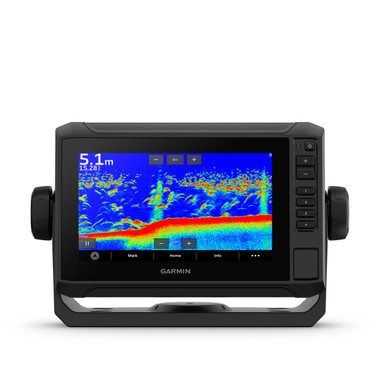
Mounting a fish finder on a kayak is a different game than bolting one to the console of a center console. Weight matters. Power draw matters. Screen visibility matters when you’re sitting eighteen inches off the water with the sun hammering your lap. And budget matters — most of us aren’t dropping a grand on electronics for a platform that cost us two grand in the first place. We’ve spent the past season testing every sub-$500 fish finder we could get our hands on from a kayak seat, and these four units are the ones that earned a permanent spot on our hulls.
This roundup focuses on units that balance screen quality, sonar capability, GPS functionality, kayak-friendly mounting, and power efficiency — all without crossing the $500 threshold. If you’re rigging a new fishing kayak or upgrading from a basic unit, these are the fish finders worth your money in 2026. For our full testing process, head over to our methodology page. And for more kayak-specific gear coverage, check our kayak fishing hub.
Quick Picks
- Best Overall: Garmin Striker Vivid 7sv — The sharpest screen, the most capable sonar suite, and the most intuitive interface in this price range. Our top pick for most kayak anglers.
- Best Value: Lowrance HOOK Reveal 7 — TripleShot transducer delivers CHIRP, DownScan, and SideScan at a price that leaves room in your budget for a quality battery.
- Best Side Imaging: Humminbird HELIX 7 CHIRP SI — The most detailed side imaging returns we’ve seen under $500. Built for anglers who want to map structure from the kayak seat.
- Best GPS and Mapping: Garmin ECHOMAP UHD2 72sv — Full-featured chartplotter with preloaded inland maps and the best navigational tools in this roundup. The unit to pick if you fish big water.
Why Kayak Fish Finders Are Different from Boat Units
You can technically mount any fish finder on a kayak. But “can” and “should” are very different conversations. Kayak fishing imposes a set of constraints that boat anglers never think about, and those constraints should drive your electronics decision.
Power is finite. A bass boat has an alternator constantly replenishing its batteries. Your kayak has whatever you brought with you — typically a small lithium or sealed lead-acid battery in the 7 to 12 amp-hour range. A fish finder that draws 1.5 amps at full brightness will drain a 9 Ah battery in six hours. That’s a real consideration on a full-day trip, and it eliminates a lot of otherwise excellent units from kayak duty.
Every ounce counts. Kayak stability is a function of weight distribution. A heavy fish finder mounted high on a RAM ball shifts your center of gravity in ways you’ll feel on every wave. The transducer, the battery, and the mounting hardware all add up. We’ve weighed complete installed systems across all four units in this roundup, and the difference between the lightest and heaviest setup is over three pounds — meaningful when you’re already managing rods, tackle, and a cooler on a 12-foot hull.
Screen angle and visibility are different. On a boat, you’re typically looking down at a console-mounted screen from a standing position. On a kayak, the screen is usually mounted at or slightly above gunwale height, and you’re looking at it from a low, reclined seat — often with the sun directly behind or above the display. Screen brightness, viewing angles, and anti-glare coatings matter enormously on a kayak in ways they simply don’t on a boat.
Transducer placement is more complex. Boats have transoms purpose-built for transducer mounting. Kayaks have scupper holes, hull contours, and limited flat surfaces. Getting a clean transducer signal from a kayak requires thought about placement, angle, and turbulence — and the wrong transducer setup will make even the best fish finder useless. We cover transducer mounting in detail below.
Vibration and movement are constant. A kayak transmits every wave, every paddle stroke, and every pedal revolution directly into your electronics. RAM mounts and similar systems absorb some of this, but cheap mounting hardware will rattle loose over the course of a season. The fish finders on this list were evaluated partly on how well they handled the perpetual low-grade vibration environment of a fishing kayak.
If you’re rigging a fishing kayak from scratch, planning your electronics early in the process saves headaches down the road. Route your wiring before you bolt down crates and tackle trays.
Garmin Striker Vivid 7sv
Best for: Kayak anglers who want the best overall screen and sonar package under $500 with reliable GPS.
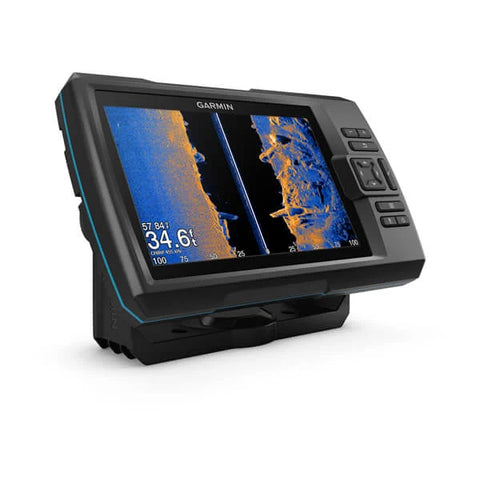
The Garmin Striker Vivid 7sv has been our go-to kayak fish finder recommendation since its release, and the 2026 model year hasn’t given us any reason to change that position. The 7-inch display is the best screen in this price bracket — period. Garmin’s proprietary color palette on the Vivid series makes sonar returns pop with a level of contrast and readability that you don’t typically see until you step into the $600-plus tier. On the water, that translates to returns you can read at a glance from a kayak seat without squinting or shading the screen with your hand.
The sonar suite covers traditional CHIRP, ClearVu (Garmin’s down imaging), and SideVu (side imaging) through the included GT52HW-TM transducer. ClearVu resolution is excellent for its class — we marked individual fish holding tight to submerged laydowns in 15 feet of water with enough detail to estimate size. SideVu extends your view to either side of the kayak, which is enormously useful when you’re scanning unfamiliar shoreline structure or prospecting a new lake from the kayak seat. Traditional CHIRP handles depth and fish arches with the reliability you expect from Garmin.
The built-in GPS is a Striker-series staple. It doesn’t support full cartography (no preloaded maps or chart card slot), but it does provide accurate position tracking, waypoint storage, speed readout, and Quickdraw Contours — Garmin’s crowd-sourced mapping feature that lets you build your own depth maps as you fish. For kayak anglers who repeatedly fish the same lakes, Quickdraw becomes incredibly valuable over time. We’ve built out detailed contour maps of several home lakes entirely from the kayak, and those maps have put us on fish that we’d have never found by casting blind.
Power draw is reasonable for a 7-inch unit. We measured consistent draw around 0.8 to 1.1 amps depending on brightness and sonar mode, which gives us a full day of fishing on a 9 Ah lithium battery with margin to spare. The unit is IPX7 waterproof — more than adequate for kayak duty, including the inevitable wave over the bow.
Mounting is straightforward. The GT52HW-TM transducer is compact enough for scupper-hole mounting or a through-hull installation on most fishing kayaks. We ran it in a scupper mount on two different hulls and got clean returns with zero interference. The head unit itself pairs well with any standard RAM mount arm, and the tilt-swivel base that ships with the unit works in a pinch for anglers who don’t want to invest in a RAM system right away.
If we had to pick one fish finder for one kayak, this is the unit. It’s not the cheapest option in this roundup, but it’s the most complete package for the money.
Lowrance HOOK Reveal 7
Best for: Budget-conscious kayak anglers who want CHIRP, DownScan, and SideScan capability without spending top dollar.
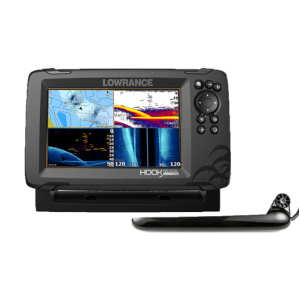
The Lowrance HOOK Reveal 7 is the value play in this roundup, and it’s not a compromise pick. Lowrance packed the HOOK Reveal with a genuinely capable sonar package — the included TripleShot transducer delivers traditional CHIRP sonar, DownScan Imaging, and SideScan Imaging in a single, compact puck that’s well-suited to kayak mounting. At its typical street price, the HOOK Reveal 7 comes in meaningfully below the Garmin Striker Vivid and the Humminbird HELIX, which leaves real money on the table for a quality battery, mounting hardware, or other kayak rigging.
The 7-inch SolarMAX display is bright and readable in direct sunlight — an area where Lowrance has made significant improvements over earlier HOOK generations. We fished full days in July with the sun at peak intensity and never had trouble reading sonar returns. Color contrast is good, though it doesn’t quite match the Vivid series’ vibrancy. The auto-brightness feature works well enough that we left it on for most of our testing rather than manually adjusting.
DownScan returns are solid. We marked brush piles, channel ledges, and submerged timber with enough detail to plan our approach before making a cast. SideScan coverage extends well to either side, and the combination of all three sonar modes on a single transducer simplifies installation considerably — you’re running one cable and mounting one puck instead of managing multiple transducers on an already space-constrained kayak hull.
The HOOK Reveal 7 supports preloaded C-MAP Genesis inland maps and offers GPS waypoint storage and route plotting. The mapping integration puts it a step ahead of the Garmin Striker Vivid in terms of out-of-the-box navigational utility, though the screen and sonar clarity give the edge to Garmin in raw fishfinding performance. For kayak anglers who fish large reservoirs or unfamiliar water regularly, having preloaded contours available from the first cast is a legitimate advantage.
Power consumption is competitive at roughly 0.7 to 1.0 amps during typical use, making it the most efficient unit in this roundup. That’s a significant point in its favor for kayak duty, where every tenth of an amp translates to extra time on the water. Build quality is solid for the price point — the unit has survived two seasons of kayak abuse in our testing rotation without any issues.
If you’re building out a pedal drive fishing kayak and need to allocate budget across electronics, rigging, and accessories, the HOOK Reveal 7 is the fish finder that gives you the most complete feature set while leaving the most room in your wallet.
Humminbird HELIX 7 CHIRP SI
Best for: Structure-oriented kayak anglers who want the most detailed side imaging available under $500.
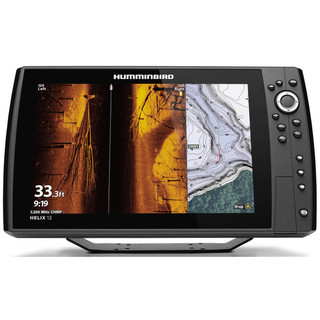
The Humminbird HELIX 7 CHIRP SI is the unit we reach for when the fishing plan revolves around finding and dissecting structure. Humminbird’s Side Imaging has been the gold standard in the fish finder world for years, and the HELIX 7 brings that legacy into a package that works genuinely well on a kayak. The SI returns on this unit are the most detailed in the sub-$500 class — we’ve marked individual rocks on a gravel transition, identified the orientation of sunken logs at 40 feet, and distinguished between hardpan and soft bottom with a confidence that none of the other units in this roundup matched.
The 7-inch display uses Humminbird’s proprietary color palettes, and while it doesn’t hit the brightness peaks of the Garmin Vivid or the Lowrance SolarMAX in harsh direct sunlight, it’s more than adequate for kayak use with a slight screen angle adjustment. The display excels in lower-light conditions and when you’re shading it with a hat brim or the natural shadow of your body — which, frankly, is how most of us end up reading our fish finders on a kayak anyway.
CHIRP sonar performance is strong. The included XNT 9 SI 180 T transducer handles traditional sonar and Down Imaging alongside the Side Imaging, giving you a complete picture of what’s below and beside you. The DualBeam PLUS sonar provides both a narrow and wide cone for traditional returns, and the CHIRP frequency sweep delivers excellent target separation. We marked suspended fish with reliable accuracy at depths to 50 feet, which covers the vast majority of kayak fishing scenarios.
GPS is built in with support for Humminbird’s LakeMaster and Navionics card-based mapping. This gives the HELIX 7 a meaningful mapping advantage over the Garmin Striker Vivid, which doesn’t support chart cards. For anglers who fish multiple lakes and want detailed, pre-built contour maps available from launch, the LakeMaster integration is a strong draw. AutoChart Live — Humminbird’s version of real-time map building — works well from a kayak and builds accurate depth contours as you paddle or pedal across the water.
The trade-off with the HELIX 7 is power draw. It’s the hungriest unit in this roundup, consistently pulling 1.1 to 1.4 amps during normal operation with all sonar modes active. Plan on a 12 Ah lithium battery for full-day fishing, or manage power by toggling off Side Imaging when you’re not actively scanning structure. The transducer is also the largest in this group, which makes mounting slightly more involved — but the side imaging returns are worth the extra effort.
If your fishing style leans heavily on finding and fishing structure — submerged timber, rock piles, channel ledges, weed edges — the HELIX 7 CHIRP SI will show you more detail about that structure than any other fish finder in this price range.
Garmin ECHOMAP UHD2 72sv
Best for: Kayak anglers who fish big water, need reliable navigation, and want the best preloaded mapping in the sub-$500 class.
The Garmin ECHOMAP UHD2 72sv is the most feature-rich unit in this roundup, and it’s the one that most closely resembles what you’d find on a full-size boat console — both in capability and in interface polish. The 7-inch display is sharp and responsive, with Garmin’s refined menu system that remains the most intuitive in the industry. If you’ve ever used a Garmin handheld GPS or automotive navigator, you’ll feel at home immediately.
Where the ECHOMAP UHD2 separates itself is mapping. It ships with preloaded LakeVu g4 inland maps covering thousands of U.S. lakes with detailed contours, and it supports additional Garmin and Navionics chart cards for even more coverage. The combination of preloaded mapping and Quickdraw Contours gives you the most complete navigational package under $500. For kayak anglers who fish large reservoirs, river systems, or unfamiliar water, having accurate contour maps available from the moment you power on eliminates the guesswork and dramatically accelerates the process of locating productive water.
The sonar package includes traditional CHIRP, ClearVu, and SideVu through the GT56UHD-TM transducer — Garmin’s Ultra High-Definition transducer that delivers a noticeable bump in clarity over the standard GT52 that ships with the Striker Vivid. The difference is most apparent in ClearVu and SideVu modes, where the UHD transducer produces tighter, more defined returns with better target separation. We ran the ECHOMAP UHD2 and the Striker Vivid side by side on the same kayak for several outings, and the UHD transducer consistently produced cleaner, more detailed imaging — particularly in deeper water beyond 20 feet.
The ECHOMAP UHD2 also supports Garmin’s ActiveCaptain app, which connects the fish finder to your phone via Wi-Fi for software updates, community-sourced waypoints, and remote display viewing. It’s a convenience feature rather than a necessity, but it’s a nice addition that the Striker series lacks.
Power draw is moderate, in the 0.9 to 1.2 amp range during typical use. The UHD transducer draws slightly more than the standard unit, but the difference is marginal and well within the capability of a 9 Ah lithium battery for a full day of fishing. The transducer is slightly larger than the GT52 but still manageable for kayak mounting.
The ECHOMAP UHD2 72sv typically sits at the top end of the sub-$500 range, and it occasionally crosses the threshold depending on the retailer. At its core, this is the unit for anglers who want a genuine chartplotter on their kayak — the kind of fish finder that does everything a boat unit does, just from a kayak seat. If big water navigation and detailed mapping are priorities alongside strong sonar performance, the ECHOMAP UHD2 is the clear choice.
Transducer Placement Guide for Kayaks
Getting the transducer right is half the battle of kayak fish finder installation. A poorly placed transducer will give you inconsistent readings, false bottom, and constant signal loss — regardless of how good your head unit is. Here’s what we’ve learned from mounting transducers on over a dozen different kayak hulls.
Scupper Hole Mounting
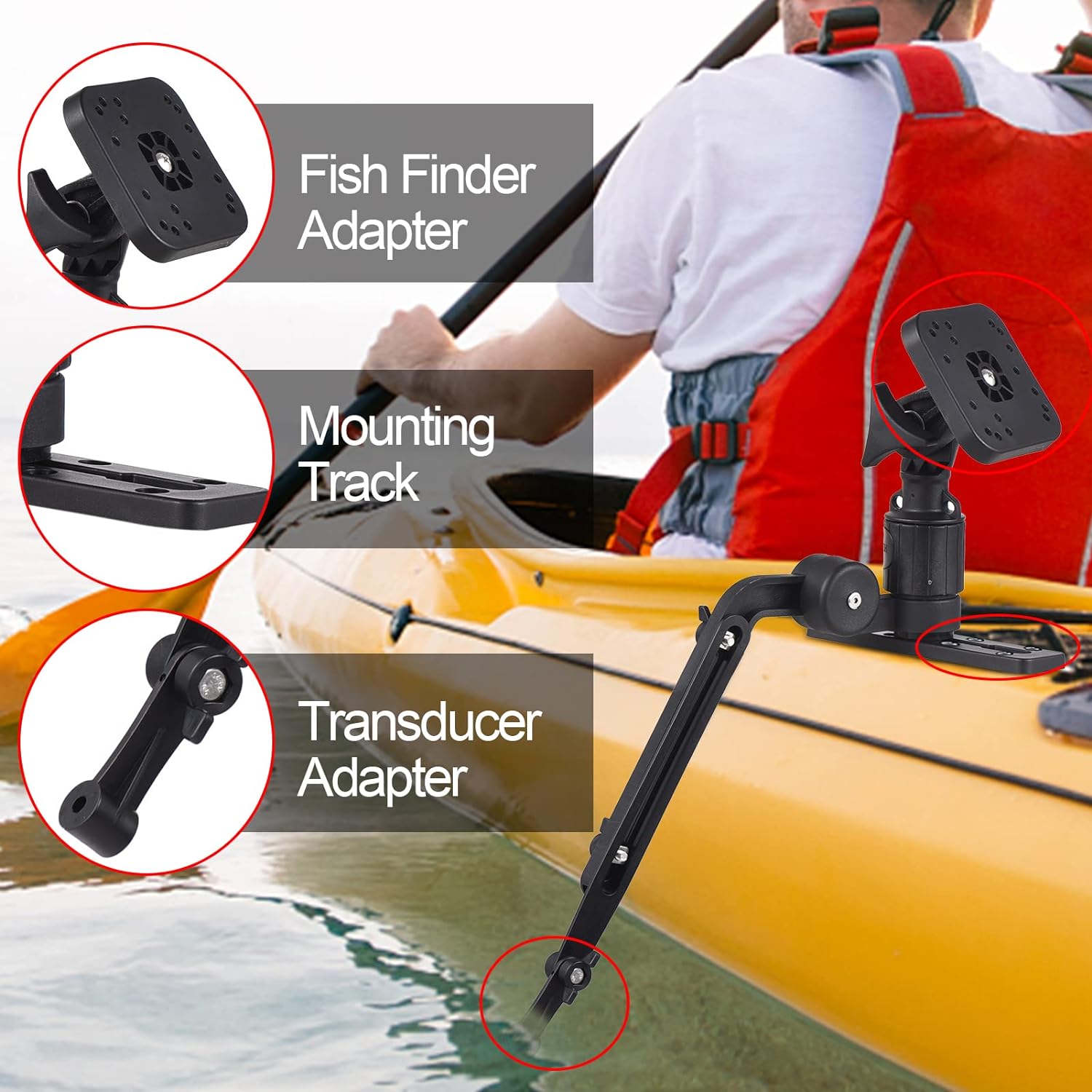
This is the most popular method for kayak anglers, and for good reason. Most sit-on-top fishing kayaks have scupper holes that accept aftermarket transducer mounts designed to position the transducer below the hull in clean water flow. The advantages are significant: no drilling, easy removal, and the transducer sits in relatively undisturbed water beneath the kayak.
The key is selecting the right scupper hole. You want a hole positioned near the center of the hull where the bottom is flattest, away from any pedal drive turbulence or paddle splash. The scupper closest to your seat is usually the best candidate. Make sure the transducer puck sits flush against the hull bottom or extends slightly below it — an angled transducer in a curved scupper will produce distorted returns.
Through-Hull (Shoot-Through) Mounting
Some anglers bond the transducer directly to the inside of the hull using epoxy or silicone, letting the sonar signal shoot through the plastic. This works surprisingly well on single-layer polyethylene hulls, which are what most fishing kayaks are made from. The advantage is a completely flush installation with nothing protruding below the hull.
The trade-off is signal loss. Shooting through the hull reduces sonar strength by roughly 10 to 20 percent depending on hull thickness and material. For traditional CHIRP, that loss is usually acceptable. For Side Imaging and Down Imaging, the signal degradation can produce noticeably softer returns compared to a direct water contact installation. We recommend shoot-through mounting only for anglers who primarily use traditional CHIRP sonar or who fish water under 30 feet deep where signal strength isn’t a limiting factor.
Arm-Mounted (Over the Side)
A transducer arm extends over the side of the kayak and positions the transducer directly in the water alongside the hull. This gives you the cleanest signal possible — direct water contact with full transducer orientation control. It’s the best option for maximizing Side Imaging performance.
The downsides are snag risk and profile. An arm-mounted transducer extends your kayak’s width and creates a potential catch point on overhanging brush, dock pilings, and other structure. It also adds a visual element that some anglers find annoying. If you fish open water and prioritize imaging quality, an arm mount is worth the trade-off. If you fish tight cover or launch through heavy vegetation, scupper mounting is more practical.
Universal Rules
Regardless of method, a few principles apply everywhere. Keep the transducer as far as possible from any propeller, pedal drive, or trolling motor turbulence. Air bubbles in the water flow are the enemy of clean sonar returns. Ensure the transducer face is level and pointing straight down (for traditional sonar and down imaging) or properly angled (for side imaging). And test your installation at multiple speeds before you commit to a permanent mount — a transducer that reads clean at rest but loses signal at pedaling speed needs to be repositioned.
Power Management: Portable Batteries for Kayak Fish Finders
The battery you choose matters almost as much as the fish finder itself. An undersized or poorly matched battery will cut your fishing day short, and an oversized one adds unnecessary weight to an already loaded kayak.
Lithium vs. Lead-Acid
We’ve switched entirely to lithium iron phosphate (LiFePO4) batteries for kayak fish finder duty, and we’d recommend you do the same. A 6 Ah lithium battery weighs roughly a pound and a half. A 7 Ah sealed lead-acid battery weighs around five pounds. That weight difference is significant on a kayak, and it’s compounded by the fact that lithium batteries maintain consistent voltage output throughout their discharge cycle — meaning your fish finder’s screen brightness and sonar performance stay constant from the first hour to the last. Lead-acid batteries experience voltage sag as they discharge, which can cause screen dimming and reduced sonar range toward the end of a long day.
Sizing Your Battery
Match your battery capacity to your fish finder’s power draw and your typical fishing duration. Take the unit’s amp draw (we’ve listed these for each fish finder above), multiply by your expected hours on the water, and add 20 percent as a buffer. For example, a unit drawing 1.0 amp on a 10-hour fishing day needs a 12 Ah battery (10 hours x 1.0 amp x 1.2 buffer = 12 Ah). Most kayak anglers land in the 6 Ah to 12 Ah range depending on their fish finder and fishing style.
Waterproofing and Placement
Your battery lives on a kayak. It will get wet. Use a waterproof battery box or a battery with an integrated waterproof housing. Position the battery low in the hull, ideally in a center hatch or tankwell where it contributes to — rather than detracts from — the kayak’s center of gravity. Secure it so it can’t shift when you’re leaning to land a fish or navigating chop. A loose battery sliding across the hull floor at the wrong moment is a stability problem you don’t need.
Charging
Charge your lithium battery after every trip. Unlike lead-acid batteries, lithium cells don’t develop memory effects, so topping off after a short outing won’t reduce capacity over time. Most lithium fish finder batteries charge fully in two to four hours with the included charger. Keep a charged spare in your vehicle for tournament days or extended outings — the peace of mind is worth the minimal cost.
What to Look For in a Kayak Fish Finder
Beyond the specific units we’ve tested, here’s a framework for evaluating any fish finder for kayak duty.
Screen Size and Brightness
For kayak fishing, 7 inches is the sweet spot. It’s large enough to read sonar returns at a glance from a low seating position, and small enough to mount without dominating your deck space. Screens smaller than 5 inches become difficult to read when you’re splitting the display between sonar views. Screens larger than 9 inches add weight and power draw that’s hard to justify on a kayak. Brightness should be at least 500 nits for readable performance in direct sunlight.
Sonar Types
Traditional CHIRP is the baseline — every unit on this list includes it, and it handles depth, fish arches, and bottom composition reliably. Down Imaging (ClearVu, DownScan) gives you a photo-like view of what’s directly below your kayak and is invaluable for identifying structure. Side Imaging (SideVu, SideScan, SI) extends your view to the sides and dramatically expands the area you can scan from a slow-moving kayak. For kayak fishing, we consider all three sonar types essential at this price point — and all four units in this roundup deliver them.
GPS and Mapping
A built-in GPS with waypoint capability transforms a fish finder from a reactive tool into a proactive one. Mark the brush pile where you caught fish, save the channel ledge transition, record the weed edge that held bass all summer. Over time, your waypoint database becomes a personal fishing map that no one else has. Preloaded inland maps (available on the ECHOMAP UHD2 and HOOK Reveal 7) give you a head start, and real-time mapping features (Quickdraw Contours, AutoChart Live) let you build custom maps as you fish.
Transducer Compatibility
Make sure the included transducer is suitable for kayak mounting — or budget for an aftermarket kayak-specific transducer kit. Compact puck transducers work best for scupper hole and through-hull installations. Transom-mount transducers designed for boats will require an adapter or arm mount to work properly on a kayak.
Power Efficiency
Compare amp draw across units before you buy. The difference between 0.7 amps and 1.4 amps is the difference between a 6 Ah battery lasting all day and needing a 12 Ah battery to achieve the same runtime. Lower power draw means a smaller, lighter, cheaper battery — which compounds into real weight and cost savings on a kayak.
Frequently Asked Questions
Can I use a fish finder on a kayak without drilling holes?
Yes. Scupper hole transducer mounts, through-hull bonding, and arm-mounted transducers all avoid drilling into the hull. For the head unit, RAM mounts using existing gear track or rail systems give you a secure, adjustable mounting point without any permanent modification. Most modern fishing kayaks come equipped with gear track specifically designed for electronics mounting. We’ve run all four units in this roundup using non-permanent installations with no issues.
Is a 5-inch fish finder good enough for kayak fishing?
A 5-inch unit will work, and it’s a valid choice if budget or deck space is your primary constraint. However, we strongly recommend a 7-inch screen for kayak fishing. The extra screen real estate makes split-screen views usable — showing traditional sonar alongside down imaging, for example — and the larger display is significantly easier to read at a glance from a reclined kayak seat. The price difference between a 5-inch and 7-inch version of the same unit is typically $50 to $100, which is money well spent.
Do I need side imaging on a kayak fish finder?
You don’t strictly need it, but we consider it highly valuable for kayak fishing specifically. A kayak moves slowly through the water compared to a boat, which actually produces better side imaging returns because the transducer has more time to build a detailed picture. From a kayak, side imaging lets you scan a wide swath of water on every pass, effectively multiplying your search area without covering more distance. For anglers who fish unfamiliar water or spend time looking for structure, side imaging pays for itself quickly.
How do I keep my fish finder dry on a kayak?
The head units themselves are waterproof to IPX7 standards across this entire roundup, meaning they can handle submersion to one meter for 30 minutes. Spray, rain, and the occasional wave are not a concern for the display. The vulnerability points are the wiring connections and the battery. Use waterproof connectors or seal standard connections with dielectric grease and heat-shrink tubing. Keep your battery in a sealed box or use a purpose-built waterproof fish finder battery with integrated connections.
What’s the single best fish finder for a kayak angler on a tight budget?
The Lowrance HOOK Reveal 7 with the TripleShot transducer. It delivers CHIRP, DownScan, and SideScan in a single transducer package with preloaded mapping, a sunlight-readable 7-inch screen, and the lowest power draw in this roundup — all at a street price that’s typically $75 to $100 below the competition. It’s the unit that gives you the fewest reasons to upgrade, which makes it the smartest money you can spend if you’re buying one fish finder and need it to do everything reasonably well from day one.
Quick Buy — Products in This Article