Pros
- HiRise elevated seat system is the most comfortable in the industry
- Exceptional primary and secondary stability for standing
- Massive 485 lb weight capacity handles any gear load
- Hull design tracks surprisingly well for a 12.5-foot kayak
- Premium build quality with UV-resistant materials
Cons
- Paddle-only — no pedal drive option available
- 82 lbs is heavy for solo loading
- Slower than longer narrower kayaks
- Limited color options compared to competitors
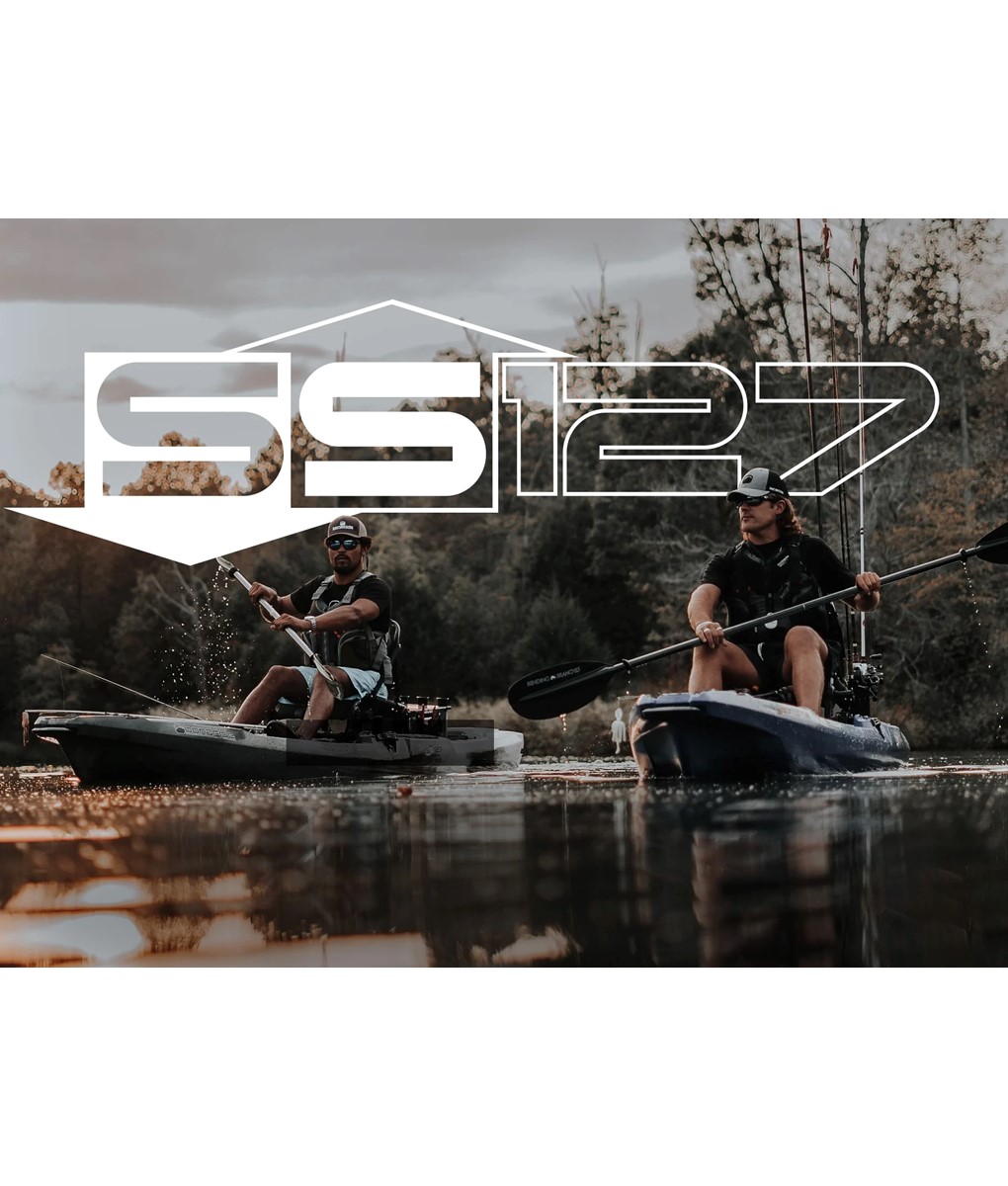
Every kayak manufacturer claims their hull is “stable enough to stand on.” We’ve tested dozens of those claims, and most of them come with an asterisk — stable in calm water, stable if you’re under 180 pounds, stable if you stand perfectly still and don’t actually try to fish. The Bonafide SS127 is the kayak that made us stop qualifying the word “stable.” We’ve spent months fishing from this hull across farm ponds, tidal flats, wind-swept reservoirs, and coastal marshes, and the conclusion is unambiguous: this is the most stable fishing kayak we’ve put on the water. Here’s our full breakdown based on our testing methodology.
Who This Kayak Is For
The SS127 is built for the dedicated sight fishing angler who spends the majority of time on their feet. If you pole skinny water for redfish, stand and pitch jigs to dock pilings, or sight-cast to cruising carp on flats, this kayak was designed around the way you fish. It’s also the right hull for larger anglers who’ve felt unstable on narrower kayaks — the 485-pound weight capacity and catamaran-inspired hull geometry accommodate bigger frames and heavier gear loads without sacrificing that locked-in feeling.
Beyond standing anglers, the SS127 is a strong choice for anyone who prioritizes all-day comfort. The HiRise elevated seat system is the best stock seat in the paddle kayak market, and it transforms full-day sessions from an endurance test into something you actually look forward to. If you’ve ever stepped off a kayak after six hours and needed ten minutes to straighten your back, the SS127 solves that problem.
Skip this kayak if: You need pedal drive propulsion (the SS127 is paddle-only with no pedal drive option — see our best pedal drive fishing kayaks roundup for those), you prioritize covering long distances quickly (longer, narrower hulls will outpace it on open water crossings), you fish alone and can’t manage an 82-pound kayak onto your vehicle (consider a lighter hull or invest in a quality loader system), or you want the absolute widest selection of hull colors (Bonafide’s color palette is more limited than competitors like Hobie or Old Town).
Key Specifications
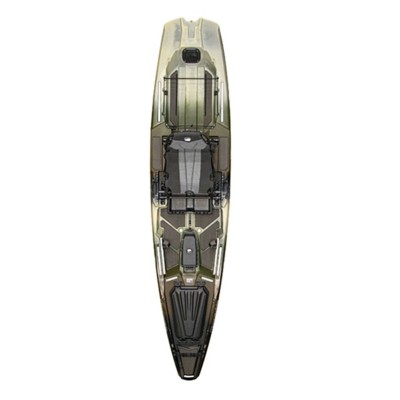
| Spec | Detail |
|---|---|
| Length | 12 ft 7 in |
| Width | 33.5 in |
| Weight (hull only) | ~82 lbs |
| Max Capacity | 485 lbs |
| Propulsion | Paddle only |
| Seat | HiRise elevated seat system |
| Hull Material | Rotomolded polyethylene (UV-resistant) |
| Hull Design | Catamaran-inspired Hybrid Cat Hull |
| Rod Holders | 4 (2 flush-mount, 2 adjustable) |
| Gear Tracks | Integrated accessory rails |
| Transducer Ready | Yes, molded transducer scupper |
| Standing Deck | Full-length, textured EVA foam |
| MSRP | ~$1,699 |
Stability and Standing: Built for Life on Your Feet
This is the SS127’s defining trait, and it’s where Bonafide made every significant design decision. The Hybrid Cat Hull — a catamaran-inspired design with twin sponsons running the length of the waterline — creates a platform that resists lateral roll with a tenacity we haven’t seen in any other sit-on-top kayak. Primary stability is immediate and absolute. The moment you sit down, the hull feels like it’s sitting on rails. Secondary stability — the resistance to tipping when you lean hard to one side — is where the SS127 separates itself from everything else in the kayak fishing market.
We tested standing stability under conditions designed to challenge the hull. Standing and casting with a full overhead motion, fighting fish that pulled us off-balance, reaching over the side to lip a bass, netting fish at arm’s length, leaning to adjust an anchor trolley — none of it produced the tipping anxiety that plagues narrower hulls. We had a 230-pound tester stand on the gunwale edge and the kayak barely acknowledged the weight shift. That’s not a party trick — it’s confidence that translates directly to more effective fishing.
The textured EVA foam standing deck runs the full length of the cockpit and provides genuine traction, even when wet. We fished in rain, stepped on the deck with wet wading boots, and stood on it after landing slimy fish — the surface grip held. EVA foam also doesn’t absorb heat the way bare polyethylene does, so you can stand barefoot on a July afternoon without cooking your feet. It’s a small detail that reflects Bonafide’s understanding of how standing anglers actually use this kayak.
The catamaran hull does introduce a characteristic that’s worth understanding. When paddling at speed, the twin-sponson design creates a slight rocking motion between the two hulls during aggressive paddle strokes. It’s not instability — the kayak never feels tippy — but it’s a different sensation than the smooth glide of a traditional V-hull or pontoon design. After a few outings, it becomes completely natural. First-timers notice it; experienced SS127 owners forget it exists.
HiRise Seat System: The Best Seat in the Paddle Kayak Market
The HiRise seat is the SS127’s second headline feature, and it’s the reason we’ve heard from anglers who bought this kayak for the seat alone and consider the hull a bonus. Bonafide designed the HiRise as an elevated, aluminum-framed throne that positions you significantly higher than any standard kayak seat. The elevated seating position does three things that collectively transform the fishing experience.
First, it gives you a higher vantage point for sight fishing. Sitting in the HiRise, your eye level is roughly 8 to 10 inches higher than a conventional kayak seat. That elevation translates to meaningfully better visibility into the water — you spot fish, structure, and depth changes earlier and from farther away. For sight fishing disciplines, that visual advantage is worth the entire price of admission.
Second, the elevated position makes getting on and off your feet dramatically easier. Standing up from a low kayak seat is an awkward, balance-testing maneuver that many anglers dread. The HiRise positions your hips high enough that standing is closer to rising from a barstool than climbing out of a bucket. The transition from seated to standing and back is fluid, fast, and stable. We went from sitting to standing dozens of times per session without once feeling like we were risking a swim.
Third, the seat is genuinely, remarkably comfortable. The aluminum frame is rigid and supportive without pressure points. The padded mesh back panel breathes on hot days and provides lumbar support that actually works across full-day sessions. We fished 8-hour days from the HiRise and got off the water without the lower-back stiffness and hip pain that most kayak seats produce after four hours. The seat reclines, adjusts vertically, and swivels — giving you a range of positions that accommodate everything from a relaxed cruising posture to an alert, forward-leaning sight-fishing stance.
The HiRise does raise your center of gravity compared to a low-mount seat, which theoretically reduces stability. In practice, the Hybrid Cat Hull is so inherently stable that the elevated seating position doesn’t introduce any meaningful compromise. We felt just as planted in the HiRise at full height as we did when we temporarily tested a low-mount aftermarket seat for comparison. The hull’s stability reserves are deep enough to absorb the elevated center of gravity without breaking a sweat.
Tracking and Speed: Better Than You’d Expect
This is where the SS127 surprises people. Catamaran-style hulls have a reputation for tracking poorly — the twin sponsons can fight each other in crosswinds and produce a zigzag course that’s exhausting to correct. Bonafide addressed this with a rudder-integrated skeg and hull geometry that channels water flow between the sponsons rather than against them. The result is a kayak that tracks genuinely well for its hull type and length.
On calm water, the SS127 holds a straight line with minimal paddle correction. On reservoirs with moderate crosswinds (10 to 12 mph sustained), we maintained a trolling course without the constant sweeping correction strokes that some catamaran hulls demand. The rudder system is controlled by a simple hand lever at the seat and engages cleanly. We left it deployed for open-water crossings and retracted it in shallow or structured water where it might snag.
Speed is where the SS127 makes an honest tradeoff. At 12 feet 7 inches and 33.5 inches wide with a catamaran hull profile, this kayak is not built to cover water quickly. Comfortable cruising speed sits around 3 mph with a relaxed paddle cadence. Pushing hard, we sustained about 4 mph in calm conditions for short bursts. Longer, narrower hulls — a 14-foot touring-style fishing kayak, for example — will cruise a full mile per hour faster with the same effort. Pedal drive kayaks like the Hobie Mirage Pro Angler 14 add sustained hands-free propulsion that the SS127 simply can’t match.
If your fishing involves long open-water crossings to reach your spots, the SS127 will get you there — it’ll just take longer. If your fishing involves launching near your target water and spending the day working a shoreline, flat, or series of structure points within a mile or two, the speed limitation is irrelevant. Most standing-focused anglers fall into the second category, which is exactly who Bonafide designed this kayak for.
Storage and Rigging: Enough for a Full Day
The SS127’s storage layout is practical and well-organized, designed around the assumption that you’re spending a single day on the water with a focused tackle selection — not hauling a week’s worth of gear to a remote campsite.
The bow hatch opens to a sealed dry storage compartment that accommodates a tackle tray, rain gear, wallet, phone, and personal items. It’s not cavernous, but it’s properly sealed and keeps your gear dry in chop and rain. The hatch cover fits flush and doesn’t rattle or pop open — a minor quality detail that distinguishes premium kayaks from cheap ones.
The rear tankwell is generously sized for a 12.5-foot kayak and fits a standard kayak crate with room for a cooler bag alongside it. Bungee tie-downs secure your load, and integrated gear track rails on both sides of the tankwell accept aftermarket rod holders, camera mounts, and accessory arms. We ran a milk crate organizer with tackle trays, a fish finder battery, a small soft cooler, and a catch bag — everything fit without stacking or compromising access.
The kayak ships with four rod holders — two flush-mount behind the seat and two adjustable-angle holders accessible from the cockpit. For most paddle anglers, four positions cover a trolling spread and a rigged backup. If you need more, the gear tracks accommodate additional aftermarket holders. We added two YakAttack Omega rod holders during testing and found six positions to be more than sufficient.
The molded transducer scupper allows clean through-hull fish finder installation without aftermarket brackets or adhesive mounts. The scupper is positioned for optimal transducer performance and keeps your wiring below deck and out of the way. It’s a purpose-built feature that signals Bonafide built this kayak for serious anglers who run electronics, not weekend paddlers who might add a fish finder someday. For help choosing the right unit, see our guide to the best fish finders for kayak fishing.
Build Quality: Premium Construction That Lasts
Bonafide builds the SS127 with UV-resistant, single-piece rotomolded polyethylene that’s noticeably thicker and stiffer than many competitors in this price range. We ran our hands along the hull seams, hatch fittings, and hardware mounting points — everything is tight, clean, and properly finished. There are no rough edges, no visible manufacturing defects, and no flex in areas that should be rigid.
The hardware — stainless steel bolts, aluminum seat frame, composite hatch covers — is a step above what you typically find on kayaks under $2,000. The HiRise seat frame in particular feels overbuilt, with thick-gauge aluminum tubing and reinforced pivot points. After months of use, including repeated folding and unfolding for transport, the seat mechanism still operates smoothly with zero play or wobble.
UV resistance matters for a kayak that spends time on the water and in direct sun. Bonafide’s polyethylene formulation resists the fading and brittleness that sun exposure produces in lesser plastics. We’ve seen two-year-old SS127s on the used market that look nearly new — a testament to the material quality and a factor that supports resale value.
The scupper plugs, drain fittings, and hatch gaskets all seal properly and show no degradation after months of saltwater and freshwater use. It’s the kind of build quality that makes you confident the kayak will perform identically on year five as it does on day one.
The Benchmark Score Breakdown
We evaluate every kayak against our standardized scoring methodology. Here’s how the Bonafide SS127 breaks down:
- Stability: 10/10 — The best standing platform in the kayak fishing market. The Hybrid Cat Hull is unmatched for anglers who fish on their feet.
- Seat & Comfort: 10/10 — The HiRise is the best stock seat in any paddle fishing kayak. Full-day comfort without compromise.
- Tracking & Speed: 7/10 — Tracks well for a catamaran hull, but speed is an honest tradeoff against stability. Slower than longer, narrower kayaks.
- Storage & Rigging: 7.5/10 — Practical layout for day trips with smart rigging details. Doesn’t match the sheer volume of 14-foot hulls.
- Build Quality: 9/10 — Premium construction, UV-resistant materials, overbuilt hardware. Strong resale value reflects durability.
- Portability: 7/10 — At 82 pounds, it’s lighter than pedal kayaks but still a challenge for solo loading. Manageable with a quality cart and roof rack system.
- Value: 8.5/10 — At roughly $1,699, you’re getting a premium standing platform with the best seat in the industry — at less than half the price of flagship pedal kayaks. Exceptional dollar-for-dollar return if your fishing style aligns with the SS127’s strengths.
Overall: 8.1/10
How It Compares
The SS127 occupies a specific niche in the kayak fishing market — the ultra-stable, paddle-powered standing platform. Two kayaks come up in every comparison conversation, and both approach the same water from a fundamentally different direction. For a broader look at the category, see our best pedal drive fishing kayaks roundup.
vs. Hobie Mirage Pro Angler 14
The Pro Angler 14 is the flagship of the kayak fishing world, and the comparison reveals what each design philosophy prioritizes.
Stability: Both kayaks offer exceptional standing stability, and this is closer than you might expect. The Pro Angler 14 is wider at 36 inches and uses its massive beam to create a planted platform. The SS127 is narrower at 33.5 inches but uses the Hybrid Cat Hull to achieve a comparable level of standing confidence at a fraction of the width. We’d give the Pro Angler a slight edge in extreme lean stability, but the SS127 holds its own in every realistic fishing scenario.
Propulsion: The Pro Angler wins this decisively. The MirageDrive 360 is the most capable pedal system on the water, offering 360-degree directional control that no paddle kayak can replicate. If hands-free propulsion matters to your fishing style, the SS127 isn’t in the conversation — it’s paddle-only.
Comfort: The HiRise seat is genuinely competitive with the Hobie Vantage ST, and we’d call this a draw with different strengths. The HiRise offers a higher seating position and easier stand-up transitions. The Vantage ST offers a more refined recline adjustment and integrated swivel. Both are all-day-comfortable seats that eliminate the back pain problem.
Price: The SS127 at roughly $1,699 costs less than half the Pro Angler 14’s $4,799 MSRP. That’s a $3,100 difference that buys a premium fish finder, a full tackle loadout, and a quality kayak cart with money left over. If you don’t need pedal drive, the SS127’s value proposition is hard to argue against.
vs. Old Town Sportsman 120 PDL
The Sportsman 120 is the mid-range pedal drive option that offers a different set of compromises.
Standing stability: The SS127 wins this clearly. The Hybrid Cat Hull provides a measurably more stable standing platform than the Sportsman 120’s conventional hull. If standing is your primary fishing position, the SS127 is the superior choice.
Propulsion: The Sportsman 120 wins with its PDL Drive system offering reliable pedal propulsion with forward and reverse. Hands-free movement while fishing is a genuine operational advantage that paddle kayaks can’t match. The SS127 requires you to put down your rod and pick up a paddle every time you need to reposition.
Technology: The Sportsman 120, particularly in AutoPilot trim, offers GPS Spot-Lock positioning that’s a category apart from anything a paddle kayak provides. If you fish wind and current regularly, that technology changes how you fish.
Price and simplicity: The SS127 wins on both counts. At $1,699 versus the Sportsman 120 PDL’s higher price point, the SS127 is more affordable. It’s also mechanically simpler — no drive system to maintain, no propeller to damage in shallow water, no mechanical parts to fail on the water. A paddle kayak is a paddle kayak, and that simplicity has genuine value for anglers who don’t want to think about drive maintenance or battery management.
Frequently Asked Questions
Is the Bonafide SS127 stable enough to stand and fish all day?
Yes — and that’s not a qualified answer. The SS127 is the most stable stand-up fishing platform we’ve tested. The Hybrid Cat Hull creates a foundation that resists lateral roll so effectively that standing becomes your default fishing position rather than an occasional luxury. We fished entire 6- to 8-hour sessions standing with only brief sit-downs to paddle between spots. Anglers up to 250 pounds have reported comfortable, confident standing on this hull. If standing is the reason you’re shopping for a kayak, the SS127 is the answer. The HiRise seat makes the sit-to-stand transition effortless, which means you’ll actually use the standing capability instead of staying seated because getting up feels risky.
Can I add a pedal drive to the Bonafide SS127?
No. The SS127 is designed exclusively as a paddle kayak, and there is no factory or aftermarket pedal drive option available. The Hybrid Cat Hull geometry and cockpit layout are not compatible with standard pedal drive installations. This is a deliberate design choice — Bonafide optimized every aspect of this hull for standing stability and the HiRise seat system, and accommodating a pedal drive would have required design compromises that work against those priorities. If pedal drive is a requirement, see our best pedal drive fishing kayaks guide for the top options. If you’re willing to trade propulsion convenience for the best standing platform available, the SS127 is worth that tradeoff.
How does the SS127 handle in wind and waves?
The SS127 handles moderate wind and chop with composure that reflects its stability-first design. We tested it in sustained 12 to 15 mph winds on open reservoirs and in 1- to 2-foot wind-driven chop in coastal bays. The catamaran hull stays planted and doesn’t produce the rolling motion that makes narrower kayaks feel sketchy in rough conditions. Wind drift is noticeable — the wide beam catches crosswinds, and without a pedal drive to hold position, you’ll be making correction strokes. An anchor or stake-out pole is essential gear for the SS127 in windy conditions. The rudder helps maintain course during crosswind paddling, but plan on working harder than a pedal kayak angler to hold your position. The hull itself never felt unsafe in conditions up to 2-foot chop — the stability reserves are deep enough that rough water is a comfort issue, not a safety issue.
Is 82 pounds too heavy for solo kayak fishing?
It depends on your loading setup and physical capability. At 82 pounds, the SS127 is lighter than every major pedal drive kayak on the market — the Hobie Pro Angler 14 weighs 120+ pounds, and the Old Town Sportsman 120 comes in around 104 pounds. But 82 pounds is still a meaningful load to lift onto a roof rack or truck bed, especially after a long day on the water. Most solo SS127 owners use one of two systems: a truck bed or SUV cargo area with a tailgate pad and slide-in loading, or a J-cradle roof rack paired with a roller-style loader that lets you feed the kayak onto the rack from the rear of the vehicle. A quality kayak cart handles the ramp-to-parking-lot segment. Test your entire loading workflow before your first trip — ideally when you’re fresh and when you’re tired, because the after-fishing load-up is always the harder one.
What accessories should I add to the Bonafide SS127 first?
Start with the gear that fills the SS127’s only real gap — positioning. A quality anchor trolley system lets you deploy a shallow-water anchor or stake-out pole from any point along the hull, which gives you the position-holding capability that pedal drive kayaks handle through propulsion. A stake-out pole is essential for flats and shallow-water sight fishing — it’s the paddle kayak angler’s version of Spot-Lock. After positioning gear, a fish finder mounted to the gear tracks using a RAM or YakAttack system transforms your fishing intelligence. The molded transducer scupper makes installation clean and straightforward. A quality paddle is worth the investment on a paddle-only kayak — upgrading from the heavy aluminum paddle many anglers start with to a lightweight carbon or fiberglass shaft reduces fatigue across a full day. Finally, a kayak cart is non-negotiable for getting 82 pounds from the parking lot to the water without destroying your back before you’ve made a single cast.