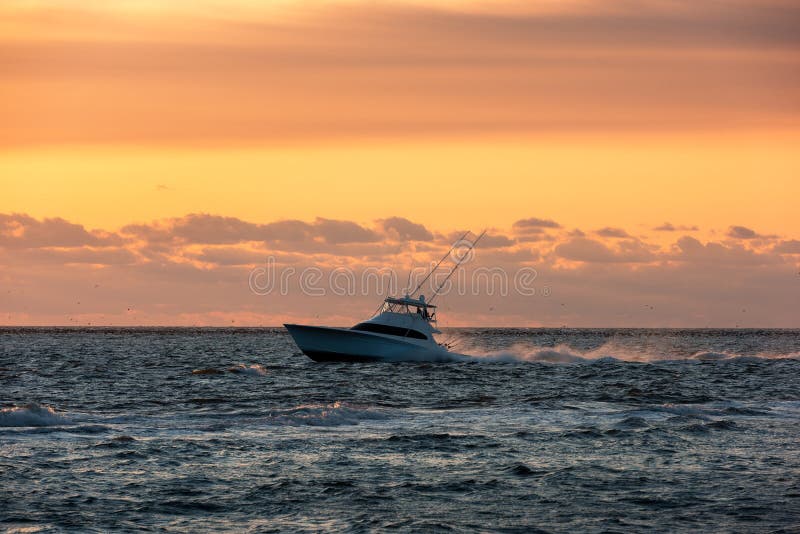
There’s a moment on every offshore trip that hooks you for life. The diesel engines settle into a low rumble, the shoreline shrinks behind you, and the water beneath the hull shifts from murky green to a deep, electric blue. You’re out here now — miles from land, rigged up, scanning the horizon for birds, weed lines, and the kind of chaos that means something big is eating below the surface.
Offshore fishing is the deep end of the sport in every sense. The fish are bigger, the gear is heavier, the stakes are higher, and the rewards are unlike anything inshore or freshwater can deliver. A yellowfin tuna screaming drag at thirty knots, a bull dolphin lighting up in neon greens and golds beside the boat, a blue marlin erupting behind the spread — these are moments that rewire your brain and ruin you for bass fishing forever.
If you’ve been wanting to try offshore fishing but feel overwhelmed by the logistics, the unfamiliar gear, or the sheer scale of it all, we wrote this guide for you. We’ve spent years running offshore out of ports up and down the coast, and the honest truth is that getting started is far more accessible than most people assume. You don’t need your own boat. You don’t need to mortgage anything. You need the right information, the right expectations, and the willingness to get out past the breakers.
This guide covers everything a beginner needs to know — from booking your first trip to understanding what happens when a 50-pound tuna tries to pull you overboard. For a broader look at our saltwater coverage, check out our full offshore fishing hub where we review gear and break down strategies across species and regions. If you’re weighing offshore against bottom fishing and wreck trips, our deep sea fishing beginner’s guide covers that side of the equation.
Charter Boat vs. Private Boat: Where Beginners Should Start
Let’s address the biggest barrier first: you do not need to own a boat to go offshore fishing. In fact, we strongly recommend that beginners start on charter boats. A charter handles navigation, safety equipment, tackle, bait, fish cleaning, and — most importantly — puts you on fish. The captain and mate have thousands of hours on the water and know exactly where to go based on current conditions, water temperature breaks, and recent bite reports.
Types of Charters
Half-day charters typically run four to six hours and stay closer to shore, targeting species on nearshore structure, wrecks, and reefs. These are a solid introduction to saltwater fishing but generally don’t push far enough offshore to reach blue water pelagics like tuna and marlin.
Full-day charters run eight to twelve hours and are the standard for true offshore fishing. This gives the captain enough time to make a proper run to productive water, troll for several hours, and get you back to the dock. For your first offshore experience, a full-day trip is what we recommend.
Multi-day trips are available from certain ports — particularly those where blue water is 60 or more miles offshore. These trips run 24 to 72 hours, fish through the night, and target species at distant structure like canyons, seamounts, and the continental shelf edge. They’re incredible experiences, but save them until you have a few day trips under your belt.
Private Charters vs. Head Boats
A private charter books the entire boat for your group, typically accommodating four to six anglers. You get personalized attention from the captain and mate, flexibility on where you fish and what you target, and a more comfortable experience overall. Expect to pay $1,200 to $3,000 or more depending on the port, the boat, and the trip length.
A head boat (also called a party boat) sells individual tickets and packs more anglers on a larger vessel. These are significantly cheaper per person — often $100 to $250 for a full day — but you’re sharing the boat with strangers, fighting for rail space, and the captain is making decisions for the group rather than tailoring the trip to you. Head boats are better for bottom fishing than trolling, so for a true offshore trolling experience, a private charter is the way to go.
Essential Gear: What the Charter Provides vs. What You Bring
One of the biggest advantages of starting on a charter is that the heavy-duty gear is included. The boat supplies rods, reels, terminal tackle, live bait, and the trolling spread. You don’t need to show up with a $600 reel or a spool of 80-pound braid. That said, there are personal items that make the difference between a great day and a miserable one.
What the Charter Provides
- Rods and reels sized appropriately for target species (typically 30- to 80-pound class conventional setups)
- Terminal tackle — hooks, leaders, swivels, weights, and crimps
- Trolling lures, skirted baits, and rigged ballyhoo
- Live bait (when applicable — varies by region and target)
- Fighting belts and harnesses for big game
- Fish cleaning and bagging at the dock
- Safety equipment — life jackets, flares, radio, first aid, and EPIRB
What You Should Bring
- Polarized sunglasses — essential, not optional. They cut surface glare so you can spot fish, weed lines, and floating debris. Spend at least $30 on a pair with quality polarization.
- Sun protection — long-sleeve performance shirt (UPF-rated), a wide-brim hat or buff, and reef-safe sunscreen. You will burn offshore. The combination of direct sun, reflected light off the water, and wind that masks the heat is brutal.
- Non-marking, non-slip shoes — most charters require soft-soled shoes. Boat decks get wet and bloody. Flip-flops are a broken toe waiting to happen.
- Seasickness prevention — take it seriously. Even experienced boaters get sick offshore. Dramamine, Bonine, or a prescription scopolamine patch applied the night before is cheap insurance. We cover this in detail in the safety section below.
- Rain jacket or windbreaker — weather changes fast offshore. A 20-minute squall can drop the temperature 15 degrees.
- Small cooler with food and water — some charters provide drinks and snacks, many don’t. Staying hydrated is critical. Bring more water than you think you need.
- Cash for gratuity — standard tipping for charter mates is 15 to 20 percent of the trip cost, split among the crew.
If you plan to make offshore fishing a regular pursuit and want to start building your own tackle, our best offshore trolling reels guide breaks down the options across price points and target species.
Understanding the Trolling Spread
Trolling is the primary technique in offshore fishing, and understanding the basics of how a spread works makes you a more engaged and useful angler on the boat. A trolling spread is the arrangement of lines, lures, and baits dragged behind a moving boat at speeds typically between 6 and 12 knots.
The Basics of a Spread
A standard trolling spread runs between four and eight lines at varying distances and depths behind the boat. The goal is to create the illusion of a school of baitfish being chased — a pattern that triggers predatory instinct in pelagic species. The spread typically includes:
- Flat lines — run directly from rod holders at the stern, relatively close to the boat. These are the shortest lines in the spread and often the first to get bit because predators attacking from behind converge on these positions first.
- Outrigger lines — run from outrigger poles that extend from each side of the boat, creating a wider spread and placing baits or lures farther from the hull’s wake disturbance. These lines enter the water at a wider angle, covering more lateral ground.
- Shotgun line — a single line run far back from the center of the transom, sometimes 150 to 300 feet behind the boat. This picks up fish that follow the spread from a distance before committing.
- Dredge or teaser — a hookless attractant (often a daisy chain of artificial squids or mullet) run beneath the surface to add visual mass to the spread. Dredges don’t catch fish directly — they pull curious predators into the strike zone where the hooked baits are waiting.
What’s on the Lines
Offshore trolling uses a mix of artificial lures (hard-headed skirted lures that create bubble trails and erratic action) and natural baits (typically ballyhoo, mullet, or squid rigged with hooks and often combined with a colored skirt). Natural baits are deadly effective on species like white marlin, sailfish, and dolphin. Artificials excel for tuna and are built to withstand high trolling speeds.
The captain and mate handle setting and adjusting the spread. Your job as a beginner is to understand the positions, keep your eyes on the baits you can see, and be ready to move when a fish shows up. Many strikes happen in the blink of an eye — a clean rigger line snaps out of the clip, the reel screams, and the mate is yelling at you to grab the rod.
Key Species and What to Expect
Part of what makes offshore fishing so addictive is the variety. On a single trip, you might encounter multiple species that fight completely differently and require different techniques. Here’s what you’re likely to see as a beginner in most offshore fisheries.
Yellowfin and Blackfin Tuna
Tuna are the workhorse of offshore fishing. Yellowfin tuna range from 15-pound footballs to 200-pound-plus giants, and they fight with a relentless, deep-pulling power that tests every piece of tackle in the chain. They don’t jump — they just pull. Hard. Straight down. For minutes that feel like hours. Blackfin tuna are smaller (typically 10 to 30 pounds) but abundant and great fun on lighter tackle.
Tuna respond to both trolled artificials and live bait. When you find them feeding on the surface — a scene called a “tuna bust” — it’s controlled chaos. The mate will pitch live baits into the frenzy while the captain positions the boat, and the bite can be instantaneous.
Mahi-Mahi (Dolphin)
Mahi-mahi are the most visually spectacular fish in the ocean. Their colors — electric blue, green, and gold — are genuinely shocking the first time you see one boatside. They’re aggressive, acrobatic, and relatively willing biters, making them the perfect offshore target for beginners. Mahi congregate around floating structure — weed lines, debris, floating pallets, and buoys — so finding structure is finding fish.
A good dolphin bite can produce fast action, with multiple fish in the spread at once. They average 5 to 20 pounds, with bulls commonly reaching 30 to 50 pounds. The meat is outstanding, which makes them a satisfying catch to bring home.
Wahoo
Wahoo are the speedsters. They hit a trolled lure at speeds approaching 60 miles per hour, and the initial strike is a violent, arm-jarring event that gives you about two seconds to process what happened before you’re holding on for the ride. Wahoo are long, streamlined, and equipped with razor-sharp teeth that will cut through monofilament leader like it isn’t there — which is why you’ll see wire leader on wahoo rigs.
They’re less common than tuna or dolphin as a targeted species on beginner trips, but they show up in trolling spreads regularly and are one of the best-eating fish in the ocean.
Blue Marlin and White Marlin
Billfish are the apex of offshore fishing. A blue marlin can exceed 1,000 pounds and will fight for hours. Even an average blue in the 200- to 400-pound range is a life-altering experience on rod and reel. White marlin are smaller (50 to 80 pounds) but highly acrobatic, throwing themselves into the air repeatedly.
Most billfish caught on recreational charters are released. The mate will leader the fish boatside, the captain will certify the catch if you’re fishing a tournament, and the fish goes back. Catching a marlin on your first offshore trip is unlikely but not impossible — and when one shows up behind the spread, you’ll understand why people spend lifetimes chasing them.
Sailfish
Sailfish are the most accessible billfish for beginners. They’re common in certain fisheries (particularly South Florida, the Gulf Stream, Guatemala, and Costa Rica), they eat both trolled and live baits willingly, and they put on an aerial display that rivals any fish on the planet. A lit-up sailfish, dorsal fin fully erect and body glowing purple and blue, tail-walking across the surface is the kind of thing you remember forever.
Most sailfish are caught and released using circle hooks that facilitate clean, jaw-corner hookups.
Fighting a Big Fish: Stand-Up vs. Chair Technique
When a serious fish eats — a tuna over 50 pounds, a wahoo screaming drag, a marlin behind the spread — you need to understand how the fight works. The mate will guide you through it, but knowing the basics ahead of time makes you more effective and less likely to lose the fish.
Stand-Up Fighting
For most species and most charter situations, you’ll fight the fish standing up. The rod goes into a gimbal belt (a belt with a cup that the rod butt seats into, transferring the load to your hips and legs rather than your arms and lower back). On heavier setups, you’ll also wear a fighting harness — a vest or kidney-style harness with clips that attach to the reel, letting you use your entire back and legs to lift the rod rather than relying on arm strength alone.
The basic technique is pump and reel. Lift the rod tip smoothly (the pump) to gain line, then reel fast as you drop the tip back down to take up the slack. Repeat. Never reel against the drag — if the fish is running and pulling drag, let it run. You reel when the fish stops or turns. Trying to reel while the fish is pulling just twists your line and wears out the drag washers.
Keep your knees slightly bent, your elbows close to your body, and your back straight. The fight is a full-body effort. A 50-pound tuna on stand-up gear will tell you exactly how fit you are.
Fighting Chair
For very large fish — big blue marlin, giant bluefin tuna, large sharks — the charter may put you in a fighting chair. This is a pedestal-mounted, swiveling chair bolted to the deck with a foot plate, rod gimbal, and harness attachment points. The chair lets you use your legs to push against the foot plate while pulling back on the rod, providing mechanical advantage that makes it physically possible to fight fish that would otherwise pull you overboard.
Fighting from the chair is a learned skill. The mate will coach you through rod angles, drag settings, and the rhythm of the fight. Listen to everything they say — they’ve done this thousands of times.
Weather, Seasickness, and Safety
Offshore fishing takes you far from shore in a relatively small vessel. Respecting weather and understanding the safety equation is non-negotiable.
Reading the Forecast
Before any offshore trip, the captain will evaluate marine forecasts for wind speed, wave height, wave period, and thunderstorm probability. As a general rule, seas of 2 to 3 feet with a long period (8 to 10 seconds between waves) make for a comfortable ride. Seas of 4 to 6 feet are fishable but rough for beginners. Anything above 6 feet, and most captains will cancel or postpone.
Wave period matters as much as wave height. Three-foot seas with a 5-second period (short, choppy waves stacking up quickly) are far more miserable than 4-foot seas with a 10-second period (long, rolling swells that the boat rides over smoothly). When booking your trip, ask the captain about conditions rather than making the call yourself from a forecast app.
Dealing with Seasickness
Seasickness is the number one trip-killer for offshore beginners, and no amount of toughness makes you immune. It’s a physiological response to conflicting sensory inputs between your inner ear, eyes, and proprioceptive system — and it hits experienced sailors and first-timers alike.
Prevention is the only strategy. Once you’re actively sick, there’s no recovery on the water. Here’s what works:
- Scopolamine patches (prescription) — applied behind the ear the night before, effective for up to 72 hours. This is the gold standard for offshore seasickness prevention.
- Meclizine (Bonine) or Dimenhydrinate (Dramamine) — over-the-counter options taken the night before and morning of. The non-drowsy formulations are preferred.
- Stay on deck, watch the horizon, and stay near the center of the boat where motion is minimized.
- Avoid alcohol the night before, eat a light breakfast, and stay hydrated.
- Ginger supplements or ginger chews provide mild relief for some people and can complement medication.
If you know you’re susceptible to motion sickness, use the scopolamine patch. It works. Don’t gamble with a $2,000 charter day.
Safety Equipment and Protocol
Reputable charters carry all required USCG safety equipment — life jackets, fire extinguishers, flares, VHF radio, EPIRB (emergency position-indicating radio beacon), and a first aid kit. Before departure, the captain or mate should give a brief safety orientation covering life jacket locations, man-overboard procedure, and basic emergency protocols. If they don’t volunteer this information, ask.
Stay aware of your surroundings on the boat. Trolling involves hooks, heavy lines under tension, and fast-moving mechanical equipment (outrigger releases, reel drags, gaffs). Keep your hands clear of running line, watch where you step, and listen to the crew at all times.
Cost Breakdown: What Offshore Fishing Actually Costs
Transparency on costs helps you plan without surprises. Here’s a realistic breakdown of what a beginner offshore trip costs in most U.S. ports.
Charter Rates
| Trip Type | Typical Cost (Private Charter) | Cost Per Person (4 anglers) |
|---|---|---|
| Half-day (4-6 hrs, nearshore) | $800 – $1,500 | $200 – $375 |
| Full-day (8-12 hrs, offshore) | $1,500 – $3,000 | $375 – $750 |
| Overnight / multi-day | $3,000 – $6,000+ | $750 – $1,500+ |
Head boat rates are significantly lower — typically $100 to $250 per person for a full day — but as noted above, the experience is different.
Additional Costs to Budget
- Gratuity for the mate(s): 15 to 20 percent of the charter cost is standard. If the mate worked hard, kept the lines tight, gaffed your fish, and cleaned your catch, tip accordingly. On a $2,000 charter, that’s $300 to $400 split among the crew.
- Food and drinks: $20 to $50 per person if you’re packing your own cooler. Some charters include provisions; ask when booking.
- Fishing license: Required in most states even on a charter. Costs vary — typically $10 to $30 for a short-term saltwater license. Some charters cover this with a vessel license; confirm ahead of time.
- Fish processing: If you want your catch vacuum-sealed and filleted beyond basic dock cleaning, some marinas charge $1 to $2 per pound.
- Personal gear: Polarized sunglasses, sun-protective clothing, rain gear, and seasickness medication. Budget $75 to $150 if you’re starting from scratch.
A realistic all-in budget for a first offshore charter experience with three friends is $2,500 to $4,000 total, or $625 to $1,000 per person for a full-day private charter including tip, food, and license. That’s the cost of a weekend ski trip — and the memories are just as permanent.
Best Offshore Fishing Destinations for Beginners
The right port makes a first offshore trip dramatically easier. Look for destinations where blue water is close to shore (shorter runs mean less time on a rough ocean and more time fishing), the charter fleet is well-established, and the species diversity keeps things interesting even on slow days.
- Venice, Louisiana — arguably the best offshore fishing in the continental U.S. Blue water is relatively close, the yellowfin tuna fishery is world-class, and the charter fleet is enormous. Mahi, wahoo, marlin, and swordfish round out a stacked target list.
- Islamorada and Key West, Florida — the Gulf Stream runs close to the Keys, putting sailfish, mahi, blackfin tuna, and wahoo within a short run. The sailfish bite in winter is legendary.
- Outer Banks, North Carolina — the Gulf Stream pushes close to shore near Hatteras, creating an accessible blue-water fishery for yellowfin and bluefin tuna, mahi, wahoo, and blue marlin. The charter fleet out of Oregon Inlet and Hatteras is experienced and beginner-friendly.
- San Diego, California — the long-range sportfishing fleet out of San Diego is a unique offshore experience. Multi-day trips run south to Mexican waters targeting yellowfin tuna, yellowtail, dorado, and wahoo on a large vessel with bunks and galley service.
- Kona, Hawaii — the Kona coast drops into ultra-deep water within a mile of shore, meaning glassy-calm conditions and blue marlin are available on a half-day trip. It’s one of the few places where a beginner can realistically encounter a marlin without enduring a brutal ocean crossing.
- Costa Rica (Quepos, Los Suenos) — if you’re open to international travel, Costa Rica’s Pacific coast offers the most consistent sailfish and marlin bite on the planet, with mahi and tuna as a bonus. Charter infrastructure is excellent and caters heavily to visiting anglers.
Frequently Asked Questions
How far offshore do you have to go to find blue water?
It depends entirely on geography and ocean currents. In the Florida Keys and Kona, blue water can be within 3 to 5 miles of the dock. Off the mid-Atlantic coast, it’s typically 40 to 70 miles. Off Louisiana, productive blue water starts around 20 to 40 miles out. This is why destination choice matters — a shorter run means more fishing time and a more comfortable ride for beginners. Your captain will know exactly where the productive water starts based on current satellite imagery and water temperature data.
Do I need previous fishing experience to go on an offshore charter?
No. Reputable charter captains and mates deal with complete beginners regularly. The crew will handle the gear, set the spread, put you on the rod when a fish bites, and coach you through the fight. Having some basic fishing knowledge helps, but it’s genuinely not required. What matters more is being in reasonable physical condition (fighting big fish is athletic), being willing to listen to instructions, and having a positive attitude when the bite is slow.
What should I do if I get seasick on the boat?
If prevention failed and you’re actively nauseous, get to the downwind rail (the lee side) so the wind is at your back, focus on the horizon, and let it happen if it needs to happen. There’s no shame in it — professional anglers get seasick. Stay hydrated, avoid going below deck where the motion is amplified, and don’t look at your phone or anything close-up. Most people feel better after getting sick once. The crew has seen it a thousand times and will not judge you. For future trips, upgrade your prevention strategy as outlined in the safety section above.
Can I keep the fish I catch on a charter?
On most charters, yes — you keep what you catch within legal limits. The mate will fillet and bag your catch at the dock. Billfish (marlin and sailfish) are almost always released unless they’re being weighed for a tournament record or are already dead from the fight. Tuna, mahi, wahoo, and other pelagic species are excellent table fare and perfectly appropriate to keep within regulations. Ask your captain about bag limits and size minimums for your region before the trip so you know what to expect.
When is the best time of year to go offshore fishing?
Peak offshore seasons vary by region. In the Gulf of Mexico and Southeast U.S., summer and early fall (June through October) are prime for tuna, mahi, and marlin. The Florida Keys sailfish bite peaks in winter (November through March). The Outer Banks blue marlin bite fires in June and July. California’s long-range season runs strongest from August through November. The common thread is water temperature — pelagic species follow warm water, so the offshore season in any given port generally aligns with when warm currents push closest to shore. Your charter captain can advise on the best window for your target species.
Offshore fishing rewards preparation, patience, and the willingness to step outside your comfort zone. The learning curve is part of the appeal — every trip teaches you something, every species fights differently, and the ocean never delivers the same day twice. Book a charter, trust the crew, stay humble, and pay attention. The fish will come. To learn more about how we evaluate offshore gear and where these recommendations come from, visit our methodology page.