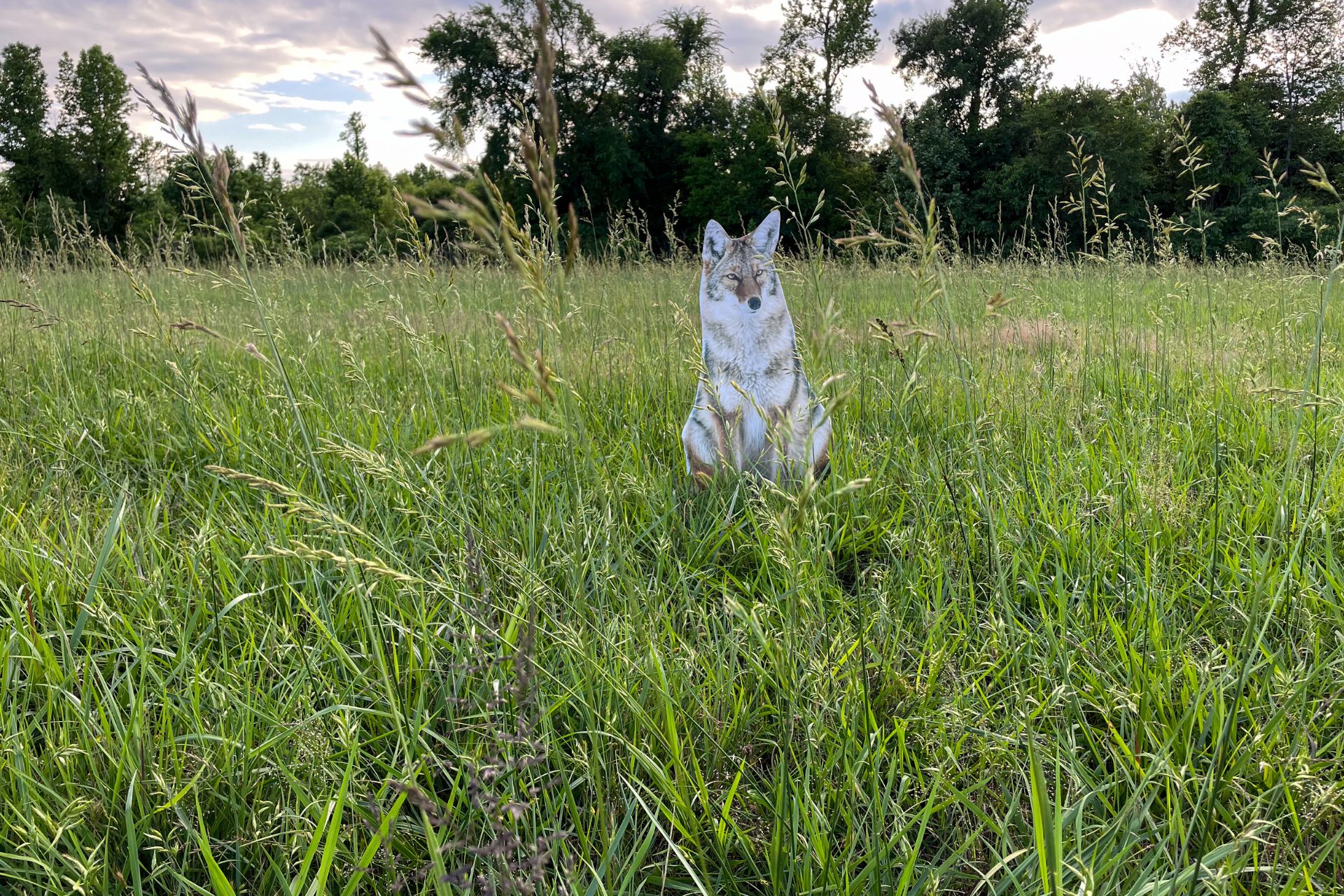
Predator hunting has a gear problem. Scroll through any forum or watch five minutes of YouTube content and you will walk away believing you need a $4,000 thermal scope, a $700 e-caller, a custom chassis rifle, and a truck full of accessories before you can call your first coyote. That is nonsense. We have called in and killed coyotes, bobcats, and foxes with setups that cost less than a decent pair of boots — and we have also hauled $8,000 worth of equipment into the field on stands where none of it mattered because the wind was wrong.
The truth is that predator hunting rewards knowledge and fieldcraft far more than it rewards expensive gear. But gear does matter, and the right equipment at the right time genuinely makes you more effective. The trick is knowing what to buy first, what to add later, and what to skip entirely. That is what this guide is for.
We have organized everything into three tiers based on how much each item actually impacts your success rate, followed by realistic budget builds, season-specific considerations, and the stuff you should avoid buying. If you are brand new to predator hunting, start with our coyote hunting beginner’s guide for the fundamentals, then come back here to build your kit. For a deeper look at how we evaluate gear, visit our methodology page.
Tier 1: The Essentials
These are the items you cannot hunt without. Every single stand we run involves every item on this list. If you are building a predator hunting kit from scratch, this is where every dollar goes first.
Rifle and Caliber Selection
You need a centerfire rifle. That is not negotiable for serious predator hunting. The two most popular coyote cartridges are the .223 Remington and the .22-250 Remington, and both have earned that status for good reasons. The .223 offers cheap, widely available ammunition with low recoil and minimal pelt damage. The .22-250 shoots flatter and hits harder at extended range but costs more per round and generates more barrel heat on high-volume shooting days.
If you already own a bolt-action or semi-auto rifle chambered in .223, .22-250, .204 Ruger, .243 Winchester, or even .308 Winchester, you already have a predator rifle. Do not buy a new gun. Spend that money on a caller and optics instead. The .223 in an AR-15 platform is arguably the most versatile predator hunting setup because it gives you fast follow-up shots on doubles and triples, which happen more often than you might expect.
Pair your rifle with a variable-power scope in the 3-9x or 4-12x range for daytime hunting. You need enough magnification to make a precise shot at 250 yards and enough field of view at the low end to track a coyote sprinting in at 50 yards. A $200 scope from Vortex, Primary Arms, or Sig Sauer will serve you well at this level. Do not spend $1,000 on glass before you have an e-caller.
Ammunition
Buy ammunition designed for varmint and predator hunting. Hornady V-MAX, Nosler Varmageddon, and Federal Varmint & Predator loads are all proven performers. These use thin-jacketed, rapidly expanding projectiles that deliver clean kills on coyote-sized game without excessive pelt damage.
Buy in bulk. A productive day of predator hunting might involve ten or more stands, and you should be burning rounds at the range between hunts to stay sharp. Budget at least 200 rounds for the season between practice and hunting. Cheap steel-cased plinking ammo is fine for practice, but hunt with quality brass-cased varmint loads.
Electronic Predator Caller
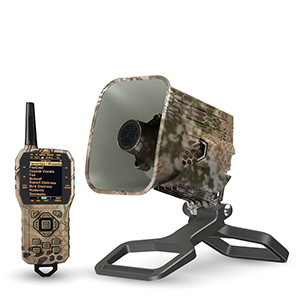
An electronic caller is the single most important piece of dedicated predator hunting gear you will buy. It separates sound from your position, runs realistic sequences hands-free, and gives you access to hundreds of sounds that would take years to master on a mouth call. We consider it more important than any optic upgrade, any clothing purchase, and any accessory.
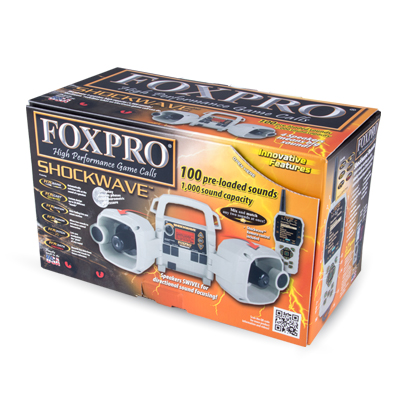
The FOXPRO Shockwave is the best e-caller we have tested — the sound quality, remote range, and sound library are unmatched. But it is also the most expensive option. If you are on a tighter budget, the FOXPRO X2S delivers 80% of the performance in a compact, significantly cheaper package. We break down every option worth considering in our best electronic predator calls roundup.
Do not skip the e-caller and try to start with mouth calls alone. We are not saying mouth calls are bad — we carry one as a backup on every stand. But an e-caller lets you focus on setup, wind, scanning, and shooting instead of trying to simultaneously learn a difficult physical skill. The learning curve is steep enough without adding another variable.
Motion Decoy
A battery-powered motion decoy is cheap, lightweight, and disproportionately effective. When a coyote responds to your caller, it is searching for the source with its ears and eyes. A decoy with erratic spinning or wobbling motion gives the incoming animal a visual anchor. It stares at the decoy instead of scanning the landscape for you, buying precious seconds to get on your gun and make a clean shot.
Place the decoy near your e-caller, 50 to 150 yards from your shooting position. The MOJO Critter and Foxpro Foxjack series are both solid options. Even a cheap $25 topper decoy on a stake will meaningfully improve your results. This is one of those rare pieces of gear where the return on investment is absurdly high relative to cost.
Camouflage and Concealment
Coyotes have excellent vision, and they will pick you apart at distances that feel impossible. Full camouflage is not optional — it is a requirement for consistent success.
Here is the minimum effective camo kit:
- Face mask or neck gaiter pulled up. Your bare face is the single biggest giveaway. A coyote will spot an exposed face at 300 yards and evaporate. We prefer a mesh face mask over face paint because it is faster to deploy and does not smear on your scope.
- Gloves. Camo or dark earth-tone gloves that still let you feel your trigger and safety. Mechanix-style gloves work well in mild weather. Insulated hunting gloves for cold conditions.
- Full camo or earth-tone clothing. Match your terrain broadly — tan and brown for open grassland, woodland patterns for timber and brush. Do not overthink pattern selection. Breaking up your silhouette matters more than which specific camo pattern you choose.
- Head covering. A camo beanie, ball cap, or hood. Anything that eliminates the round, human-shaped outline of your head.
You do not need to buy a $300 camo outfit. A $40 set of camo from Walmart or a surplus store, combined with a face mask and gloves, is functionally identical to premium camo for predator hunting. Save the money for your caller.
Tier 2: Game Changers
These items are not strictly required, but each one represents a significant, measurable improvement to your effectiveness. Once your Tier 1 kit is solid, these are where your next dollars should go — roughly in this order.
Thermal Monocular
A handheld thermal monocular is the single biggest force multiplier you can add to a predator hunting setup, assuming your state allows night hunting. Thermal lets you spot responding coyotes at 500+ yards in complete darkness, through fog, and in thick cover where the naked eye is useless. It transforms night hunting from a guessing game into a deliberate, tactical pursuit.
Even during daylight hours, a thermal monocular is a superior scanning tool. We have picked up coyotes bedded in CRP grass and brush rows that we never would have seen with binoculars. On evening stands where legal shooting light is fading, thermal extends your effective scanning window by critical minutes.
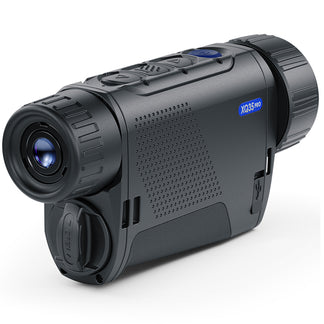
The Pulsar Axion 2 XQ35 Pro is our top recommendation for predator hunters. It is compact enough to carry comfortably, produces a clean image with good detection range, and the battery life lasts through a full night of hunting. We cover every worthwhile option in our best thermal monoculars for predator hunting roundup.
This is the most expensive item on the Tier 2 list, and it is not essential if you hunt exclusively during daylight hours. But if you have any interest in night hunting, a thermal monocular will put more animals in front of you than any other single purchase.
Shooting Sticks or Tripod
A stable shooting rest makes you a better shooter in the field, period. Predator hunting involves shooting from the ground, often at odd angles, at animals that are moving or about to move. Freehand shooting from a seated position is possible, but a quality set of shooting sticks or a compact tripod dramatically improves your accuracy and confidence at distance.
We prefer a set of trigger-style shooting sticks for most predator hunting scenarios. They are fast to deploy, easy to adjust height from seated or kneeling positions, and lightweight enough to carry without thought. Bog-Pod, Primos, and Vanguard all make solid options in the $30 to $80 range. A full-size tripod like a Kopfjager or BOG DeathGrip offers the most stability but adds weight and setup time.
Get your shooting sticks set up and on target before you start calling. Once a coyote is responding, you should not be fumbling with equipment. Sticks up, rifle rested, caller running, eyes scanning — in that order.
Wind Indicator
Wind management is the single most important tactical variable in predator hunting, and it is the thing new hunters underestimate the most. A coyote’s nose is its primary survival tool. If a responding coyote catches your scent at any point during its approach, the stand is over. There is no recovering from it.
You need a way to monitor wind direction constantly throughout every stand. The cheapest and most effective option is a small squeeze bottle of unscented powder or milkweed fibers. A puff of powder shows you exactly what the wind is doing at your position — not just the general direction, but the subtle swirls and thermals that a flag or finger-in-the-air test will miss.
Wind checkers from Dead Down Wind and Primos cost under $10 and last an entire season. There is no excuse for not carrying one. Check the wind before every stand, recheck it every few minutes during the stand, and abandon a stand immediately if the wind shifts unfavorably. No amount of gear will overcome bad wind.
Quality Seat Pad or Cushion
This sounds trivial. It is not. Predator hunting means sitting on the ground for 15 to 30 minutes per stand, multiple stands per outing, often in freezing temperatures. A cold, uncomfortable hunter fidgets. Fidgeting creates movement. Movement gets you busted.
A quality seat cushion — something with closed-cell foam insulation and a waterproof bottom — keeps you warm, dry, and comfortable enough to sit still for the duration of your stand. Therm-a-Seat and Northeast Products both make excellent options that weigh almost nothing and strap to your pack or belt. We have tried hunting without one in January. We do not recommend it.
The difference between a comfortable hunter and a miserable one is measurable in how long you stay on stand, how still you sit, and how alert you remain. A $15 seat pad quietly improves all three.
Tier 3: Nice to Have
These items will refine your setup and open new capabilities, but they represent diminishing returns compared to Tiers 1 and 2. Buy these after your core kit is dialed.
Thermal Scope (Clip-On or Dedicated)
A thermal riflescope or clip-on unit eliminates the two-step process of scanning with a thermal monocular and then transitioning to your rifle. You scan, identify, and shoot through one optic. For dedicated night hunters who are running high-volume stands, this is a legitimate efficiency gain.
The downside is cost. Quality thermal scopes start around $2,500 and quality clip-on units are not much cheaper. For most predator hunters, a handheld thermal monocular paired with a weapon-mounted light or an illuminated reticle is a more cost-effective solution that covers 90% of the same scenarios. Save the thermal scope purchase until predator hunting is a deeply established part of your life and you are confident you will use it enough to justify the investment.
Bipod
A quality bipod — Harris, Atlas, or Magpul — is useful if you prefer prone shooting positions or if your terrain allows it. In open prairie and agricultural settings where you can stretch out behind a field edge or terrace, a bipod provides rock-solid stability for shots beyond 200 yards.
The reason this is Tier 3 rather than Tier 2 is that most predator hunting happens from a seated position, and bipods are awkward to use while seated. Shooting sticks are more versatile for the typical predator hunting stance. If you already have a bipod on your rifle from other shooting, leave it on — it will not hurt. But do not prioritize buying one over a quality set of shooting sticks.
Game Bags and Fur Handling Supplies
If you plan to sell pelts or have them tanned, you need proper fur handling equipment: a quality skinning knife, a fleshing beam, fur stretchers, and game bags for transport. Coyote pelts in prime winter condition can bring $30 to $80+ depending on quality and market conditions, which adds up over a season.
If you are hunting for population management or simply for the challenge and do not plan to keep pelts, you can skip this category entirely. But if fur matters to you, invest in proper handling tools from the start. A poorly handled pelt loses most of its value.
Trail Cameras
Running trail cameras on known coyote travel corridors — fence crossings, creek bottoms, field edges — gives you intelligence on local coyote activity patterns. You learn which direction they travel, what time they move, and how many are working your area. This information makes your stand placement more strategic and your timing more deliberate.
Trail cameras are Tier 3 because they require time, property access, and a long-term approach that goes beyond showing up and calling. They are most valuable for hunters with dedicated permission properties where they hunt repeatedly throughout the season.
Budget Builds: Realistic Price Points
Gear lists are meaningless without honest budget context. Here is what a functional predator hunting kit actually costs at three levels.
The $500 Starter Build
This assumes you already own a suitable rifle and scope — most hunters do. If you are starting from absolute zero, add $400 to $600 for a Ruger American or Savage Axis in .223 with a basic scope package.
- Electronic caller: ICOtec GC500 or Lucky Duck Revolt — $100 to $150
- Motion decoy: MOJO Critter or generic topper — $25 to $50
- Camo clothing: Walmart or surplus store full camo set — $40 to $60
- Face mask and gloves: $15 to $25
- Shooting sticks: Primos Trigger Stick Gen 3 — $40 to $60
- Wind checker: Dead Down Wind or Primos — $8
- Seat pad: Therm-a-Seat — $12 to $18
- Ammunition: 200 rounds of .223 varmint loads — $120 to $160
- Total: approximately $360 to $530
This build will call in and kill coyotes. We have run this exact caliber of setup and had productive seasons. The caller is the most important piece — do not cheap out below the $100 mark, because bottom-tier callers have reliability issues and poor sound that will cost you opportunities.
The $1,500 Enthusiast Build
This is where the setup gets genuinely serious and covers daytime hunting at a high level with the option to extend into night hunting.
- Electronic caller: FOXPRO Shockwave — $450 to $500
- Motion decoy: Foxpro Foxjack or MOJO Critter — $30 to $100
- Thermal monocular: Pulsar Axion 2 XQ35 Pro — $600 to $700
- Camo clothing: Mid-tier set from Sitka, First Lite, or KUIU — $150 to $250
- Shooting sticks: BOG Havoc or Kopfjager K700 — $60 to $100
- Wind checker, seat pad, accessories: $40 to $60
- Ammunition: 300 rounds — $180 to $240
- Total: approximately $1,510 to $1,950
The Shockwave and the Pulsar Axion are the two biggest jumps in this build, and both are worth it. The Shockwave gives you the best sound and remote range available, and the Axion opens up night hunting and dramatically improves your ability to spot responding animals. This is the build we run most often and recommend to hunters who are committed to predator hunting as a regular pursuit.
The $3,000+ No-Compromise Build
This is the full-send kit for hunters who have decided predator hunting is a primary focus and want every possible advantage.
- Everything from the $1,500 build
- Thermal clip-on or dedicated thermal scope: $2,500 to $5,000
- Upgraded rifle platform: Custom or precision chassis in .22-250 or .204 Ruger — $800 to $1,500
- Bipod: Harris S-BRM or Atlas CAL — $80 to $250
- Trail cameras (3-4 units): $150 to $400
- Fur handling kit: Skinning knives, stretchers, fleshing beam — $100 to $200
- Total: $3,000 to $7,000+
There is no ceiling on this category if you want to chase it. The honest truth is that the $1,500 build gets you 90% of the way there. The jump from $1,500 to $3,000+ is about efficiency and convenience, not about putting dramatically more animals on the ground. A thermal scope saves you a step. A precision rifle extends your range. Trail cameras refine your strategy. But the fundamentals — caller, decoy, wind management, fieldcraft — still drive the majority of your results.
What NOT to Buy
We have wasted money so you do not have to. Here are the most common predator hunting gear purchases that we consider poor investments for most hunters.
Ultra-cheap electronic callers under $60. They break, the speakers sound like garbage, and the remotes fail at the worst possible moment. A coyote that hangs up at 200 yards because your caller sounds like a robot is an opportunity you cannot get back. Start at the $100+ tier or save until you can.
Premium camo for predator hunting. We love quality hunting clothing for all-day sits in a tree stand, but predator hunting stands last 15 to 30 minutes. You do not need $400 worth of Sitka to sit on the ground for twenty minutes. Cheap, pattern-appropriate camo works identically for this application. Spend the difference on a better caller or optic.
Attractant scents and cover scents. They do not overcome bad wind. Nothing overcomes bad wind. Play the wind correctly and you do not need scent products. Play it incorrectly and no amount of cover scent will save you. We have never had a stand succeed because of scent products, and we have had plenty succeed without them.
Dedicated coyote hunting rifles before you have an e-caller and decoy. We see this constantly — a new hunter drops $800 on a rifle and then calls with a $30 Bluetooth speaker duct-taped to a fence post. The rifle is the least specialized piece of gear in a predator hunting kit. Almost any centerfire rifle you already own will work. The caller is what makes the hunt happen.
High-end rangefinders for predator hunting. Most coyote shots happen inside 200 yards, and many happen inside 100. A rangefinder is nice to have for confirming distances on landmarks when you set up, but you do not need a $600 ballistic rangefinder for predator hunting. A basic $100 to $150 unit is more than sufficient if you want one at all.
Season-Specific Gear Considerations
Predator hunting is a year-round pursuit in most states, but the gear you prioritize shifts significantly between summer and winter conditions.
Summer and Early Fall
Hot-weather predator hunting is primarily an evening and night game. Midday stands in July are miserable and generally unproductive because coyotes are bedded in cover avoiding heat.
- Light, breathable camo. Swap heavy layers for moisture-wicking, light-colored camo in tan and brown patterns that match dried grass and open terrain.
- Insect protection. A Thermacell or permethrin-treated clothing is borderline essential. Swatting mosquitoes on stand is a guaranteed way to get busted.
- Hydration. Carry water. Dehydration degrades your concentration, and summer evening hunts can stretch longer than you plan.
- Thermal monocular becomes even more valuable. Summer nights are the best time to capitalize on thermal scanning because the temperature differential between warm-bodied animals and the cooling ground creates strong thermal contrast.
- Lighter calling sequences. Coyotes are responsive but tend to approach more cautiously in summer when pups are in dens and adults are protective. Pup distress and lower-volume distress calls often outperform loud, aggressive sequences.
Winter
Cold-weather predator hunting is peak season for fur quality and coyote activity. It is also when the gear you carry — and how it handles cold — matters most.
- Insulated layers with wind protection. You are sitting motionless on the ground in temperatures that may be in the single digits or below zero. Dress for 20 degrees colder than the forecast because you are not generating body heat while sitting still. A quality base layer, insulating mid layer, and windproof outer shell is the standard three-layer approach.
- Insulated, waterproof boots. Your feet are on frozen ground for the duration of every stand. Boots rated to -40F are not overkill in northern states. Muck Boots Arctic Pro and LaCrosse Alpha Burly Pro are proven options.
- Hand warmers. Stick a chemical hand warmer in each glove and one in each boot. They cost pennies and keep you functional in brutal cold.
- Lithium batteries in everything. Alkaline batteries lose significant capacity in cold temperatures. Lithium batteries perform consistently down to well below zero. Run lithium in your e-caller, decoy, thermal monocular, and any other battery-powered equipment during winter hunts.
- Seat pad becomes critical. Sitting on frozen ground without insulation drains your body heat faster than you expect. A closed-cell foam seat pad is the barrier between you and hypothermia on a January morning stand.
- Fur handling preparedness. Winter fur is prime fur. If you are going to invest in pelt handling at any point, winter is the season where it pays off. Carry a game bag and skinning knife if you intend to keep hides.
Frequently Asked Questions
What is the single most important piece of predator hunting gear?
The electronic caller. It is the piece of equipment that actually makes the hunt happen. A rifle kills the animal, but the caller brings it in. We would rather hunt with a mediocre rifle and a great caller than a custom precision rig and a cheap caller. Your ability to produce convincing, well-placed sound at distance from your position is the foundation of every successful stand. Start with the best e-caller you can afford and build everything else around it. Our best electronic predator calls roundup covers every price point worth considering.
Do I need thermal optics to hunt coyotes successfully?
No. Plenty of coyotes are killed during legal shooting hours with nothing more than a rifle scope and Mark One eyeballs. Thermal optics are a massive advantage for night hunting and for spotting animals in cover, but they are not a requirement for daytime hunting. If your state does not allow night hunting, or if you are on a tight budget, skip thermal entirely and invest in a better caller and more time in the field. Trigger time beats thermal time. That said, if night hunting is legal and you are serious about maximizing your take, a thermal monocular is the single most impactful upgrade you can make.
Can I use a shotgun instead of a rifle for predator hunting?
Absolutely, and in certain situations a shotgun is the better choice. Hunting in thick brush, timber, or areas with short sight lines where shots will be inside 50 yards makes a 12-gauge loaded with heavy coyote loads (T-shot, BB, or dedicated coyote loads like HEVI-Shot Dead Coyote) devastatingly effective. Shotguns are also the right call for night hunting with a light in states where that is legal, because the engagement distances are short and a pattern is more forgiving in low-light conditions. The drawback is range — a shotgun limits you to roughly 50 to 70 yards maximum on coyotes, which means you need tighter setups and animals that commit closer. For open country, a rifle is clearly superior. Many experienced predator hunters carry both.
How much should I budget for a complete predator hunting setup?
If you already own a suitable rifle and scope, you can build a fully functional predator hunting kit for $400 to $500. That gets you a quality e-caller, a motion decoy, camo clothing, shooting sticks, and ammunition. This is not a compromise build — it is a setup that will call in and kill coyotes consistently. To add night hunting capability with a thermal monocular, budget $1,200 to $1,500 total. The no-compromise build with thermal scope and all the accessories runs $3,000 and up. We strongly recommend starting at the $500 level, hunting hard for a season, and then adding Tier 2 gear based on what you actually find yourself wanting in the field.
What is the most common mistake new predator hunters make with gear?
Overspending on the rifle and underspending on the caller. We see it constantly in forums and in the field. A hunter drops $1,200 on a rifle and premium scope, then pairs it with a $40 Bluetooth speaker or a cheap call from a gas station. The rifle is the least specialized tool in the kit — any accurate centerfire rifle works. The caller is what separates a guy sitting in a field from a guy calling coyotes. Budget accordingly. The second most common mistake is ignoring wind management. No amount of gear compensates for hunting with the wind at your back. Carry a wind checker, use it on every single stand, and walk away from a setup if the wind is not right. Discipline with wind will put more fur on the ground than any piece of equipment you can buy.
Building a predator hunting kit is an exercise in prioritization. Start with the essentials, master the fundamentals of setup and wind management, and add gear only when you have a clear understanding of what it will do for your hunting. The coyotes do not care what brand name is on your pack. They care about sound, wind, and whether you can sit still long enough for them to commit. Get those right and the gear list sorts itself out. For more predator hunting content — including gear reviews, calling tactics, and thermal optic breakdowns — visit our predator hunting hub.
Quick Buy — Products in This Article