Pros
- Barrel-maker-built rifle — Bergara's 4140 CrMo steel barrels are exceptional
- Consistent sub-MOA accuracy with match ammo out of the box
- Mini-chassis stock system with adjustable cheek riser and LOP
- Remington 700 footprint — massive aftermarket trigger and stock compatibility
- TriggerTech adjustable trigger is crisp and predictable
Cons
- 9.2 lbs with scope is heavy for mountain hunting
- Not a true lightweight — this is a precision-first platform
- Mini-chassis stock can feel bulky compared to traditional sporter stocks
- Barrel profile is heavy — contributes to accuracy but adds weight
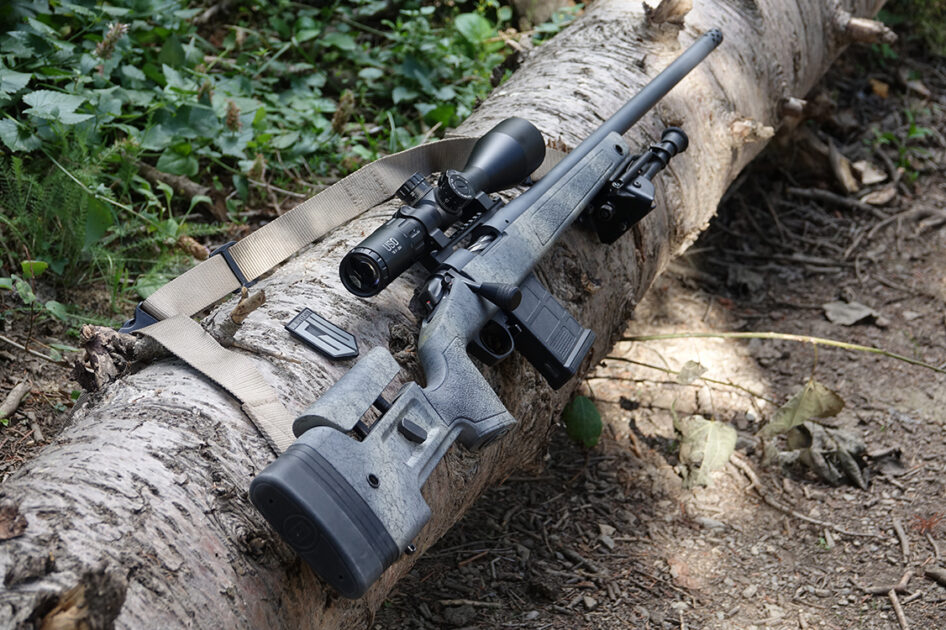
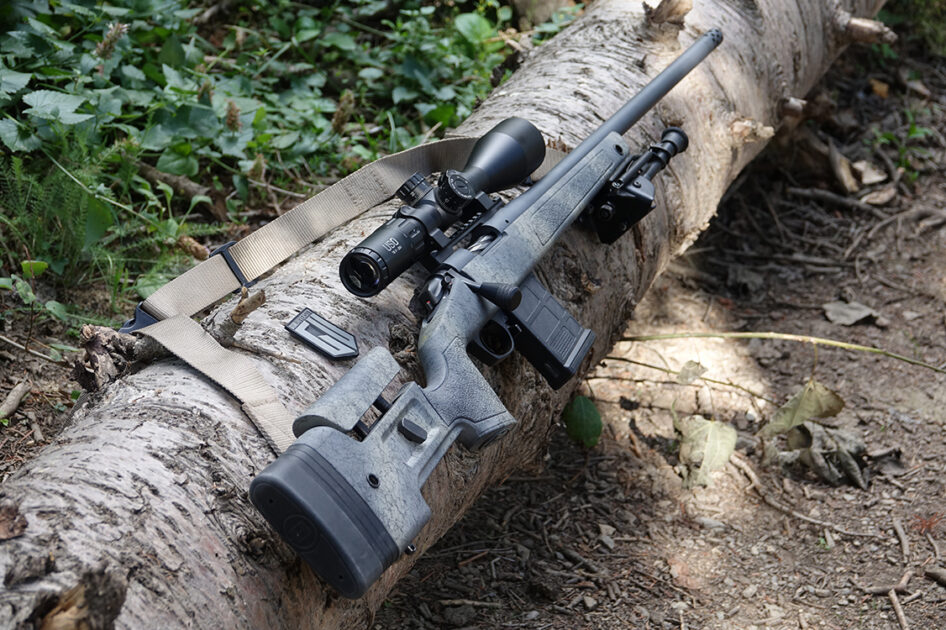
There’s a segment of hunters who live between two worlds. We own hunting rifles, and we own precision rifles, and we’ve spent years wishing someone would build a single platform that handles both jobs without charging us custom-shop prices. The Bergara B-14 HMR is the closest anyone has come to filling that gap — a rifle designed by barrel makers, built on a proven action footprint, and priced at a point that doesn’t require a second mortgage.
We’ve put several hundred rounds through the B-14 HMR across range sessions and field hunts to find out if it actually delivers on its crossover promise. Here’s our full breakdown based on our testing methodology.
Who This Rifle Is For
The B-14 HMR is built for the hunter who takes accuracy seriously. If you’re the person who shoots year-round, builds DOPE charts for your hunting caliber, and expects to make ethical shots past 300 yards on big game — this rifle was designed specifically for you. It’s equally at home punching paper at the range and sitting on a bipod at a western glassing point waiting for an elk to step into a clearing at 450 yards.
It’s also an excellent entry point for hunters who want to start shooting at distance but don’t want to buy a dedicated competition rig alongside their hunting rifle. The B-14 HMR lets you train on the same platform you hunt with, which means the trigger feel, the bolt throw, and the stock geometry you practice with are identical to what you carry into the field.
Skip this rifle if: You prioritize weight above all else and your hunts involve miles of vertical gain (look at the Christensen Arms Ridgeline at 6.3 lbs), you want a traditional sporter profile that shoulders fast in thick timber (the Tikka T3x Lite is a better fit), or you need a rifle under $800 (the Howa 1500 in a basic stock is hard to beat for the money).
Key Specifications
| Spec | Detail |
|---|---|
| Action | B-14 push-feed, Remington 700 footprint |
| Barrel | 4140 CrMo steel, #6 contour, 22–26 in (caliber dependent) |
| Caliber Options | 6.5 Creedmoor, 6.5 PRC, .308 Win, .300 Win Mag, .22-250 |
| Twist Rate | 1:8 (6.5 CM), 1:10 (.308) |
| Trigger | TriggerTech Frictionless Release, adjustable 1.5–4 lbs |
| Stock | Mini-chassis with adjustable cheek riser and LOP spacers |
| Magazine | AICS-pattern detachable box magazine |
| Weight (bare) | ~9.0 lbs |
| Weight (with scope) | ~9.2 lbs (varies by optic) |
| Overall Length | 42.5–44.7 in (caliber dependent) |
| MSRP | ~$1,150 |
Performance
Accuracy and Barrel Quality
This is the headline, and it’s the reason the B-14 HMR exists. Bergara is a barrel company first — they’ve been making barrels for other manufacturers and custom builders for decades — and that expertise is immediately obvious when you start sending rounds downrange.
Out of the box, our 6.5 Creedmoor test rifle consistently printed sub-MOA five-shot groups at 100 yards with Hornady ELD Match 140gr ammunition. We’re not talking about cherry-picked three-shot groups that look good on social media. We’re talking about honest five-shot strings, cold bore included, that clustered inside 0.8 MOA on average across multiple range sessions. The best group we printed measured 0.47 MOA, which is territory that makes you question whether the rifle or the shooter is the limiting factor.
At 300 yards, groups opened predictably to the 1.0–1.2 MOA range, which is exactly what you’d expect from atmospheric conditions and human error at that distance. The barrel itself isn’t the variable — we are. That’s the compliment. When a rifle shoots better than most shooters can hold, it removes equipment as an excuse and forces you to get better behind the trigger.
The 4140 CrMo steel barrel with a #6 contour is heavier than a sporter profile, and that’s a deliberate trade-off. The additional barrel mass resists heat-induced accuracy degradation during extended strings and provides the rigidity needed for consistent harmonics. If you’re running a five-round magazine and taking one shot on an animal, the barrel quality is overkill. But if you’re also using this rifle for load development, PRS-style practice, or prairie dog sessions, that barrel quality pays dividends across thousands of rounds.
For hunters debating between 6.5 Creedmoor and .308 Winchester in this platform, the 6.5 Creedmoor is the stronger choice for long-range hunting applications. The ballistic coefficient advantage of modern 6.5mm projectiles means less wind drift and more retained energy past 400 yards. The .308 remains a solid option if you want wider ammunition availability or plan to use the rifle for shorter-range hunting as well.
TriggerTech Trigger
The inclusion of a TriggerTech Frictionless Release trigger is one of the B-14 HMR’s most significant differentiators at this price point. Most rifles under $1,200 ship with serviceable-but-unremarkable triggers that require an aftermarket upgrade to unlock the rifle’s full accuracy potential. Bergara skipped that step entirely.
The TriggerTech unit breaks cleanly with zero creep and almost no perceptible overtravel. We ran ours at 2.5 lbs for range work and bumped it to 3.0 lbs for field hunting — a simple adjustment that takes an Allen key and about 30 seconds. The break is crisp and predictable every single time. There’s no stacking, no mushiness, and no guessing about when the sear will release. You press through the wall, and the rifle fires. That’s it.
This is the kind of trigger that lets you focus entirely on fundamentals — sight picture, breathing, natural point of aim — without any mental bandwidth devoted to managing a heavy or inconsistent trigger pull. For precision shooting at extended range, where a fraction of an inch of trigger-induced movement can translate to a miss at 500 yards, the TriggerTech is a genuine accuracy multiplier.
Bolt Action
The B-14 action is a two-lug, push-feed design built on the Remington 700 footprint. That footprint decision is strategically important — it means the B-14 HMR is compatible with the entire Remington 700 aftermarket ecosystem, which is the largest in the bolt-action world. Triggers, stocks, chassis systems, scope bases, bottom metal — all of it fits. If you eventually outgrow the factory configuration, the upgrade path is virtually unlimited.
The bolt throw itself is smooth with a short 90-degree lift. Lockup is solid and consistent, with no perceptible play or wobble at full engagement. Cycling speed is adequate for a hunting rifle — this isn’t a competition action with zero-tolerance bearing surfaces, but it’s noticeably smoother than the Howa 1500 and competitive with the Tikka T3x. The bolt handle has a tactical-style knob that provides a positive grip, even with gloved hands in cold conditions.
Feeding from the AICS-pattern detachable box magazine is reliable. We ran Magpul AICS magazines through the rifle without a single feeding issue across several hundred rounds. The AICS magazine standard is another smart decision by Bergara — magazines are affordable, widely available, and durable enough to take field abuse.
Mini-Chassis Stock System
The B-14 HMR’s stock is where the “crossover” identity becomes most tangible. It’s not a traditional polymer hunting stock, and it’s not a full aluminum chassis. Bergara calls it a mini-chassis system — a stock with an integrated aluminum bedding block that provides chassis-level rigidity while keeping the weight and profile closer to a traditional stock.
The adjustable cheek riser is a standout feature. It uses a simple dial mechanism that raises and lowers the comb to align your eye with whatever optic you mount. We adjusted it once when we first mounted our scope and never touched it again. Consistent cheek weld is critical for repeatable accuracy, and the adjustable riser eliminates the foam pad or aftermarket kydex cheek riser that you’d need on most hunting stocks.
Length of pull is adjustable via spacers at the buttpad. We ran ours at 13.5 inches, which accommodated both summer range sessions in a t-shirt and late-season hunts in heavy layering. The SoftTouch coating on the stock surface provides good grip without being tacky, and it handles moisture well — we didn’t experience any slippage during wet-weather shoots.
The trade-off is bulk. The mini-chassis stock is wider and heavier than a Tikka or Christensen sporter stock. It doesn’t shoulder as naturally for fast, instinctive shots in timber. This is a rifle that wants to be shot from a bipod, a pack, or a rest — and it rewards you handsomely for doing so. If your hunting primarily involves deliberate, precision shots at identified targets, the stock geometry is an asset. If you need a rifle that whips to your shoulder when a buck jumps at 40 yards, this isn’t it.
Recoil
In 6.5 Creedmoor, recoil is mild. The combination of the rifle’s 9-pound base weight and the inherently moderate recoil impulse of the 6.5 CM cartridge makes this one of the most pleasant centerfire rifles to shoot for extended sessions. We fired 80-round range days without any fatigue or flinch development, which matters enormously for training and load development.
In .308 Winchester, recoil is noticeable but still manageable thanks to the rifle’s mass. The .300 Win Mag variant will remind you that physics exist — the heavier barrel and stock absorb some energy, but sustained range work in magnum calibers is always more demanding. For most hunters considering the HMR, the 6.5 Creedmoor or .308 offers the best balance of terminal performance and shootability.
The buttpad does a reasonable job of distributing recoil, though it’s not as soft as the Limbsaver pads found on some competitors. For a rifle that most shooters will fire from a stable position, this is a minor point. If you’re particularly recoil-sensitive, the weight of the platform works in your favor.
Long-Range Hunting Performance
This is where the B-14 HMR earns its keep. We carried it on a late-season mule deer hunt in eastern Montana — the kind of hunt where you’re glassing draws from ridgelines and your shot opportunities start at 250 yards and extend past 500. The rifle was set up with a Vortex Viper PST Gen II 5-25x50, a Harris bipod, and a rear squeeze bag.
At 385 yards, we took a broadside shot on a mature mule deer buck. The 140gr ELD-X round impacted exactly where the crosshair sat — high shoulder, dropping the deer where it stood. The TriggerTech broke cleanly under pressure, the stock provided a stable platform on the bipod, and the rifle did what it was designed to do.
We also ran the HMR through a simulated long-range hunting course — steel targets at 300, 450, 600, and 750 yards from field positions (bipod prone, pack-supported sitting, and barricade). First-round hit rates were strong: 100% at 300, 90% at 450, 70% at 600, and 40% at 750. Those numbers reflect realistic field shooting, not benchrest conditions. At 600 yards and beyond, the shooter is the dominant variable — the rifle and ammunition are fully capable.
The one area where the HMR’s weight becomes a genuine consideration is the approach. Carrying a 9.2-pound scoped rifle plus a bipod across broken terrain for several miles is noticeably more taxing than carrying a 7-pound sporter. We felt it in the legs and shoulders by midday. For stand hunting, blind hunting, or vehicle-accessible glassing positions, the weight is irrelevant. For backcountry hunts with significant elevation change, you’ll want to honestly assess your fitness and pack weight budget before committing to this platform.
For hunters who specifically pursue elk in the backcountry, the weight conversation becomes even more critical. The HMR is absolutely capable of taking elk at distance, but carrying it deep into wilderness country is a commitment. Consider your hunting style honestly.
Benchmark Score Breakdown
We evaluate rifles based on our standard Benchmark Score methodology, weighted for the platform’s intended use case. The B-14 HMR is a precision-hunting crossover, so accuracy and trigger quality carry more weight than portability.
- Accuracy: 9.5/10 — Sub-MOA consistency with match ammo is exceptional at this price. The barrel quality is the foundation of this entire platform.
- Trigger Quality: 9/10 — The TriggerTech Frictionless Release is the best factory trigger in this price class. Clean break, adjustable, and predictable under pressure.
- Build Quality: 8.5/10 — Solid action, excellent barrel, and a well-executed mini-chassis stock. Fit and finish are above average for a production rifle.
- Ergonomics: 7.5/10 — The adjustable stock is a major asset for precision shooting, but the weight and bulk penalize it for dynamic hunting scenarios.
- Value: 9/10 — At ~$1,150, you’re getting a rifle with a premium trigger and a barrel-maker-quality barrel. The aftermarket compatibility via the Rem 700 footprint adds long-term value.
Overall: 8.7/10
How It Compares
Choosing a bolt-action hunting rifle in the $800–$1,500 range means navigating a set of deliberate trade-offs. Here’s how the B-14 HMR stacks up against three rifles we’re frequently asked to compare it to.
Bergara B-14 HMR vs. Tikka T3x Lite
The Tikka T3x Lite is the rifle you buy when weight and handling are your top priorities. At roughly 6.5 lbs bare, it’s nearly 2.5 lbs lighter than the HMR — a difference you will absolutely feel on the mountain. The Tikka’s action is famously smooth, arguably the slickest factory bolt on the market, and it shoots sub-MOA with good ammunition.
Where the HMR pulls ahead is in precision infrastructure. The adjustable cheek riser, the mini-chassis bedding, the TriggerTech trigger, and the AICS magazine system all give the HMR a significant edge for deliberate, long-range shooting. The Tikka’s factory trigger is good but not TriggerTech good, and its stock lacks the adjustability that the HMR provides.
Choose the Tikka if you hunt in terrain where you carry far and shoot close-to-moderate distances (<400 yards). Choose the HMR if your hunts involve less hiking and more precision shooting past 300 yards.
Bergara B-14 HMR vs. Howa 1500 HCR
The Howa 1500 HCR (Hunter Chassis Rifle) is the closest direct competitor to the HMR. It runs a full aluminum chassis (not a mini-chassis), an AICS magazine, and Howa’s proven 1500 barreled action — all at a price point roughly $150–$200 below the Bergara.
The Howa shoots well. Accuracy is in the 0.8–1.2 MOA range with match ammunition, which is competitive. But the B-14 HMR’s barrel is consistently tighter, and the TriggerTech trigger is a clear upgrade over Howa’s HACT two-stage unit. The Howa’s full chassis is more rigid than Bergara’s mini-chassis, but it’s also heavier and less comfortable to carry. The Howa’s bolt, while reliable, feels noticeably rougher in cycling compared to the Bergara.
Choose the Howa if budget is your primary constraint and you want a capable chassis rifle for the lowest possible entry price. Choose the HMR if you want the better barrel, better trigger, and smoother action — and you’re willing to spend the extra $150–$200 to get them.
Bergara B-14 HMR vs. Christensen Arms Ridgeline
This comparison reveals the fundamental trade-off the B-14 HMR forces you to confront: precision versus portability. The Christensen Arms Ridgeline weighs roughly 6.3 lbs bare — a full 2.7 lbs lighter than the HMR. It uses a carbon fiber-wrapped barrel, a lightweight sporter stock, and a clean, traditional aesthetic. It also costs approximately $500–$700 more than the Bergara.
The Ridgeline shoots well for a lightweight rifle — typically 0.8–1.2 MOA with quality ammunition. But it doesn’t match the B-14 HMR’s consistency or its ability to maintain accuracy across longer shooting strings. Lightweight barrels heat faster, and harmonics shift sooner. The Ridgeline also lacks the adjustable cheek riser, the AICS magazine standard, and the Rem 700 aftermarket compatibility that the HMR offers.
Choose the Ridgeline if you’re a mountain hunter who covers serious miles and needs every ounce shaved from your pack weight. Choose the HMR if precision at distance matters more than portability and you want more rifle per dollar.
Frequently Asked Questions
Is the Bergara B-14 HMR accurate enough for long-range hunting?
Yes. The B-14 HMR consistently shoots sub-MOA with match-grade ammunition, which translates to <4.5-inch groups at 450 yards — well within the vital zone of any North American big game animal. Combined with the TriggerTech trigger and the stable mini-chassis stock, this is one of the most capable long-range hunting platforms available under $1,500. The barrel quality is the foundation — Bergara builds barrels for custom rifle makers, and that expertise shows in the consistency of their factory offerings.
What is the best caliber for the Bergara B-14 HMR?
For most hunters, 6.5 Creedmoor is the optimal choice. It offers exceptional long-range ballistics, manageable recoil for extended practice sessions, and excellent terminal performance on deer-sized game out to 600+ yards. The .308 Winchester is a strong second choice if you want wider ammunition availability or hunt in areas where the heavier bullet is advantageous. For elk-sized game at extended range, consider the 6.5 PRC or .300 Win Mag variants. For a deeper dive on cartridge selection, see our full hunting caliber guide.
Can you use Remington 700 accessories on the Bergara B-14 HMR?
Yes. The B-14 action is built on the Remington 700 footprint, which means scope bases, triggers, stocks, chassis systems, and bottom metal designed for the Rem 700 are compatible with the B-14 HMR. This gives you access to the largest aftermarket ecosystem in the bolt-action world. Common upgrades include chassis systems from MDT and KRG, scope bases from Seekins and Nightforce, and bipod adapters from Area 419. The factory TriggerTech trigger is excellent enough that most shooters won’t feel the need to upgrade that component.
Is the Bergara B-14 HMR too heavy for hunting?
It depends on how you hunt. At 9.0 lbs bare and roughly 9.2 lbs scoped, the HMR is too heavy for aggressive mountain hunting where you’re covering 5+ miles per day with significant elevation gain. It’s ideal for hunting styles that involve driving to a glassing point, sitting a blind, posting on a food plot, or hiking moderate distances to a predetermined shooting position. If you accept the weight as the cost of precision — and plan your hunts accordingly — it’s not a problem. If ultralight is non-negotiable, look at the Christensen Arms Ridgeline or the Tikka T3x Lite instead.
How does the Bergara B-14 HMR compare to rifles costing $2,000+?
The B-14 HMR competes directly with rifles in the $1,500–$2,000 range on accuracy and trigger quality. Where more expensive platforms pull ahead is in action refinement (custom actions with tighter tolerances), barrel material (stainless or carbon-wrapped options), weight savings, and fit and finish. A $2,500 custom build on a Defiance or Bighorn action will have a smoother bolt, a lighter overall package, and potentially tighter accuracy nodes. But for most hunters, the B-14 HMR delivers 90% of that performance at roughly 45% of the cost. The diminishing returns curve is steep above the HMR’s price point, and the hunting rifles category is full of options that cost more without meaningfully outperforming it in the field.