
Bobcats are the most challenging predator you will ever try to call. That is not an exaggeration or a marketing hook — it is something every serious predator hunter eventually learns through long, cold, silent stands that produce nothing. If coyote hunting teaches you the fundamentals, bobcat hunting teaches you patience, discipline, and humility. These cats do not sprint across open fields toward a screaming cottontail like a coyote will. They creep. They pause. They watch. And if anything feels wrong — your scent, your silhouette, a flash of movement — they dissolve back into the brush without you ever knowing they were there.
We have spent years refining our bobcat hunting tactics across timbered hollows, rocky desert terrain, and brushy creek bottoms, and the honest truth is that bobcats humble us regularly. But when the tactics come together — the right stand, the right sound at the right volume, a decoy holding a cat’s attention while it materializes out of cover at thirty yards — there is no moment in predator hunting that compares. This guide covers everything we have learned about consistently calling bobcats, from behavior and timing to calling sequences, decoy strategies, gear, and fur handling. If you are new to predator hunting entirely, start with our coyote hunting beginner’s guide to build the foundational skills, then come back here when you are ready for the next level.
For more predator hunting content — gear reviews, thermal optic breakdowns, and species-specific tactics — visit our predator hunting hub.
Understanding Bobcat Behavior
You cannot hunt an animal effectively if you do not understand how it thinks, moves, and survives. Bobcats are fundamentally different from coyotes in almost every behavioral dimension, and those differences dictate every aspect of how we approach a bobcat stand.
Solitary and Territorial
Bobcats are solitary predators. Unlike coyotes, which operate in family groups and packs, a bobcat moves alone through a defined home range that it patrols and defends. Male home ranges in good habitat typically span five to fifteen square miles, while female ranges are smaller and often overlap with one male’s territory. This means you are not calling at a pack of animals hoping one commits — you are trying to reach a single cat that may or may not be within earshot of your stand. The population density is lower, the odds per stand are lower, and the margin for error is razor thin.
Understanding territory helps with stand selection. Bobcats use the same travel corridors, the same hunting routes, and the same bedding areas repeatedly. If you can identify where a bobcat is living — through tracks, scat, scrapes, or trail camera images — you have a massive advantage because that cat is almost certainly going to be in that area again.
Visual Hunters With a Cautious Approach
This is the single most important behavioral difference between bobcats and coyotes, and it shapes every tactical decision we make. Coyotes respond to calls primarily with their ears — they hear distress and run toward the sound. Bobcats respond with their eyes. A bobcat that hears a distress call does not charge in. It orients toward the sound, begins a slow, deliberate approach, and then stops to visually locate the source before committing further. If it hears distress but sees nothing, it will often lose interest or circle wide and leave.
This is why decoys are optional for coyotes but borderline mandatory for bobcats. A bobcat needs to see something that confirms what it is hearing. We will cover decoy strategy in detail below, but understand this principle now: if you are calling bobcats without a visual component, you are cutting your odds dramatically.
Ambush Predators
Bobcats hunt by stalking and ambushing, not by chasing prey across open ground. They use thick cover, rock formations, deadfall, and terrain features to get close to prey before pouncing. This instinct carries over to how they respond to calls. A bobcat will use every piece of available cover on its approach. It will follow brush lines, stay in shadows, move through creek beds, and pause behind rocks or stumps to observe. You will not see a bobcat skylined on a ridgetop trotting toward your caller. You will see it — if you see it at all — emerging from thick cover at close range, already watching the decoy with the intensity of an animal that is about to strike.
Best Time to Hunt Bobcats
Season and Breeding
Winter is prime bobcat season across most of the country, and for good reason. Bobcat fur reaches its peak quality during the coldest months, which matters both for pelt value and for regulatory purposes since most states structure their bobcat seasons around fur primeness. But the tactical advantage of winter hunting goes beyond fur quality.
Bobcat breeding season runs roughly from late January through March in most regions, and this is when calling success rates spike. During the breeding season, male bobcats expand their travel patterns significantly as they search for receptive females. They cover more ground, move more during daylight hours, and are more responsive to sounds — particularly kitten distress, bird distress, and any sound that suggests an easy meal during an energy-intensive period. Female bobcats are also more active and vocal during this window.
The weeks immediately before and during peak breeding are, in our experience, the most productive time to target bobcats specifically. If you have limited time and want to maximize your odds, hunt late January through February in most of the country.
Time of Day
Bobcats are crepuscular, meaning they are most active during dawn and dusk. The first two hours of daylight and the last two hours before dark are the highest-percentage windows for calling. Bobcats do move during full daylight, especially in winter and during breeding season, but the transitional light periods are consistently the most productive.
Midday stands can work in cold weather when bobcats may be actively hunting to maintain caloric intake, but we typically use midday for scouting and repositioning rather than calling. If you are running multiple stands in a day, prioritize the morning and evening slots for your best bobcat locations and use the middle of the day for less proven spots where you are gathering information.
Calling for Bobcats
Calling bobcats requires a fundamentally different approach than calling coyotes. If you run the same high-volume, aggressive sequences that work on dogs, you will educate bobcats without ever knowing they were listening.
Sound Selection
The most effective bobcat calling sounds fall into two categories: bird distress and small mammal distress.
Bird distress is our go-to starting sound for bobcats. Woodpecker distress, starling distress, and yellowhammer distress are all proven producers. Bobcats are highly attuned to bird sounds because birds are a natural and frequent part of their diet. The pitch and cadence of bird distress seem to trigger a response in bobcats more reliably than rabbit distress in many situations, particularly in timbered and brushy habitats where cats are accustomed to hunting birds.
Cottontail distress works, but it is not the automatic choice it is for coyotes. In areas where bobcats rely heavily on rabbits — desert Southwest, brushy Southern terrain — cottontail distress can be extremely effective. But in mixed timber and hardwood habitats, we have found bird distress to outperform rabbit distress on cats consistently.
Rodent squeals and mouse distress are excellent low-volume, close-range sounds that work well as secondary sounds partway through a stand. These subtle sounds can pull a cat that heard your initial calling and is sitting just inside cover, waiting to see something before committing.
Avoid loud, aggressive sounds like jackrabbit distress and coyote challenge howls when specifically targeting bobcats. These sounds work on coyotes because coyotes respond to aggression and competition. Bobcats do not. A screaming jackrabbit at full volume is more likely to alarm a nearby bobcat than attract it.
Volume: Low and Patient
Volume control is the single most critical calling variable for bobcats. Start significantly quieter than you would for coyotes. We are talking about turning your e-caller down to 30-40% of the volume you would use on a coyote stand. Bobcats do not need — or want — a wall of sound. They have excellent hearing, and they associate loud, unnatural sounds with danger.
Think of it this way: a bird in distress is not screaming across a half-mile of open ground. It is fluttering and calling from a bush or a branch, producing sound that carries maybe 100 to 200 yards naturally. Your calling should mimic that reality. Low, intermittent, and convincing at close range will outperform loud and constant every single time on bobcats.
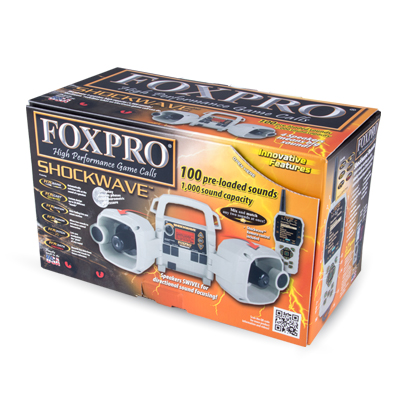
If you are using a quality electronic caller like the FOXPRO Shockwave, you have precise volume control from the remote. Start your stand at low volume and resist the temptation to crank it up when nothing appears in the first ten minutes. Patience — not volume — is what calls in bobcats.
The 30-Minute Stand
Here is where bobcat hunting demands the most discipline. Effective bobcat stands are long. Where a productive coyote stand might run 15 to 20 minutes, a bobcat stand should run a minimum of 30 minutes, and 45 minutes is not unreasonable in proven bobcat habitat.
Bobcats approach slowly. A cat that hears your call from 300 yards away may take 15 to 20 minutes to cover that distance because it is stopping, watching, circling, and using cover every step of the way. If you pack up at 20 minutes because nothing has shown, you may be abandoning a stand that had a bobcat 50 yards out, working its way through the last strip of brush before committing.
A basic bobcat calling sequence:
- Minutes 0-3: Bird distress at low volume. Short bursts of 20-30 seconds with 30-second pauses between. Let the sound settle into the landscape naturally.
- Minutes 3-10: Continue bird distress, varying the cadence slightly. Keep the volume low. Add pauses of 45-60 seconds. A bobcat hearing this is orienting and beginning to move.
- Minutes 10-15: Switch to cottontail distress or rodent squeals at low to moderate volume. The change in sound can trigger a cat that heard the bird distress but was not fully committed. Keep pauses frequent.
- Minutes 15-25: Return to bird distress or try a different bird species. Maintain patience and keep your eyes locked on the cover edges and terrain features nearest to your decoy. This is the window where bobcats most often appear.
- Minutes 25-35: Subtle sounds only — mouse squeaks, very soft bird distress, or even silence with just the decoy running. A bobcat that has been working its way in for twenty minutes is close now and hyper-alert. A sudden blast of loud sound at this point can blow the entire stand.
The hardest part of this sequence is not the calling — it is the sitting. Thirty-five minutes of near-motionless vigilance in freezing temperatures, scanning thick cover for a ghost-quiet predator, is mentally and physically demanding. That difficulty is exactly why bobcats are the pinnacle of predator calling.
Decoy Strategy
Motion decoys are not optional for serious bobcat hunting. We said it above and it bears repeating: bobcats are visual hunters. They need to see something that matches what they are hearing, or they will not commit to the final approach.
Why Decoys Are Critical for Bobcats
A coyote running toward a distress call is often so focused on the sound that it ignores the absence of a visual target until it is already in range. A bobcat will not do this. It will approach to a certain distance — often 40 to 80 yards — and then stop. It will sit motionless in cover and watch. If it sees nothing moving, it will either leave or circle wide enough to catch your scent. A decoy solves this problem by giving the cat a visual focal point that holds its attention and pulls it the last critical yards into the open.
Decoy Placement and Selection
Place your decoy within five to ten yards of your e-caller, positioned so that a bobcat approaching from the most likely cover will see it before it sees you. Battery-powered topper decoys with erratic, fluttering motion work well. The MOJO Critter is a popular choice, and even inexpensive feather-on-a-stick style decoys can be effective because they provide subtle, continuous motion that mimics a wounded bird or struggling small animal.
The decoy does not need to be large or elaborate. It needs to move. Bobcats key on small, erratic movements — exactly the kind of motion a wounded bird or mouse produces. A decoy that spins, wobbles, or flutters unpredictably will hold a bobcat’s gaze far more effectively than a static visual attractant.
Place the decoy and caller 50 to 80 yards from your position on bobcat stands. This is closer than the 100-150 yard placement we typically use for coyotes. Bobcats appear at close range, and you want the decoy close enough that a cat emerging from nearby cover encounters it immediately — before it has time to scan further and potentially spot you.
Setup and Positioning
Stand selection for bobcats is all about cover, terrain structure, and proximity to where cats live.
Thick Cover Edges
The number one rule of bobcat stand placement is this: set up on the edge of thick cover, not in the open. Bobcats live in dense vegetation — cedar thickets, brushy creek bottoms, rock-strewn hillsides, briar tangles, deadfall-choked timber. They will not cross 200 yards of open ground to reach your caller. Set up where the cover meets an opening — a small clearing, a creek crossing, a rock shelf, a logging road — so that a bobcat can approach through its preferred habitat and step into a shooting lane at close range.
Rock Outcrops and Ledges
Rocky terrain is bobcat terrain. Cats use rock outcrops for denning, sunning, and ambush hunting. If you have access to rocky ridgelines, bluff lines, or boulder-strewn hillsides, these are high-percentage bobcat stands. Set up where you can see the base of rock features and the transition zones where rock meets brush or timber.
Creek Bottoms and Drainages
Creek corridors are natural travel routes for bobcats. The combination of water, dense cover, prey concentration, and terrain structure makes creek bottoms some of the most reliable bobcat habitat in any landscape. Set up on a slightly elevated position overlooking a creek bottom, with your caller and decoy positioned in or near the creek channel where a traveling bobcat is likely to encounter them.
Wind Considerations
Everything we said about wind in our coyote hunting guide applies to bobcats, but bobcats are somewhat less nose-dependent than coyotes. That does not mean you can ignore the wind — a bobcat will still spook on human scent — but their approach is driven more by sight and sound than by scent verification. Still, set up with the wind in your face or crossing whenever possible. Do not give any predator an advantage you can avoid.
Gear for Bobcat Hunting
Most of your predator hunting gear transfers directly from coyote hunting to bobcat hunting. The core kit is the same, but there are specific considerations that matter when targeting cats.
Electronic Caller
Your e-caller is your most important tool, and for bobcats specifically, you need one with precise volume control and quality sound reproduction at low volume settings. Cheap callers that sound tinny or distorted at low volume will not cut it. The sound needs to be convincing and natural at 30-40% power, because that is where you will be running it for most of a bobcat stand.
The FOXPRO Shockwave excels here because its speaker quality remains clean and realistic across the entire volume range, and the remote gives you granular control without needing to move from your position. We cover every option worth considering in our best electronic predator calls roundup.
Shotgun vs. Rifle
This is a genuine decision point for bobcat hunting, and the answer depends on your terrain.
Shotgun: In thick cover where shots will be under 40 yards — which describes a large percentage of bobcat encounters — a 12-gauge loaded with #4 buckshot or heavy coyote-specific loads is devastating and forgiving. Bobcats appear suddenly and close, often in motion, and a shotgun gives you a wider margin for error on a fast, close shot in dense vegetation. Many dedicated bobcat hunters prefer a shotgun for exactly this reason.
Rifle: In more open terrain, or if you are hunting mixed species (bobcats and coyotes on the same stands), a rifle in .223 Remington or .22-250 Remington remains the better all-around choice. It covers the close shots a bobcat presents and gives you the reach for a coyote that shows up at 250 yards.
If you are specifically targeting bobcats in thick timber or brush, consider bringing both — a shotgun as your primary and a rifle as backup. Set up with the shotgun ready and the rifle within reach. We have had stands where a bobcat appeared at 25 yards and a coyote showed up at 200 yards on the same calling sequence. Having both options available lets you make the right shot regardless of what appears.
Camouflage and Scent Control
Bobcats are visual predators, and your concealment needs to be impeccable. Full camo from head to toe, face mask on, gloves on, silhouette broken against cover behind you — the same standards we outline in our predator hunting gear list. Because bobcats approach slowly and deliberately, they have more time to study your position than a coyote sprinting in at thirty miles per hour. Every detail matters.
Scent control is secondary to concealment for bobcats, but it is not irrelevant. Rubber boots, scent-eliminating spray on your outerwear, and avoiding heavily scented products on hunt mornings are simple steps that reduce one more variable. Wind management remains your primary scent control tool.
Optics for Bobcat Hunting
Optics serve a different purpose on bobcat stands than they do when scanning open country for coyotes. You are not glassing a half-mile of prairie. You are studying the edges of thick cover at 30 to 150 yards, trying to pick out the outline of a motionless, camouflaged predator that is already watching your decoy.
Binoculars
A compact 8x or 10x binocular is useful for studying cover edges without moving your head and body to reposition your rifle scope. Scan slowly along brush lines, deadfall, rock edges, and shadow pockets. A bobcat sitting motionless at 60 yards in dappled timber is extraordinarily difficult to see with the naked eye. Binoculars give you the resolution to pick out the ear tips, facial pattern, or body outline that reveals a cat holding in cover.
Thermal Monoculars
If you have a thermal monocular, bobcat hunting is where it truly earns its value during daylight hours. A bobcat sitting still in thick brush is nearly invisible to the naked eye but lights up like a beacon on thermal. We have spotted bobcats on stand with thermal that we never would have seen otherwise — cats sitting inside cedar thickets, tucked against rock faces, or lying flat in tall grass, all within 80 yards of our position. For a detailed breakdown of the best thermal scanning optics for predator hunting, see our thermal monocular roundup.
Shot Opportunities
Bobcat shot opportunities are fundamentally different from coyote shots, and if you are not mentally prepared, you will miss your chance.
They Appear Close and Quiet
A coyote gives you warning. You hear it howl in response, you see it cresting a ridge at 400 yards, you track it running in for thirty seconds before the shot presents itself. A bobcat gives you almost none of that. One moment you are staring at an empty brush edge. The next moment, a bobcat is standing there at 40 yards, completely still, staring at your decoy. No sound. No warning. Just a predator that materialized out of the cover like it was always there.
This means you need to be in shooting position for the entire duration of your stand. Your rifle or shotgun should be on your knee, on shooting sticks, or shouldered and ready. You cannot be leaning back, fiddling with your phone, or adjusting gear at minute twenty-five and expect to make a shot when a bobcat appears at minute twenty-six. Readiness is not a phase of the stand — it is the entire stand.
Shot Placement
Bobcats are smaller and lighter than coyotes, averaging 15 to 35 pounds depending on region and sex. The vital zone is proportionally smaller. A broadside shot targeting the front shoulder crease, one-third up from the bottom of the chest, is the ideal presentation. With a rifle, this puts the bullet through both lungs and often the heart. With a shotgun at close range, center the pattern on the shoulder area and let the payload do the work.
If a bobcat is sitting motionless and watching the decoy, you often have more time than you think. Do not rush the shot. Settle your crosshairs, control your breathing, and squeeze. A composed, well-placed shot on a stationary bobcat at 40 yards is a gift that bobcat hunting rarely gives — take full advantage of it.
Fur Handling and Pelt Care Basics
Bobcat pelts are among the most valuable furs in North America, and proper handling from the moment of harvest directly impacts that value. A well-handled Western bobcat pelt can bring significant money at auction, and even Eastern pelts with less dramatic belly patterns hold meaningful value compared to most other furbearers.
Field Care
Get the bobcat cooled down as quickly as possible after harvest. In cold weather, this happens naturally, but if temperatures are above freezing, get the carcass out of direct sunlight and into shade or your vehicle. Do not pile a harvested bobcat in the bed of your truck under a warm sun for hours — heat degrades fur quality rapidly.
Skinning
Bobcats are skinned using the cased method — a single cut up the inside of each hind leg, connecting across the base of the tail, with the entire hide pulled off over the body like removing a sock. Do not cut up the belly. Cased pelts are the industry standard for bobcat fur and what buyers and auction houses expect. If you are new to fur handling, watch multiple detailed skinning tutorials before attempting your first cat, or bring your first bobcat to an experienced fur handler or taxidermist.
Fleshing and Stretching
After skinning, the pelt needs to be fleshed — all fat, meat, and membrane removed from the hide — and then stretched fur-side-in on a wooden or wire stretcher sized for bobcats. The pelt dries on the stretcher in a cool, dry, ventilated area away from direct heat. Once dry, it is removed, turned fur-side-out, and stored flat or hung until sale.
Proper fleshing and stretching are skills that directly impact pelt value. A poorly fleshed or improperly stretched bobcat pelt loses significant value at auction. Invest the time to learn these skills correctly or partner with someone who already has them.
State Regulations Overview
Bobcat regulations are significantly more restrictive than coyote regulations in most states. Unlike coyotes, which are classified as pests or unprotected predators in many jurisdictions, bobcats are typically classified as furbearers with defined seasons, tag requirements, and harvest reporting mandates.
Key regulatory variables you must verify before hunting bobcats in any state:
- Season dates. Bobcat seasons are typically shorter than coyote seasons, often running from November or December through January or February.
- Tag and permit requirements. Many states require a specific bobcat tag or permit in addition to your hunting license and furbearer stamp. Some states use a limited-draw system for bobcat tags.
- Harvest reporting. Most states require you to report harvested bobcats within a specific timeframe and have the pelt sealed by a state wildlife official. CITES (Convention on International Trade in Endangered Species) tagging is required for any bobcat pelt that will be exported or sold commercially.
- Bag limits. Many states impose per-season bag limits on bobcats, often one to three animals per hunter per season.
- Legal methods. Verify that calling and shooting are legal methods for bobcat harvest in your state. Some states allow trapping only, and others restrict the use of dogs, electronic calls, or specific equipment during bobcat season.
- Night hunting. Most states prohibit night hunting for bobcats even where night coyote hunting is permitted.
Check your state’s Department of Natural Resources or Game and Fish website for current-season regulations. Bobcat regulations change more frequently than coyote regulations because wildlife agencies actively manage bobcat populations based on harvest data and population surveys. Do not rely on last year’s rules. For a deep look at how we approach gear evaluation and field testing across all our predator hunting content, visit our methodology page.
Frequently Asked Questions
What Is the Best Call for Bobcat Hunting?
Bird distress sounds — particularly woodpecker distress, yellowhammer distress, and starling distress — are the most consistently effective bobcat calls across a wide range of habitats. Cottontail distress works well in areas with high rabbit populations, and rodent squeals are excellent as a secondary or finishing sound. The key is not just the sound selection but the volume and cadence. Run any sound quieter and with more pauses than you would for coyotes. A quality e-caller with clean low-volume reproduction makes a significant difference on bobcat stands.
How Long Should You Sit on a Bobcat Stand?
A minimum of 30 minutes, and 45 minutes is not unreasonable in confirmed bobcat habitat. Bobcats approach slowly, using cover and stopping frequently to observe. A cat that begins responding to your call from 300 yards away may take 15 to 20 minutes to work its way in. Cutting a stand short at 15 or 20 minutes — which is perfectly reasonable for coyotes — means you are potentially leaving before a committed bobcat ever reaches a shooting lane. Discipline and patience are the defining skills of successful bobcat hunters.
Can You Hunt Bobcats and Coyotes on the Same Stand?
Yes, and it happens regularly. If you are running distress sounds in predator habitat, any predator within earshot may respond. The tactical challenge is that the ideal bobcat setup — low volume, thick cover edges, close decoy placement — can limit your effectiveness on coyotes that might respond from further out. Our approach is to set up stands based on the primary target species but remain ready for anything. If you are in prime bobcat habitat, run the stand for bobcats (low volume, long duration, decoy close) and consider any coyote that shows up a bonus. Bring both a shotgun and a rifle if terrain allows for diverse shot opportunities.
Do You Need a Decoy for Bobcat Hunting?
A motion decoy is not technically required, but we consider it close to essential. Bobcats are visual hunters that need to see a source for the sounds they are hearing before they commit to the final approach. Without a decoy, a bobcat will often approach to within 40-80 yards, sit in cover, watch for several minutes, and then leave when it sees nothing that confirms the distress sounds. A simple battery-powered topper decoy with erratic motion — positioned near your e-caller — gives the cat a visual target that holds its attention and pulls it into the open for a shot.
What Is the Difference Between Hunting Bobcats and Coyotes?
Everything about bobcat hunting is slower, quieter, and more deliberate. Coyotes respond quickly and aggressively — they hear distress and they run toward it, often arriving within the first 5 to 10 minutes of a stand. Bobcats hear distress and they investigate cautiously, taking 15 to 30 minutes to creep through cover and visually confirm a target before committing. Calling volume should be lower for bobcats. Stand duration should be longer. Decoys shift from helpful to nearly mandatory. Setup locations shift from open terrain with long sight lines to thick cover edges with close shooting lanes. And the shot opportunity itself is different — instead of tracking a running coyote at 200 yards, you are picking up a motionless cat at 40 yards that appeared without a sound. For a complete breakdown of predator hunting fundamentals and the gear that supports both species, check our predator hunting gear list.